SearchUser loginBread BooksFavorite Recipes
|
Submitted by BreadBlockBaker on December 27, 2011 - 11:00am Sulfur smell after bulk fermentationAny ideas as to why my dough might have a sulfur smell? I've had my sourdough starter going for a little over a year now. It is a good strong starter (started with the pineapple method) that I've been making bread with weekly since it got going. Last night I mixed up the dough (whole wheat, all purpose flours, water, starter and salt) as usual, and left it to do it's bulk rise over night. This morning when I went to turn the dough, it let off the stinkiest sulfur/rotten egg smell. I checked the left over starter I had placed in the fridge, and it's fine, good strong sweet beer-y smell. And the dough itself doesn't smell like sulfur, just the air pockets. I'm going ahead with the final rise, and plan to bake the bread, but will it be edible? Submitted by ronnie g on November 25, 2011 - 4:14pm Bulk retarding processJust a quick question if anyone is reading. I am in the process of the 1, 2, 3 sourdough recipe. I've only made it a couple of times before. For the first time last night I did 1 1/2 to 2 hours stretch and fold, then retarded the bulk in the fridge overnight. I've taken it out, but my question is, do I allow it to come completely to room temperature before dividing and shaping? Or should I divide and shape now? The dough has risen in the fridge somewhat overnight. Thanks for any responses. Ah well. I did my own research and found my answer. http://www.sourdoughhome.com/retarding.html This link had all my answers and my bread turned out pretty nice too! As for flavour, I could barely wait 30 minutes to cut into it to see the crumb and have a taste. It was cool, soft and not overly tangy at first, but the sourness sort of popped up at the end. That's the way I like it, so I'm calling it a success!
Nice crispy crusts.
Soft, open crumb. Submitted by Lehua on August 16, 2011 - 11:21am Tartine Country Rye with Bulk Retard - any suggestions?I've only been baking bread for 2 months so still not sure of my bench techniques. I also have this quirk of always wondering "what if...". (Might come from being a software beta tester in the past). I have had some successes and some not so great outcomes, but am enjoying this process. Having tried a number of different breads - ones with yeast, some with biga and yeast and some with natural starter- I find that I prefer the natural starter technique and like the crumb of the high hydration of the Tartine method. So - this is a picture of my very first bread. This was the Tartine whole wheat bread. On my very first bread I made a mistake: I used KA white whole wheat instead of regular white flour with whole wheat. And it came out great,though a little dense: So my dilemma: I work irregular hours and can't be around to do the Tartine bulk ferment with regular stretch and fold. So I decided to try a retarded bulk ferment. Here's my schedule: Sunday am: mixed levain Results: Great flavor, not sourdoughy at all. Chewy crust just the way I like it and lovely texture. The downside: ugly bread! When I removed them from the bannetons they spread way out. In the oven they had wonderful oven-spring, but the loaves did not hold their shape and became a bit morphed: See the funny shape? They spread way out and didn't keep that nice rounded shape I had in my first loaves. I think I'm on to something. I really like the flexibility of the retarded bulk fermentation, but how do I get the structure to hold the shape? Any suggestions for my next experiment? Thanks, Linda Submitted by nasv on May 27, 2011 - 9:59am retarding bulk-fermentation, when stretch-and-fold?Hi everyone... I recently picked up the Tartine Bread book, country artisan bread is my favorite and I'm working on working the process to my schedule. Very simplified, with an active starter, this is how I breakdown the major steps in Chad Robertson's process:


In trying to tailor this to my schedule, I understand that I can retard the final-rise in the fridge, then take it out of the fridge to warm up a little bit, and then into the oven for baking... but the book also suggests retarding during bulk fermentation. I think in my ideal schedule, I'd like to mix the leaven on day-1 morning, and then begin bulk fermentation during the evening and let it go the night (to be followed with day-2 final-rise/proofing and baking). I understand I can bulk-ferment with cooler water, or even stick the dough in the fridge to retard the process (what I'd likely do). My question is where/when does the S&F fit into this? Especially if I should do this every 30 minutes for a few hours... is the need minimized with the longer fermentation? Do I need to do this just a few times before setting aside for colder longer fermentation? S&F a few times, instead, before dividing into rounds and bench rest? Thanks!!! -Nico
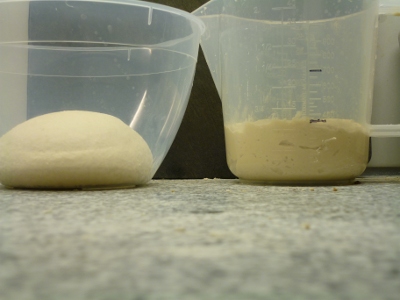
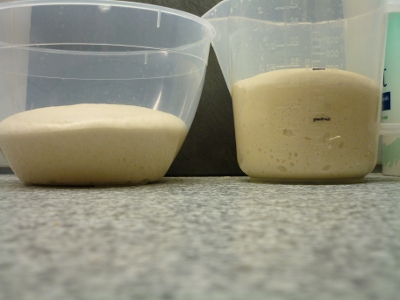
Submitted by varda on March 18, 2011 - 9:59am Can time between Bulk Fermentation and Proofing be exchangedI frequently get into situations where I have dough on the counter and I will be out of the house at the time to do a step, and this makes me wonder if you can substitute time for final proofing with time for bulk fermentation and vice versa. For instance, if I will be gone when it is time to end bulk ferment and shape into loaves, and so leave the bulk ferment to go long, can I make up for this by cutting short the proofing. In practice I have done this several times, and sometimes my bread comes out badly but many variables other than this in particular may account for that. I am talking about naturally leavened bread that might have a combined bulk ferment, rest, proof period of say six hours. I know this must be wrong, wrong, wrong (if sometimes unavoidable) but I would like to understand the theory. Thanks. -Varda Submitted by Juergen Krauss on February 15, 2011 - 11:41pm Test Tube Baking [2]: Bulk fermentation, doubling in sizeHi, The famous "proof until double in size" is present in almost every recipe. I remember seeing some photos somewhere, but I can't remember. So, here is my experiment. I made a white dough according to RB "Crumb" (100% Flour, 70% water, 2% salt, 2% yeast), divided it after gluten development and proofed one half in a cylindrical measuring cup, the other half in a transparent pudding bowl. This way you can see what a doubling in size looks like in a non-cylindrical bowl. Ambient temperature was between 22C and 24C, it took about 90 minutes to get the doubling in size. Here are the pictures.
In this picture I simply combined the previous two, for comparison.
Thanks, Juergen Submitted by plevee on July 1, 2010 - 9:11am RetardingBad planning or a sluggish starter mean that I occasionally bulk retard dough overnight. This slows the starter even more & it can take many hours for the dough to warm up and finally double. My question is, how important is the full rise during bulk fermentation? I am tempted to divide, shape, proof and bake the cold, partly risen dough without a full bulk rise. How would this adversely affect the structure and flavour of the finished bread? Patsy Submitted by Aprea on February 10, 2009 - 9:22am morning bread baking for perfect timing...Ok - After being at this since the holidays - I have had several succeesful attempts at pain de campaign, and basic sourdough from BBA. The direction I am trying to pursue is using sourdough starters with more of a healthy grain combo - whole wheat or rye. Is it possible to skip the refrigerator and let the dough ferment at room temperature for up to 24 hours? I also am interested in room temp fermenting for cinnamon rolls. Could I prepare a partially whole grain sourdough at say 3pm - let it bulk ferment at room temperature - occassional folds. Then in the morning shape, proof for under an hour and bake? We love fresh bread and it would be especially luxurious to have it in the morning - using the leftovers for evening meals.
Any thoughts?
|
ALSO ON |