Submitted by booch221 on April 23, 2011 - 1:14pm

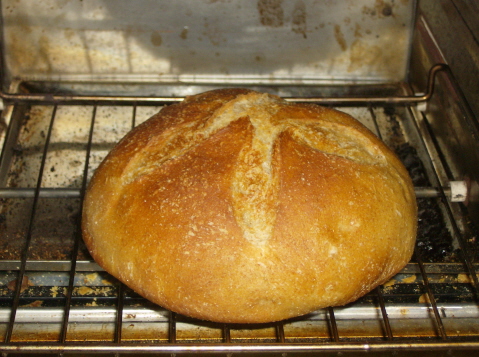
No Knead Bread Baked in a Skillet

No-Knead Bread

Makes two small loaves*

This bread gets its great flavor from a long, slow overnight rise, using only a scant 1/4 teaspoon of yeast. If you use more yeast the dough will rise too quickly. Refrigerating the dough further improves the flavor and texture of the bread.

Volume

Weight in Ounces

Metric Measure

1 cup all-purpose flour

4.5 ounces

128 grams

1-3/4 cups bread flour

7 ounces

198 grams

1/4 cup semolina flour

2 ounces

57 grams

10 ounces warm water


296 ml

1/4 teaspoon instant yeast


1-1/4 teaspoon salt


Steps:

  1. Mix the flours yeast and salt in large bowl, add the water and mix just until all the flour is wet and incorporated. It shouldn't take more than a minute, you don't want to overwork it. A silicone bowl scraper is very handy for bringing up the dry flour from the bottom of the bowl.

  2. Smear a little olive oil on a piece of plastic wrap. Lay it directly on the dough.

  3. Let rise for overnight. You can bake the dough now if you wish, see note below.*

  4. Deflate dough by folding it over on itself with the bowl scraper. Divide into two equal portions and place in zip lock bags and refrigerate for at least two hours or up to several days. Dough will rise slightly again in the zip lock bag.

  5. On baking day, remove the dough from the refrigerator and allow to warm in the zip lock bag on the counter for 30 minutes.

  6. After the dough has warmed for 30 minutes, place a baking stone in the oven, and preheat at 450º F for 30 minutes. The dough will have warmed for an hour by now.

  7. Remove the dough from the zip lock bag and place it on a piece of parchment paper. Handle it gently so you don't deflate it too much.

  8. Gently flatten it into an oval about ¾ of an inch thick (you can dust the top with flour if you want the artisan bread look).

  9. Put the dough and parchment paper in a cold 12-inch cast iron skillet. Place a lid on it. Let the paper stick out from under the lid.

  10. Place the skillet on the stone and bake covered for 30 minutes.

  11. Remove the lid and bake another 10 minutes until golden brown. The internal temperature should be 205-210° F. 

*Notes: If baking immediately, place dough on parchment paper and then proceed to step 8. There is no need to warm the dough as it already is at room temperature. You may have to reduce the baking time a little. You can also bake one big loaf instead of two small ones. Adjust the baking time accordingly.

See more step-by-step instructions and  pictures here.


Submitted by Elagins on September 3, 2009 - 3:30pm

www.nybakers.com -- Open for Business!!!


As you know, I've been thinking about starting up an e-biz directed at amateur bread bakers and have raised the issue here a few times.

At last, I'm very pleased to announce (with Floyd's consent) the opening of my new company, THE NEW YORK BAKERS, and our website, www.nybakers.com.

The goal of THE NEW YORK BAKERS is to offer home bread bakers a source for all of the the ingredients, supplies and equipment that we typically can't find at retail, in sensible quantities and at reasonable prices.

As hobbyist bread bakers, I think we all understand the challenges of finding what we need, and it was my dissatisfaction with what's currently out there that motivated me to make THE NEW YORK BAKERS a reality. Over time, I'm hopeful that it will grow into a valuable resource for all of us who love baking bread -- not to mention sharing it.

Again, our address is www.nybakers.com. Please stop in and have a look around. There's lots of good stuff there, and more to come.

Elagins aka Stan Ginsberg, Proprietor

Submitted by rayel on April 1, 2009 - 3:38pm

uncoated parchment


  Hi everyone, ist post ever, so I am not sure I am doing this right. My question is:

Does anyone know where to buy untreated parchment? That is,

 no silicone etc.  Thanks, Ray


Submitted by xaipete on March 27, 2009 - 7:42pm

Where parchment doesn't work


I learn most things by experience, and this evening taught me that it isn't a very good idea to put parchment paper under a pizza that you are going to cook on a stone on the BBQ. Wow, it was really exciting! The parchment paper immediately caught fire and melted into the pizza. The pizza also was really black on the bottom--I mean really black (think it was a combination of the heat of the stone and the ability of what Bruce would term the lowest of low grades of parchment's ability to melt into anything subjected to 600 degrees).

What an exciting evening we had. And, we're a little hungry too! I did salvage a little bit of these pizzas and tried to separate the bottom from the top on part of the really burnt parts, but that was pretty challenging--pizza doesn't separate well. We'll, we didn't burn the wine, so I guess will manage through the evening, somehow.

--Pamela

Submitted by xaipete on February 12, 2009 - 8:45am

Parchment Paper


I was able to purchase 1000 sheets (full sheet-pan size) of parchment paper from a supplier for a under $35.00 including tax. I was skeptical about this purchase because it was such a large quantity, but went ahead with it anyway because of the price.

So what if I just purchased a life-time supply of sheets; it makes sense price-wise and I can store the box under a bed.

Funny thing is that I just love the big size and quality, and find that I'm using it for other things too. It is just perfect for wrapping up a loaf of bread either to keep or to give to a neighbor, cut in half and folded it makes a great serving plate for pizza, slicing bread and not getting crumbs all over the place, etc. And it is eco-friendly!

--Pamela

Submitted by colinwhipple on July 6, 2007 - 5:39pm

Parchment Paper - Temperature Limit?

I bought a roll of Wilton parchment paper. The packaging says the temperature limit is 400 degrees.

Some of the recipes I want to use it with call for temps up to 500 degrees. Can the parchment paper still be used? What can the adverse consequences be?


Colin


Submitted by verminiusrex on April 1, 2007 - 6:39pm

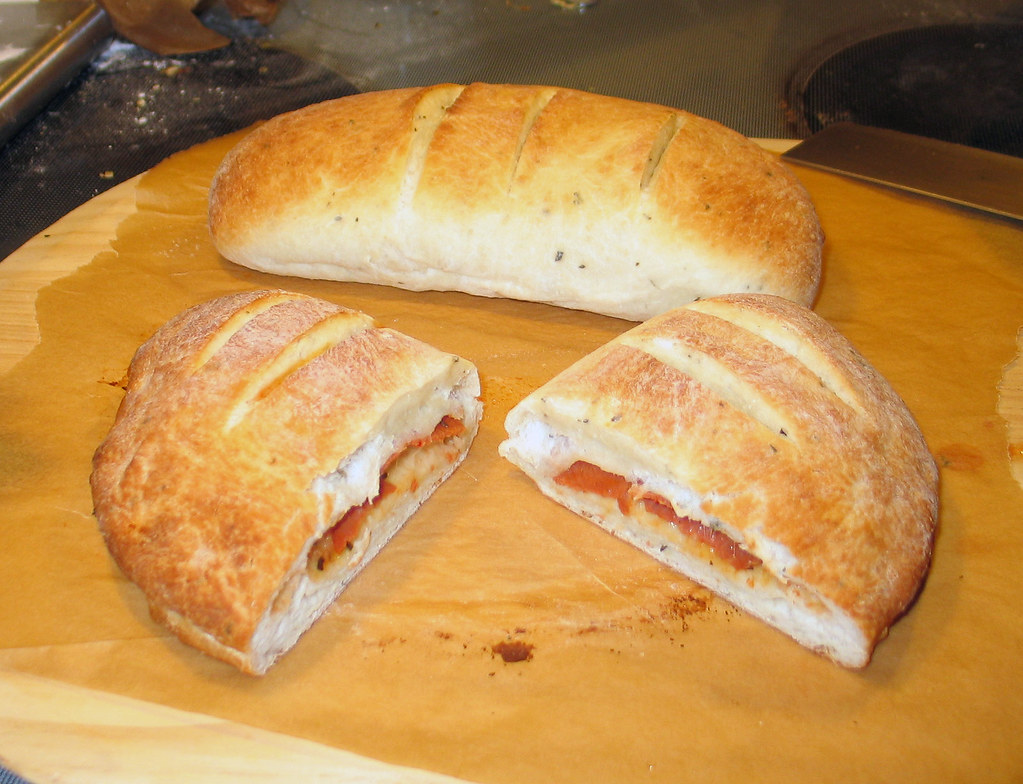
Calzone, Pizza Stone and Parchment Paper

I did a little experiment for dinner the other day. I wanted to bake some calzones using Alton Brown's pizza dough recipe, bake it on my pizza stone, and see if the bottom browns as well using parchment paper instead of being put directly on the stone. The results were faboo.