The Fresh Loaf

News & Information for Amateur Bakers and Artisan Bread Enthusiasts

breadsong's blog

  • Pin It
breadsong's picture
breadsong


Having had such a wonderful time at last year’s Kneading Conference West, I jumped at the chance to attend this year’s event and be immersed, once again, in all things grain. It was really good to see friendly faces from last year and meet new people – so many interesting, and interested people to chat with, and learn from!

***To see some wonderful write-ups of this event, and more pictures, please see these posts:
Floyd’s http://www.thefreshloaf.com/node/30236/kneading-conference-west-part-1
Floyd’s http://www.thefreshloaf.com/node/30241/kneading-conference-west-part-2
MC-Farine’s http://www.farine-mc.com/2012/09/kneading-conference-west-2012.html
Naomi Duguid's  http://naomiduguid.blogspot.ca/2012/09/notes-from-skagit-valley.html
Rhona McAdam’s http://reallygoodwriter.com/food-festivals/kneading-with-a-k
Teresa from Northwest Sourdough's http://www.northwestsourdough.com/discover/?p=3199
Teresa from Northwest Sourdough's http://www.northwestsourdough.com/discover/?p=3237


Washington State University’s Mount Vernon extension, where the event was held, is located in the beautiful
Skagit Valley and is an ideal location for this event – lovely fields and orchards, conference spaces and labs –
and the staff there are such gracious hosts! Here is the extension’s director, Dr. Steve Jones, serving up some yummy pretzel samples,
freshly-baked in Andrew Meltzer’s class:  

More sharing of good bread: a gorgeous wood-fired miche someone brought; check out the brick pattern imprinted on the bottom during the bake :^)

 
      I regret I didn’t get to taste this: 


We enjoyed some pretty amazing company: Keynote Speakers Naomi Duguid and Andrew Whitley;  so many great instructors, volunteers, bakers, millers, and maltsters;  old, and new friends;  and also, enjoyed very delicious ‘tastings’, accompanied by glorious and perfect late-summer weather…

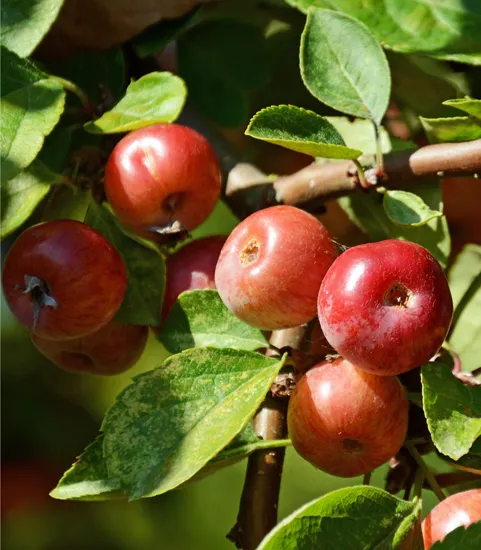
...a lovely orchard apple, ripening in the September sun  


***
The conference opened with Naomi Duguid’s keynote address, “Bread Over Time”.
Naomi talked about looking back – how we are standing on the shoulders of peoples’ determination, creativity, labor and achievements in the absence of technology, in using grain - a rich and difficult resource - to survive; and discussed respect and how we may be able to give grain-based foods value again by getting back to local grains, individual varietals with local, distinctive flavors – so we might know where our grain comes from, recognize the effort it takes to produce food from grain, have a commitment to a piece of our bread’s production and a relationship with those that have a part of producing it. MC-Farine has captured so well Naomi’s address!:
http://www.farine-mc.com/2012/09/naomi-duguid-bread-over-time.html


***

The next session I attended was “Whole Grains: We Need the Whole Story” presented by Bob Klein, Tom Hunton, Cliff Leir, and Andrew Whitley. The panel discussed milling methods and that ‘whole-wheat’ might not mean ‘whole-grain’.
As part of this panel discussion a video was shown that described (and I hope I’m paraphrasing correctly) “A wheat kernel may be more than the sum of its parts – it’s a system – all pieces are designed to work together; how can we outsmart a well-designed seed?; we may not have all of the science yet to know what phytochemicals we may be missing when we exclude certain parts of the grain from our flour”.
It was noted “what’s in the mixing bowl may not be usable by our bodies” and how study is needed to determine how long fermentation may help make the nutrition in the grain more available to us.

Bob Klein, of Community Grains, presented an example of product labelling that might help the consumer understand what they were purchasing:

I remember seeing coffee beans for sale at a market once, which listed on the package, the place and elevation where the beans were grown, along with the name of the farmer that grew the coffee. That packaging, as with this labelling from Community Grains, causes me to think of the people behind the product :^)

There was discussion too, on how to improve consumers’ perception of whole grain flour, perhaps by emphasizing freshness, that the product was produced with integrity, the product’s good/distinctive flavor and by creating more positive connotations of the product with better description (describing a bread as “golden” instead of “brown”, for example).


***

In Julie Richardson and Laura Ohm’s class, they were preparing some beautiful pies and tarts; these were peach and plum with raspberry – pleated pie and pastry perfection! (a picture of baked ones coming up, next post): 


***

In the afternoon, we enjoyed a Skagit Valley Tasting - incredible beer from Skagit Valley Malting, delicious goat cheese from Gothberg Farms, and crispy, flavorful, hand-crafted crackers from Dawn Woodward, of Evelyn’s Crackers:

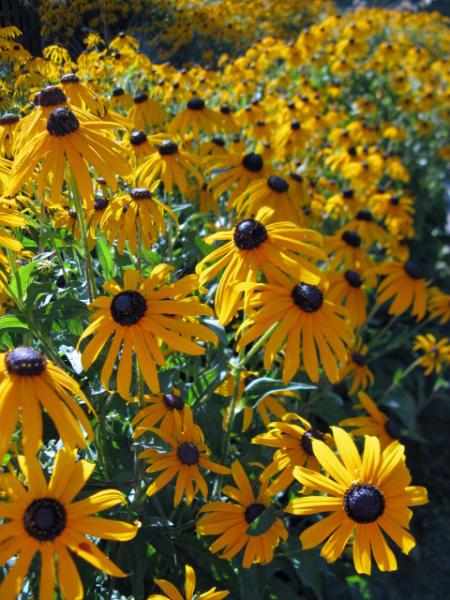
And from the gorgeous gardens, a yellow poppy,
catching some of the last of the day’s sunshine :^)

***

After the beer, cheese and cracker tasting, and a extremely tasty wood-fired-pizza dinner (thanks to Mike Dash of Rolling Fire Pizza, and Mark Doxtader of Tastebud Farm), the day ended with a talk given by Richard Scheuerman about the heritage of grain-growing and the agricultural history of the Hudson’s Bay Company in the Pacific Northwest, illustrated with beautiful artwork
(really lovely botanical drawings of various heritage grains): 

Richard talked about the biodiversity of the grains that used to be grown in the Puget Sound region and explained these grains were landrace grains, strains with rich genetic diversity that adapted over time to the locales in which they were grown. I thought I heard Richard say some of the historical varieties he researched are now being grown at the WSU extension (I hope I heard correctly), because if that is the case, isn’t it wonderful the ‘terroir’ of some of those Pacific Northwest grains is being preserved? :^)


Continued with next post: Kneading Conference West 2012 - Day 2

Last year's event: Kneading Conference West 2011

breadsong's picture
breadsong

Bonjour, everyone :^)

Susan of Wild Yeast posted an invitation to celebrate Julia Child on August 15th
(on what would have been Julia’s 100th birthday), by baking Pain Français, from Mastering the Art of French Cooking, Volume 2.

What a special way to honor Julia Child! – many thanks to Susan and her baking group, the Bread Baking Babes,
for extending the invitation to participate in this centenary celebration!
Susan has written a wonderful post to celebrate Julia - here is a link: Oh, Julia!

Here are the loaves I baked, to pay tribute to Ms. Child and her Pain Français.

Une rose pour Julia

I have a yellow rose bush outside, called the ‘Julia Child’ rose, named for (and perhaps by?)  Ms. Child…
it blooms beautifully each year. I really love this rose and when I see the flowers, it makes me happy to think of Julia
and her lovely cooking!
Julia’s rose inspired me to try shaping Julia’s bread as pain français en forme de rose.
I loved the golden crust color of the pain français after baking…reminding me of the golden yellow color
of the rose itself :^)


                          a close-up of the ‘rose petals’

The idea for shaping the rose came from this post:
http://www.thefreshloaf.com/node/19320/caucasian-bread
The dough was 63% hydration (quite a bit lower than the original recipe, thinking I would need a stiffer dough to make rose petals).
After rolling out, I brushed the dough with olive oil, prior to rolling up into a cylinder. I hoped the olive oil would prevent the petals from merging/sticking together.
The dough was cut in half lengthwise after it was rolled up, folding open as I cut to expose the cut side (facing up). The two pieces were twisted together, trying to keep the cut side facing up, then the twist coiled up to form the ‘rose’.

A picture of the twist, and the final shaping:
 

I had some extra dough from this batch so baked a small batard, decorated with another flower for Julia;
the stencil for this an imitation of the one used by MC,
for her beautiful pain de l’Abbaye Saint-Wandrille:


Fleur-de-lys

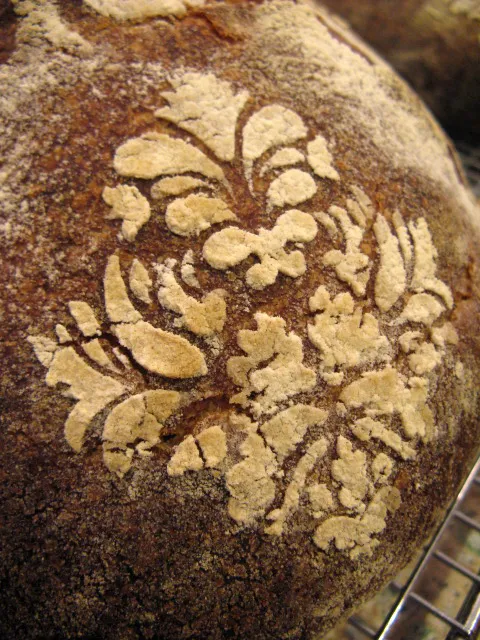
Admiring the decorative fleur-de-lys pattern, a symbol of la Belle France, on the cover of both volumes of
Mastering the Art of French Cooking – which inspired the stencilling on this boule:


For this bake, the dough was 71% hydration.  I am not sure what the crumb is like – I froze this loaf – so hard to not to have a slice to taste after baking, considering the tantalizing aroma as this bread emerged from the oven!


La Couronne des Perles

I watched an episode of ‘Baking with Julia’ on pbs.org, where Julia and Steve Sullivan of Acme Bakery are making decorative French breads (a wonderful episode!).
One of the breads they made was la couronne, decorated with a ‘string of pearls’.
I thought a bread, dressed up with a string of pearls, was a most lady-like thing to bake in honor of Julia’s birthday!
                                                    

After I baked this bread, I re-read the beginning of Ms. Child’s book, My Life in France, where she describes her first meal after arriving in the city of Rouen, enjoyed at the restaurant ‘La Couronne’:
“our first lunch together in France had been absolute perfection. It was the most exciting meal of my life…”  
I loved that part of the book, where Julia writes about how she discovered her love of French cuisine!,
and was happy I’d baked a couronne, considering the name of that restaurant :^)

The first time I tried making la couronne, it was at 76% hydration; I held back a bit of water from the original formula,
as I was using a soft flour.
I didn’t hold back quite enough water, finding at 76% hydration the pearls flattened out when proofed upside down.
This second try was 71% hydration and this time, the pearls kept their shape during proofing.
             Here is a picture of the crumb:


I was so happy baking these breads to honor Julia for her birthday, and to enjoy the pleasures brought by Julia’s fresh, crusty, aromatic pain français.
Joyeux anniversaire et merci beaucoup, Julia, for this bread and everything else that you taught and gave to us,
through your research and writing!

Happy baking everyone!
:^) breadsong

Submitted, with many thanks, to Susan @ YeastSpotting


breadsong's picture
breadsong

Hello everyone,
These basil buns are my adaptation of Jan Hedh’s Risotto Bread, from his book, Artisan Breads.

I loved Mr. Hedh’s idea of including fresh basil in a prefermented dough.  Our season for fresh basil is here! –
I was curious to try making these rolls, to see how they would taste.
                                      

The aroma of basil held very nicely after baking and the basil flavor is definitely there! There is a nice sweetness from the durum, along with tanginess and richness from the yogurt and parmigiano cheese. The crumb is very soft and moist  from the yogurt and risotto, but the risotto is not visible in the crumb after the bake.

I tried stencilling the tops with a basil leaf, and also tried applying a basil leaf with an egg white/water wash, wanting to see how a whole, tender basil leaf would hold up to baking. The leaf lost its bright green color during the bake, but the leaf didn’t brown like I feared it might.

one of the rolls, before baking

                                                             a stencilled roll

crumb (golden from the durum, nice and soft!)

The adapted formula (I wanted to call these rolls 'Pane Risotto con Basilico' in honor of their Italian flavorings :^)   ):

....this was how much basil I used (leaves are pictured on a dinner plate)


 ...the dough after all the ingredients were mixed together


                       One last shot :^)

Thank you, Mr. Hedh, for these lovely, fragrant, delicious little rolls!

Happy baking everyone,
:^) breadsong

Submitted to Susan's YeastSpotting


breadsong's picture
breadsong

Hello everyone,

At the end of June, The Bread Bakers Guild of America presented WheatStalk 2012, a *wonderful* three-day
educational event in Chicago.

On the Guild's website, the event is described as:
“… a joining together of member bakers, millers and growers to learn and improve techniques, share ideas and build community”, and,
“…will feature three educationally packed days with hands-on classes, demos, lectures and oven building taught by the industry leaders and old friends…”.

This event was exactly as promised! :^)

WheatStalk attracted some incredible (and extremely hard-working!) instructors, teaching assistants and volunteers!
The event was so much fun to attend, very well-organized, and held at Kendall College (a superbly-equipped and immaculate facility), located right on the Chicago River:
                                             

How fortunate was I to be able to attend this event, study at Kendall College, and have a bit of time to explore Chicago.
What a vibrant city! The architecture  was gorgeous (so many beautifully-designed buildings!), lots of green space in the downtown area, lots and lots of public art on display – a real feast for the eyes!

The view from 95 stories Up! --->  

Skylines:
 
Beautiful trees in among the skyscrapers, and one example of the incredibly-beautiful outdoor artwork,
                                                                                                                   a mural by Marc Chagall:


I found this event to have a joyous atmosphere with so many friends connecting again and so many
nice, kind people to meet.
Everyone was very welcoming to a home baker like myself, and my instructors were patient and generous,
each one a wealth of knowledge.
The teaching assistants and fellow students were invaluable to learn from, also – people were asking such good questions.
By the end of the conference I was feeling quite awestruck by the collective knowledge and expertise of the bakers in attendance!


The first evening, Jeffrey Yankellow presented a Baker’s Math class.
Jeffrey emphasized the importance of knowing the function of ingredients in dough, of understanding the bread-making process and baker’s math, and of practical experience. With all of all of these, he said you can ask yourself, “What do I want this bread to be?” and create any bread you want :^)


The next three days offered almost-impossible choices (by that I mean, so hard to choose among the incredible classes and demos offered!):  the range covering artisan breads and pastries, gluten-free baking, wood-fired oven baking, decorative breads, milling, bread baking science, building a wood-fired oven, food photography, equipment maintenance...

The social gatherings organized were lovely and it was really good see so many people enjoying one another’s company!

My first class was Decorative Breads, with Coupe du Monde de la Boulangerie / Team USA Silver medal winner
Harry Peemoeller :^)
I admired the way Harry ‘thinks outside of the box’ and uses all sorts of different things for molding pieces for his displays, the way he brings components together to create individual pieces and an overall artistic vision, and how he uses natural ingredients, powders, spices and glazes to make his pieces look so realistic.
Here is a picture displaying Harry’s craftsmanship using decorative dough, along with his artistic design and construction/engineering skill!:
 
(and, a link to a photo of Harry's Team USA Coupe du Monde de la Boulangerie work of art!)


The next day's class was Baking with Sprouted Wheat Flour (and wood-fired oven baking), taught by
Richard Miscovich, a professor from Johnson and Wales University. Richard had such energy, enthusiasm and patience and was an excellent instructor! Richard taught us about sprouting wheat and how to use freshly sprouted berries a couple of different ways, mixed up two different types of lovely sprouted wheat dough, and also instructed us regarding wood-fired oven construction, insulation, proper burning/combustion, steaming and baking. Fascinating! I read in the latest Guild newsletter Richard is writing a book on wood-fired ovens (oh, I’ll be watching out for this book! ). Here are two photos showing what came out of that wonderful WFO :^)  
(a a 50% sprouted whole-wheat with sesame, and a 100% sprouted whole-wheat):
 

The last day I attended a Baking Science lecture presented by Lee Glass (a physician really good at explaining chemistry!) and Andrew Ross (a crop and food scientist and professor at Oregon State University). These gentlemen taught in an engaging way, bringing the subject matter to life with clear explanation and humor – it was very interesting, and enlightening.
Solveig Tofte (of Sun Street Breads in Minneapolis, MN) then presented an entertaining  demo on Scandinavian Baking. Solveig’s demo was touching as she discussed family recipes she’d worked on, and in the process, had been able to recapture flavor memories for her family. Her Vört Limpa Rye bread was one of the best ryes I’ve had the pleasure to taste; I was so preoccupied with its gorgeous flavor I didn’t even think to take a picture of it! Solveig described the flavor of this bread as “not sweet, and the spices don’t camouflage the flavor of the rye and fermented grain”. So true! – the bread’s flavor was beautifully balanced. Here is a picture of two beautiful Fyrstekake (“Royal” or “Prince’s Cake”, Norwegian almond-filled tarts) she demonstrated:
just loaded with almondy-goodness! :^)

Update: This blog post on Modern Baking's site is a lovely write-up about Solveig's presentation, and features her recipe for Harring Kake:
http://modern-baking.com/blog/glimpse-rich-family-history

To read more about WheatStalk, please see these lovely blogs, so well-written and filled with beautiful photos:
http://www.farine-mc.com/2012/07/wheatstalk-2012.html
http://thebakingblog.com/category/wheatstalk-2012
http://thebakingblog.com/2012/06/28/natural-ingredients-and-traditional-practices/
http://thebakingblog.com/2012/06/29/taking-inspiration-from-team-usa/
http://thebakingblog.com/2012/06/30/when-cardinal-rules-are-broken/


Update: Here are some more links to coverage regarding this event:
http://www.zingermansbakehouse.com/2012/07/wheatstalk-2012-i-was-there-man/
http://www.bakemag.com/Photo%20Gallery.aspx#id=album-339924&num=content-6344565

Lastly, here are a few pictures of some the lovely breads produced by some of the classes (wish I could have seen (and tasted!) them all!):

Easy Rye Breads, taught by Volker Baumann
 

The *most delicious!* kougelhopf,
kindly provided for breakfast by The French Pastry School 
(that was not my breakfast plate btw :^), limited myself to just one, willpower in action let me tell you!)

Bagels, Bialys and Pretzels, taught by Jeffrey Hamelman
 

An extremely-tempting-looking savory pastry, crafted by Ciril Hitz

Baking with Ancient Grains, taught by Frank Sally
   

Team USA Bread Demo, Jeffrey Yankellow and Mike Zakowski


Many, many thanks to the Guild and those who organized, taught, and volunteered at WheatStalk: a truly first-class event!
Thanks too, to Kendall College, Goose Island Brewery, and The French Pastry School for being such generous and gracious hosts.

I left this conference feeling so privileged to be able to attend, full of inspiration to learn more about baking delicious, nutritious, beautiful bread,
and *very grateful* to all of those organizers and teachers who put this event together for the benefit of the students.

Happy baking everyone!
:^) breadsong

breadsong's picture
breadsong

Hello everyone,

This month, Elle and the Bread Baking Babes are baking MC-Farine’s cute and charming Morning Cuddle Breads,
as ‘Summer Twists’.

MC, on her always-so-interesting blog!, recently featured a beautiful Barley Bread - in her post she recalls the sucre d’orge (barley candy) she had as a youngster. 
I was curious so looked up barley sugar candy online (noting its pretty golden color), and read on Wikipedia “Barley sugar was often made into small spiral sticks, and the name is… sometimes used for…twisted legs and spindles in furniture…”.
                          (So that’s where ‘Barley Twist’ furniture got its name!).

MC‘s Barley Bread post motivated me to make these breads as ‘Barley Twists’ … using a bit of barley malt extract , and some of the *lovely* Fairhaven organic whole barley flour MC gave to me (*many thanks!*), in place of oats. 
The barley flour was scalded, to help retain moisture and hopefully add a bit of extra sweetness.
For fruit, I added golden raisins, their color reminding me of the golden color of the sucre d’orge :^)

                  Barley Twists        
                                           Cinnamon Cuddles

Two breads were shaped as ‘Barley Twists’, egg washed, and sprinkled with barley flakes prior to baking.

The other two breads were shaped in a ‘C’ shape, for ‘Cinnamon Cuddles’ (the raisins in this bread seemed to call out for some cinnamon! ). I added some cinnamon to the egg wash, sprinkled cinnamon sugar along the edges of the twists, where the strands joined, and for a bit of extra golden color, sprinkled some turbinado sugar on top, prior to baking:
 cinnamon egg-wash :^)
                                   just before baking

                                                                 crumb

The bread has a soft and moist crumb, nice sweetness from the golden raisins, and the bread itself having a lovely complex flavor that I don’t quite know how to describe!, but this is a wonderful breakfast bread.

Thanks to MC for the lovely ideas in her posts, and thanks to Elle, too, for featuring this bread this month!
Here is the formula I worked out, inspired by these ladies' efforts :^)


Happy baking everyone,
:^) breadsong

Submitted to YeastSpotting :^)


breadsong's picture
breadsong

Hello everyone, 
Continuing to be inspired by Beth Hensperger’s beautiful book, Bread For All Seasons…
the next chapter begins with June and is titled ‘Sun Food’.

I’ve baked three breads of Italian origin over the last while, using ‘yellow-colored’ flours -
thinking about 'sun food' (sun bread), I wanted to call these breads ‘pane di sole’ :^)


Micca di enkir e buratto
A dear friend generously gave me some beautiful softly-yellow-colored Italian einkorn flour:
  
Searching on TFL yielded Giovanni’s amazing post about his visit to Mulino Marino, and finding einkorn (enkir) flour there.
(loved how Giovanni’s post featured six millers, whose names all began with the letter ‘f’ –
this group of men seemed like a brotherhood, or  fratellanza, to me :^)   )


In place of buratto flour, I used 85% high-extraction flour, as one of Giovanni’s comments noted buratto flour might be comparable to a French T80 which may be a light whole wheat?
The einkorn levain was slower to ferment than the wheat levain, so I placed the einkorn levain in a warm ( 90F or so?) proofer for awhile, to let it catch up – I’m not sure if it was the warmer, wetter levain, or the einkorn flour, or both, but when baked, this bread was the sourest bread I’ve ever tasted – and I’m not complaining! It was amazing to taste - been meaning to bake this bread again, to see if I can re-create that flavor.

The crumb is not as astonishingly beautiful as with Giovanni’s loaf...
 
  ...but I was happy with the oven spring :^)

This bread was baked back in March, and I’m pretty sure at that time of the year, I was still dreaming of the sun. 
Many thanks to Giovanni, for his inspiring and informative post about these millers and their flours – and for baking that beautiful, perfect ‘micca’ – it was wonderful to see!

Focaccia al pomodori

This focaccia is based on Mr. Leader’s formula for Grape Harvest Focaccia in his lovely book, Local Breads.  
There are so many incredible, captivating photos in Mr. Leader’s book – including his photo of ‘Individual Focaccias with Cherry Tomatoes’ – the breads look like they’ve been wood-fired – gorgeous!
When I saw a colorful mix of hothouse tomatoes at the store – these breads came to mind.
After baking, these tomatoes were sweet and flavorful, almost beyond belief – it’s been many months since I’ve tasted tomatoes like these.
It’s as if they’d been vine-ripened in the sun, but it’s still too early here for that! The flavor was an amazing surprise :^)

In making the focaccia, I pre-fermented 21% of the flour in a 80% hydration sponge (used only all-purpose flour in the sponge), then used 40% all-purpose, 30% soft whole wheat, and 30% extra-fancy durum (nice and yellow) flour in the final dough, with 60% hydration overall.

                                                           ...before baking

Sun shots :^)  


Pane tipo di Altamura

Franko embarked on a journey to bake pane tipo di Altamura last year – I haven’t forgotten the lovely bread he baked!
There have been so many other enticing bakes of this bread by Varda and others. Consistently, these 100% durum breads have had vibrant orange-colored crusts, and yellow crumb...
I was intimidated by this bread, and found the courage to try making a version of it this week, having some extra time and having just seen Jeremy’s post of a beautiful and bright-yellow semola remacinata bread. Jeremy included a link to his friend Ibán Yarza's blog where there was yet another beauty! of a bake.
I'm very grateful for the tips and guidance in these posts, including tips on how to build the levain (thanks!, codruta, for your question – if you see this).  I tried to keep the levain quantity  and hydration, and dough hydration to that recommended by Mr. Yarza, and do a multiple-stage durum levain build at varying hydrations (formula below). Mr. Yarza called the levain masa madre, but I wanted to call this levain pasta madre, in honor of durum flour, and Italy  :^)


I used 100% extra-fancy durum flour for this bake, so this bread might be a pane tipo di Altamura?
Whatever it’s called, it was one of the most delicious breads I’ve ever tasted, with a very moist and almost sweet, crumb –
a complex flavor I won’t forget, just like the image of that first beautiful Altamura bread Franko baked :^)

Here are some crumb shots (slices from the loaf on the right, the loaf on the left was given as a gift)


                                                                      close-up:

My adaptation of Mr. Yarza's formula:


Baker's %'s:


Just one last link - can't help thinking about Sofie’s absolutely beautiful ‘ray of sunshine’ French Country Bread!  :^)

 Wishing everyone a happy, and sunny!, month of June -
                                                                                  :^) breadsong


Submitted to Susan @ YeastSpotting

breadsong's picture
breadsong

Hello everyone,
I had some extra starter (wheat, rye, durum) ... and yesterday, saw Susan's post featuring lovely Blueberry Sourdough Scones.
Mixed some up last night and froze them; baked fresh this morning - Yum :^)  
Thanks, Susan, for a delicious recipe and great way to use extra starter! 


These scones are very tangy and tasty. Not too much sugar in the dough - a light sprinkle of cinnamon sugar over the top before baking tasted quite nice!

Happy baking everyone!
:^) breadsong

Sending, with gratitude, to Susan @ YeastSpotting

breadsong's picture
breadsong

Hello everyone,

Shepherd’s Bread, from Beth Hensperger’s book Bread for all Seasons, is the May challenge for the Bread Baking Babes baking group.
Thank you to Karen of Bake My Day for hosting the challenge - this bread caught my interest, seeing the beauty of
Karen's loaves and having enjoyed reading Ms. Hensperger’s book :^)

In the introduction to this book’s Springtide chapter (Shepherd’s Bread is included in this chapter as a ‘May’ bread)
the author wrote “On Memorial Day weekend, the Basques…hold their annual picnics. They are descendants of shepherds who came to the United States and settled in the agricultural communities of the California Sierras, Idaho’s Rocky Mountains, and the Nevada foothills...”.

We took a trip once to northern Nevada - I remember reading about Basque culture and the history of sheepherding there. This is a link to an old photo of an actual Basque shepherd in Nevada – the countryside looks bright and snowy, just as it was when we visited.

I imagine it must have been a hard life in that territory, raising and herding animals, and wonder what it would have been like cooking and baking ‘at camp’. Ms. Hensperger notes “Shepherd’s bread is traditionally baked in a cast-iron pan submerged in a small, ember-lined pit covered with dirt.”
This bread was baked in a cast-iron dutch oven and I baked it dark to try and emulate what might happen,
baking with coals :^)
   
                                                     a close-up of the crust:

Thinking the shepherds might have baked with sourdough, I made this bread with sourdough, following Susan’s (wildyeastblog) Norwich Sourdough formula ( I just saw MC’s wonderful Meet The Baker post profiling Diane Andiel and Diane’s version of Norwich Sourdough – thanks to MC for writing about Diane and her bread, and Susan and Diane for baking it, inspiring this effort!):


The bread has a softness (olive oil having an effect?) and a sweetness; the crust is dark, but not crisp –
very pleased with the flavor and the softness of the crumb:

My husband loved this bread, and said, “Mmm, this is really good brown bread - should be having this with 
some baked beans with molasses”. 
Sounds like good camp food, doesn’t it?

Happy baking everyone!
:^) breadsong

Submitted to YeastSpotting :^)

breadsong's picture
breadsong

Hello everyone,
Franko very kindly told me about a baking textbook that was available for sale online: On Baking
(authors Sarah Labensky, Priscilla Martel, Klaus Tenbergen and Eddie Van Damme).

Happily, I purchased the book, and once it arrived, the first thing I made was Turkish Pide Bread,
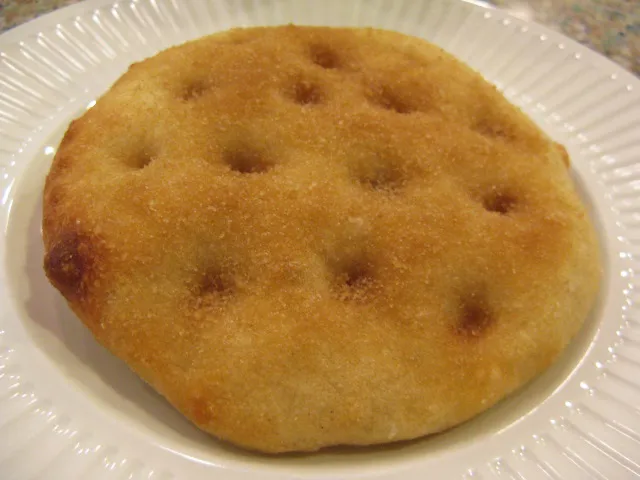
a round loaf with a pretty, diamond-patterned and sesame-coated crust:  

 
On the weekend, I saw this pineapple pattern on my friend’s tablecloth -
it reminded me of the Turkish bread’s crust:

Pineapple bread! I thought…and found a formula for Hawaiian Pineapple Sweet Bread in Advanced Bread and Pastry...
and Janie’s recent post about bakers from Mexico got me thinking about Mexican sweets and flavors.
 
Wanting to make this pineapple bread but being short of time, I made a sponge-based version of the ABAP formula, substituting a small amount of medium rye and whole wheat flour, and adding some fresh pineapple (diced, then caramelized with Mexican piloncillo sugar and unsalted butter, then flavored with small amounts of Mexican canela (cinnamon) and vanilla bean paste. This is how the pineapple turned out (yum!):


Here is the baked bread, kind of lumpy-looking but completely delicious: 
pineapple-brown sugar bread, or pan de piña y piloncillo :^)

To make the diamond pattern, I started by rolling with a thin dowel, but this dough was springy and the marks left by the dowel would not remain. I used a bench scraper to impress the diamond pattern on the dough, and went over the pattern a few times during proofing, and one last time, right before the bread went into the oven. 

The pineapple flavor completely infused throughout the crumb – loved how this tasted!
Here is the crumb:
(ice cream drizzled with some of the caramel sauce was a lovely accompaniment)

This is my adaptation of Mr. Suas' formula (1200 grams, to make 2 pineapple breads):


I enjoyed letting my oven 'travel around the world' for this bake :^)
(borrowing the phrase from this baker’s post)

With thanks to Mr. Suas for another fantastic formula – will have to try the levain version of his Hawaiian Pineapple Sweet Bread!

Happy baking everyone!
:^) breadsong

Submitted to Susan for YeastSpotting


breadsong's picture
breadsong

Hello everyone,
When checking out last Friday’s Yeastspotting post, I saw two posts for Granville Island Beer Bread
(both breads looked fantastic!).
Looking at the posts, I saw The Bread Baking Babes selected this bread for the April challenge.
Granville Island Brewing’s beers are available at a nearby store (perfect!) –
I thought it would be fun to pick up some of this beer and participate in this month’s challenge  :^)

Asiago cheese and fresh garden chives (one of the things I just love about April!) are the add-ins for this loaf.  

The dough bubbled up happily during fermentation, and was a joy to shape – no stickiness at all.

The bread has a very delicate flavor with the chives, and the asiago is a very tasty addition to the crust!
The grated cheese didn’t want to stick to the loaf very well, so I didn’t get as much on the outside as I wanted to…
I was so inspired by Natashya’s completely-cheesy-crusted loaf but it didn’t turn out looking as good as hers!

Crust and crumb shots:
... melty-cheese on the crust

 ... crackles

... crumb


Thank you Natashya for hosting the challenge, and to Chuck for the original recipe!


Happy baking everyone,
:^) breadsong

Submitted to YeastSpotting


Pages

Subscribe to RSS - breadsong's blog