SearchUser loginRecommended BooksFavorite Recipes
|
Submitted by mountaindog on March 1, 2009 - 8:56pm 90% Milanaise Whole Wheat Sourdough, long cool fermentI decided to revive my dormant Carl Griffith's 1847 Oregon Trail starter last week, so I had a lot of nice ripe starter by the end of the week on hand that I wanted to use up. I used an excel spreadsheet I made up for Flo's 1-2-3 sourdough to use up any amount of excess ripe sourdough starter, except in this case, I needed to increase the hydration since I was using all whole wheat flour in the final dough, so it became 1-2.25-3 bread (78% hydration final dough). The reason I made this as 90% whole wheat is simply because the excess starter I had was made up of about 25% whole wheat and 75% AP, so even though the final dough is all whole wheat, there is about 10% AP in the overall formula due to the large amount of starter. One other thing that I got away with that I don't usually do is that all the starter used in this formula was actually ripe the day before I made the dough, but I got busy and just put it in the frig, so it was not as strong as it could have been since it was past peak, but the bread still came out with great flavor and a nice soft open crumb, chewy dark golden crust, not at all dense.
This is also the first bread I've made with my new big bag of organic Meunerie Milanaise flour from Quebec, and I notice a distinct difference in taste compared to either the King Arthur WW or Bob's Red Mill WW that I usually use (it handled very differently as well, very extenisble and silky dough). The Milanaise flour had absolutely no bitter whole wheat aftertaste, it was sweet, I imagine this must be what freshly-ground whole wheat flour tastes like, and this bag was milled on January 8 I think (thanks to Tete au Levain's tip on how to determine the milling date on the bag I had).
After mixing the final dough with my dough whisk just long enough to get everything incorporated, I let it rest 30 minutes, then did about 2-3 minutes of folding in the bowl with dough scraper, rest another 30 min., then 2 stretch & folds 30 min. apart, then just left it in it's bucket to bulk ferment overnight in my 62F basement Thursday night. Friday morning before I left for work, I shaped the loaves and placed them in a couche in my 50F basement refrigerator until I got home from work, then baked them as soon as the oven was preheated. They came out flatter than I had hoped, but since it is a wet dough, and mostly whole wheat, that may be expecting too much. To me the most important thing was the open crumb and great taste these had, much better than the desem bread I attempted 2 years ago.
I am happy enough with this result and the taste that I plan to make this our weekly bread from now on, since I'd like to reduce the amount of white flour we are eating these days. The Oregon Trail starter is a very strong and fast riser, so I was hoping it would do well with whole grains, and I think it did. I will try this formula again with my home-made starter to see if it does as good a job rising this dough as "Carl" did. I also hope using a starter that is at peak (as opposed to older discarded starter past peak as used here) will improve the volume. Submitted by mountaindog on February 23, 2009 - 2:48pm Billowy Sourdough Cinnamon Rolls with Cream Cheese Icing
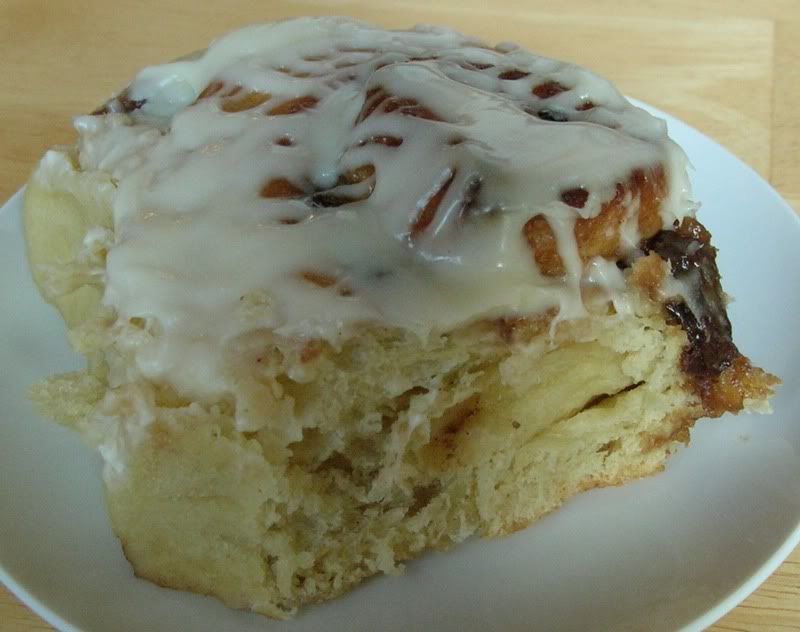
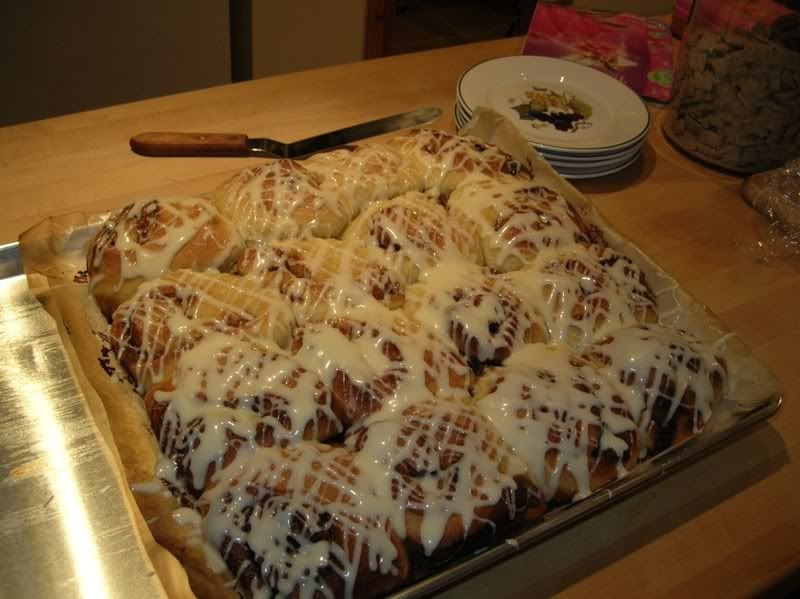
I was inspired from Teresa at her Northwest Sourdough website to try her sourdough cinnamon rolls pictured there, but the closest actual written recipe I could find to that was her Festive Hawaiian Roll recipe. After studying a lot of other sweet dough recipes and brioche recipes, I decided to make a hybrid dough with what I thought were the best aspects of each, that would also use only sourdough starter as the leavening agent. The main differences from NWSD's recipe is my addition of eggs and buttermilk, plus I added 4 times the amount of butter, bringing the butter content up to 11%, which is still not as high as many sweet doughs and not nearly as high as brioche. This recipe will make about 16-24 large and airy, but rich and tender Cinnamon Rolls. We don't like excess cinnamon flavor in our rolls and so use about half the amount of cinnamon usually called for in the filling of similar recipes. We are also not *fond* of white fondant glaze, so I made up this cream cheese/buttercream glaze to provide a more flavorful topping that complements the flavor of the rolls well. I also did not use any nuts in these, but they could also be added to the filling if desired. Beware of these rolls: Due to the potato and buttermilk in the dough, these are by far the richest, most moist, tender, and flavorful cinnamon rolls we've ever had, the dough itself is fragrant with vanilla and butter, it almost does not need the filling or icing. The sourdough made these extraordinarily airy and puffy with no commercial yeast added. Because these are so rich, they will be reserved for special occasions or special visitors in our house, they are far too addictive to keep around otherwise. Because they are also so light and billowy - similar to a good sourdough waffle, they are not overly filling and heavy in your stomach. The total preparation time is about 36 hours to allow for the long cool ferments. If you want to serve these rolls on a Sunday morning, you need to build the levain the preceding Friday evening.
Approx. 12 hours before making the final dough, build the levain as follows: Levain Build: grams Item Let this mixture sit at room temperature until doubled (usually overnight, if your starter is fast and the levain is active early, keep it in the frig. until ready to make dough). Meanwhile, make a small amount of mashed potato by boiling or microwaving (covered) 1 medium peeled & sliced potato in a little water until soft. Mash with fork and a little milk until smooth. Final Dough: grams Item Once levain is ripe, make the final dough. First cream the softened (not melted) butter by hand or in mixer with paddle attachment, then beat in eggs, honey, vanilla, and mashed potato and continue mixing. Stop to scrape down sides of bowl with spatula as needed and continue to mix just until well-blended. Switch to dough hook and add buttermilk and levain until blended, then gradually add flour and salt and continue mixing with dough hook until well-blended. Scrape down sides of bowl with spatula, cover, and let rest 20 min. After rest, uncover and continue to mix with dough hook another 2-3 minutes (or by hand, fold in bowl with plastic bowl scraper for 3 min.). This will be a very soft, sticky dough, around 71% hydration if you count the liquid from eggs and milk, but not counting the butter. Place the dough into a container sprayed with cooking oil, cover, and bulk ferment in a cool location (55-65F) until doubled, approx. 8-12 hours depending on temperature and how fast a riser your starter is. Every few hours, give the dough a stretch and fold, for a total of about 2 folds. Meanwhile, make the filling as follows: Filling: grams Item For the filling, add all above ingredients to a medium sized saucepan and bring to a low boil over medium heat while stirring. As soon as the mixture boils, take off heat and chill to a spreadable consistency before using. After dough has doubled, divide it into 2 pieces on a flour-dusted surface (it may be sticky even though the butter should be solid from the cool temps), then roll out each piece of dough into a rectangle shape about 10 x 16 inches across. Spread the filling across each rectangle of dough, leaving 1 inch clean where the outer seam edge of the roll will be and then taking the opposite edge, roll up the dough gently but firmly and seal the seam. Slice each log into 8 or 12 rolls (depending on how big a rectangle you rolled out and how large you want the rolls to be) with serrated knife and place them just barely touching each other on baking parchment on sheet pan. Don't worry if log gets flattened as you slice each roll, you can straighten them out once placed on the sheet pan, and they should rise very high and straighten out when proofing. Spray tops of rolls lightly with cooking spray, cover with plastic wrap, and slowly proof rolls overnight or up to 12 hrs. in the refrigerator or cool place between 45 and 55F until the dough is about doubled and puffy looking. Bake right out of frig. at 400 degrees for about 25-35 minutes until light golden, or until the center of dough registers about 195-200F on instant-read thermometer. Do not let the rolls get very brown. Melt about 4 TBSP of butter in microwave and as soon as rolls are out of oven, brush them with the melted butter to keep crust soft before icing them. Here are the rolls right out of oven and after being brushed with butter, they had a great amount of oven spring and rose tremendously during the bake:
While rolls are baking, make a glaze/icing as follows: Cream Cheese Glaze: grams Item Microwave the butter and cream cheese together until very soft but not melted. Whisk them together while adding the vanilla, powdered sugar, and enough milk to thin out the icing to a drip-able consistency. Let the rolls mostly cool before glazing them with icing. Dip a wire whisk in the icing and drizzle across surface of each roll in crisscross pattern. Serve and enjoy. (NOTE: I've not yet tried this, but it should also be possible to chill the un-sliced logs in frig overnight and slice just before baking, or freeze the logs for up to 1 month, take out the night before baking and defrost in frig. Next morning, remove from frig., slice, and let warm up at room temp about 1-2 hours before baking.) It's a good thing we had a house full of guests this past weekend to help us put away not only the cinnamon rolls, but also these Vermont Sourdough boules, and cherry-sunflower-seed levains.
Submitted by mountaindog on February 6, 2009 - 7:38am More dough mixing trial and errorThis is in response to Trailrunner's questions on a mixing discussion over at Hansjoakim's blog here on a fantastic-looking crumb he has on his Hazelnut bread. Lately I seem to get best results with a combo of warm shorter bulk ferment with frequent early folding and long cold final proof. No mixer, no kneading with flour, no repeated French-folding. (warning, this could change as soon as I read of a better method, so please take with a grain of sea salt!):
Here are results of a less slack dough (65% hydration pain au levain 10% whole wheat), not huge holes like you'd get with a very wet dough, but large enough and evenly distributed, and very flavorful crumb, chewy but not gummy:
I still need to try SteveB's double-mixing technique he describes here. If anyone sees any error in my ways with how I've been doing this, I'm all ears! I'm sure I'll revise this after I read Advanced Bread and Pastry, due in soon. Submitted by mountaindog on January 17, 2009 - 2:55pm Cherry Pecan Pain au LevainI've always liked the walnut raisin pain au levain Dan Leader sells at Bread Alone Bakery near me, and I've been wanting to try something like this for awhile and finally got around to it this week, but with cherries and pecans. Both Susan's yeasted version on her Wild Yeast blog and SteveB's version on his Bread Cetera blog gave me a craving for cherry pecan bread when I saw their photos....thanks for the ideas you two, your baked goods are so mouthwatering and professional looking...(I am unworthy of breadblogging in the same sphere as you two!) I made this as a sourdough-only version and mixed about 30% whole wheat and 2.5% rye with AP flour. This mix gave a nice dark-colored but light-textured open crumb that tasted good with the fruit and nuts. You could obviously substitue rasins and walnuts, or anything else you can think of. I find it especially tastes great sliced, toasted, and served with cream cheese, and lasts a long time.
I soaked the cherries for a bit too long as they were a little too mushy and a some color washed out, but the bread tasted great, I'll be making this again a lot I think. It was very easy. Here are the loaves just before slashing and loading into the oven, after their overnight cold retarding:
Here's the formula: Pecan Cherry Pain au Levain Makes 2 large 2.5 lb batards or oblong loaves. Levain Build
Final Dough
1) 12 hours before making final dough, create the levain using some ripe starter that has been fed and doubled. Mix well and cover in bowl until levain has risen to over double but has not yet begun to collapse, aprox. 10-12 hours at 65-70F. Toast the pecans at 350F for 10-20 minutes and let cool, then coarsly chop and set aside. Soak dried sour cherries in water overnight and strain next morning before making final dough. 2) When levain is ripe, create final dough by mixing warm water with levain to dissolve. Mix all flours and salt in large bowl until evenly distributed, then add watered levain to flour mix with dough whisk, spoon, or hands until well combined. Cover and let rest for 1 hour at @ 70F. Tip dough onto counter, knead in the cherries and pecans lightly, and french fold for approx. 10 minutes with short 1-2 minute rests as needed to scrape together dough or relax it, and tuck in the fruit/nuts. The cherries and pecans may fall out and it will be quite messy at first, but eventually the dough will come together into a neat lump after 5-6 minutes or so. At end of kneading, round out the dough so that fruit/nuts are tucked inside and good skin of dough is on outside. Place dough in lightly oiled container and cover to rest for 30 min. After 30 min., turn out dough onto lightly oiled counter to give it one good gentle stretch and letter fold, then place dough back into oiled covered container. Repeat one more stretch and fold after another 30 minutes, then let dough continue to rise until doubled at @ 70F (approx. 2 more hours). 3) Shape dough into 2 batards, place batards in floured couche, cover well so loaves don't dry out, and let loaves cold proof overnight at 40-50F for approx. 8-10 hours. Next morning, place loaves in warmer area (65-70F) while oven preheats for 45 minutes to 450F. Bake loaves on oven stone with steam (I pour 1 cup hot water from tea kettle into pre-heated cast iron pan on oven floor) at 450F for 15 minutes, then turn heat down to 400F for another 30-35 minutes until center registers 200-205F with instant read thermometer and crust is well-browned. On a slightly different note: my last few batches of bread have been coming out smelling and tasting better than ever, I think it may just be this new flour I was able to pick up in a 50lb bag from Bread Alone Bakery down the road from me. It is an All-purpose flour from Canada with 11.5% protein, not sure about ash content. Anyone ever used or heard of this Oak AP flour before?I like it a lot. It handles nicely in dough.
Submitted by mountaindog on January 12, 2009 - 11:36am Rich Man's Brioches a Tete, and revised Sourdough handling techniquesIt's been quite a long time since I've actively participated on this forum, but I have the flu this week and am cooped up inside with plenty of time to bake and web surf, so thought I'd provide an update on how I think I've improved on some of my old sourdough techniques, as well as show some fun results with brioche. French Fold on Sourdough After all these years, I still find that my favorite sourdough formulas are either the Columbia or the Thom Leonard boules from Glezer's Artisan Baking. I always return to them over again, and often make some of each in a given week, as they have some different qualities that I like in both. I've posted the formulas for these breads here a few years ago, but I've since changed my methods a bit. For quite a long time, over a year, I abandoned my KitchenAid Pro 600 stand mixer and started using the no-knead technique as many here have used, extending the bulk fermentation to overnight at room temp, and giving 3 good stretch-and-folds the first 90 minutes into the first bulk ferment before going to bed at night. That sure made things easy, and I was able to fit it into my busy summer schedule especially, but it didn't quite give me the open and flavorful crumb I really wanted. I think the dough just wasn't getting quite developed enough via that method. I don't think my dough hook on my stand mixer, however, was really doing such a great job developing the gluten as well, so recently I began really studying the French Fold in more detail, and I really find Richard Bertinet's video extremely helpful for this, thanks to people on this site pointing me there when I lurked earlier this Fall. To make my sourdough I now continue to do it all by hand, relatively quickly, with really superior results to what I got before using no-knead or even stand mixer. Here's my long-ferment adaptation of the Columbia Sourdough from Maggie Glezer's Artisan Baking: Makes two 44-ounce (1250 g) round boules or four 22-oz batards (original recipe doubled) This method works well if you are busy with work during the week and don't want to be baking all day Saturday either. I begin this process on Friday Morning. Once you get comfortable with it, you could even begin it Thurs. evening and make the final dough before work on Friday morning, letting it rise while at work and shaping as soon as you get home. Approx. 30 hours before baking (e.g. Fri. Morning) make the Levain as follows: Dissolve starter in the water, then add flour and knead this stiff dough until smooth. Place in covered container and ferment at room temp (@70F) until doubled, 8-12 hrs. That evening (e.g. Fri. Evening) make the final dough as follows: Mix By hand: combine all 3 flours, wheat germ, and salt in large bowl, and mix thoroughly with rubber spatula or mixing spoon until all dry ingredients are perfectly distributed. Measure the warm water first and while it's sitting in a container on your scale, use a clean tablespoon to scoop a little syrup at a time into the water until the correct weight (40g) is added to the water. If you accidentally spoon in too much, just scoop a little syrup out of the water before it dissolves, stir well to dissolve. Pour the malted water over the ripe levain and mix well until dissolved, then pour the water/levain liquid over the flour mixture and mix with spoon, dough whisk, or hands until just combined. Cover bowl with plastic wrap and let dough rest 1 hour at room temp. (@60-70F). So, my dough handling method now is: 1) mix all dry ingredients together in large mixing bowl: flours, salt 2) add water to the ripe levain to dissolve and mix in its own bowl 3) add watered levain to flours in large mixing bowl and mix until well-combined by hand with my trusty King Arthur dough whisk (or use spoon or hands). 4) cover bowl and let rest for 1 hour. 5) tip rested dough onto clean counter (no flour, no oil, no water) and begin the French fold a la Bertinet. I do this for at least 5 minutes before giving it a rest, scraping the dough together with a bench scraper, and continuing for another 5 minutes. It is amazing how well this works even for very wet doughs. The first minute or so, it is tough, you feel the dough tighten and not stretch yet still be sticky and you're ready to give up, but keep at it and all of the sudden, the dough starts to stretch while simultaneously becoming less sticky, you can really feel it change. By the second 5 minute stretch, it really starts to look like in the video andd tightens up really nicely, leaving almost nothing sticking to the counter. 6) After 10 min. of the French fold, place dough ball into lightly oiled container and cover, let rest 30 minutes, and then do a regular gentle stretch and letter fold after 30 minutes. Repeat this rest and stretch-fold 1 more time, then let dough bulk ferment overnight in cool location (50F-60F) until a little more than doubled in bulk. 7) Next morning, shape dough into loaves as desired and let rise until doubled again, around 4-5 hours in my chilly 60-65F house. Bake as usual. This total 10 min. French fold develops the gluen just as well as traditional hand kneading with added flour for 15-20 min. and I think works better than my stand mixer ever did. The benefits are less time kneading, no added flour to toughen up the dough, but better gluten development, and easier to work with large batches that don't fit in my stand mixer anyhow.
The Thom Leonard boule (above) crumb from the French Fold. This was a wet dough and I had not yet studied David Snyder's scoring video when I baked these. After seeing David's scoring tips, my Comunbia batards (below) turned out with better ears, even though those were also wet doughs. (Oops, my batard shaping still needs practice as I left a "baker's cave" in there).
FYI - my adaptation of the Thom Leonard boule (also from Glezer's Artisan Baking) is the same mehod as above for Columbia, just different formula and quanitity of dough, as follows: The evening before baking make the Levain as follows: Dissolve starter in the water in a small bowl, then add flour and beat this batter-like dough until very smooth. Place in covered container and ferment at room temp (@70F) until doubled, 8-12 hrs. Next day make the final dough as follows:
Brioches a Tete Since my husband's family are visiting here from France this winter, I decided to make some brioche, which I have't done in a long time, using some lovely non-stick molds they brought me from France. I made Peter Reinhart's Rich Man's Brioche from the BBA, and I also used Bertinet's French Fold method to mix and knead the dough, but this dough was really too wet and full of butter to do this properly (really like a cake batter), still, I persisted, and it eventually did come together a bit, and turned out nice and light, despite having a fine-textured crumb. I think next time I will try Peter's middle-class brioche, which has about half the butter. This version here was heavenly with a good cup of coffee on a cold snowy winter morning though :-)
Submitted by mountaindog on May 15, 2007 - 2:11pm Giving No-Preheat a TryWith warm weather and more time spent in the garden than in the kitchen these days, I finally decided to give the "no-preheat" method a try since ehanner, crumb bum, sourdough-guy, and many others seem to like the results and the ease (not to mention energy savings). Submitted by mountaindog on April 20, 2007 - 7:16am Better results for Whole Wheat Sourdough thanks to Jane and othersSeeing everyone make such beautiful whole grain breads lately inspired me last weekend to finally try Jane's lovely sourdough technique (Jane's results here), with tips by JMonkey and Tomsbread as well - thanks guys! Submitted by mountaindog on March 18, 2007 - 10:20am Big Improvement: Oven Spring and FoldingI've been real busy the past few weeks so have not been online much, but did make time to bake each weekend. Submitted by mountaindog on February 21, 2007 - 7:48am Spelt Muffins - any fruitI posted this somewhere here a long time back, but thought I'd post again to make it easier to find. I'll try to remember to get some photos next time I make them before they get all eaten! I may try to make these into a sourdough recipe like JMonkey did here in order to use up excess starter...I'll report on that when I do, but for now, these just use baking powder. Submitted by mountaindog on February 18, 2007 - 9:20pm Desem - first tryAfter posting a forum question here on desem a few weeks back, I got some helpful hints from gt, JMonkey, pumpkinpapa, northwestsourdough, and maki (thanks all). |
ALSO ON |