
Making the biga was straight forward using Rene’s instructions: 160-flour; 72-water; 1/4-tsp active yeast. Hydration of 45%. A rough mix and into the fridge for 24-hrs.
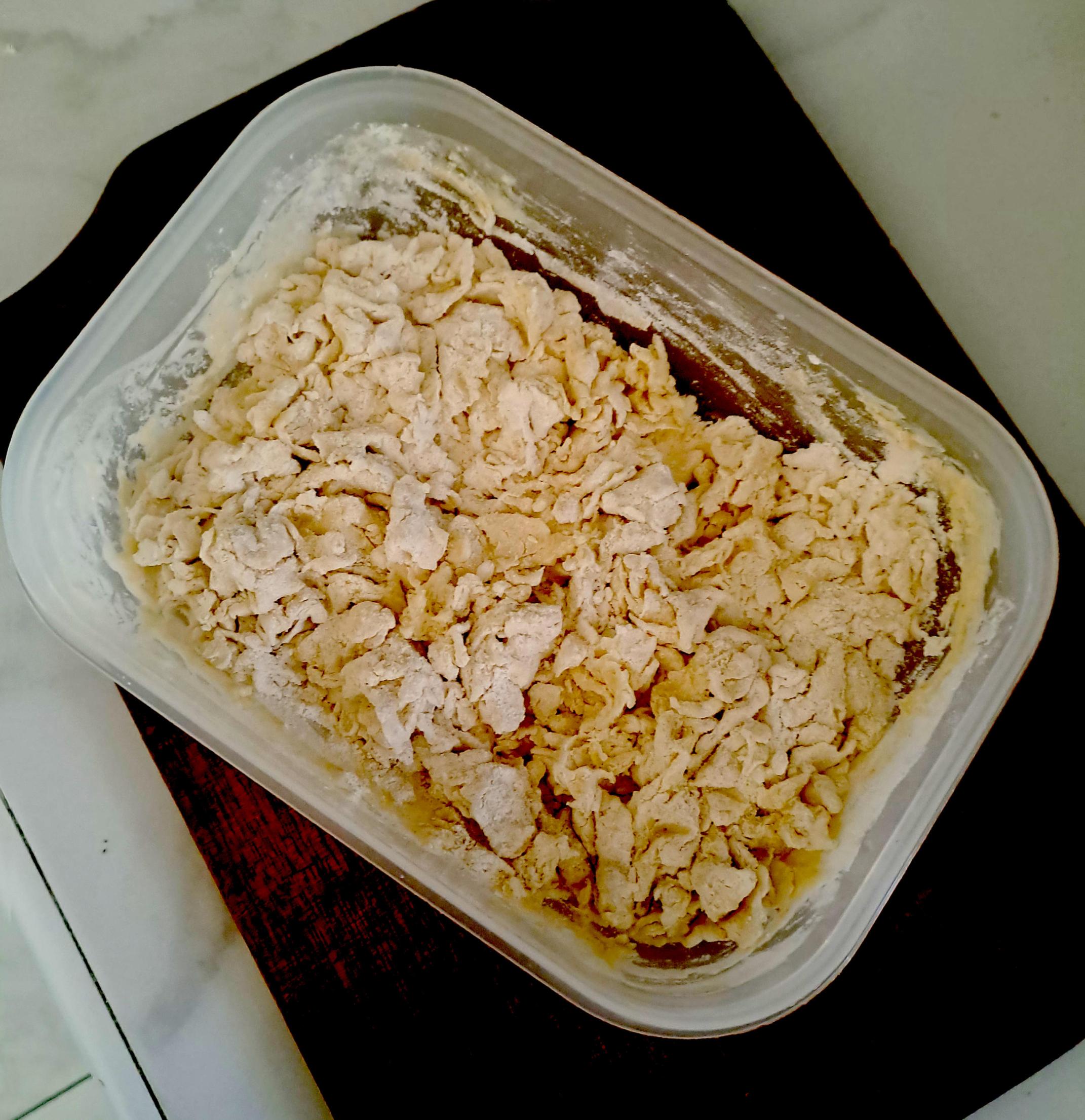
Biga ready for the fridge
Next day, 143-gr of water with 1-tsp of salt went into the fridge along with a separate bowl of 160-grams of flour. Both were chilled thoroughly.
I used a spatula to turn the cold biga out of the tuperware and into the cold water in the mixing bowl. It went back into the fridge for a 30-min soak. Combining the biga and water took about five minutes and it was hard to remove the lumps of biga with a spatula. I might try a potato masher next time. I finally gave up and, ignoring the pea-sized lumps, mixed in the additional 160-gr of cold flour and folded the dough for 4-min to be sure all the flour was incorporated. As per my recipe, I let the dough hydrate for 10-min.
The dough seemed softer and stickier than my previous attempt without biga. The folds, coils and stretches were a little easier but I was still jiggling the dough to make it stretch down from my fingers. I allowed a 20-min rest between Coil-Fold sessions.
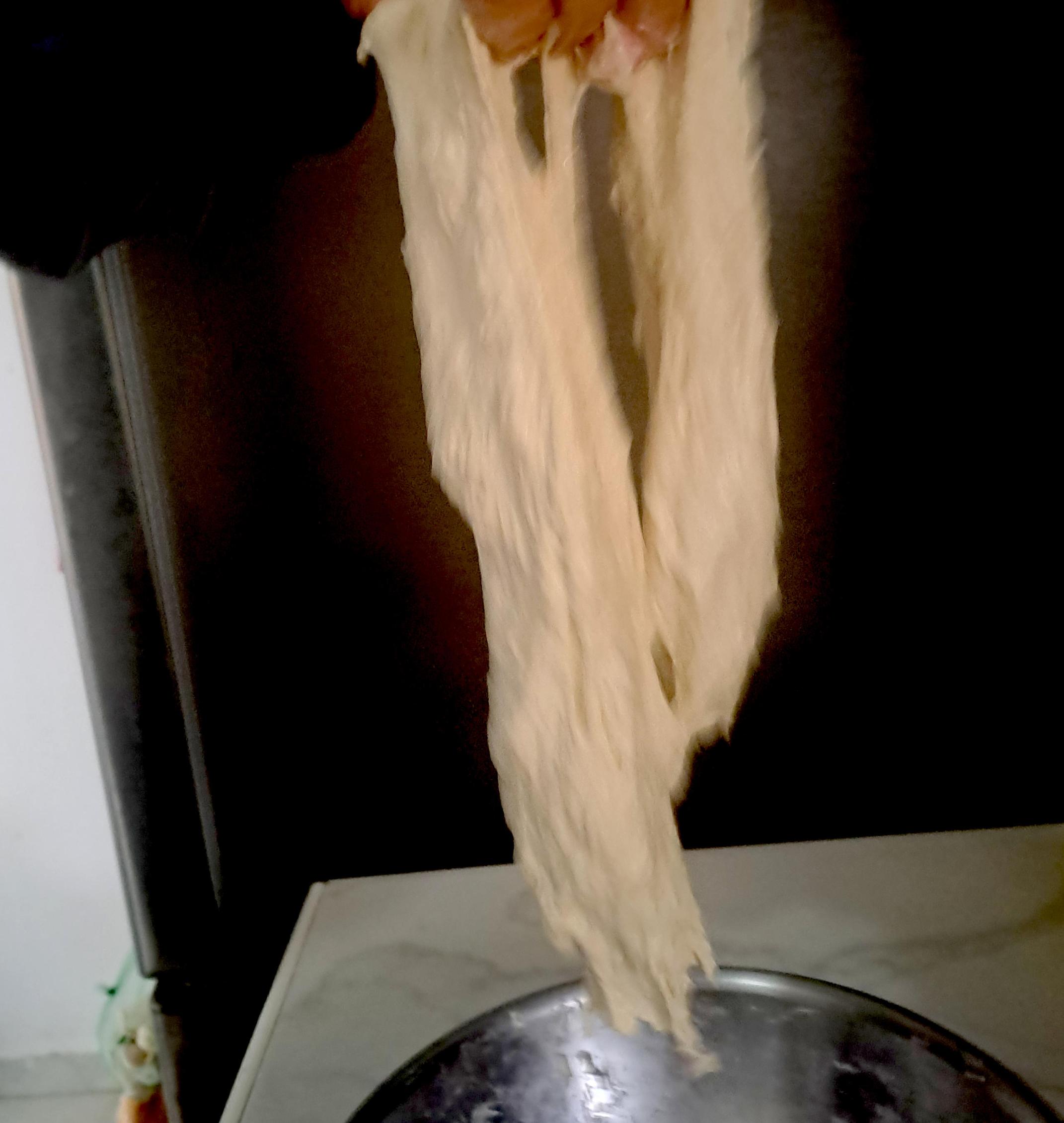
The forth Coil-Fold
So far, no surprises. I placed the dough, along with a control sample, into the fridge.
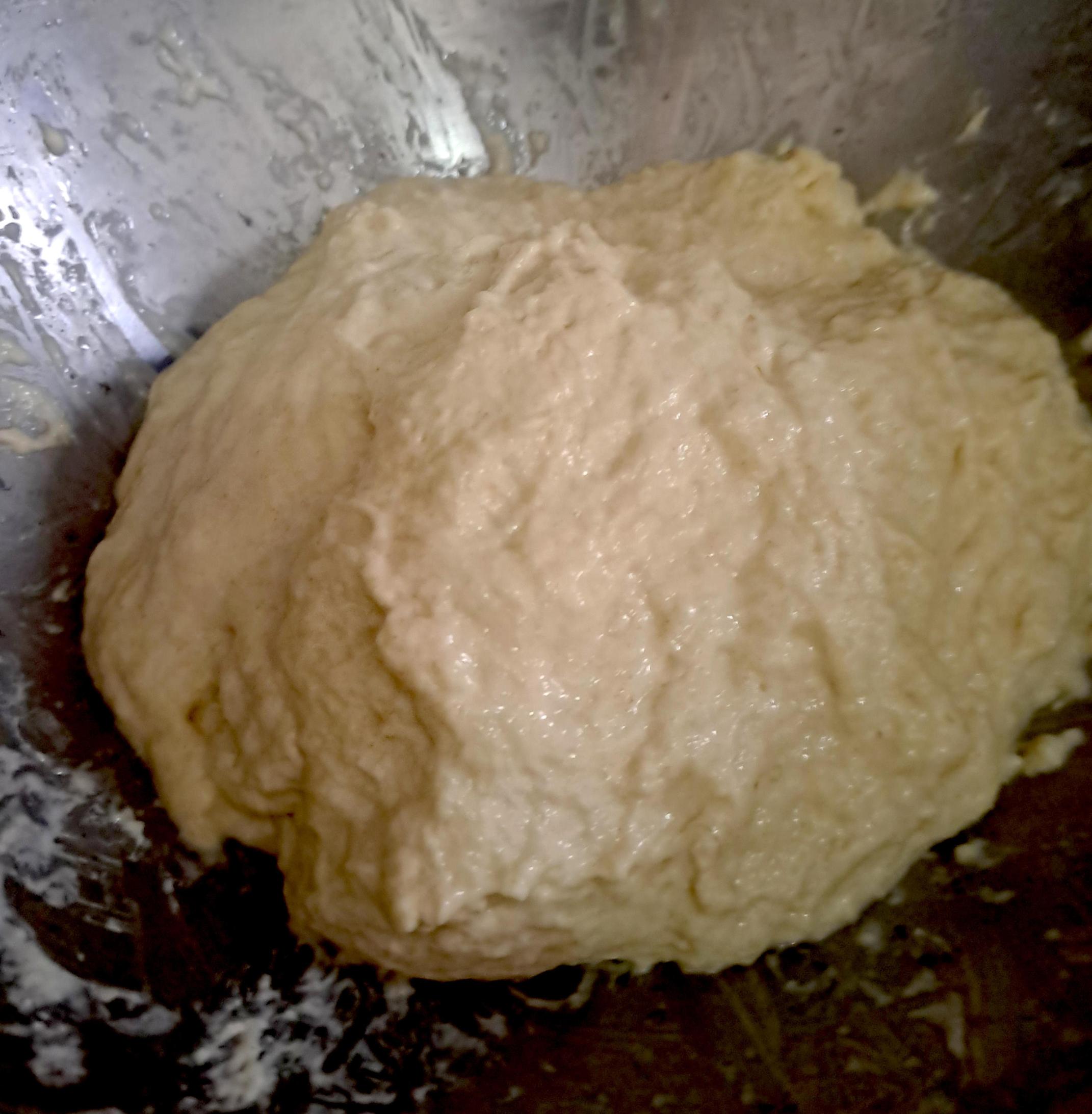
Dough ready for cold fermentation
After 20-hours, the dough in the glass had not risen at all.
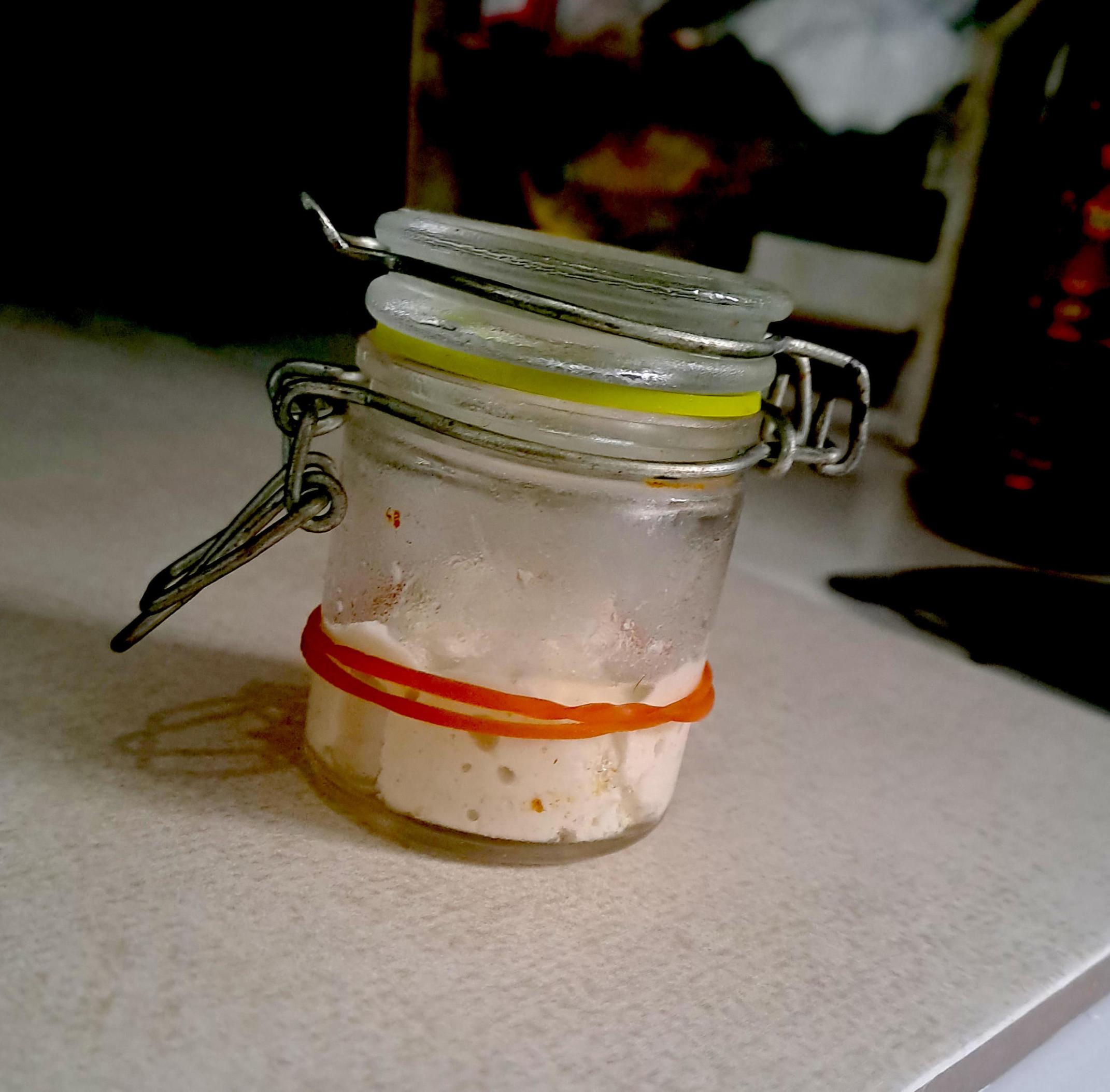
That’s sad
The cold dough in the mixing bowl looked much the same as always, like potato soup.
The dough was similar to my previous attempts: soft but with enough structure for a slow slump but no sign of over-proofing.
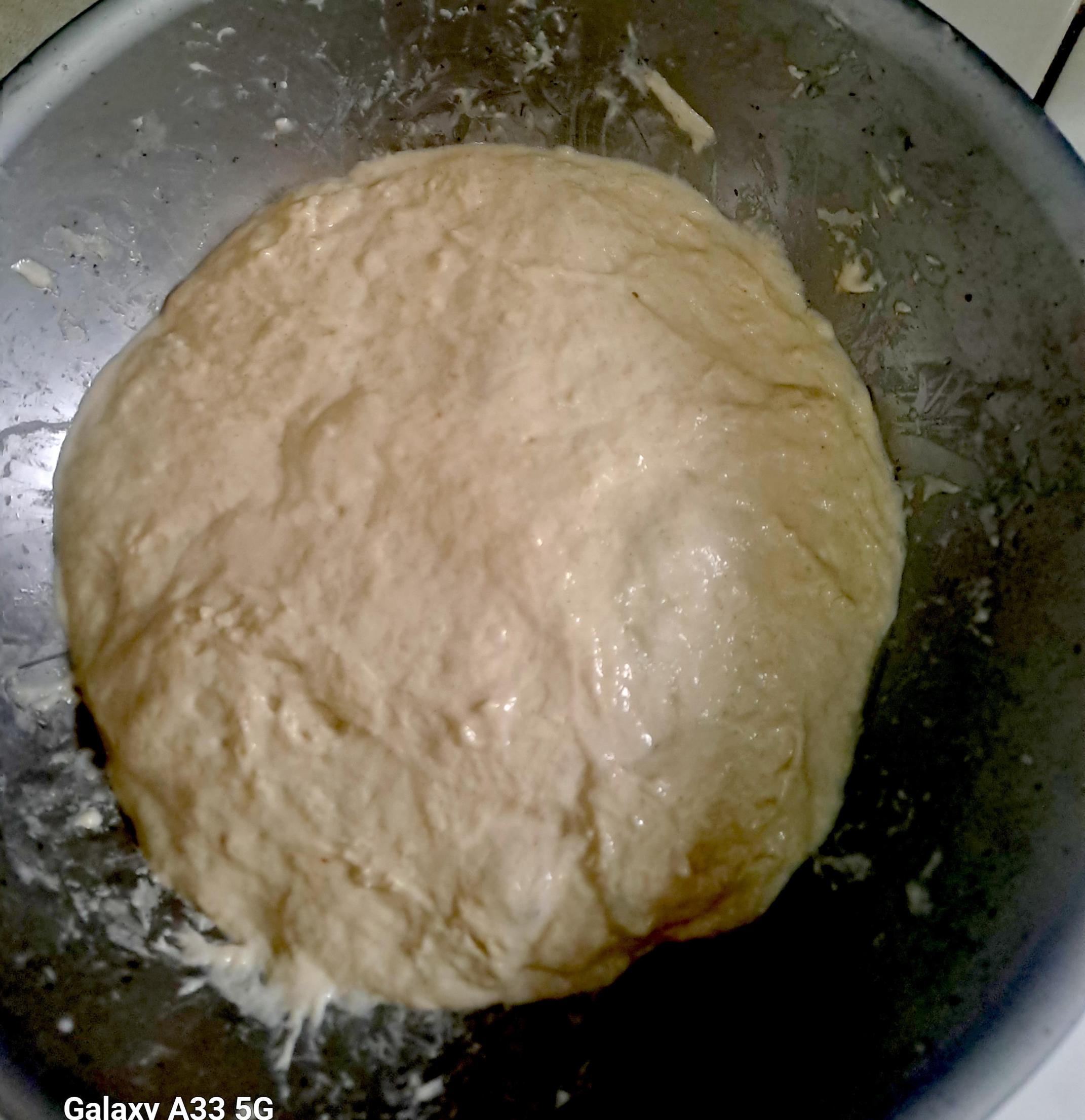
Dough after 20-hours cold fermentation
I turned the dough out onto the peel with little effort, shaped and scored it in a chris-cross as best I could and slipped it into the oven. After removing the cover at the 20-min mark, I could see a definite improvement in oven spring. The finished loaf was a bit lop-sided due to the dough slumping between the peel and the hot cast iron but I was pleased with the overall shape.
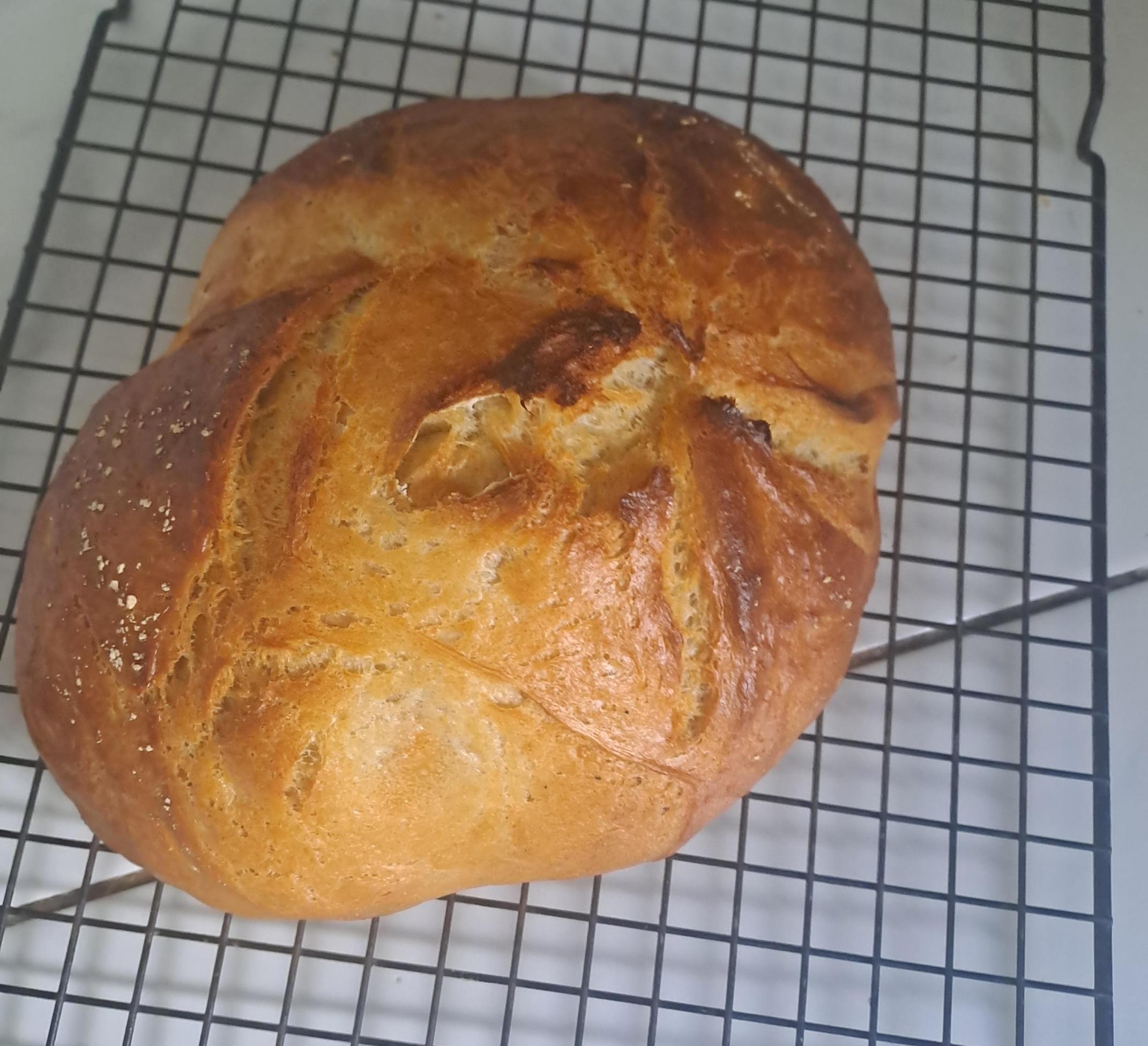
Crust
Unfortunately I lost the open crumb. The crumb is dense and chewy. And the crust harder to cut. My guess is this has much to do with the dough not rising during the cold fermentation.
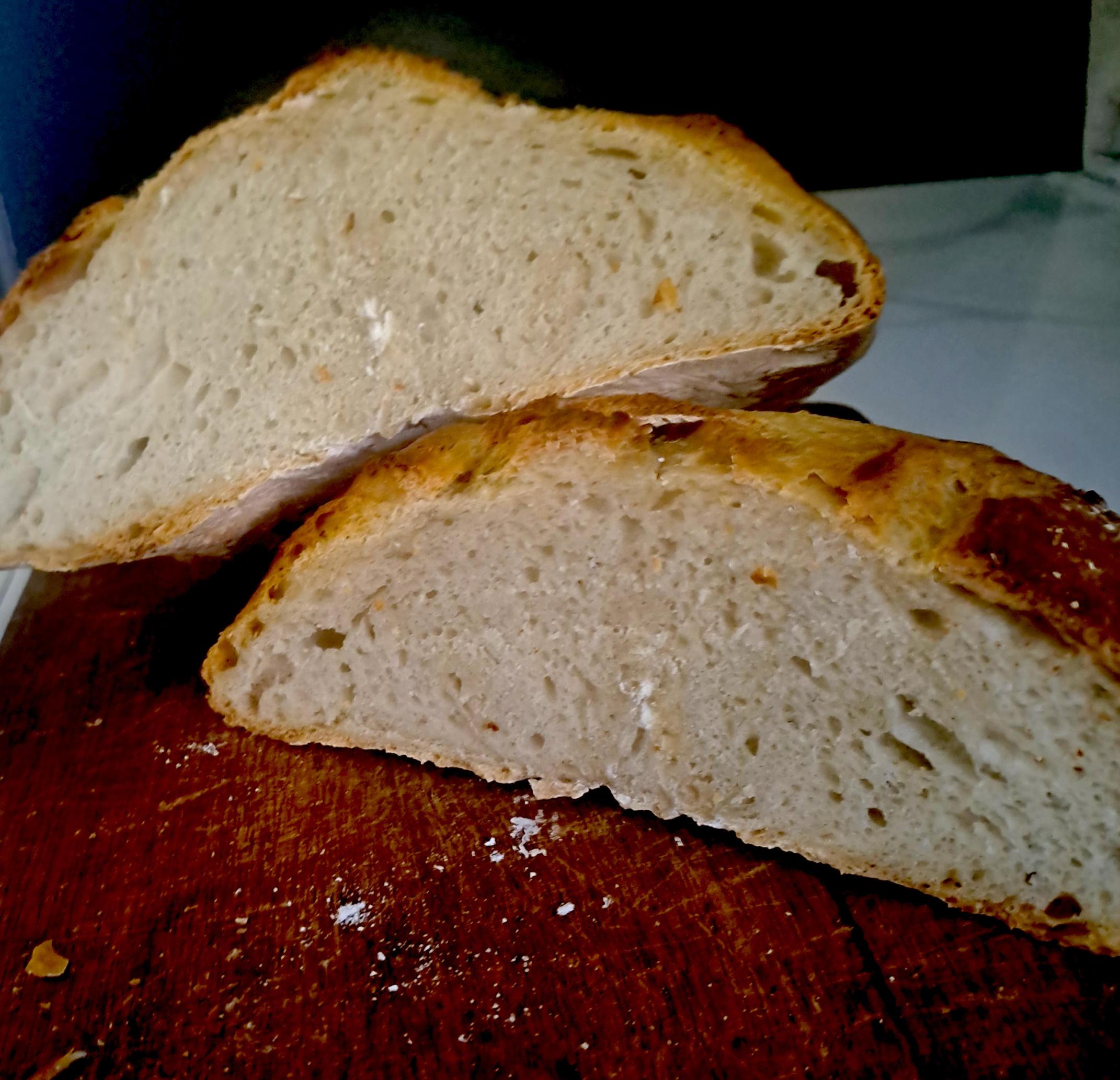
Crumb
Your thoughts, as always, much appreciated.
Katie
That's an interesting experiment, Katie. One thing about refrigerating dough: it usually acts as if it ferments for about an hour after going into the big chill. Then fermentation becomes very slow. Say you wouldn't see visible fermentation after the first hour at room temperature. With only 1/4 tsp yeast I wouldn't expect to see much activity (at room temperature) for several hours at least. So I wouldn't expect to see much activity if the dough went right away into the fridge without waiting that hour. And that's what you observed.
For your flour, the big unanswered question is: if you mixed up a dough without yeast, would it hold up without turning into glop for the number of hours needed to show visible fermentation at room temperature? IOW, is the fermentation itself doing most of the damage, or is it time under hydration separate from fermentation? I don't remember if you have already tried this out.
I too made a biga crumble with weak flour a few days ago and will be posting about it soon. I went to the opposite extreme and put both the biga and the poolish (I put all the flour into those two preferments) in a proofer at 80 deg F for about 6 hours before combining. I refrigerated the shaped loaf overnight before baking. The final freestanding loaf turned out out fairly good. I'm not recommending any particular procedure here. But it does seem that there is plenty of scope for varying the conditions when using a biga crumble.
TomP
Katie, at the end of your last thread you asked if you should use 1/4 tsp of yeast, but did not get an answer. However, in the previous post Rene said, "...with the extra yeast and biga..." you might get a quicker fermentation. It appears he meant 1/2 tsp.
Yes, in the post where he spoke about quantities and method, he advised the larger amount of yeast.