
In my quest to unlock the mysteries of bread-making I ran across a video of King Arthur Martin where he effectively handles a 100% hydration, sloppy dough. When he said “use strong bread flour,” my reaction was to move on. As soon as any of these celebrity bakers mention strong flour, I turn off knowing anything they say from then on will be irrelevant to my situation.
But then I drew similarities in his technique to that of Solano in Brazil who seems to have mastered weak flour so I was curious and took a second look at Solano’s post.
https://www.thefreshloaf.com/node/57279/100-white-weak-flour
Here’s the list of my ingredients and method based on the above:
320 grams of AP flour (small loaf but that shouldn’t matter?)
210 grams of bottled water (for a hydration of 65%— less than Silano’s 68% and way less than Martin’s 100%)
1/4 teaspoon active yeast
2 teaspoons sea salt
I combined the Blanquita brand flour (9.4% protein), with the yeast and salt, then mixed in the 210-grams of room temperature water slowly until I got a sticky ball. I mixed the dough for 5-min to be sure all ingredients were incorporated then let hydrate for 30-min.
I started with a Bowl-Fold, folding sections of dough from one side into the middle, repeating 12 times as I turned the bowl. After, I allowed the dough to rest for 30-min.
Then I did a Coil-Fold, reaching under the dough and stretching the middle upward until the dough began to tear and rolled it onto itself. I did four coils per session for four sessions, allowing the dough to rest for 30-min between each session.
After the last Coil-Fold I left the dough to ferment for 1-1/2 hours before placing in fridge for 24-hours. The next day, pre-heated oven at 500F for 3/4 of an hour. I don’t have a dutch oven but a good facsimile with an iron skillet and tight fitting, inverted cast aluminum bowl. I also have a steamer bowl in the oven and add a couple of ice cubes to the skillet.
The dough had collapsed during the cold fermentation and was full of mouse-holes. I dusted the cold dough ball and turned it onto a floured peel and did my best to shape it into a ball. Scoring it properly was impossible. I dumped it into the oven and baked at 480F, covered for 20-min and because it was rather pale, baked for a further 24-min uncovered.
Okay, it was a useful experiment. The bread turned out better than expected and I was surprised I could handle 65% hydration with this flour. Just have to figure out the bulk fermentation, I think.
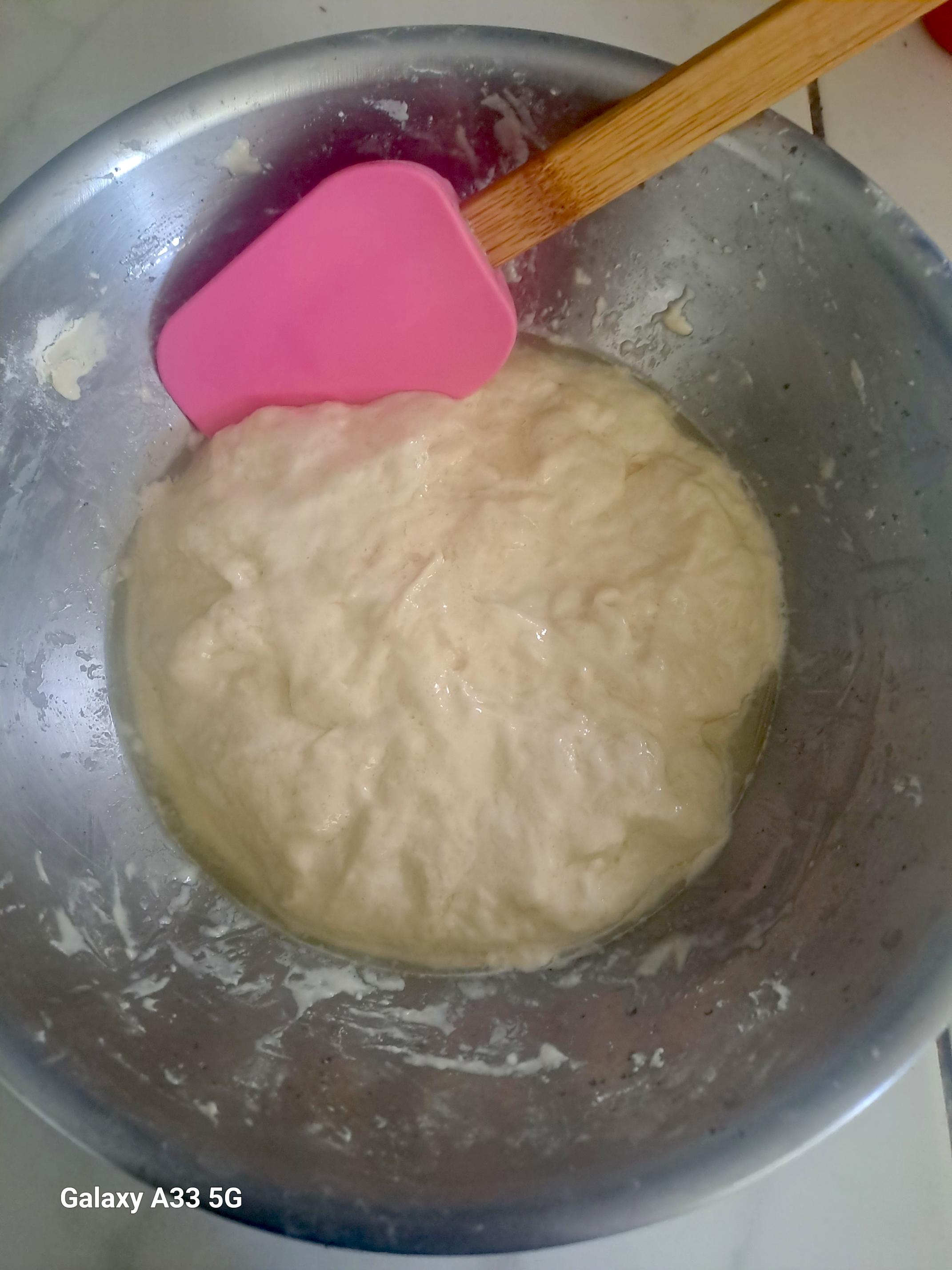
After mixing indredients
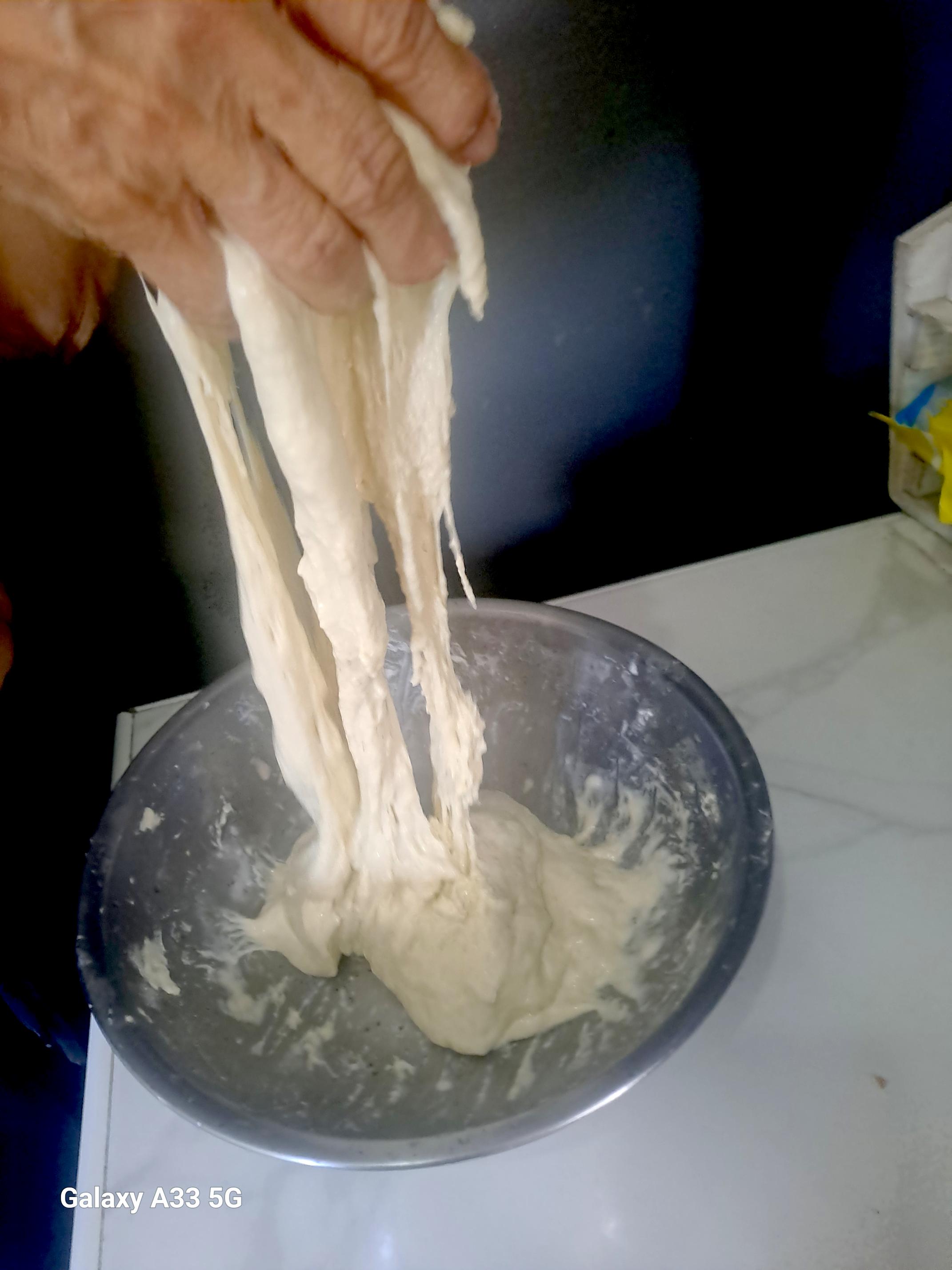
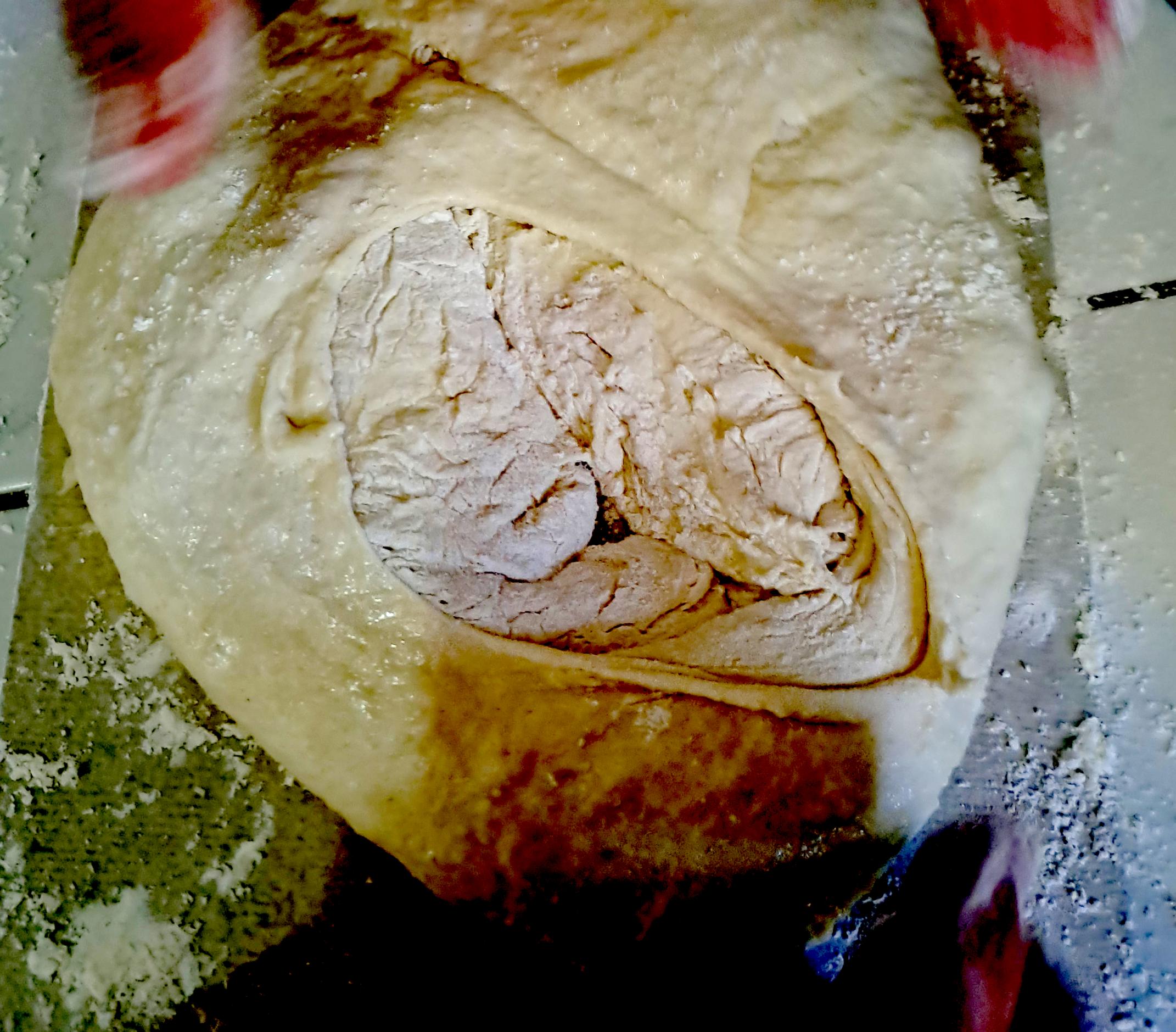
Third coil-fold
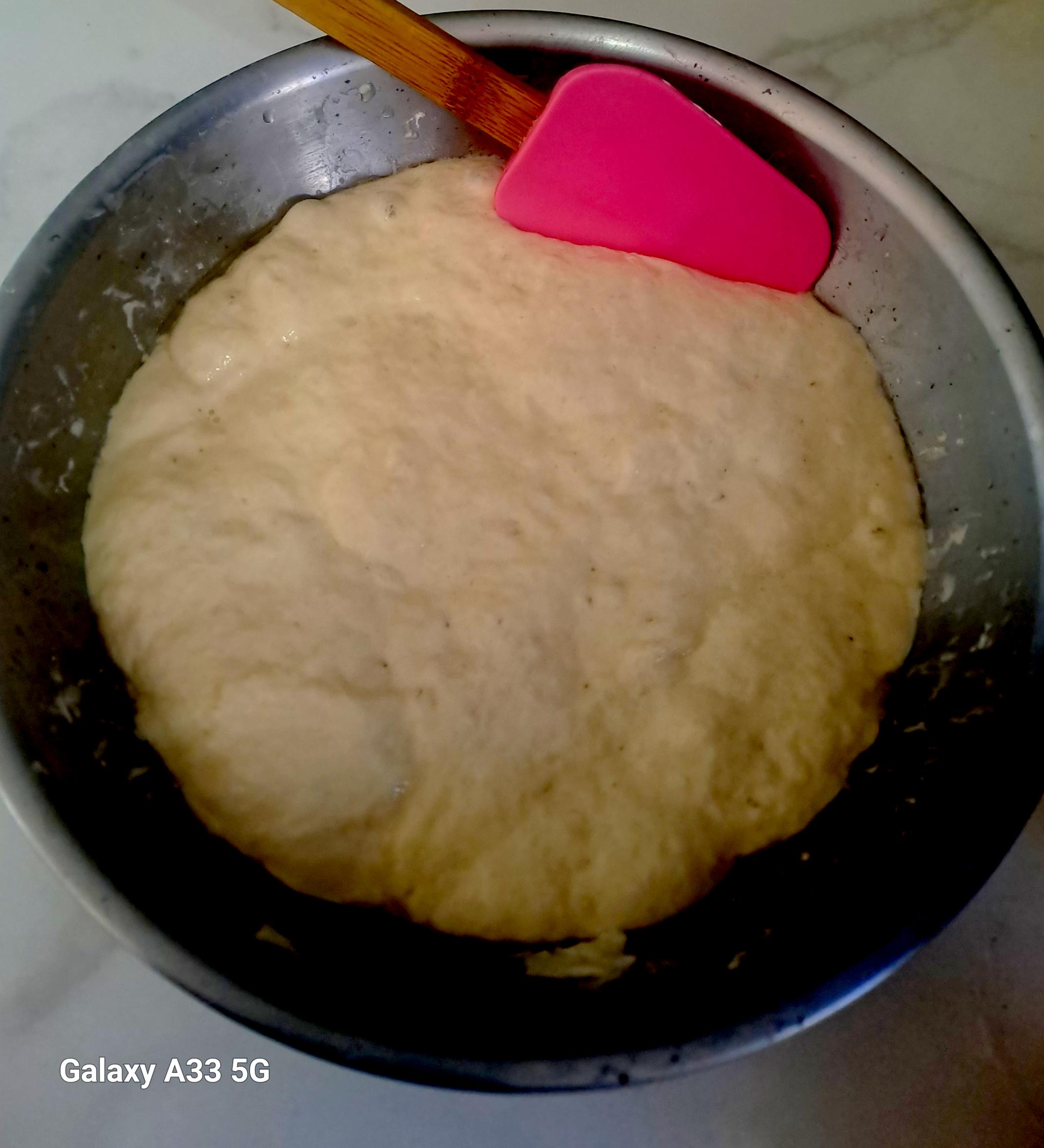
Ready for fridge
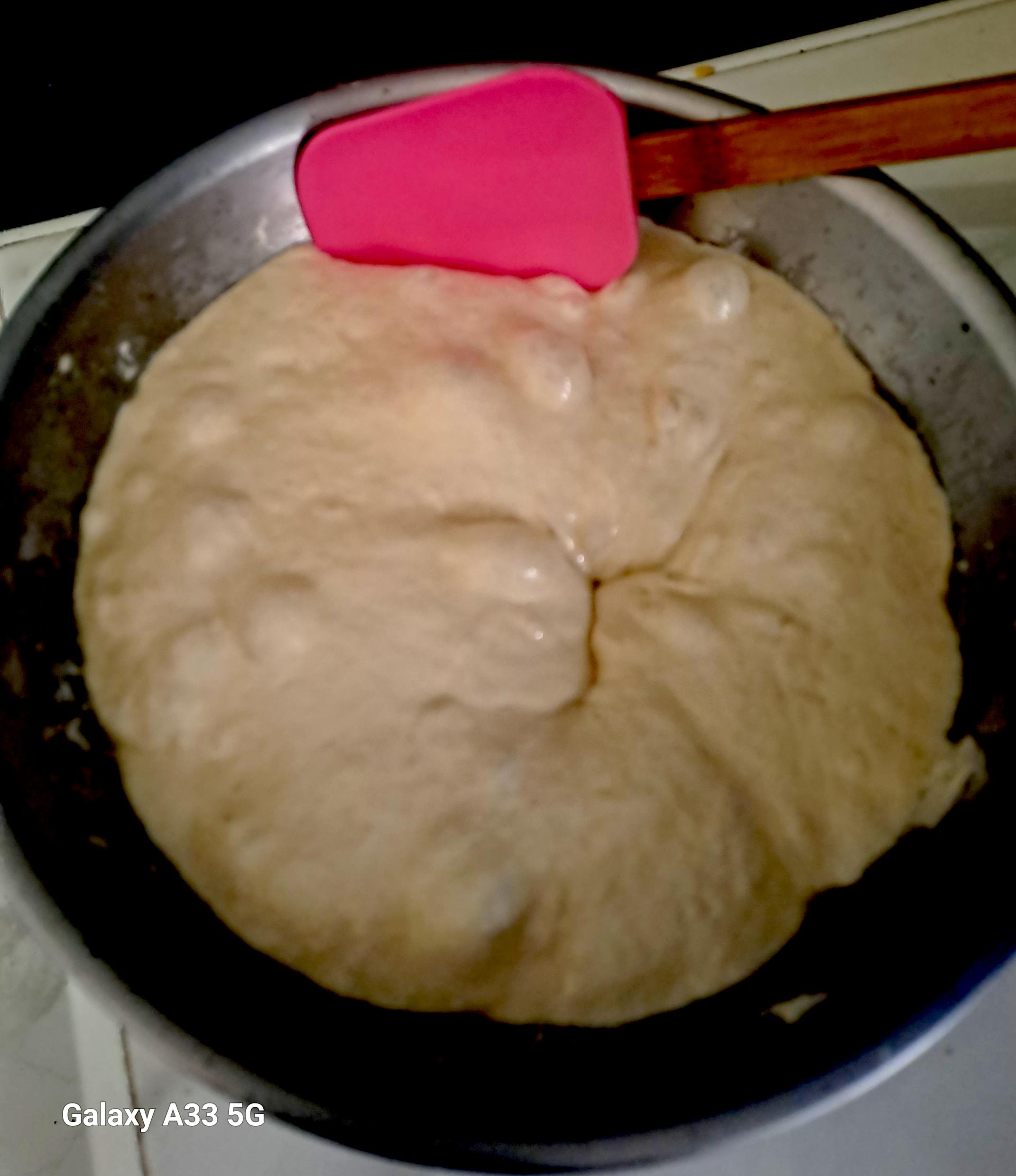
After 24-hours
Over proofed
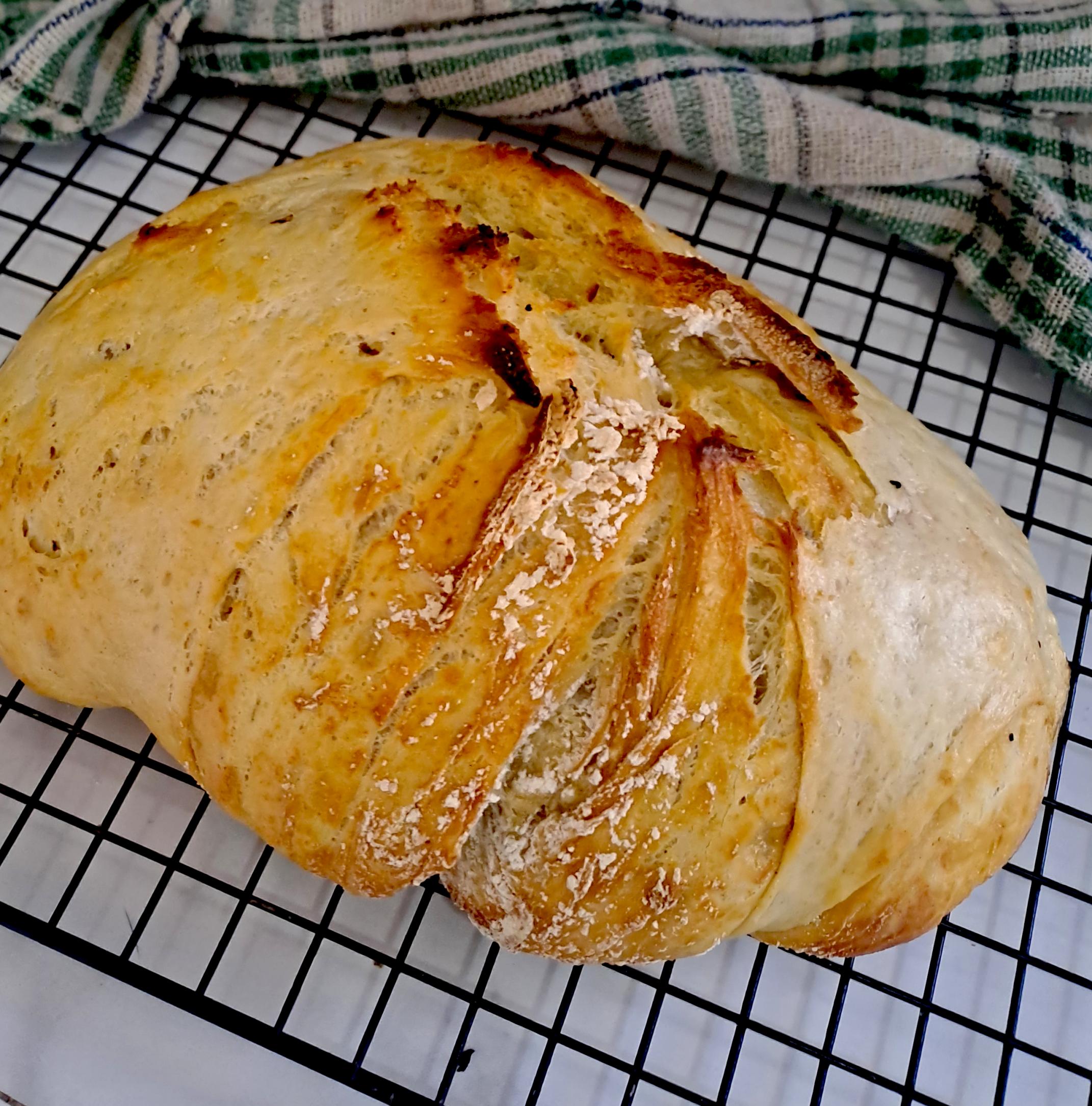
Crust
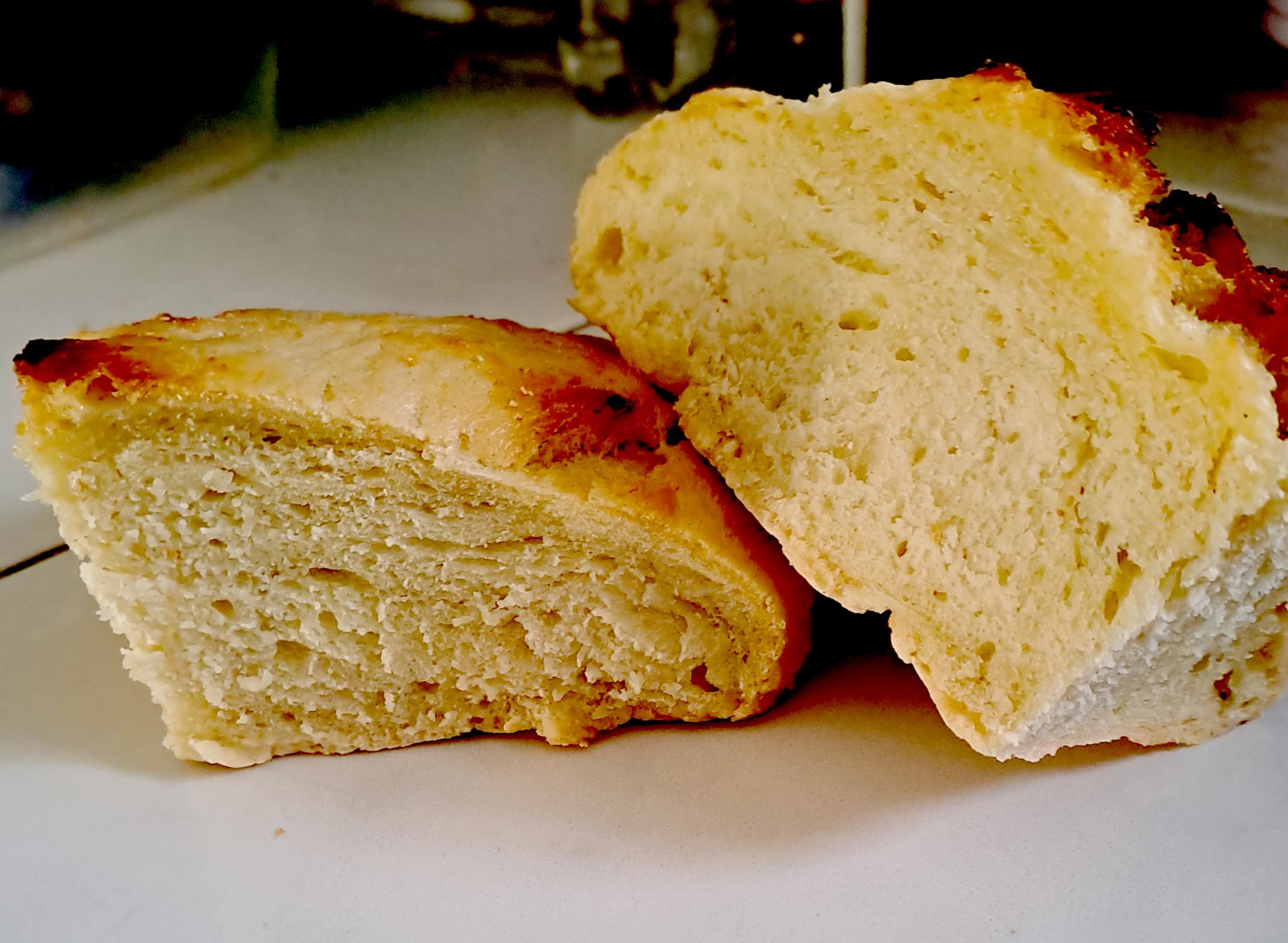
Crumb
NOTES: As expected, the dough was sticky and lacked structure after the 5-min mix. After first Coil-Fold not much development, the dough tore after stretching 6 to 8 inches. After second Coil-Fold there was a small improvement. After third Coil-Fold (see photo), again better but a real cow-pie though the dough was much smoother. After fourth Coil-Fold dough was not much improved and little if any increase in volume. Following 1-1/2 hour fermentation, dough was slack, jiggly and some bubbles had formed on the surface. After 24-hour cold fermentation, dough was jiggly and had continued to rise (see photo), at least doubled in size but over proofed. Comments please...
Katie
Great try, Katie!
I've made Martin Philip's 100% hydration pan de cristal formula many times, with great success. It's a fantastic bread but, yes, it needs higher protein flour. And, also, it doesn't require a cold proof. Nor, it seems, does Solano's recipe that you link to. Pan de cristal takes about 5 hours at room temperature with lots of coil folds. Then you bake it. I cold proofed it once because it was 2 am and the dough still needed a few hours more and I didn't want to stay up all night. Though I salvaged the bread, it was definitely falling into itself when I pulled it from the icebox.
I'm curious what would have happened with your bread if you didn't do the 24-hour cold proof and just baked it as it was after the 1 1/2 hours of fermentation at room temperature.
Rob
Although there was only .23% yeast, a 1-1/2 hr rest followed by 24 hr cold was obviously too much. Solano's dough spent 14 hrs in fridge. I'd say your salt should be halved. It was 11-12g. Next time, I'd lower hydration--heck, bagels are good with 59% hydration, so a good loaf doesn't have to have high hydration. Though 65% is not normally high, with your flour it is.
That being said, how did it taste? Does it make decent toast?
Glad to see you back!
This loaf might not have turned out how you had hoped, but that looks like some major improvement. Great work! Looks like you're headed in the right direction.
Thank you for commenting, Rob. The cold ferment is an effort to provide structure to the dough. My past attempts without the fridge, have left me with a dough that will not roll up into a ball. It just puddles into a pancake in the bottom of my skillet. By refrigerating the dough I can roll it up and get it into the oven before it cow-pies but the result has been a cannon ball. After baking, you need a hacksaw to cut into the crust and the crumb is dense and tasteless.
Katie
thanks, Katie. Here's some thoughts based on nothing but experience & instinct:
and then maybe try baking it after 3 hours in the fridge. Maybe that way it'll be cool enough to shape but not overfermented & slack.
Rob
Thanks for hanging with me, Moe. Surprisingly the loaf tasted pretty good and I could actually cut the crust with a bread knife. And if you look closely, there is the beginning of pockets of air trapped in the crumb. I have been slowly fighting to increase hydration so to reduce it now would be going back to a place I’ve already been. I was pleased to be able to work this dough at 65% so no going back. The over-proofing, if that’s what it was, was a surprise (never had it happen before), so that’s the challenge. And I want your suggestions. Ten minute period of hydration instead of thirty? Twenty minutes between Coil-Folds instead of thirty? Forty-five minute fermentation at room temperature instead of ninety? Would love specifics before my next try.
Katie
Timing of S&F sessions almost never makes any difference. Let enough time go by that the dough had relaxed some (generally 15 or 20 minutes, especially early in bulk fermentation), otherwise do them at your convenience. If your bulk will be long enough, they can even be spaced a few hours apart.
TomP
Thanks for your support, Verdig. It’s been a struggle but yeah, this loaf taught me a lot. I didn’t know whether to laugh or cry when I saw those gaping holes in the dough and it was a close decision between the oven or the garbage bin for that lump of dough. But I baked it and it turned out pretty well and at least, as you said, pointed me in the right direction.
Thanks again, Katie
Rob... Not sure about adding more yeast. Comparing the photos, before and after fermentation at room temperature, I think I have an acceptable rise.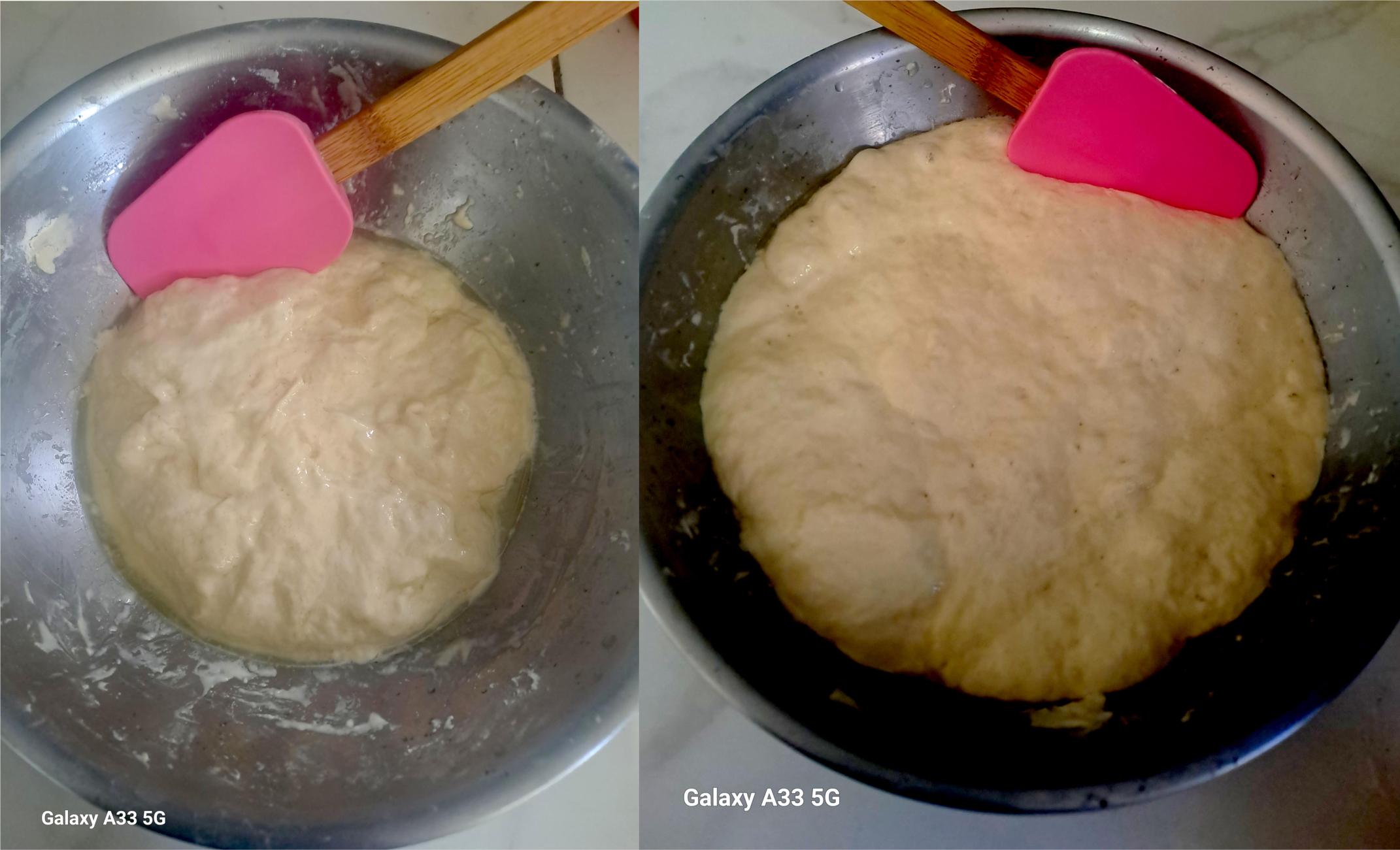
Would adding more yeast firm up the dough? Or are you suggesting that I’ll need more yeast if I cut out the room temperature fermentation and go straight to the fridge.
Katie
The dough in your pictures seems lumpy to me, both before and after rising. Typically for my doughs, after enough S&Fs and enough time in bulk fermentation, the dough looks (and feels) much smoother. For me, this usually happens between 2 and 4 S&F sessions. Sorry, no pics.
Maybe the fast fermentation isn't letting you get to that point. Making the fermentation longer may not work because of the deterioration you've had. That suggests to me that you would do well to make each S&F session longer or more intense. Of course, I'm not there handling your dough so please just consider this idea as a suggestion.
good questions, Katie:
no: more yeast will not firm up your dough. And, yes, you are getting a decent rise in the bowl.
But more yeast will enable things to move quicker. It sounds, from everything you describe, that your major problem is time. According to your schedule, your dough did 3 1/2 hours at room temperature: 2 hours during the coil folds and an hour and a half after that. Doubling the yeast would, I think, give your dough a faster rise. My experience with my fridge is that retarding dough doesn't stop it from fermenting and rising. It simply slows yeast growth and promotes acid development, which adds flavor but tends to degrade dough strength over time. My intuition is that more yeast will speed up lift, allowing for less counter time and a much shorter cold proof.
I have not worked with your flour and so don't know if this will hold true. But that's my thought: more yeast might sacrifice flavor a bit, but it might give you a somewhat more stable loaf in a shorter amount of time.
Rob
Hiya Tom. And yes, I’m thinking maybe a twenty-minute rest between Coil-Folds would be sufficient. I was going strictly by Solano’s findings but the over-proofing took me by surprise. I obviously have to cut back somewhere, the room temperature fermentation I guess. I don’t know...
Katie
...if you are trying to follow Solano's process, cut refridge time from 24 hrs to 14hrs. That's where the overfermenting happened, no?
Yup! It didn’t look like a brain surgeon’s nightmare going into the fridge. I only went with 24-hours because it fit my schedule... make dough at noon... bake at noon... ready for dinner. Who knew that bread could be so touchy :-)
Any thoughts on the 1-1/2 hour fermentation at room temperature?
Thank you, Moe
Katie