SearchUser loginRecommended BooksFavorite Recipes
|
Submitted by Susan on October 13, 2009 - 12:54pm Simple AP Sourdough
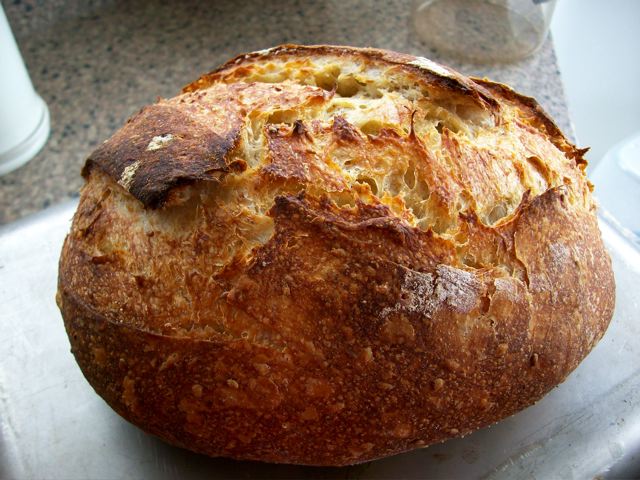
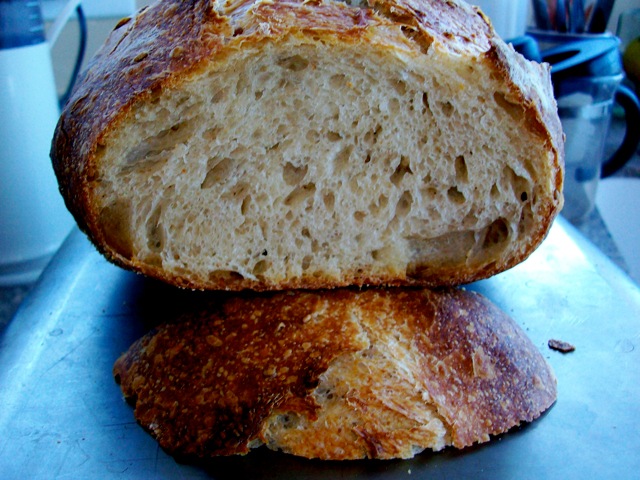
Here's the AP version of my usual sourdough. It's 61% hydration. Next time I'll stretch the hydration to 65%. Trial and Error. It includes 20g of dry brown sesame seeds and 25g of whole wheat flour. I like a more chewy crumb than this loaf provides, but for those who want a crispy crust with a soft crumb, here you go:
Susan Submitted by Susan on October 10, 2009 - 11:22am Prescott Flaxseed Sourdough
Same old recipe, tweaked a little for the seeds. I keep learning more and more, thanks to everybody here. This one's named Prescott, as we're up the hill in Arizona for a short while. Here's the way I did it. It's only one way, so bake how it suits you and your location, temp, flours, etc. 20g whole flaxseed and 55g warm water, soaked for about 30 minutes before starting dough 50g firm starter 175g water 275g KA Bread Flour 25g whole wheat flour 6g salt Mix starter and water, add all of flaxseed mixture, then add flours and salt. Mix minimally by hand just until flour is wet, rest for 30 minutes, one Stretch & Fold, two more S&Fs at 1-hour intervals, let rise to double. Keep the dough temperature in mid-70'sF during fermentation. Pre-shape, rest 15 minutes, shape, then overturn into linen-lined basket. Put in plastic bag, then into fridge for overnight. Out of fridge for two hours before scoring, loading into oven, and covering. Oven preheated to 480F, then lowered to 440F after 3-5 minutes. Bake 20 minutes covered, 15 minutes uncovered, 5 minutes in turned-off oven. Note: You can retard this dough in an oiled bowl after folding, if you like, and continue in the morning. Submitted by Susan on September 29, 2009 - 10:29am Simple Sourdough (9/09)50g firm starter, 204g water, 275g high gluten flour, 25g white whole wheat flour, 6g salt. All mixed minimally by hand, rested for 30 minutes, one Stretch & Fold, two more S&Fs at 1-hour intervals, let rise to double. Kept the dough temperature in mid-70'sF. Pre-shaped, rested 15 minutes, shaped, then plopped into linen-lined colander. Put in plastic bag, then into fridge for overnight. Out of fridge for 2 hours before scoring, then baked at 450F for 20 minutes covered followed by 20 minutes uncovered.
Submitted by Susan on July 18, 2009 - 5:09pm Black & Tan Sesame Seed Sourdough
Sorry, no beer in this one, just black and tan sesame seeds! The very warm weather has impacted my breadmaking, too. Starter and dough were taking off way too fast, but using cold water slows things down enough. I used 50F water yesterday evening to mix this loaf. I should have used sesame oil rather than olive oil. 15g Starter, 210g water, 1 tsp EVOO, 25g KA WWW, 275g All-Trumps, 6g salt, 2 T mixed sesame seeds Mix by hand in the evening, rest a few minutes, fold in the bowl a few times. Leave overnight at 60-70F, fold whatever it needs in the morning, shape, proof and bake. Simple bread. Submitted by Susan on June 24, 2009 - 12:30pm Overproofed Loaf Example
This little loaf is a perfect example of overproofing. This is not a good thing. Note the light color of the crust, the short stature, the spreading, and the more biscuit-like crumb. I made a pizza with half the dough, and forgot the rest for a few hours. A little bird told me to go ahead and bake it, but being hard-headed, I shaped it and put it in the fridge for the night. You see the result. My apologies to the little bird for not following her suggestion. Susan from San Diego Submitted by Susan on June 21, 2009 - 9:44am Starter Live and Learn (Supposedly)I TOLD myself to be ready for the change in weather, but it tripped me up once again. I wasn't taking the warmer weather into account when refreshing my starter. So lately it was way on the downhill side before I was using it. Big mistake, as my loaves have been somewhat flatter and somewhat more dense, though certainly edible. But I'm back on track now, as evidenced below. Thought I'd better document this here so others can learn from my errors.
80g firm starter, 200g water, 275g HG flour, 25g WWW, 7g salt Your somewhat slow bread buddy, Susan Submitted by Susan on May 11, 2009 - 9:45pm 63% Hydration SourdoughA pretty loaf; more fluffy crumb and less sour than my Ultimate loaf, well-risen, excellent thinner crispy crust. I suspect retarding overnight would increase the sour somewhat. 60 grams 100% starter Mix starter and water, add flour and salt. Mix until rough. Cover and rest 10 minutes. Fold from bottom to top around tub. Cover and ferment until doubled (~7 hours@lower 70'sF). Stretch and fold. Let relax. Shape and put in linen-lined colander until floured finger leaves an indentation (~2.5 hours). Place in 530F oven, covered, for 10 minutes. Reduce heat to 430F. Remove cover at 20 minutes. Continue baking for 12-15 minutes. Turn off oven and leave for 10 minutes. Cool on rack.
Submitted by Susan on May 9, 2009 - 11:16am Here's an H-G flour SD Recipe, MonstergirlHigh-Gluten Spring Wheat flour is what I use for all my sourdoughs, Shannon, and using it tends to make a stretchier, chewier loaf, which is what I want. H-G flour is a step higher in protein than bread flour. Don't know if you are making sourdough, but if so, here's a simple recipe: 50g starter 210g water 300g High-Gluten Flour 6g salt Mix the starter and water in a small plastic tub,* add flour and salt, mix until rough. Cover and let sit 10 minutes. Using a wooden spoon, fold the dough from bottom to top around the tub. Cover and let rise until the dough has doubled in volume. At this point, turn it out on your oil-sprayed counter and envelope-fold it. Fold it two or three times, letting it relax between foldings. Each time you fold, it will become easier to handle and will hold its shape better. Now, shape the dough and leave it to rise either on the counter with parchment underneath or in a banneton (or linen-lined colander or bowl). When you can poke your floured finger into the dough and the imprint stays, it's time to bake. Pre-heat the oven to 500F, then turn it down to 460F after you load the bread. There are several options for steaming bread. My fav is covering the bread for the first 20 minutes with a stainless-steel bowl. Total time in the oven will be about 30 minutes. Let the bread brown as much as it can without burning. Don't cut the loaf until it has cooled. *If you use a small tub (such as a 2-lb yogurt tub, which is what I often use), the dough will half-fill it, and when it doubles, the tub will be full! Cool, eh? Remember to have fun. Susan from San Diego The below loaf has 25g rye flour substituted for 25g of the HG flour:
Submitted by Susan on March 13, 2009 - 10:11pm Sprouted Wheatberry SD
Here's an example of another loaf using the same basic recipe as the ones below. In this case, I used all white flour and added barely sprouted wheat berries which I ran through a mini food processor. Turns out it won't be a favorite of mine, but that's okay. I tried it. (My fav, so far, is white flour with 25g rye or whole wheat and 2-3 Tablespoons of dry steel-cut oats thrown into the mix.) It doesn't take much to make a decent loaf of bread. I own a KA mixer but never use it for my bread, I just threw away my baking stone, and I let the bread do its own steaming by covering it with a bowl or roaster lid for the first 18-20 minutes of baking. My usual implements are a scale, a cheap round plastic tub with lid, an old bamboo chopstick, a bench knife, a plastic colander with a linen cloth laid inside (sprinkled with flour and a bit of rice flour), parchment (used for more than one loaf), a heavy 14" pizza pan, a large ovenproof bowl, and my oven. Many of these items came from thrift stores. I feel fortunate to have a Miele oven, as it really holds the heat. The first and most important item is your starter. If it's not fresh and active, then you've begun with a huge handicap. The rest is practice, practice, practice. Try not to get frustrated when a certain recipe doesn't work for you. Your temperature, humidity, starter, flour and water are all different from everyone else's, so just relax and go with the flow. Make the same recipe over and over until you get it just like you want it. Then try different flours. I use mostly high-gluten flour because that's what I like. You might like All Purpose, Bread flour, or Whole Wheat or Rye better. But each of these will require changes in water and/or handling, so be prepared. If you've hung around this long, thanks, and I hope my words help you. Susan Submitted by Susan on March 13, 2009 - 9:02pm Onion-Poppyseed SD
75g firm starter 210g water 25g ww or rye flour 275g high-gluten flour (if using bread flour or AP, adjust the water) 1/2 ounce dried onions (soaked in hot water for a couple of hours, then drained; use the water drained from the onions as part of the water in the dough) 3 tbsp poppy seeds 6g salt Mix starter and water, add the rest and mix, wait 20 minutes, *fold in the bowl, wait 10 minutes (3 or 4 times from *), cover and refrigerate overnight. Remove from fridge, flatten on lightly oiled counter, *envelope fold, cover with bowl, wait until dough relaxes, maybe 15 minutes (3 or 4 times from *), let rise until when snipped with scissors you see a holey network (thanks, Dan Lepard, for that hint). BTW, the last two times the dough is folded, round it up well. Turn the dough ball to create surface tension, let rest for 5 minutes to seal the bottom, then overturn into a banneton. Let rise for ~3 hours at room temp. Turn out onto parchment, slash, spray with water, load into 500F oven, cover, bake for 20 minutes, remove cover, lower heat to 460F and bake for 10 minutes. Turn off oven and leave for 5 minutes. If you'll notice, this recipe is basically the same as the Faux Deli Rye, I just twisted things a bit here and there. |
ALSO ON |