
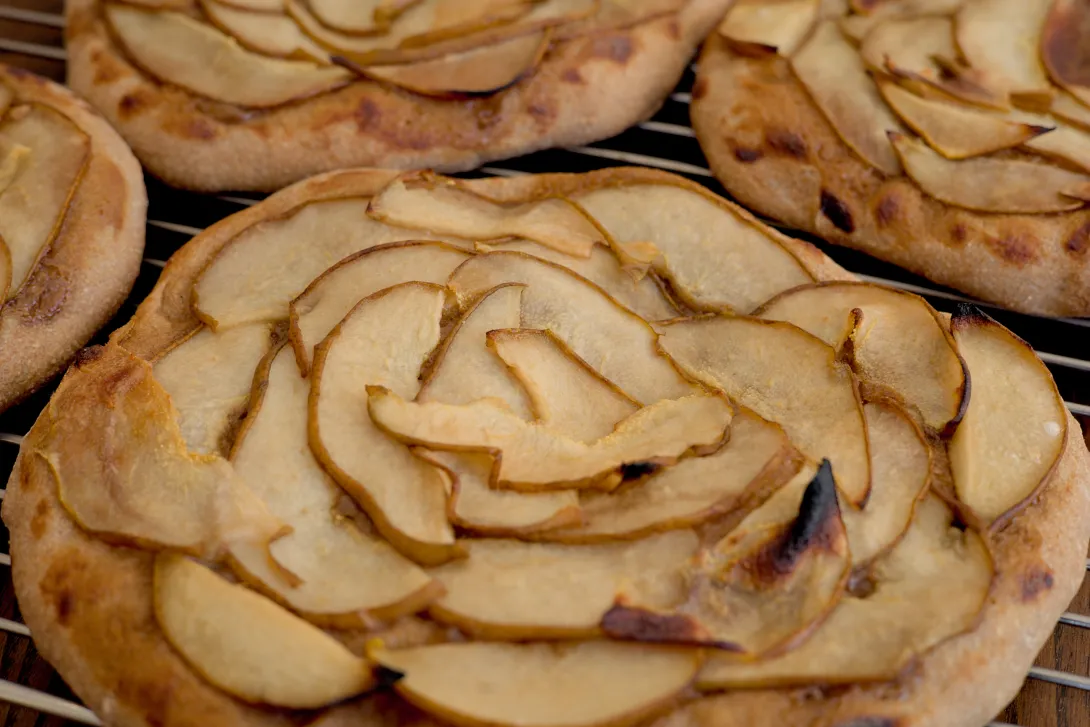
It had been a while since I'd gotten myself into trouble with baking, my long-awaited mixer was washed and waiting for its inaugural batch, and I had 15.4 pounds of pears on hand. So, naturally, I made pear pizza with a spiced butternut caramel sauce.
THE MIXER
I've been enduring kneading dough with a food processor since 2024. While mine does a phenomenal job developing gluten, it's only willing to do so within a narrow hydration range and for no more than 280g of dough at a time. To get the sandwich bread I want takes about 90 minutes of *active time*, from pulling the autolyze out of the fridge to starting bulk fermentation, at which point it still needs 3-4 folds at 10 minute intervals to correct an issue from my workaround to the hydration limitation. And it still requires an exceptionally messy 15 minutes of hand kneading.
After a year and a half of that, I'd had enough. It was time to purchase an appropriate appliance for 100% freshly milled wheat doughs.
For a long time, I was torn between the BUP and the Nutrimill Artiste. As much as I would like the fancier toy, I ultimately went with the Artiste for the smaller footprint (it barely fits in its home as-is) and because I suspected I'd end up ordering a bottom drive bowl in either case, which would make the BUP more of an investment than I want to sign myself up for at this point.
With just one use, I can safely say that the Artiste is a far superior tool for the job than a food processor. Figuring out how to re-work my methods to fit it may take some time, but so far I'm absolutely delighted. If not for all my unnecessary futzing around with the new machine, the dough would probably have taken under half an hour from time of measuring ingredients to the start of bulk fermentation — and my hands were clean enough throughout that I could actually *do other things!* Comparatively speaking, it was a dream.
For the first time in many months, I'm looking forward to baking again.
THE DOUGH
Usually I add VWG and an overnight, refrigerated autolyze, but since I've never used this sort of machine for dough before I decided to follow along with a more tested process.
Using this pizza recipe from Grains in Small Places as a reference:
460g RHW (spring Yecora Rojo)
354g water, of which 50g reserved for bassinage
28g toasted walnut oil
6.5g IDY
>7g salt (I was aiming for 1.5%, overpoured, then couldn't be bothered to correct it or note where I ended up)
Mixed all but reserved water and kneaded about 8-10 minutes. 10 minute rest, more out of curiosity than for any purpose. Then ~8 minutes more kneading with bassinage.
The bowl became very messy with each addition of water, but only for 40 seconds or so before the dough collected itself again. Which is about what I expected.
I suspect that the overnight autolyze will be more beneficial to gluten development than an overnight BF. But that's something I'll have to try another time.
I did the windowpane test at several points throughout this process. I wish I could say what the results were, but the gluten in Yecora Rojo (or at least my current batch of it) behaves in ways I don't have the experience to interpret. Early on, it did not pass the WP test, so I kept kneading. Then it did, but not as well as I'd like, so I kept going. Then it made a great windowpane and turning it out into another bowl left long, ropey strands of gluten stretching close to a meter as I tried to get it to release from the Artiste's bowl. Then after a few rounds of 10 minute rests in the fridge with folds in between (to equalize dough temperature), there was no windowpane.
This is only my third time working with Yecora Rojo sans VWG. I'm sure if I didn't use that so much, I'd be better able to interpret what was going on. What I can say is that industrially produced flours which mix wheats from various harvests sure do a lot for consistency (consequently, so does VWG), and my batch of Yecora Rojo is very extensible but low in elasticity, behaving similarly but not identically to the spelt I've handled.
It slackened notably but not egregiously during proof, which is consistent to my prior experiences with Yecora Rojo. Freestanding bakes may warrant some consideration and deliberate adjustments or techniques.
While I need a lot of practice with pizza shaping -- not to mention time spent looking up how one ought to do so in the first place -- the dough was somewhat concerning while being stretched. It was prone to tearing on the surface and did not have nearly the extensibility I was expecting from prior experiences with YR; possibly this dough is a lower hydration and/or there was an ambient temperature difference (previous bakes were in the summer, and these days it's generally single digits F outside.) Or, the doughs I'm comparing this one to did not have oil; I don't recall.
For now, this bake leaves me with some mysteries to explore further down the road.
THE TOPPINGS
I sliced the pears ~2mm thick and dehydrated them at 150F while the dough proofed, around 2 hours. They ended up tacky on one side and still wet on the other. I arranged them tacky side up on the pizzas, but between the scorching and the slightly too-wet consistency of the dough beneath the sauce, I think they would be better flipped the other way.
Despite what I "named" it, the sauce is not sophisticated. After cooking butternut squash in my Instant Pot, I reduced the cooking liquid to the point that it caramelized slightly. This sort of reduction, caramelized or not, is a nice and interesting sweetener that I've enjoyed making from sweet potatoes and various fall squashes. Basically, if the liquid left over after cooking tastes good, I've found that it's worth reducing and using somehow if I'm going to be hanging around in the kitchen anyway. And while I normally try to avoid added sugars (and this absolutely qualifies), I'm not too bothered by this type since I'd be eating those calories anyway if I instead baked the source food. Also, there is probably a nonzero amount of soluble fiber and/or minerals in there.
Note that counterintuitively, I find such reductions to not be all that good when used to top the food they originally came from. The flavors blend together and the reduction ends up being invisible flavor-wise. Though for purposes like slightly sweetening cranberry jam or vinaigrettes, it provides a nice twist.
To make such a reduction into a caramel sauce, reduce and caramelize the cooking liquid, add whatever milk-type liquid you prefer along with any spices, then reduce again to desired consistency. It will become considerably more viscous after cooling.
I added cinnamon (Ceylon), cardamom, nutmeg, and ground ginger. If I were doing this again, I'd probably skip the cardamom and maybe the cinnamon, since they did not come through. The ginger was definitely important for balancing the harshness from the particular butternut squashes I had this time.
THE PIZZA
The results:
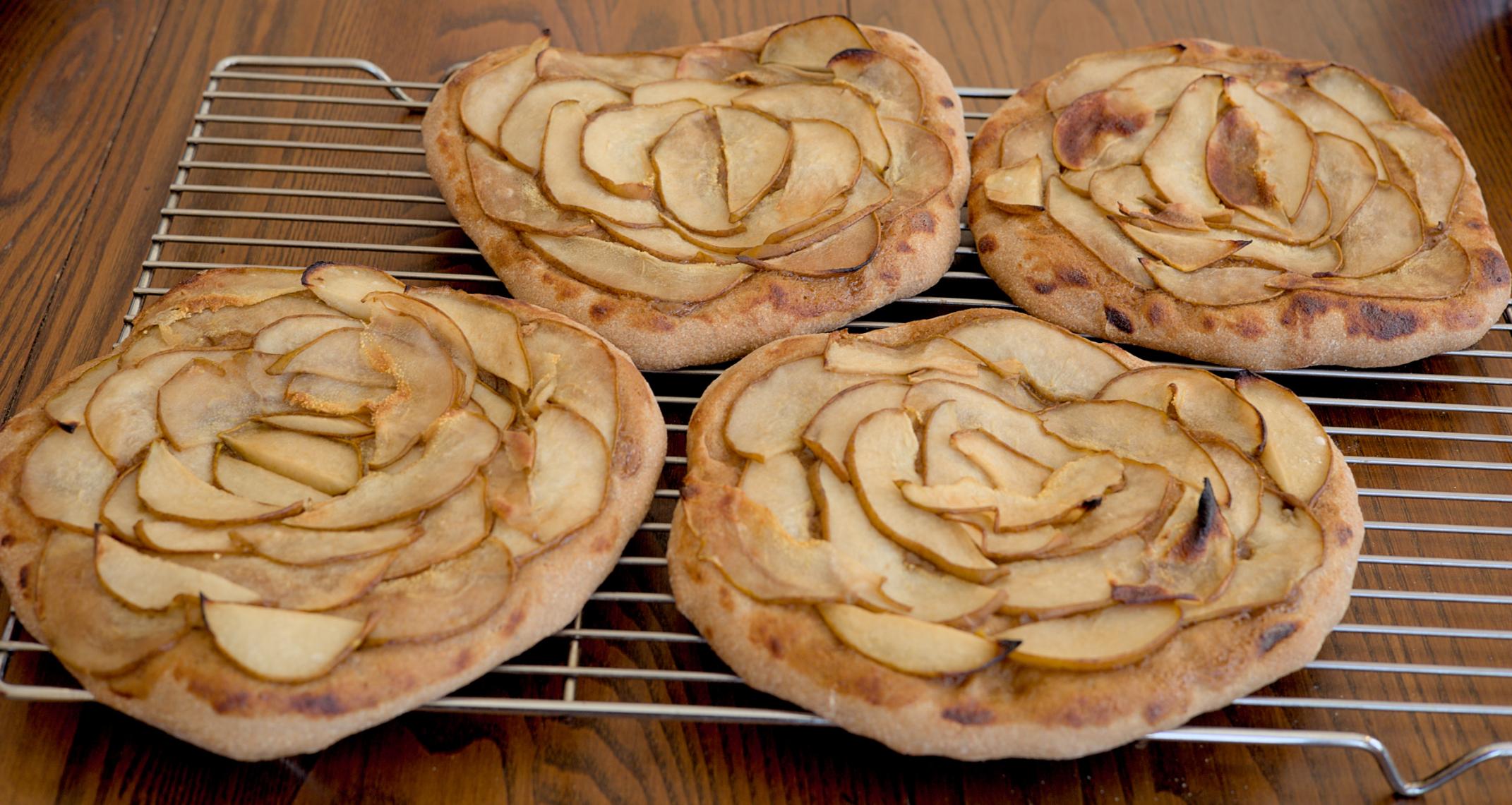
When it comes to pizza, all I really want is a big, fluffy flatbread, a bready aroma, and that particular texture that the dough gets under the sauce and toppings. On the first two counts, this was fantastic. The dough remained a tiny bit too wet under the sauce for me, though. Most people wouldn't think anything of it, but I'm after something very specific and this didn't get there.
Next time I try something similar, I'll see if further limiting the moisture content of the toppings helps; I'm not sure that the sauce was to blame, since raw tomatoes work just fine with a much higher water content.
While warm, the bread is wonderfully soft and supple. The crumb turned out much airier than I was expecting, given that the gluten development seemed relatively poor late in the process.
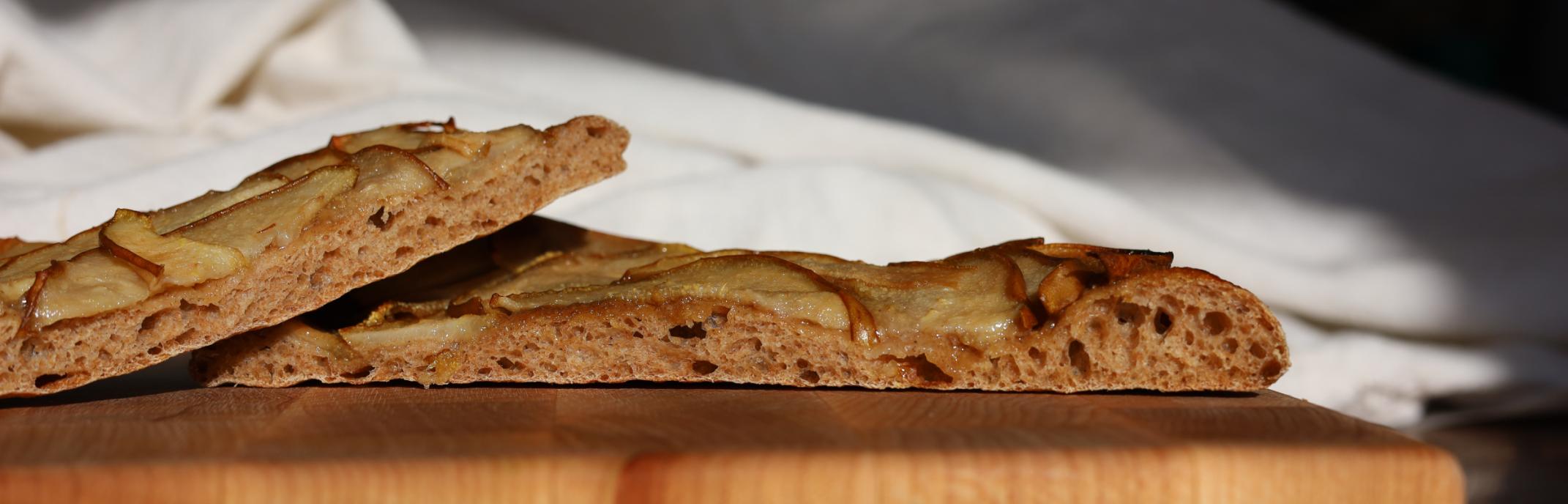
I neglected to take pictures of the bottom crust, but it wasn't anything remarkable, just an even light browning. I thought I'd have an additional 90 minutes of proofing time at least, but I ended up having to turn on the oven when the dough was nearly ready. My cast iron pan got pretty much no preheating time.
Overall, for a complete shot in the dark with a type of mixer I've never used before, a dough I've never made, plus a sauce and topping combo that I entirely winged without even looking up other recipes to reference, I'm quite pleased. My harshest critic "loved" it (direct quote, recorded for posterity) and for once was far more enthusiastic and had fewer notes for improvement than I did.
FURTHER EXPLORATIONS
I'm not sure exactly where I'll go with what I've learned from this bake, but several things stand out to me as worthy of noting for future reference.
Firstly, Yecora Rojo (at least my current batch) can make a nicely airy flatbread. Its gluten "profile," so to speak, may not be suited to freestanding loaves at this hydration, or that may have been down to issues with my methods.
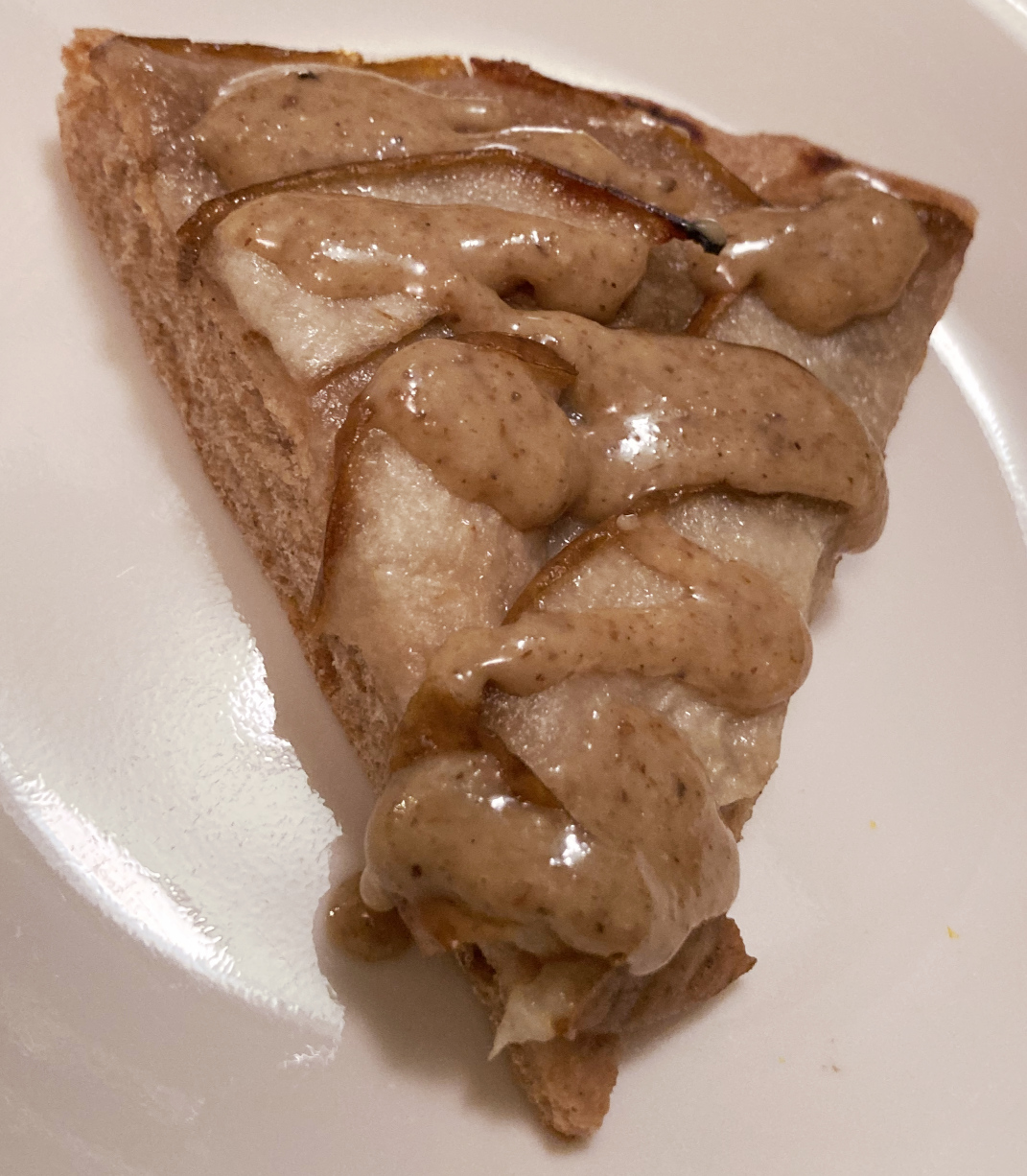
Overall this is barely sweet and unfortunately the pear flavor is very mild. With some walnut butter on top (as seen in this shot under much poorer lighting with my old phone's camera), the fruit is completely lost, even the slices I dressed more modestly than this one. Next time I'll use a well-cooked spiced pear butter for the sauce; or, apple butter, as I suspect I'd try this with apples before pears. If I do try pear again, I'll want to test out toasted fennel seeds with it, as I think those would suit nicely.
For apples, I suspect a McIntosh apple butter, possibly with a smaller portion of Fuji for sweetness, and perhaps Golden Delicious to top. I would peel any apples used for the butter, then purée the peels and add them to the dough, as I find apple peel purée texturally disappears when inside bread but is grainy otherwise, even when well cooked. Apples would also get cassia cinnamon and more pumpkin pie type spices. (Now, pumpkin pizza, there's something I'll have to try!)
When it comes to shaping, I think I tucked each ball of dough in on itself too much going into final proof, given how thin some of them were in the center. Something I'll pay attention to in the future.
Also: I have a lot to (re-)learn about photography, too.
– Regis
- VerdigRegis's Blog
- Log in or register to post comments