hello and welcome :)
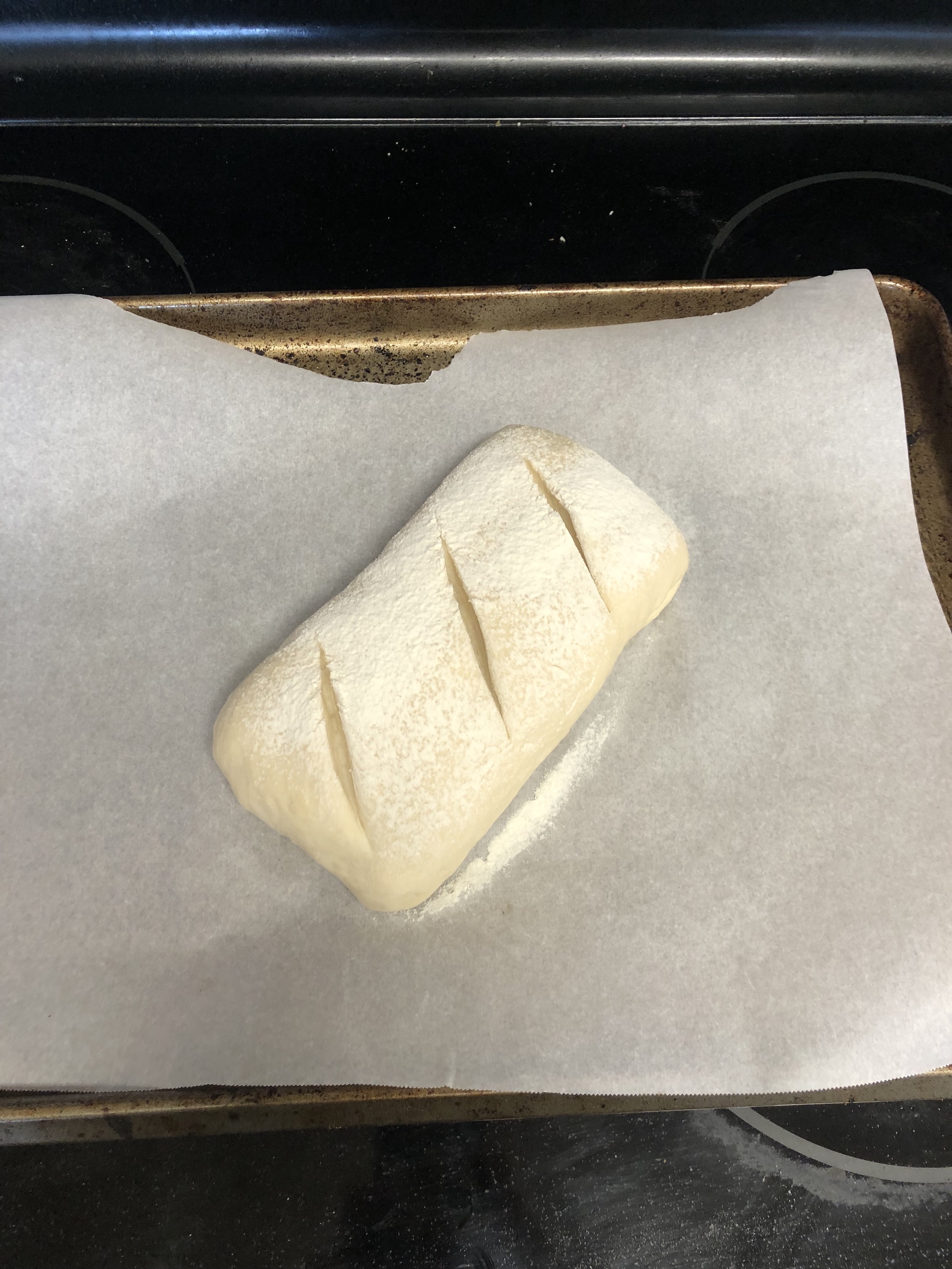
This Saturday, I attempted to make the "easiest loaf of bread". I halved the recipe to make one loaf and ended up baking at 425 instead of 450 (I feel like the oven in my apartment handles 425 better). It's getting colder in the PNW, so for rising, I put the dough in the oven while the oven was turned off. I feel like the 2 hour rise time worked out pretty well. The 45 minute rise on the baking sheet afterwards was also helpful.
Did the ol' cup of boiling water on a baking sheet below the bread thing as well this time. As a newbie, it feels like there are a number of specific variables that I'm trying to figure out. Did I knead the dough too much? not enough? I don't have a mixer so I do everything by hand. Too much flour or water? Was the rising period warm enough? Did my activated yeast activate? (I'm going to try instant yeast only for a little bit from now on).
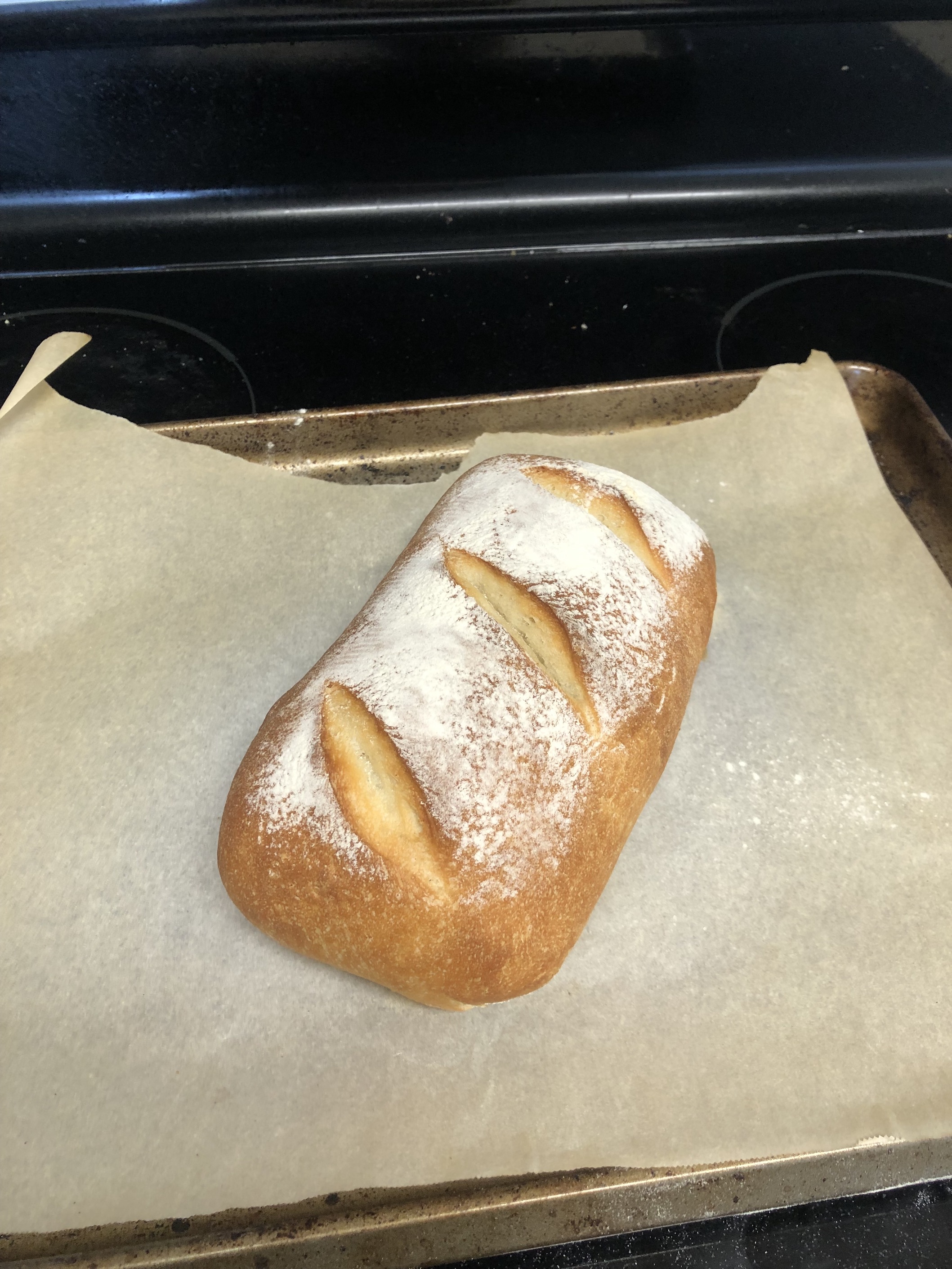
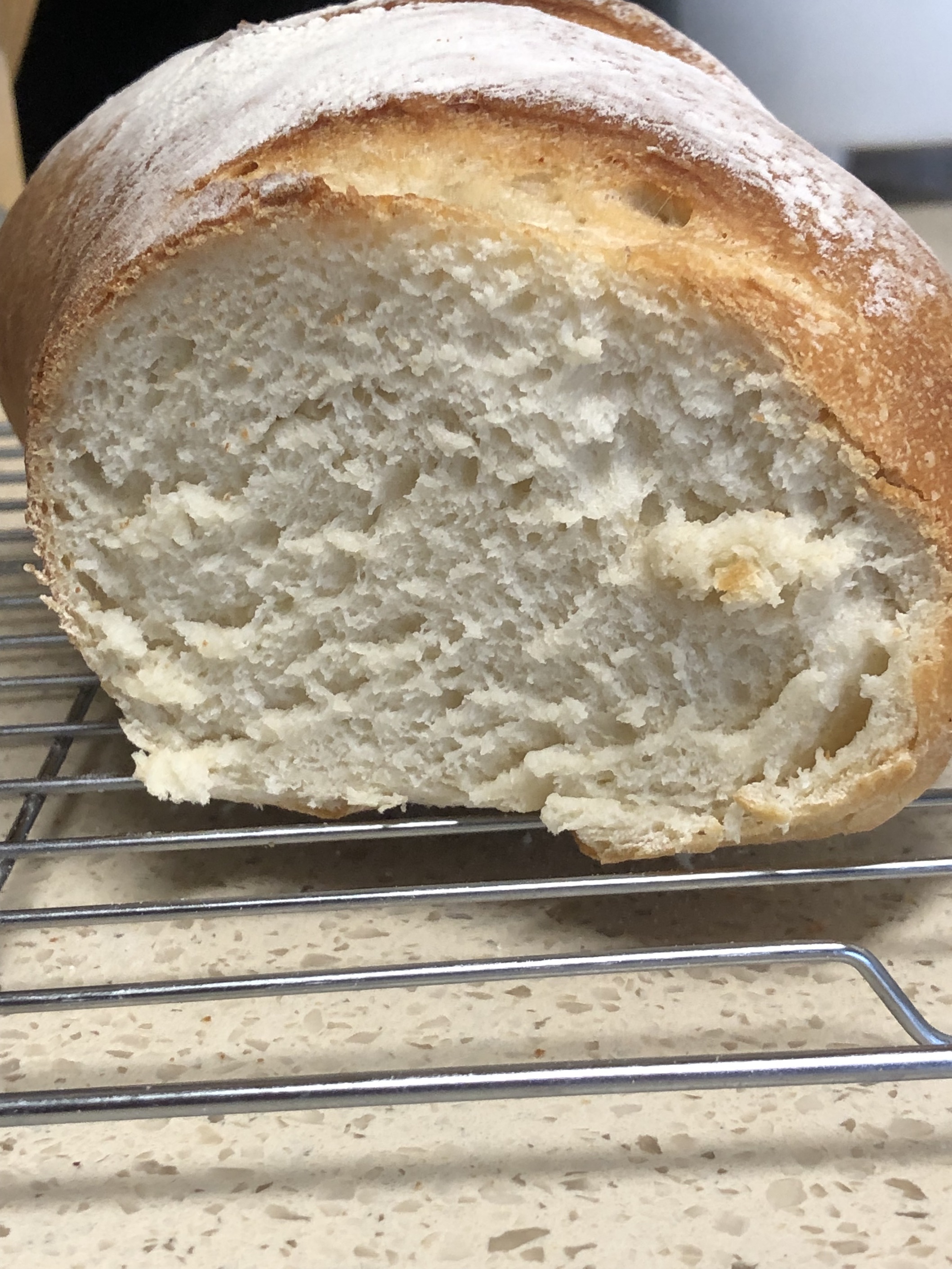
After letting the bread cool down, I added a little butter and tested and enjoyed. Crunchy on the outside, a bit soft on the inside. Gotta keep practicing for soup season on the horizon!
happy breading all :)
- Anonymous's Blog
- Log in or register to post comments
I would add another rise cycle. Hard to tell really but that's what I'd do and see what happens. Enjoy!
noted! Rising time and baking time seem to be the two things that need to be like "juuuuuuuust a little longer" each time I bake
...a couple of your questions: you can tell if the ADY is active by adding it to warm water and sugar, from the recipe. If it foams, it's good. Instant yeast is easy, but it can also be a dud and you have no way of knowing beforehand.
It is practically impossible to overknead white flour dough by hand. Baking With Jack did it for 90 mins, as a test, and the dough hadn't broken down to any significant degree. In other words, it's unlikely to be a problem. Knead until you get a windowpane.
When you put the rising dough in a cold oven, make sure the light is on. That little bulb produces a lot of warmth.
After 2 hrs, how much had the dough risen?
ahh thank you for the insight! I got some instant yeast a couple days before baking the next bread I made and I think it ended up alright. Having the foam visual for active dry is more calming for my bread anxiety though haha.
I wanna say the dough was about twice the size pre-rise, but that's something I ned to monitor more closely in the future I think.
Twice the size is good. Doubling is usually the goal in yeast doughs. You can give it another (Davey's suggestion) rise, if you want. That tends to produce a finer crumb. It will take less time than the first. Make sure the shaped loaf rises well--you will get used to a certain quantity of dough rising to a certain level in the pan, with practice (or do the poke test--I prefer looks, myself, for pan bread). You got baking suggestions, so you should be good to go. Post another picture.
I'll say again;
Enjoy!
It looks nice to me. When you're comfortable with (or tired of) white flour straight dough, you might find some added flavor and even convenience with a pre-ferment. Typically the night before, you mix some flour, water and a very little yeast, cover the bowl and let it sit out overnight (or start in the morning and use more yeast to shorten the fermentation). The next day, you include the pre-ferment with the rest of the flour, water, yeast, and salt.
I used instant yeast for the convenience - it goes right into the mix without having to wait until it foams up. I keep the instant yeast in the freezer and it lasts for a long time.
Here are some formulas from here and there, mostly with some proportion of whole wheat flour for flavor and health. You could just use all white flour if you like; just reduce the hydration a bit.
Bread Formulas
During covid, I started using a sourdough culture, not because I had difficulty finding instant yeast but because I love rye bread. Non-sourdough pre-ferments like the poolish in several of the formulas add flavor without the need for a sourdough culture (for wheat flour)