
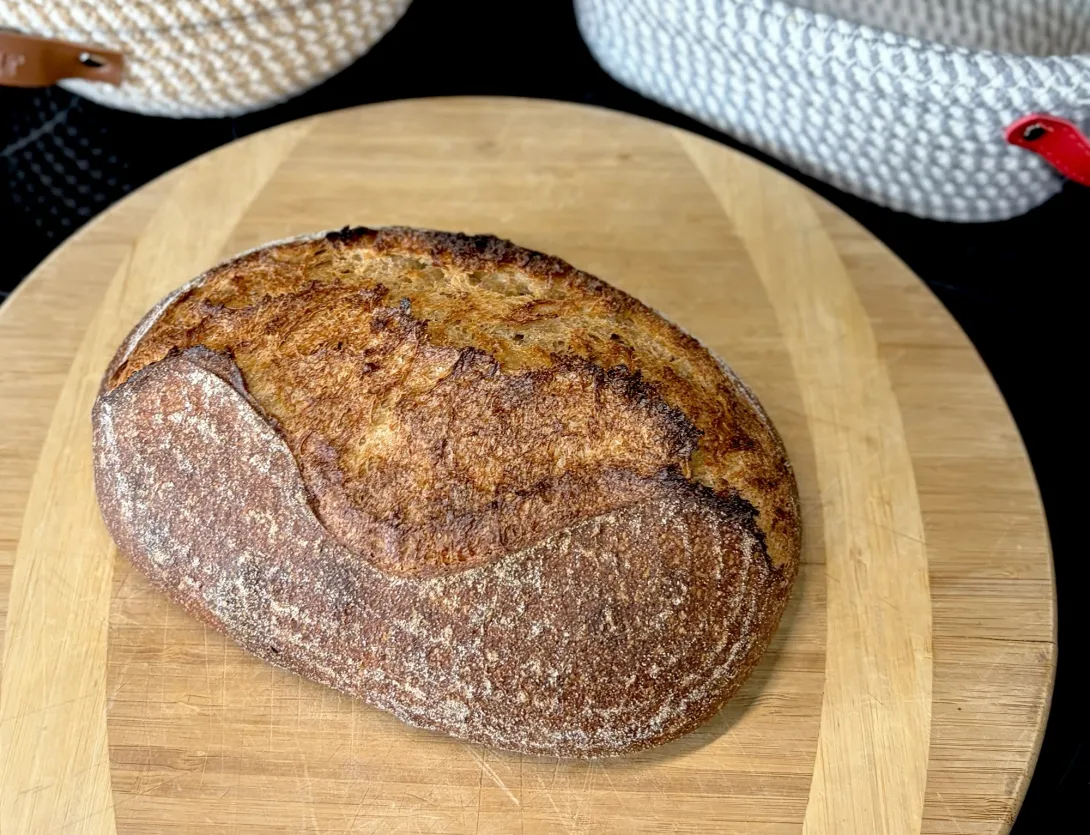
I recently bought some fresh barley grain and figured what better use for it than as a scald. This one was almost exclusively a fresh-milled loaf. The only non-FMF was a little bread flour in the starter. I like to include that to make sure the starter is nice and strong to help with the FMF and low-gluten barley flour.
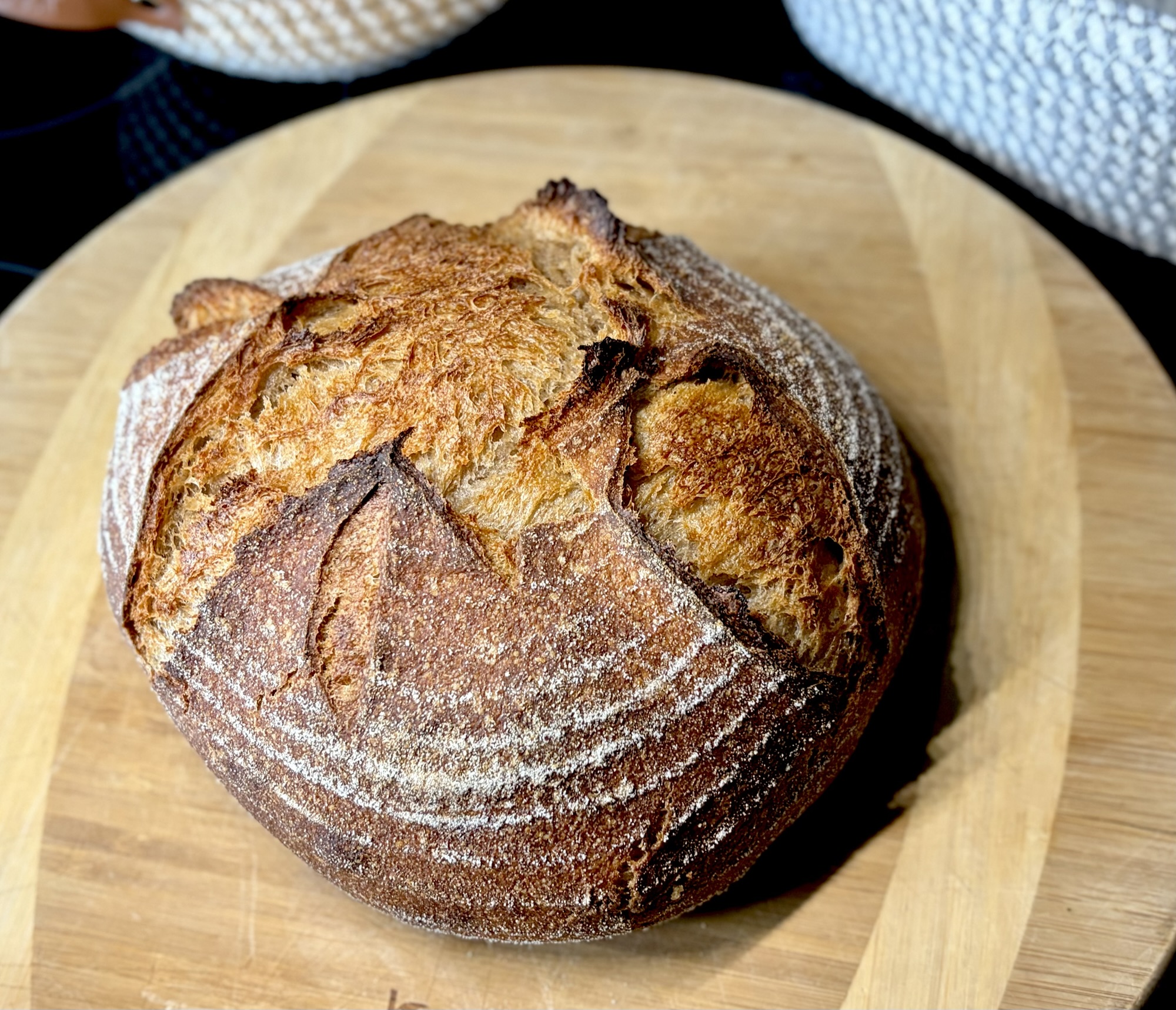
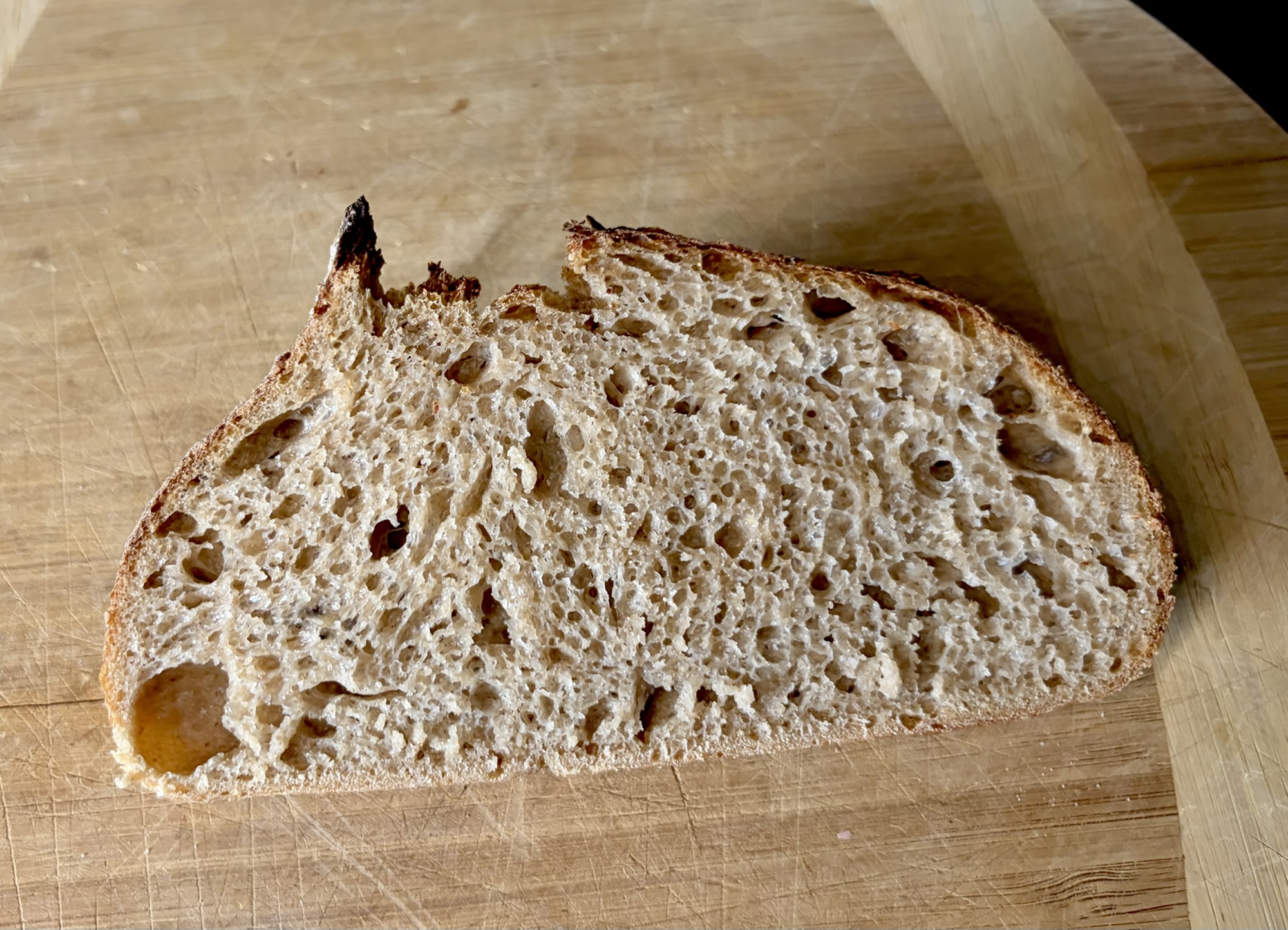
This one turned out exceptional. I really nailed the fermentation and gluten development. I’ve been doing 2 sets of coil folds, 30 minutes apart during bulk, and one set of stretch and folds. I also let this one go to 60% rise during bulk instead of the usual 50% at 75 F.
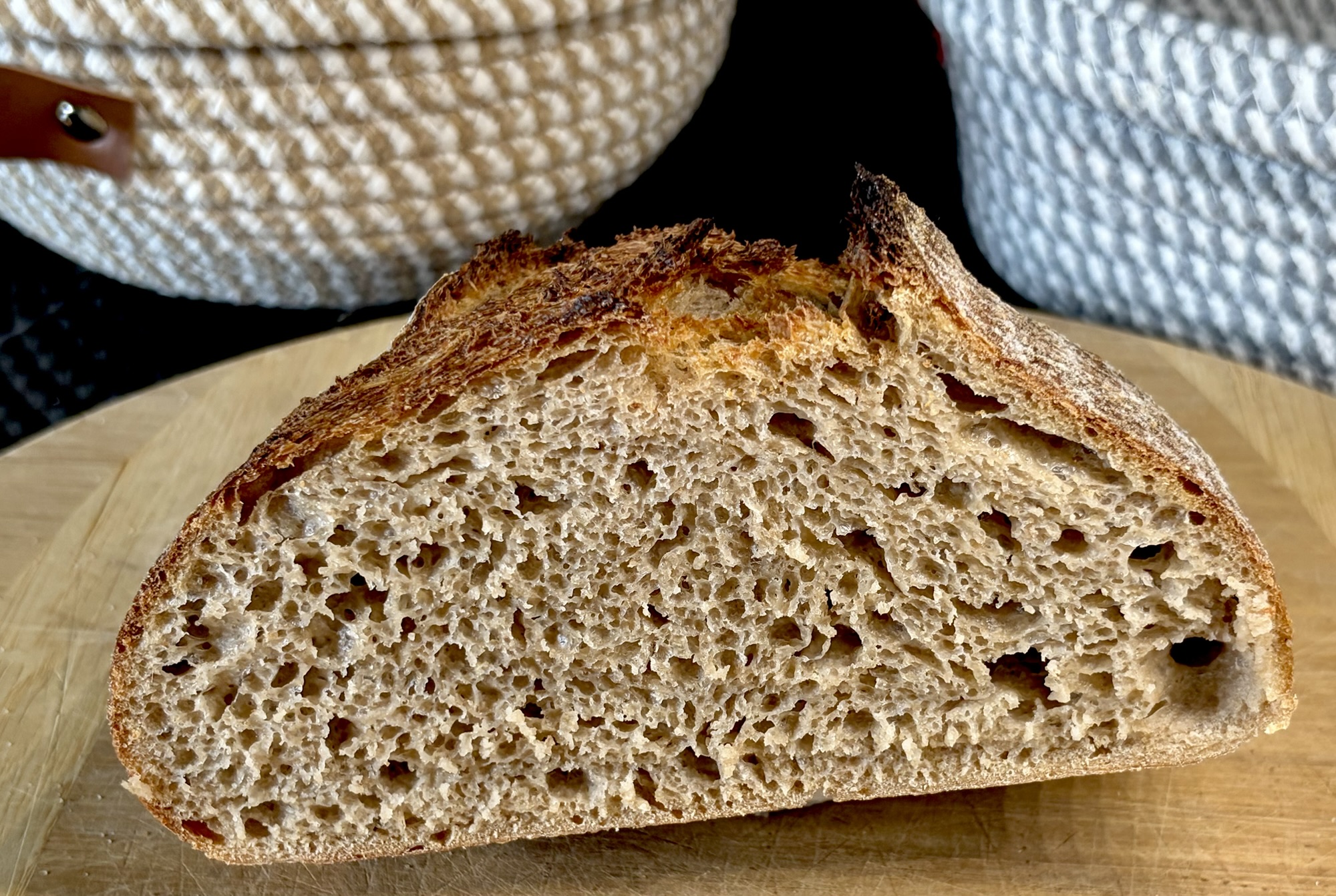
The dough was like a soft, billowy pillow. The crumb was moist and soft from the scald, and the crumb was very open and flavorful.
I milled one of my favorite grains, Stardust WW from Barton Springs Mill, for the main dough with my Mockmill 200 and sifted once with a #30 drum sieve, and re-milled at the finest setting. The barley for the scald flour was milled only once at the finest setting.
Stardust is a hard white winter wheat with a 12% protein content.
The total amount of fresh milled flour in this bake was 83.5%. I sifted 3% of the bran from the Stardust whole wheat. It really is a very small amount of bran, but I feel it improves the flavor and lightness of the bread. You could certainly add it back in as part of the scald.
I used my Ankarsrum to mix the dough and oven-baked it on a baking stone with steam.
I added a little honey, which really brought out the malty flavor of the barley.
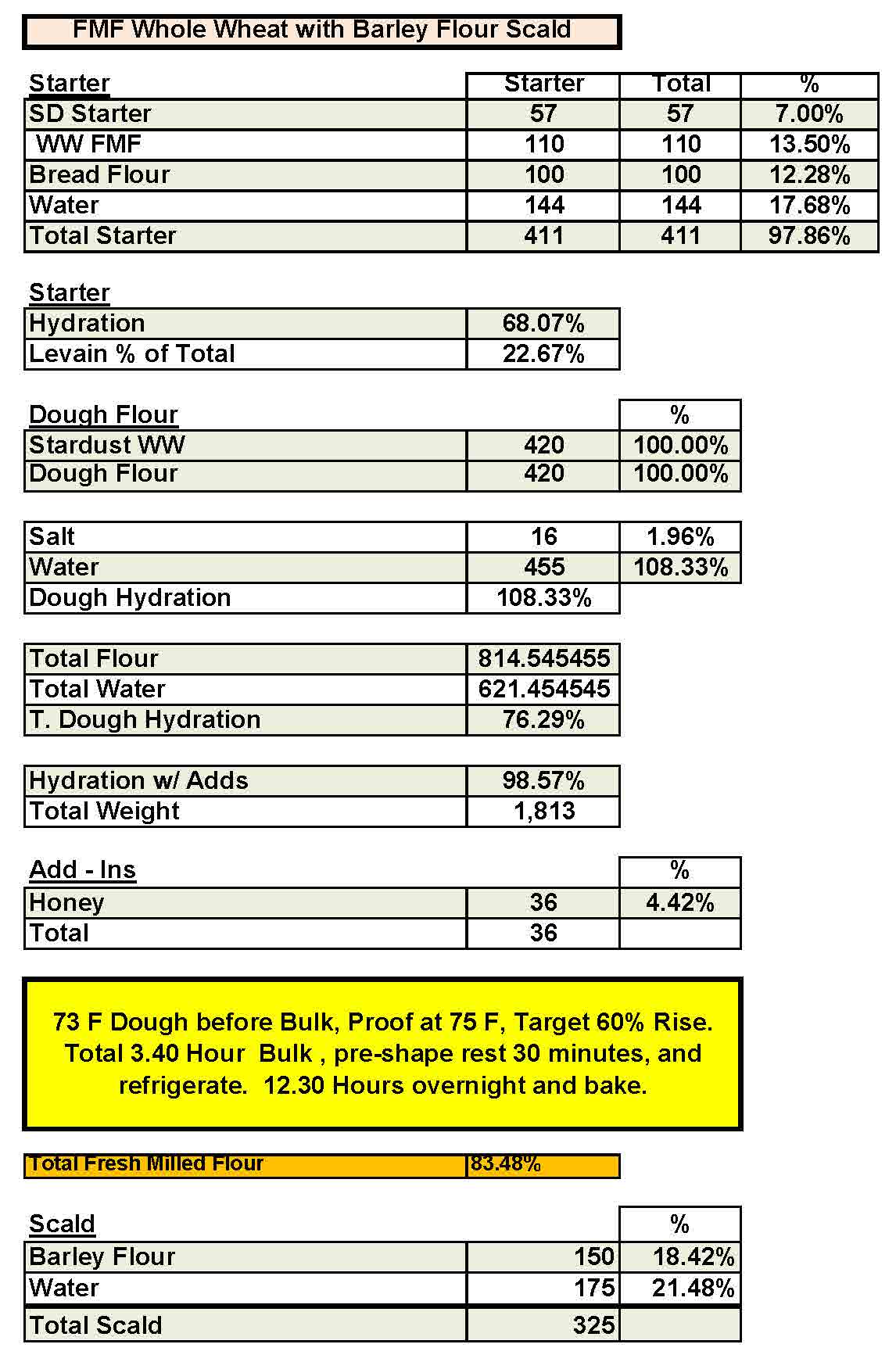
Formula
Levain Directions
Mix all the levain ingredients together for about 1 minute and cover with plastic wrap.
Let it sit at room temperature for around 6-7 hours or until the starter has almost doubled. Either use in the main dough immediately or refrigerate for up to 1 day before using.
Scald Directions
Pour boiling water over the ingredients and mix until incorporated. Cover and let cool to room temperature. I put mine in the refrigerator to let it cool quicker.
Main Dough Procedure
Note: I use an Ankarsrum Mixer, so my order of mixing is slightly different from than of using a Kitchenaid or other mixer. Add all the water to your mixing bowl except the 70 grams of water. Add all your flour to the bowl and mix on low for a minute until it forms a shaggy mass. Cover the mixing bowl and let it rest for 20 – 30 minutes. Next, add about half of the remaining water, honey and the scald and mix for a minute. Add the levain next and mix for 10 minutes, increasing the speed to position #4. Let the dough rest for 15-20 minutes and then add the remaining water and the salt and mix on medium-low (about speed 4) for around 14-17 minutes until you have a nicely developed, smooth dough. If necessary, mix longer. You want to have good gluten development from mixing the dough.
Remove the dough from your bowl and place it in a lightly oiled bowl, and do several stretch and folds. Make sure the dough is as flat as possible in your bowl/container, and measure the dough in millimeters and take the temperature of the dough as well. Based on the chart from http://www.thesourdoughjourney.com, determine what % rise you need and make a note. If you have a proofer, decide what temperature you want to set it at and what rise you are aiming for. I had a DT of 73 F and set my proofer to 75 F and aimed for a 60% rise. Do 2 sets of coil folds, 30 minutes apart. After another 30 minutes, do a set of stretch and folds.
Once the dough reaches the desired bulk rise, pre-shape and let rest for 25 minutes. Finish shaping and place in your banneton, bowl, or on your sheet pan, and cover it so it is pretty airtight (note: It is not necessary to cover the dough when refrigerating it. Most professional bakeries do not cover their dough, but they do have dedicated retarders for dough, so if you are like me feel free to continue to cover it). This dough is very sticky, so make sure you use plenty of rice flour in your banneton or bowl to prevent it from sticking.
On baking day, you can take the shaped dough out of your refrigerator and bake as soon as your oven is ready, after scoring, of course.
When ready to bake, score as desired. Prepare your oven for steam. I have a heavy-duty baking pan on the bottom rack of my oven with 1 baking stone above the pan and one on the top shelf. I pour 1 cup of boiling water into the pan right after I place the dough in the oven. I then lower the temperature of the oven to 450°- 455° F. Bake until they are nice and brown, and the internal temperature is at least 205 – 210°F.
Take the bread(s) out of the oven when done and let them cool on a baker’s rack for as long as you can resist.
- Isand66's Blog
- Log in or register to post comments
Barley is great in a scald. And what a lovely loaf!