Submitted by Soundman on July 22, 2008 - 8:14am

WW Loaves / Sales Pitch


I recently added a thread on the Introductions forum (Hello From Connecticut). I mentioned that a particular website (sfbi.com) offered a solution to the slashing tool problem. I put my money where my mouth was and bought their replaceable blade lame. Sad to say, that money was wasted. More below.

Sales Pitch:

Soon after my posting, holds99 (Howard) mentioned that Eric Hanner had pointed TFL bakers in the direction of the PureKomachi Tomato Knife as being similar to an old serrated knife he has been using to score loaves. Thanks go to Howard and of course to Eric. This knife is a wonderful tool for scoring loaves.

The sfbi.com offering, well, not so much. They provide a very small handle and some basic double-edged razor blades and offer that you thread the tip of the handle into the openings in the blade to secure it! OMG, a starring role in my very own bloody-hands slasher movie! Fortunately this so-called tool didn't set me back too much.

My first opportunity to use my new PureKomachi was yesterday. I just jumped a grade or 2 as a bread scorer. It was easy as pie (maybe not the best simile) and stress-free. I even relaxed as I made the cuts.

Pix:

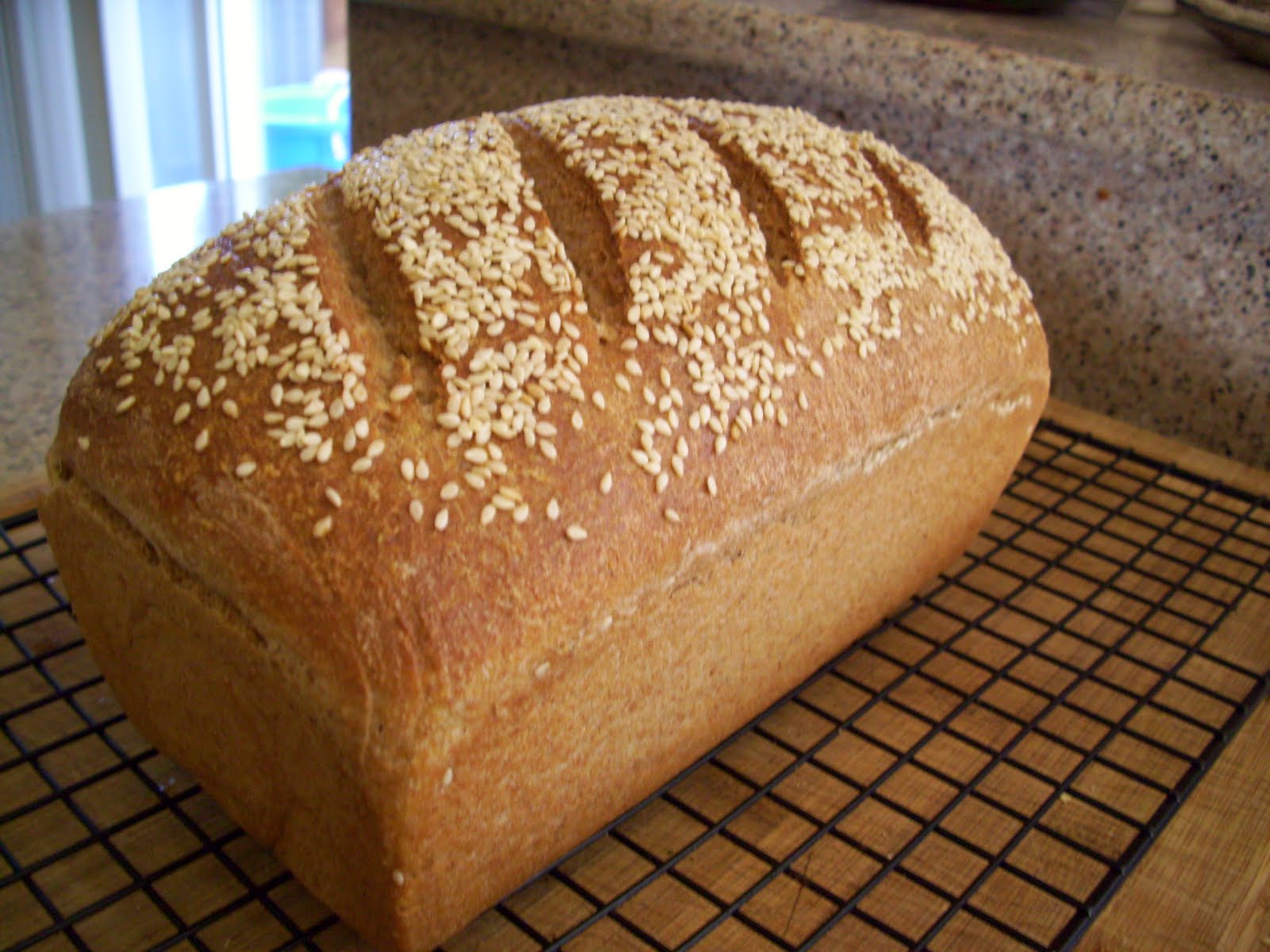
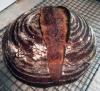
Whole Wheat Boules

Whole Wheat Boules

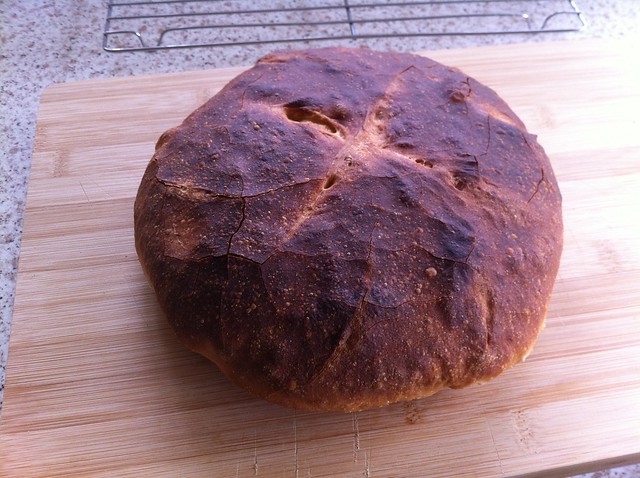
WW 1

WW 1

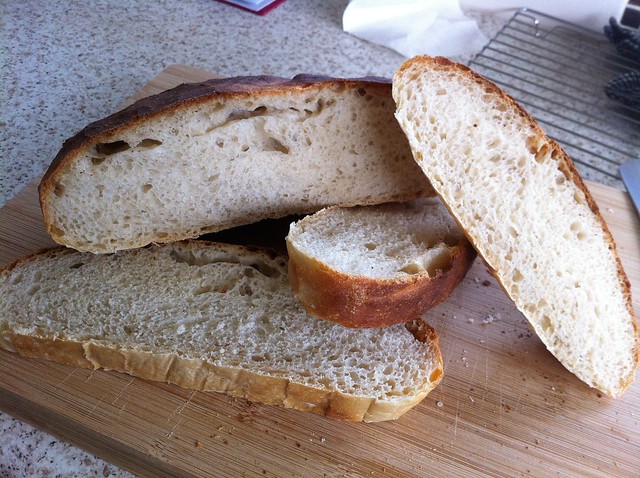
WW2

WW2

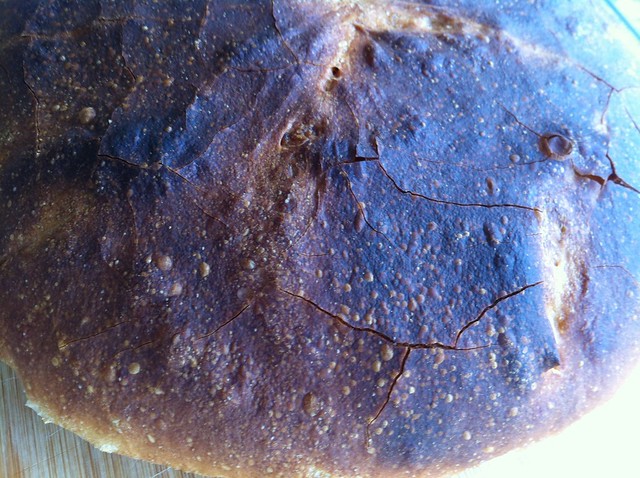
WW High Angle

WW High Angle

The only time I felt the knife dragging was when I slashed across an already slashed portion of the dough. It was much easier to get a deeper slash than I ever experienced with my KA lame.

About the loaves:

They're my typical weekly WW bread. It uses a preferment with all the WW flour for the recipe, and as noted elsewhere (down toward the bottom of PaddyL's recent post about Whole Wheat vs. Sourdough) uses buttermilk, which, as an acidic medium (thanks, subfuscpersona) does good things for making the WW nutrients more usable.

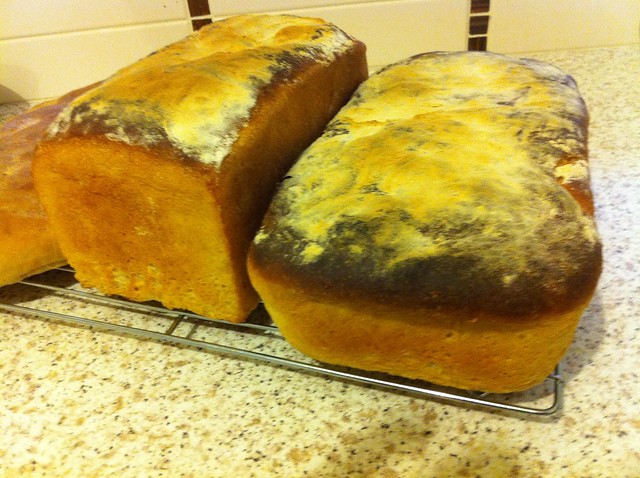
I baked these loaves at a slightly lower temperature than usual (440 to start, then 410) and it did good things for the crust. The spackling on the crust is bran from sifting coarse red whole wheat to get some high extraction flour.

PureKomachi, for all your scoring needs!

Soundman (David)

Submitted by LeadDog on July 20, 2008 - 1:38pm

Grape Harvest Focaccia?


Last week was the first time I had ever seen, tasted, or baked Focaccia.  I followed the direction to the letter and the bottom was a very dark brown, burnt.  This week I used a Pizza stone and it came out just right.  I looked high and low all over the place for a Whole Wheat Sourdough Focaccia recipe and didn't find one so I made my own up.  In "Local Breads" I saw the recipe for "Grape Harvest Focaccia" so I decided to add the grapes since mine are ripe.

Grape Harvest FocacciaGrape Harvest Focaccia 


Focaccia CrumbFocaccia Crumb 

 Coming out of the oven the Rosemary just smacks you in the face.  Then you get the fruit aromas of the grapes.  The taste of this is just great.  The first flavor is the grapes and after chewing it for awhile you get the tangy sourdough.  I'm very happy with how it turned out this week. 

Submitted by RMatey on July 19, 2008 - 7:58pm

Help with stoneground WW flour +sourdough problem....

Well I guess it is time to stop lurking.  I am pretty new to this site but from what I've see it is really great!

Although my newbie question is about two sourdough loafs it is also about whole wheat bread.  Since the starter, proccess, recipe etc were all the same I THINK it was the flour that goofed me.

Using Robin Hood Whole Wheat flour, 13% protein I get a nice dough that, with a bit of work, came together well, got nice and stretchy and produced nice, airy whole wheat sourdough.  This flour had the large flecks of bran, which I believe, is indicitive of remixed industrial grinding.

 Using this flour from "Anita's Organic Mill" (a local place)...marked Stone Ground Whole Wheat flour...I get a bag of flour which is all an even sized grind and gives me incredibly dense bread.  The thing is it is supposed to be 14% protein which should give me a bigger rise, bigger wholes, chewier crust.  I got no oven spring and during the rise my carefully shaped mini boules...ruptured.  It was like they didn't have the gluten to hold shape. 

Now I might have thought this was over acidification or over proofing but while kneading the dough, it just never really came together the way white or "big fleck" whole wheat does.  It reminded me of...sugar cookie dough?  It was smooth, and would stretch (like taffy stretches) but would never window pane to any great degree.  This was after 2x the amount of kneading as with Robin flour...

 So what are peoples thoughts?  Does stoneground whole wheat not knead as well because the bran is ground in so fine?  Or...I dunno.  I am lost.

HELP

Submitted by tamraclove on May 26, 2008 - 5:53am

Mike Avery's Cranberry Chocolate Loaf / 100% WW Sourdough


The Chocolate Cranberry loaf was my first 100% sourdough loaf. I won't say too much about it here, because I posted questions about it in another forum. Here is a link to that conversation.

This loaf was made using my yeasted starter. My wild starter still isn't ready yet, although today's observation (day 6) shows that it increased by about 50% - the most so far!


Today I'm trying Mike's 100% WW Sandwich Bread. It looked pretty basic, and I'd like a basic recipe to use every week to hone my skills on.

My dough is in its first rise right now. It's been sitting, oiled and covered, in a sunny window (cool kitchen) for 1 1/2 hrs. It still hasn't doubled yet. This is the same starter I used yesterday in the Chocolate loaf, and it has been fed twice since then, and I waited until it doubled before stirring it down and measuring it.

The recipe calls for finely milled WW. Here in Greenock, I think I only have 1 option for WW. I need to check at the store again. As of now, I'm using the store brand Strong 100% Stoneground WW. The bran flakes are huge - the same size as in the bag of wheat bran that I bought. I have been reading that the gluten in coarsely-ground flour is not 'available' resulting in shorter gluten strands. This might also account for the hard time I had in kneading. I ended up adding just over 1C of additional flour (oh - I doubled the recipe) and it was still quite sticky.

I'm defining sticky like this - wet enough to leave strings of dough attached to my hands, will clean the countertop, but if I leave it sit long enough to clean my hands off, I have to use a scraper to pick up the ball again.

So... if the gluten is shorter, the dough is stickier, wetter, heavier, harder to rise? Hmm... we'll have to see. With the Chocolate loaf, it didn't quite double on the first rising, bit it 'nearly' doubled on the second rise, and then I got very nice oven spring. The conditions were the same - sunny windowsill. But, the chocolate loaf was made with white flour (WW starter) and this bread is 100% WW - much heavier bread. I did get it to pass the windowpane test finally (it took almost 30 min. of kneading).

More comments will be posted as the day's baking progresses.


AFTER FIRST RISING:

After 2 hours, i decided that the dough had nearly doubled. I punched it down gently, turned it over, and reshaped the ball 'inside out'. The dough is somewhat stiffer after the 2 hour rest, and didn't stick to me - yea! As I stretched the dough (the side that was the bottom) the dough did not tear, but made very small (1/8-1/4") blisters on the surface. The dough is very smooth, other than that.

AFTER SECOND RISING:

The dough nearly doubled again - after about 1.25 hrs. I punched it down, divided it in half (double batch) and made 2 loafs. It was still too sticky to put on the counter without a dusting of flour. I spread the dough out - almost using Mike's 'teasing' technique, like for stretch and fold. I rolled the dough up, brushing flour off and pinching the seam as I went. I sealed the ends, turned them under, and placed them into 2 greaed and floured PC stoneware bread pans (I can't get Baker's Joy here) The pans are about 1/2 full of dough - I don't think they'll rise above the surface...

AFTER FINAL RISE:

I was right - they only filled the pans about 3/4 of the way.  I did get them to slash nicely - one long slash down the middle.  Baked for 45 min at 350, then upped the temp to 400 for the last 10 to get them brown(I had the pans too low in the oven).   Because I had greased AND floured my pans, they popped out nicely.  I took them out when the temp was at 205. 

The bread was, again, too moist.  But not as bad as last time.  They were completely risen inside - no thick spots, or pockets of dough.  The flavor is nice - just a bit sour. But that might be because of the extra moisture.  You can't taste the honey (I didn't really want to) so it's a nice any-time bread.  I will definately use this bread next time, and compare notes - using more flour until I'm happy with the texture.  Also, since a double batch wasn't enough for my 2 loaf pans, I think I will make a 3x batch next time.  That makes 1.5 batch in each pan.  I think that would just about do it.

1st try at Mike's WW


Crumb still a bit too moist 


Submitted by obrien1984 on April 30, 2008 - 3:13am

Whole Wheat Sourdough

For several months now, I have been baking whole wheat breads based on recipes in Peter Reinhart's latest book. For the most part, I have met with success.

 I am now attempting to modify these recipes to accomplish two goals: to eliminate commercial yeast from my breads, and to simplify the baking schedule (which includes using less equipment, making less mess, and adjusting the rise times to occur while I'm at work).

I wanted to share some techniques with those of you who might have similar goals. It's quite simple, and probably nothing new to those of you who have been baking a while.

First, I followed Peter's recipes for whole wheat bread, replacing the "biga" with sourdough starter. Instead of adding yeast in the final mix, though, I simply let it rise all day while I was at work (about 10 hours). This accomplished two goals: first, obviously, no commercial yeast. Second, I was able to jump right into shaping when I got home, since the first rise was accomplished throughout the day. This cut a good 2-3 hours off my after-work baking schedule.

Second, instead of using baking stones, I preheated a large, cast-iron skillet in a 500F oven. This eliminated the need to use a utensil (like a peel or baking sheet) to transport the dough from the bowl to the oven, as well as eliminated the need for baking stones. Additionally, I think the skillet retains heat better than the baking stones, and since the transfer needs to take place outside the oven, I think it actually gives the dough a bit of a head start on rising. You get all the benefits of "oven spring," but without having to worry about the bread forming a crust too soon.

I tried this for the first time yesterday, and ended up with my first loaf of whole wheat bread made entirely without commercial starter. The crumb was moist and full of holes, but not grainy, mushy, or too chewy. My only complaint is that the bread was much too tart for my own taste. It really overwhelmed all the other flavors. It wasn't bad, but it's just not to my liking. I'm not sure if this is due to the long, 10-hour rise, or to an overly-acidic starter. I'm inclined to believe the latter, because my starter smelled very strongly of alcohol and vinegar. However, it rose beautifully, so I know it's active.

Anyway, please let me know what you think!


Thanks!

Joseph 

Submitted by DakotaRose on April 28, 2008 - 12:32pm

Honey Grain Bread Recipe


I just thought I would share the recipe I came up with for the quinoa flour. I incorporated it into one of my other recipes I created a while back. It isn't a high percent of quinoa, but it sure does come through in the bread. This is not a gluten free recipe.


Honey Grain Bread

2 3/4 cups water (1/4 c. used to proof yeast)
1 T. Salt
5 T. Butter or Olive Oil
5 T. Honey (use 1 T. in proofing yeast)
3 cups Bread Flour
1 cup Quinoa Flour
1 cup Flax Flour
2 1/2 cups White Whole Wheat Flour
1 1/3 cups Quick Cook Oats
5 t. yeast
2 T. vital gluten

Set to ferment over night or longer
2 1/2 c. water
2 1/2 c. white whole wheat flour
2 c. bread flour

I proofed my yeast in 1/4 c. warm water, 1 T. honey, 5 t. yeast.

I proof the yeast while I am adding the other ingredients to my mixer bowl that has the fermented flour in it. Sometimes depending on the amount of moisture in the air I have had to add an extra 1/4 c. of flour.

I set my mixer to mix for 12 minutes, but keep an eye on it. I have noticed that when I have let my fermented flours go for longer then 12 hours or so then it takes a lot less mixing to work the gluten up.

Once the dough has been mixed and is looking smooth and stretchy I like to scrape it out of the mixer bowl and kneed if for a little bit to see how it feels. Even though I enjoy my mixer I still like to kneed the dough. It is a great way to releave stress. Anyways, I set it aside now in a greased bowl and cover and let rise for 2.5 to 3 hours, until it doubles in size. I have been told I should let it rise twice before shaping it and placing on a baking pan or in a bread pan, but so far I have only done a single rise before placing in the pans. Then I slit the tops with a razor blade and let rise covered for 1 hr. (Next time I am going to try a little longer rise in the pans and also try a double rise before shaping.

I had put them in a cold oven and turned the oven to 400 degrees for 10 minutes, turned it down to 350 degrees after that and let bake an additional 25 minutes. They did not get a spring in the oven at all so I think I will put them in a warmed oven next time because that is how I normal do it, but wanted to try something different this time.

The bread was not heavy at all and has a delightful nutty flavor and when toasted it melts in the mouth and has a great crunch to it. We have not been able to keep the bread very long as it is gobbled up long before I usually make my next batch of bread. I might double this recipe for 4 loaves instead, but I do enjoy baking.

A few things I want to try with this next time as well is getting a stone for the oven and doing artisan loaves with it again. This might sound strange, but the artisan loaves had much more flavor then the loaves in the pan.


Submitted by JMonkey on April 20, 2008 - 6:40pm

Keeping a stiff starter on the counter

I'm a telecommuter who works from home, and I bake bread for my family two to three times a week. Occasionally, I'll make a loaf with commercial yeast, but typically, I make sourdoughs. Also, on the weekend, I like to make sourdough English muffins and sourdough waffles.

Keeping my starter in the fridge meant I was constantly trying to remember when I needed to take the stuff out to rev it up for bread, and I'd often realize too late that I didn't have enough starter for the muffins or waffles.

After some tinkering, I finally decided to keep the starter on the counter and feed it once or twice a day, which means I've always got at least enough active starter for my overnight whole grain sourdough, and, if I'll need more for a daytime sourdough, I've got enough to seed a bigger amount that can ripen while I sleep. The regimen that I now follow also has the advantage of not wasting anything, because I use all the extra starter stored in the fridge to make all the waffles and English muffins I want. Since both of these recipes derive most of their rise from the interaction of acids and baking soda, using week-old starter from the fridge has enough oomph for leavening and flavor, given that it's gotten pretty acidic already.

Anyway, I'm not saying this is the way to maintain a starter - it's just what works for me at this time in my life, at least for my primary whole wheat starter. (I also keep a rye starter and some white Carl's 1847 Oregon Trail starter in the fridge that I only take out when I want to bake special breads.)

I usually feed it twice a day, once in the morning and once again before bed. Sometimes I forget, though, and only feed it once a day, but it doesn't seem to mind much. I keep it at 60% hydration, which is pretty stiff, but I find it's less messy and stands up a bit better that the wet stuff would to a missed feeding here and there, due to my forgetful nature. Here's how I feed it (it's a 1-3-5 ratio for starter-water-flour).

In the morning, it looks like this.


It hasn't risen much, but it feels puffy, and when I break it open, it's clearly aerated inside.

It weighs about 45 grams, so I take 5 grams of it (about the size of a small marble) ...


... and put the rest in my fridge bowl. These leftovers will find their way into waffles or English muffins later in the week.


Then I add 15 grams of water and mush it up until it's soft and the water has turned somewhat milky in color.


Then I add 25 grams of whole wheat flour.


Finally, I mix it all up with a spoon, take it out and knead it a bit in my hands, which consists of folding it over on itself four or five times. I then roll it into a ball, snap on the lid and let it work.


That's it. I've found it's not that much of a hassle to feed it twice a day and is much less annoying than realizing I can't make a sourdough because I forgot to take my starter out of the fridge and feed it. Since the overnight sourdough I make requires just 40 grams of stiff starter, I'm pretty much always set.

Anyway, it works for me.

One note: for what it's worth, I haven't detected any difference in flavor or performance for the starter on the counter vs starter rev'd up from the fridge.

Second note: Since I'm working with stiff starter, I increase the liquid in both the sourdough muffins and waffles by about 1/4 cup or so.

Submitted by JMonkey on April 19, 2008 - 4:58pm

Recent bakes -- I'm back!

I've been absent from TFL recently, as work and home have eaten up just about every waking minute, and there have been far too many waking minutes in the past couple of months. I could have stood for a tad more sleeping minutes.

Nevertheless, a family has to eat, so I've still been baking. One thing I learned: Don't double the amount of salt in a bread recipe. I did this by accident, doing the math for 2% in my head and adding 20 grams instead of 10 grams. Not even the birds would eat this stuff. Yuck.

I have had some nice loaves come out of the oven, however. Last week, I made the same doubling error as before, but with the starter. I used a 40% innoculation instead of 20% for this largely white flour sourdough (I added 10% whole wheat). All in all, the loaf was fine, though it wasn't as flavorful as I'd have liked. Rose quickly though, and looked beautiful.


I also revived my rye starter to make a 40-30-30 rye to whole wheat to white flour loaf. I didn't add caraway, and missed it, actually.

Starter is amazingly resiliant stuff. I'd not fed it for months (probably three at least ... maybe even four), and it had acquired a nasty black crust that could have been mold, could have been hoochy gunk (the rye is kept at 100% hydration, but it's still pretty pasty rather than liquid). In any case, it started right back up and made a wonderfully sour rye loaf. The shaped dough stuck a little bit to the baker's linen, so I had to slash it strangely to incorporate the rip and avoid a blown out side. Turned out OK, though, in the end.


And, of course, I regularly make my standby overnight whole grain sourdough hearth loaf (60% whole wheat, 30% whole spelt, 10% whole rye. The secret to getting a good "grigne" I think is not to proof it too long. Two to two-and-one-half hours seems to be just about right.


Mmmmmm. Grilled cheese sandwiches on whole grain sourdough hearth bread.

Submitted by marcsababa on April 17, 2008 - 10:02pm

Please help trouble shoot my whole wheat sourdough sandwich loaf.

Why is my sandwich loaf splitting?: I followed the one stage sourdough recipe I found on this site.  I also followed JMonkey's shaping video.  Well I probably made some errors since i don't know yet why and how the loaf is optimized. SO what happened?  Why did it split so much?

Why is my sandwich loaf splitting?: I followed the one stage sourdough recipe I found on this site.  I used freshly ground whole wheat only.  I also followed JMonkey's shaping video. Well I probably made some errors since I don't know yet why and how the loaf is optimized. SO what happened? Why did it split so much?


Also why could i only slice it quite thick?  Could it have been too freshly out of the oven? 

Here is a picture of the slice;

loaf slicesloaf slices