Typo after typo, My left fnger doesn't know what my right finger is doing. This is way worse than dyslexia, which I had but sold to Lebanese rug trader and a lot more painful too.
With plenty of rye, WW and semolina bread in the freezer we baked off another as close to white bread as we ever make for the bread winners daily lunches. My wife prefers Oroweat whole wheat bread but we are slowly winning her over to SD bread in the 25%-35 % whole grain range.


This one was 25% home ground whole grain bread with spelt, rye and WW ground from berries. The remainder of the flours used for the bread were grocery bought bread flour and AP milled by KAF.

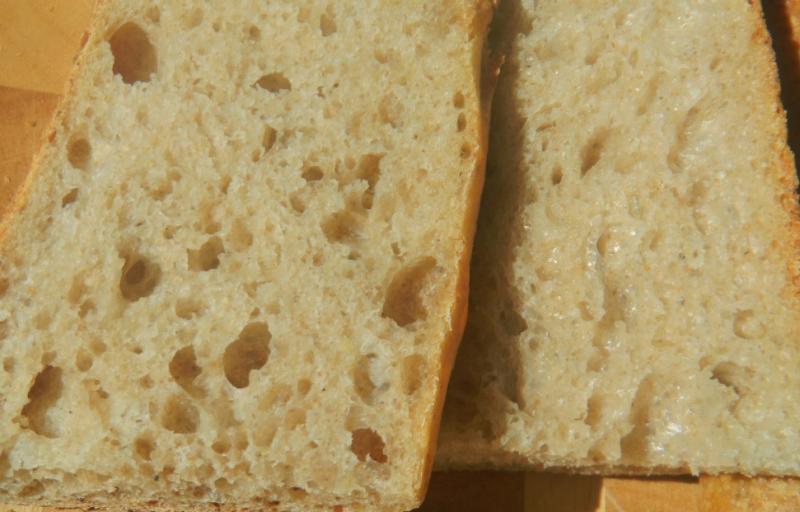
The bread baked up nicely browned with small to medium blisters. The crust came out crisp but went soft and chewy as it cooled. The bloom and spring were OK but nothing special. The crumb was moderately open, soft, chewy and slightly glossy. This bread had a bolder SD tang right after being cooled and we assume it will get better tomorrow.
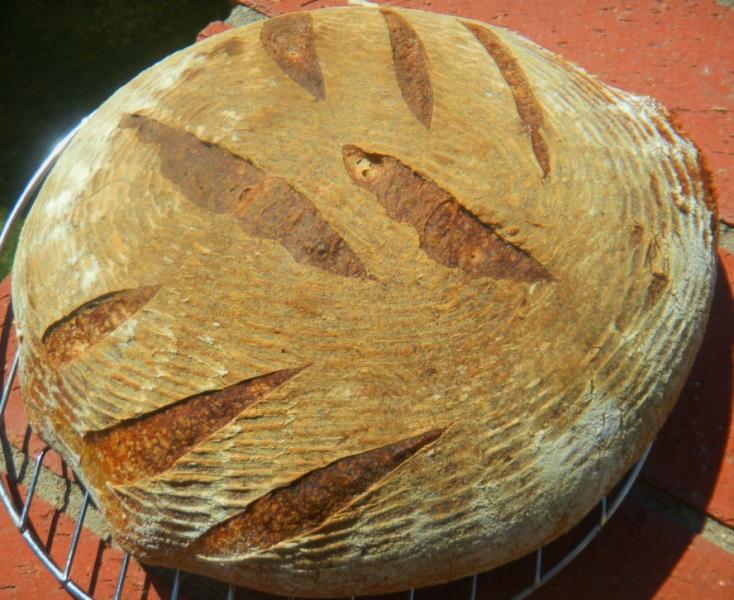

If you like David Snyder’s Pugliesi Capriosso and San Joaquin or Pierre Nury’s Rustic Light Rye you will like this bread. For a nearly white bread it sure is tasty. Just delicious.
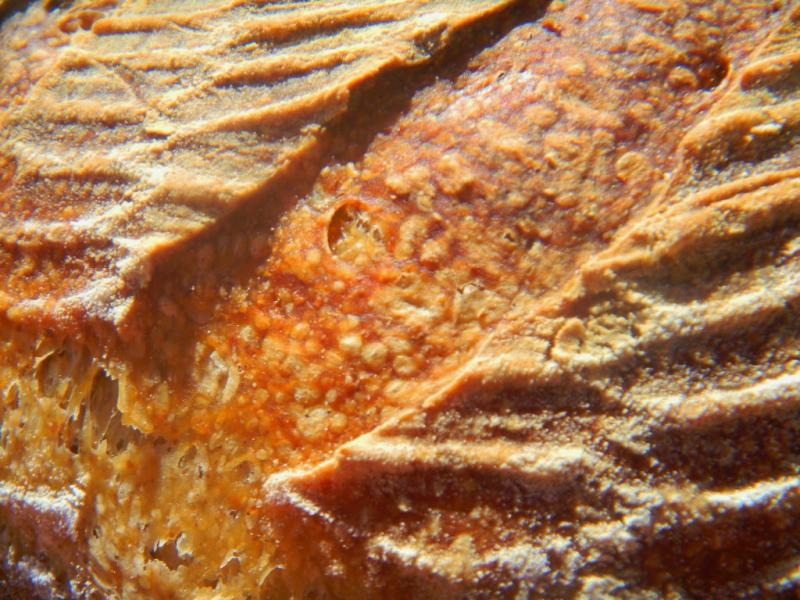
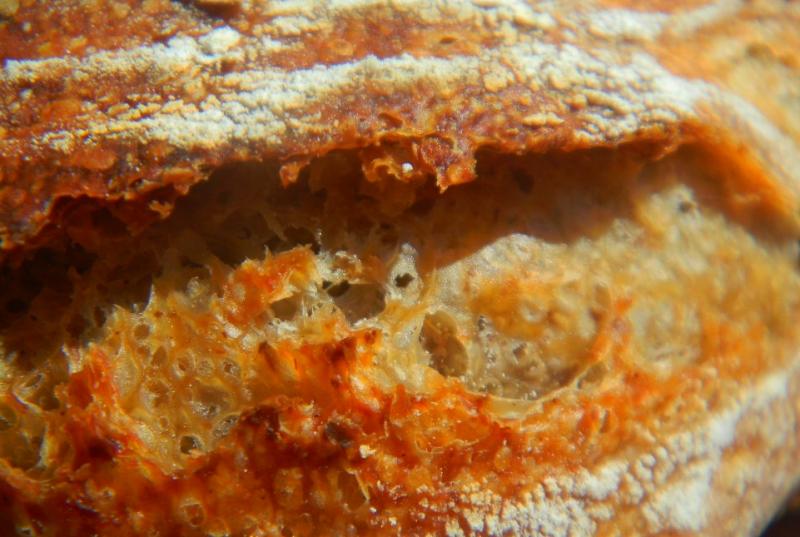
The formula follows the pictures.
Method
The levain starter was equal amounts of rye sour, desem and spelt (a new one that we will soon convert to Kamut) and built up over (2) 3 hour and (1) 2 hour build.

The levain was refrigerated overnight after nit had doubled along with the autolysed flours which included the entire formula less the levain. There were no sprouts, scald, soaker or add ins with the exception of the red and white home made malts, some ground flax seed and a tiny bit of honey.

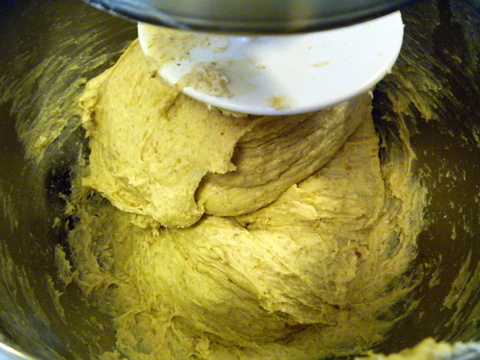
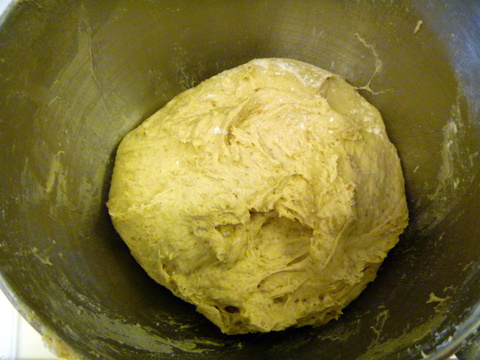
The next day the autolyse and the levain were removed from the fridge and sat on the counter for 1 hour to warm. The two were combined in the KA mixing bowl and kneaded with the dough hook for 8 minutes on KA2. The dough pulled away from the sides at the 7 minute mark. It came together easily for the 75% hydration dough.

It was rested in an oiled plastic tub, sized for a 836 g loaf, for 20 minutes before (4) sets of S& F’s were performed all in the tub. The first set was 25 stretches with a ¼ turn each time. The next set was 5 stretches less all the way down to the last one of 10 for a total of 70 stretches.

After the last S&F the dough was rested for 60 minutes before being pre-shaped and then shaped into a boule and placed into a rice floured basket seam side up. The basket was sized to allow the dough to double when it reached the top.

Sandwixh on the left made with last bakes Semolina Bread - good but not great like this bake.
The boule was them placed into a plastic trash can liner, the end closed with a rubber band. The tented and basketed boule was placed in the refrigerator for a 12 hour retard.

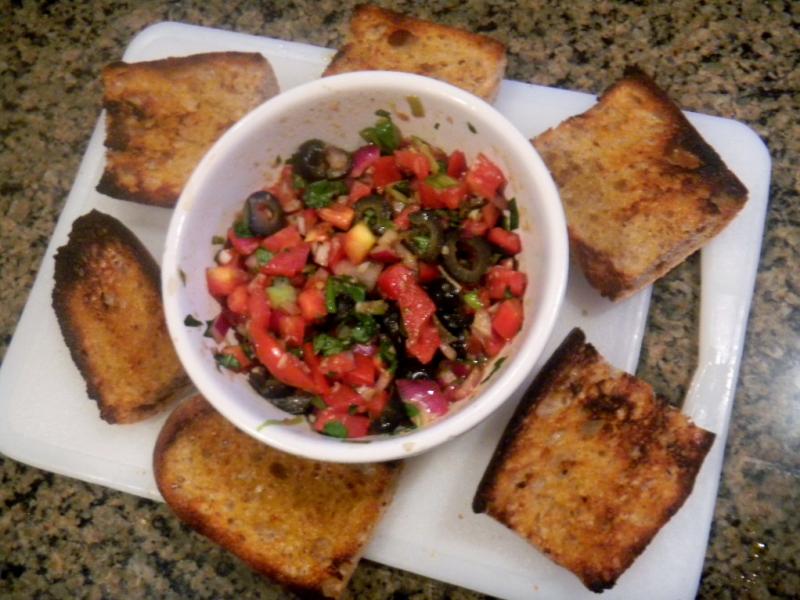
Makes a great grilled hot dog bun! cantaloupe, cherries, black grapes, chips and pico de gillo. 1/2 ea plum and peach, 3 kinds of pickles and some Mexican beans - a typical but still a nice lunch to feature this fine bread.
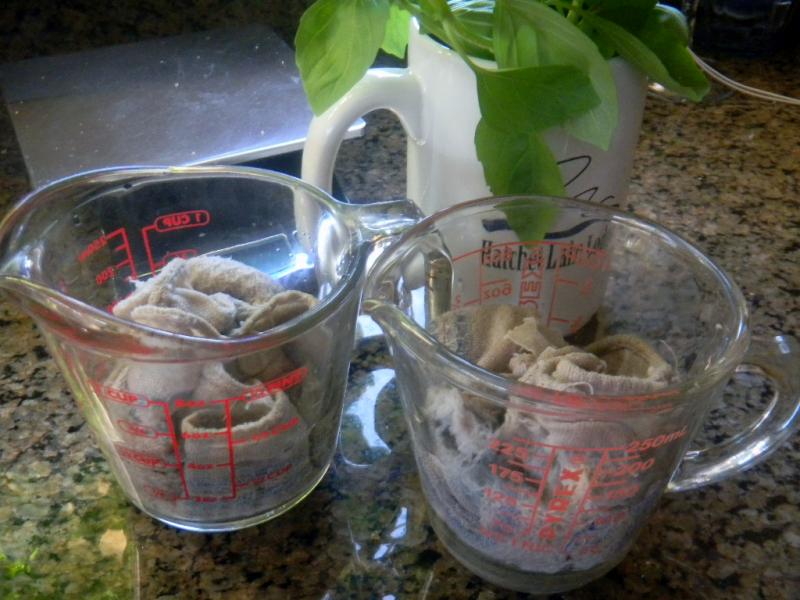
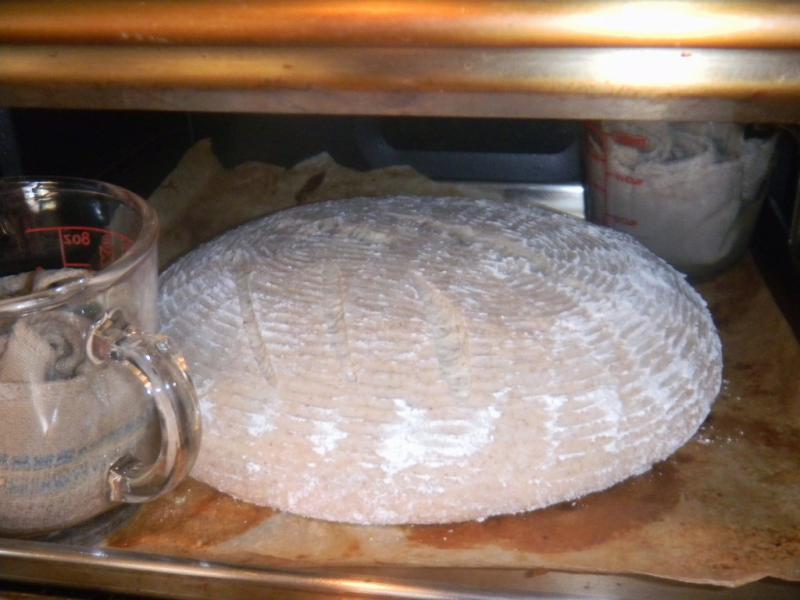
After 12 hours the mini oven was preheated to 500 F and (2) of Sylvia’s steaming cups with dish rage rolled up were micro waved until boiling. The dough was covered with parchment and then the bottom of the mini’s supplied broiler pan. The whole stack was overturned and the basket removed.
It was quickly slashed ¼” deep with a single sided razor blade, the steaming cups placed in the corner and the whole apparatus loaded into the mini oven’s bottom rack for 15 minutes of steam as the oven was turned down to 450 F. When the steaming cups were removed at the 15 minute mark the oven was turned down to 400 F convection this time.
The boule was rotated every 5 minutes for the next 20 minutes when the boule was tested for temperature. It was at 208 F and deemed done. The mini oven was turned off and the bread allowed to sit in it with the door ajar for another 10 minutes to further crisp the skin. It was then removed to a cooking rack.
| Multi grain SD Starter - 25% Whole Grain Sourdough Boule | | | | | |
| | | | | | |
| Mixed Starter | Build 1 | Build 2 | Build 3 | Total | % |
| Multi-grain SD Starter ** | 45 | 0 | 0 | 45 | 9.54% |
| AP | 0 | 25 | 25 | 50 | 14.12% |
| Dark Rye | 15 | 0 | 0 | 15 | 4.24% |
| WW | 15 | 0 | 0 | 15 | 4.24% |
| Spelt | 15 | 0 | 0 | 15 | 4.24% |
| Water | 45 | 25 | 0 | 70 | 19.77% |
| Total Starter | 135 | 50 | 25 | 210 | 59.32% |
| ** 15 g each Rye Sour, Desem & Spelt SD Starters | | | |
| | | | | | |
| Starter | | | | | |
| Hydration | 78.72% | | | | |
| Levain % of Total | 25.12% | | | | |
| | | | | | |
| Dough Flour | | % | | | |
| Non - Diastatic Red Malt | 2 | 0.56% | | | |
| Wheat Germ | 10 | 2.82% | | | |
| Dark Rye | 10 | 2.82% | | | |
| Spelt | 10 | 2.82% | | | |
| Ground Flax Seed | 10 | 2.82% | | | |
| WW | 10 | 2.82% | | | |
| AP | 200 | 56.50% | | | |
| Diastatic White Malt | 2 | 0.56% | | | |
| Bread Flour | 100 | 28.25% | | | |
| Dough Flour | 354 | 100.00% | | | |
| | | | | | |
| Salt | 7 | 1.98% | | | |
| Water | 260 | 73.45% | | | |
| Dough Hydration | 73.45% | | | | |
| | | | | | |
| Total Flour | 471.5 | | | | |
| Water | 352.5 | | | | |
| T. Dough Hydration | 74.76% | | | | |
| Whole Grain % | 25.77% | | | | |
| | | | | | |
| Hydration w/ Adds | 75.29% | | | | |
| Total Weight | 836 | | | | |
| | | | | | |
| Honey | 5 | 1.41% | | | |