Last week I finally found the elusive box that had my DLX bowl & paddles in it. Although my KA makes an appearance here for its whipping prowess, it has now been relegated back to the pantry until I next need it for grinding meat or extruding pasta. I've really been enjoying Hanne Risgaard's Home Baked: Nordic Recipes and Techniques for Organic Bread and Pastry. It has some great looking recipes, many of which use grains other than the standard wheat. The first one I've tried is her Spelt-Durum bread.
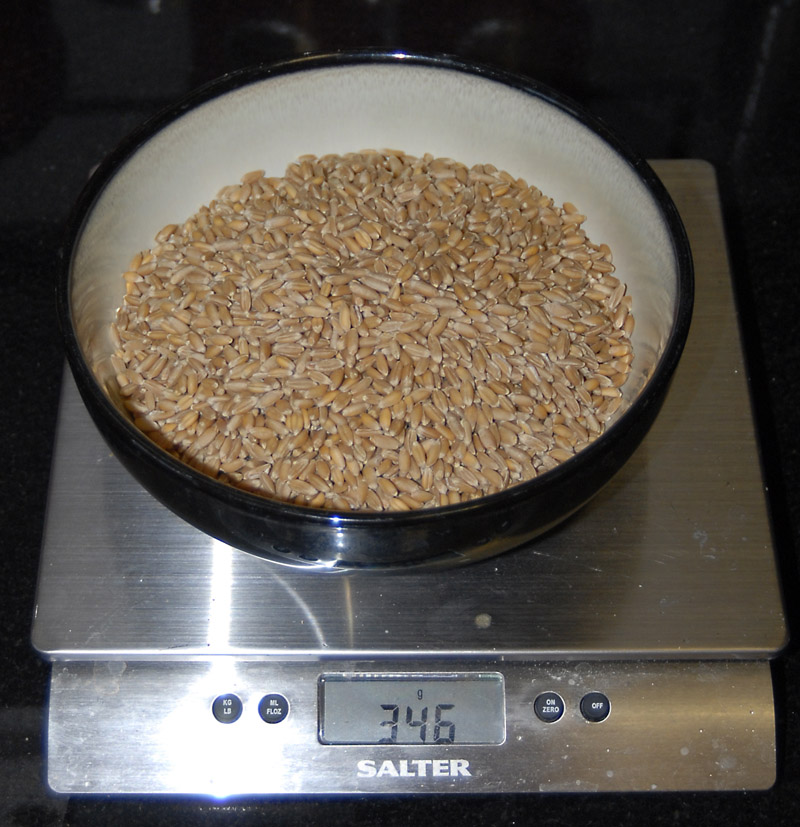
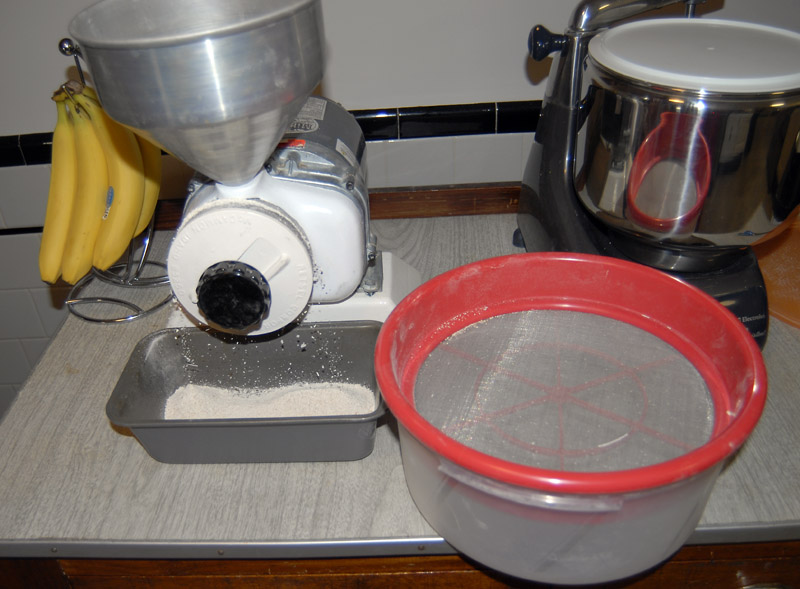
I had durum flour on hand, and got some of Bob's Mill's spelt. This is the first time I've milled it. The recipe calls for both sifted and whole spelt flour. For the sifted, I used a #30 mining seive. I don't know if the spelt grinds differently, or if I just had the stones set further apart than normal, but instead of the 15% extraction I get with wheat, I got right at 20% extraction with the spelt.
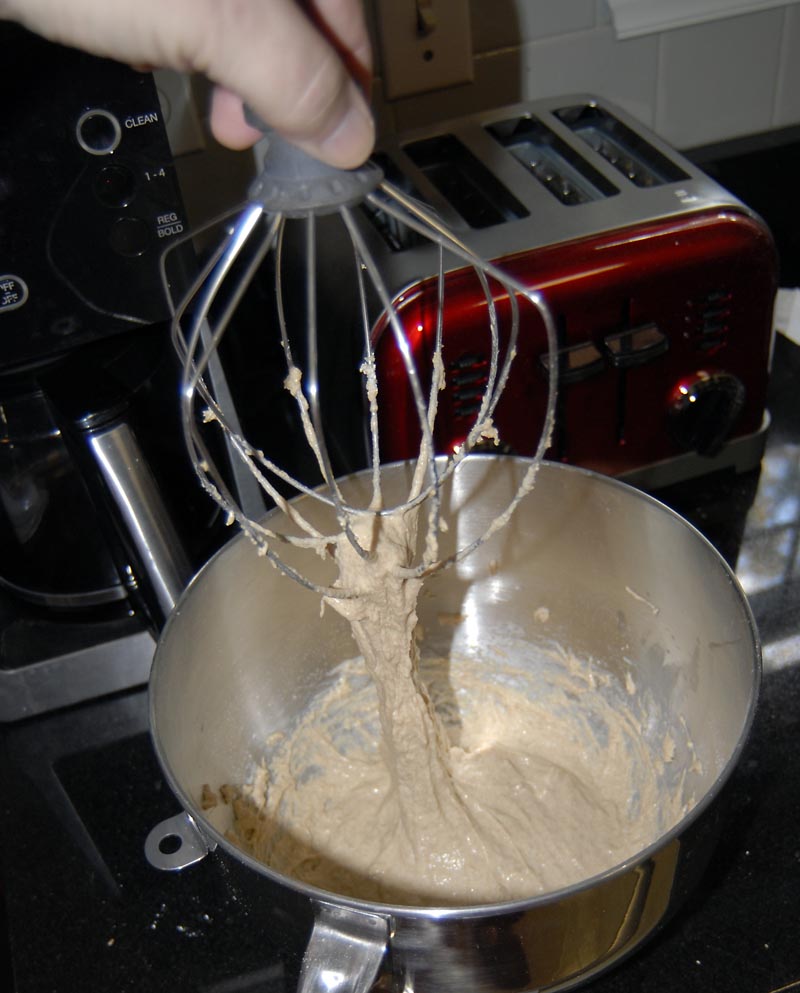
The bread uses a poolish, and calls for it to be "whipped." When I think whip, I think Kitchenaid (well, I actually think Catwoman, but that's a whole 'nuther thing). I used the KA wire whisk to beat the hell out of the 100% hydration starter. When it was done, it was like pancake batter. I poured it into a small bucket to sit overnight.

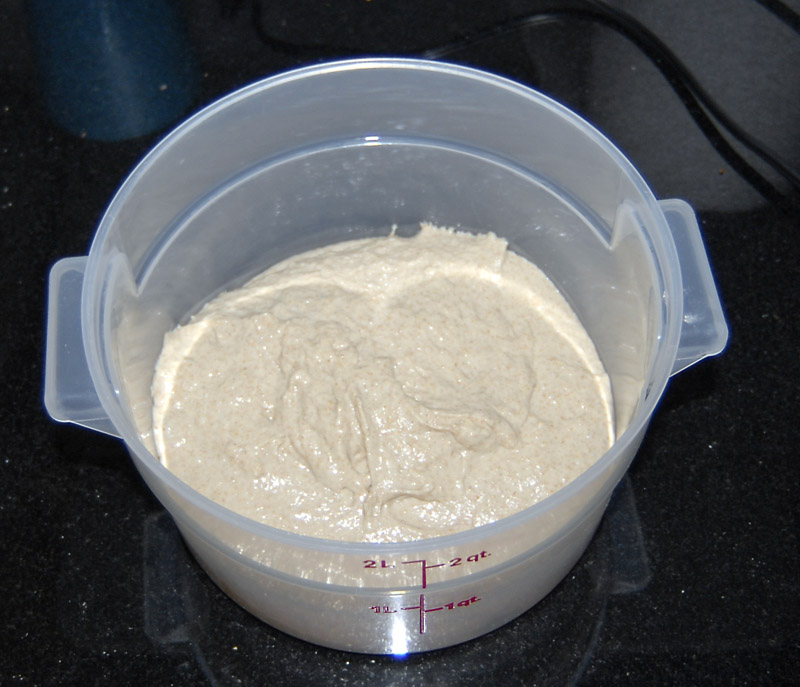
Fortunately, about 6 hours later, before going to bed, I happened to glance at it to see how things were going... Good thing I did, the top was swollen up and it was about to explode. After enduring the Great Homebrew Cherry Stout Kitchen Explosion of 1997 (a debacle that sent fermenting stout spraying across the ceiling, blinds, and cabinets -- stout that we still found traces of 5 years later when we moved out), which nearly led to murder and/or divorce, I was happy to catch this one before it decorated our new kitchen. I dumped it into the DLX bowl, covered it with a damp cloth, and went to bed.
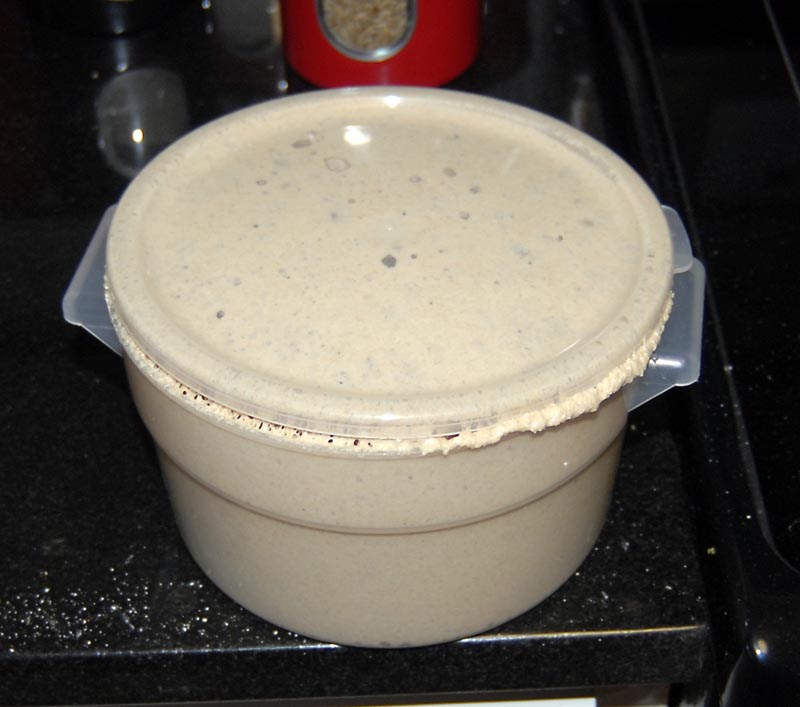
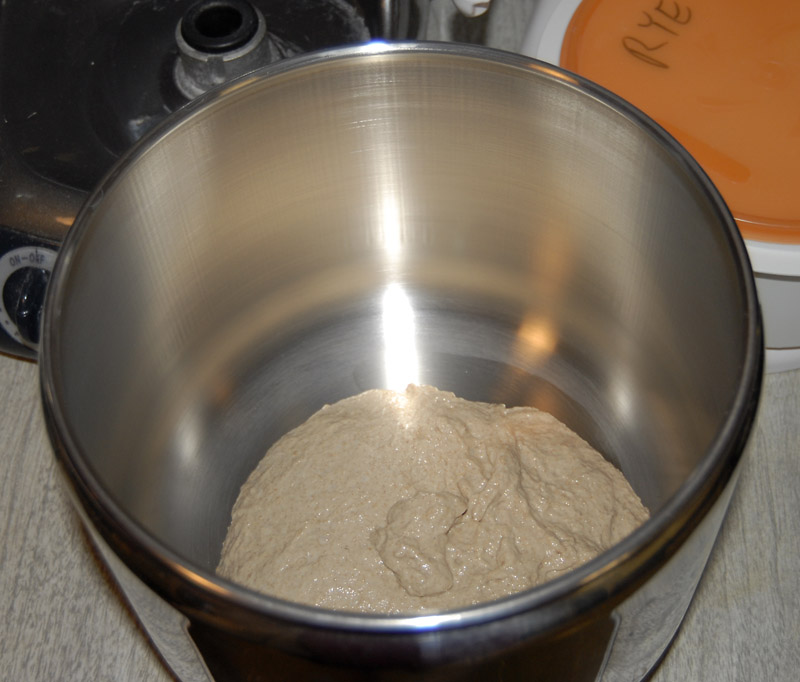
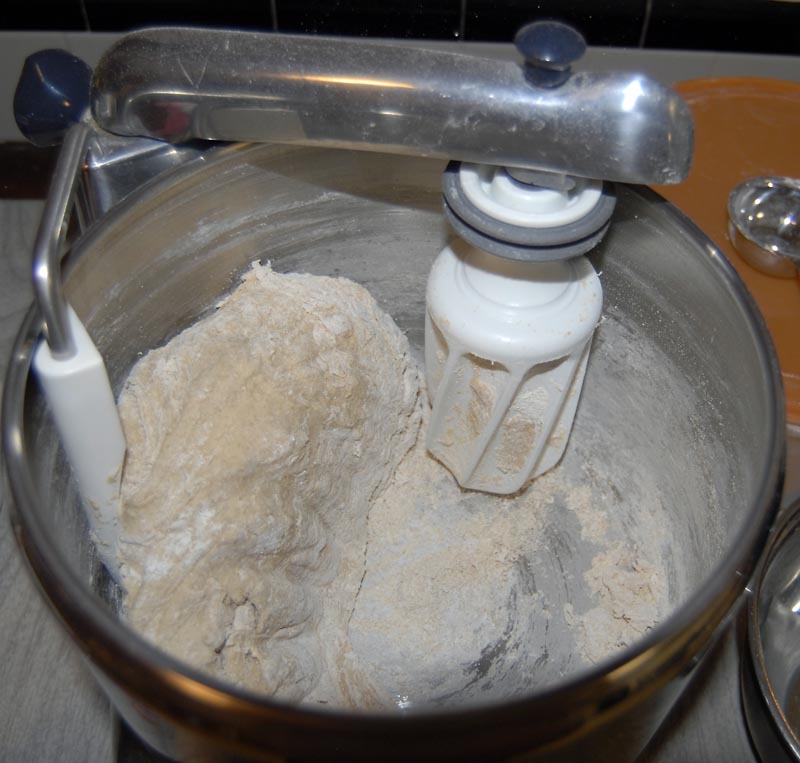
The next morning, it was nice and bubbly. I added the rest of the water and the dry ingredients and began to mix the final dough. As you can see, it was very dry at the end, and I added just enough water with a spray bottle to get it to come together. First takeaway from this batch is that I need to add more water, as you'll see later.
As per instructions, I proofed for an hour, did a stretch and fold, and proofed for another hour. The dough felt pliant, but a little dry, and was prone to the type of small surface tears I get when I do a whole grain challah.
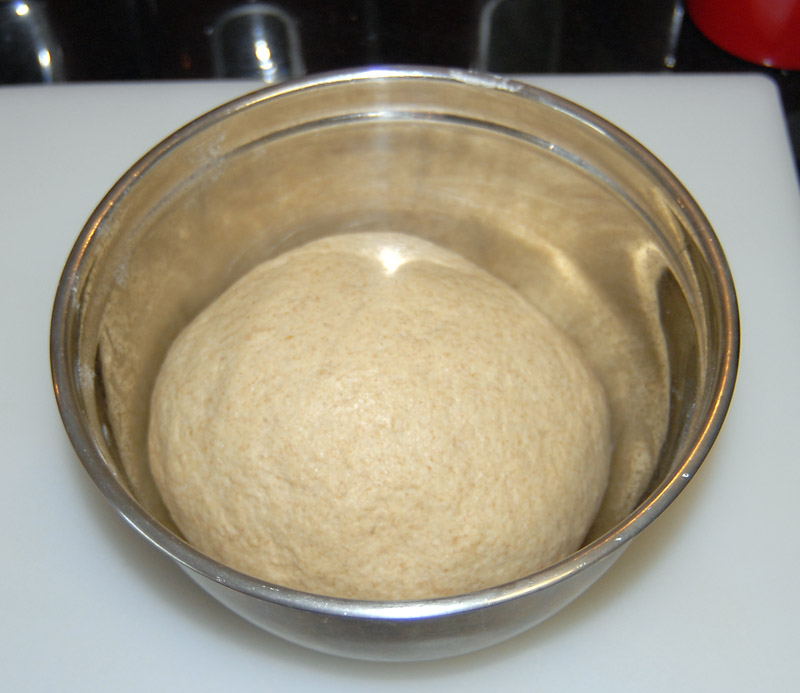
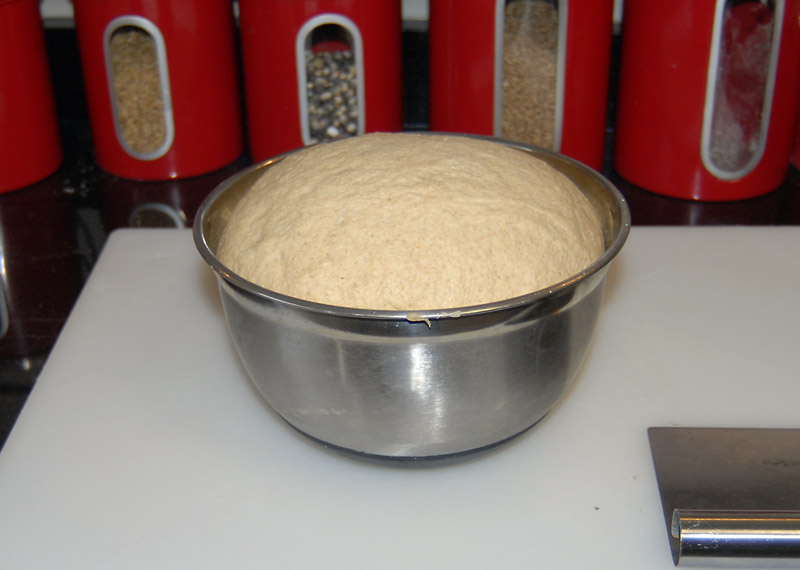
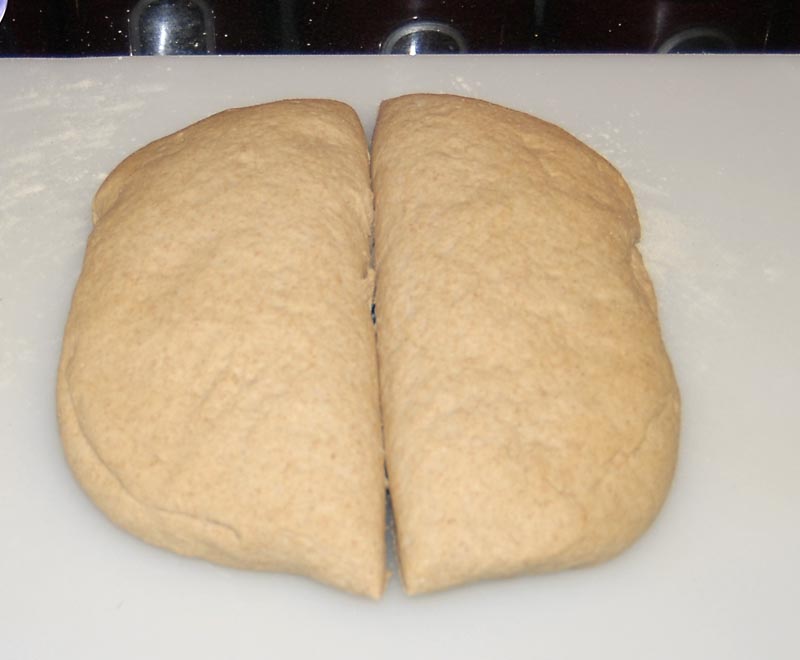
Finally it was time to shape. I had a really hard time getting the bottom of the bread to seal -- it just didn't want to form a homogenous mass. With the long loaf, I put the seams on the bottom and hoped for the best (and it ended up working. For the round loaf, the seams went up, which didn't work too well.
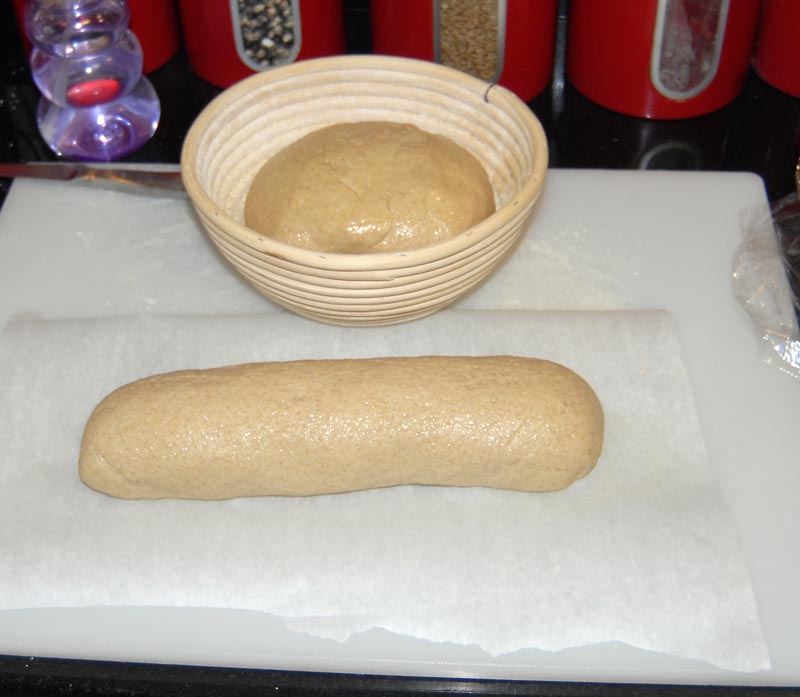
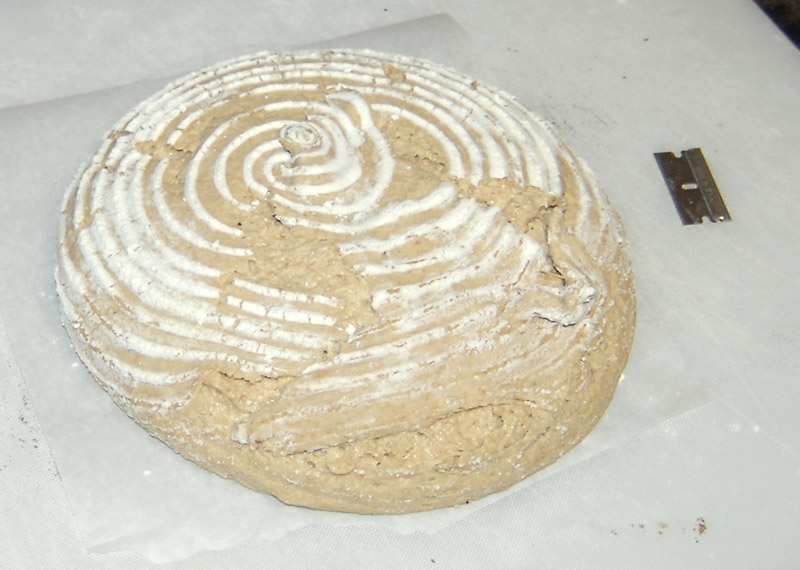
When I lifted the cloth in the proofer, I was greeted with this:
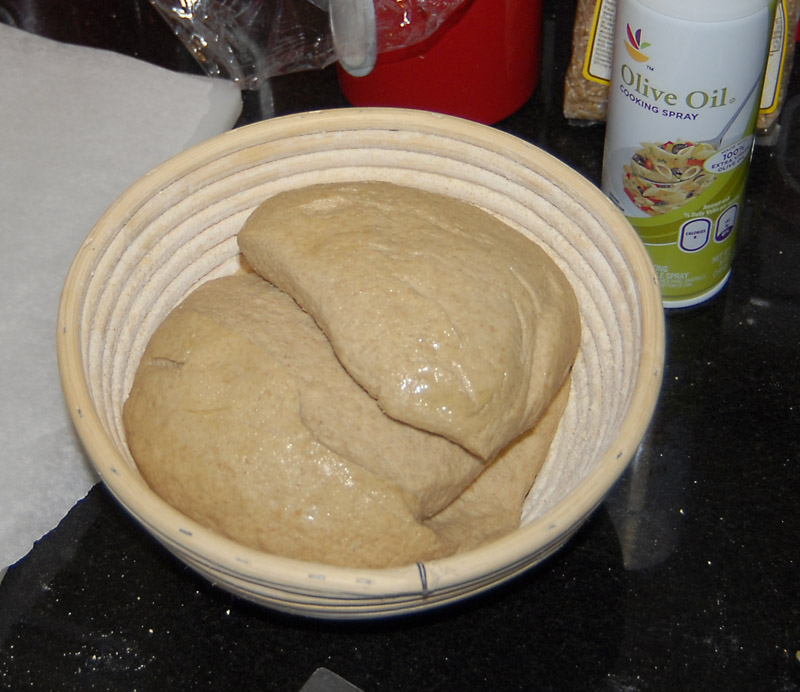
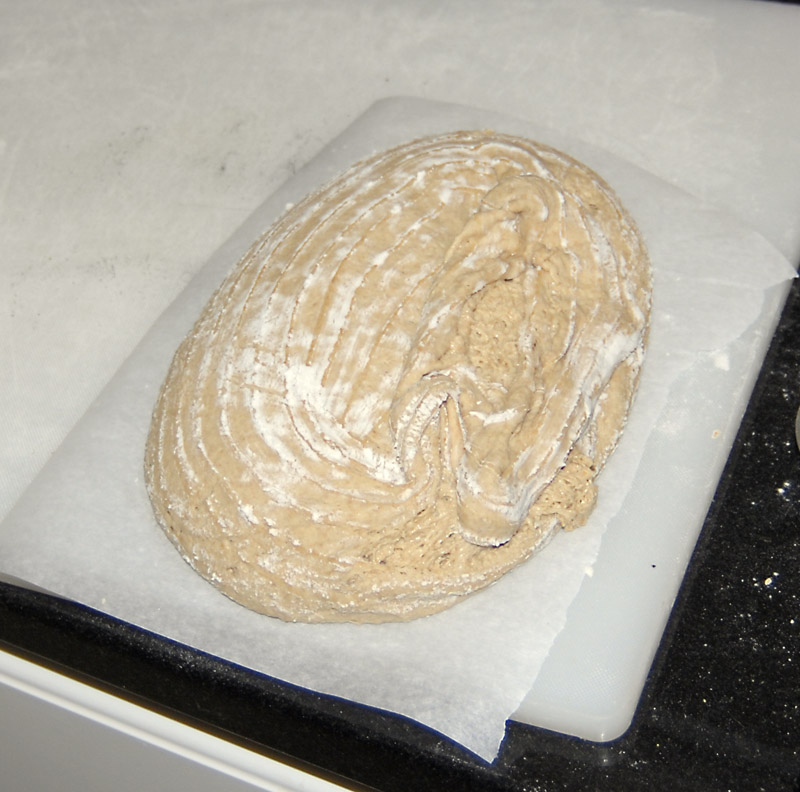
I decided to try and use its own weight to work it together (which worked with the long loaf), and inverted it on the board to finish rising.
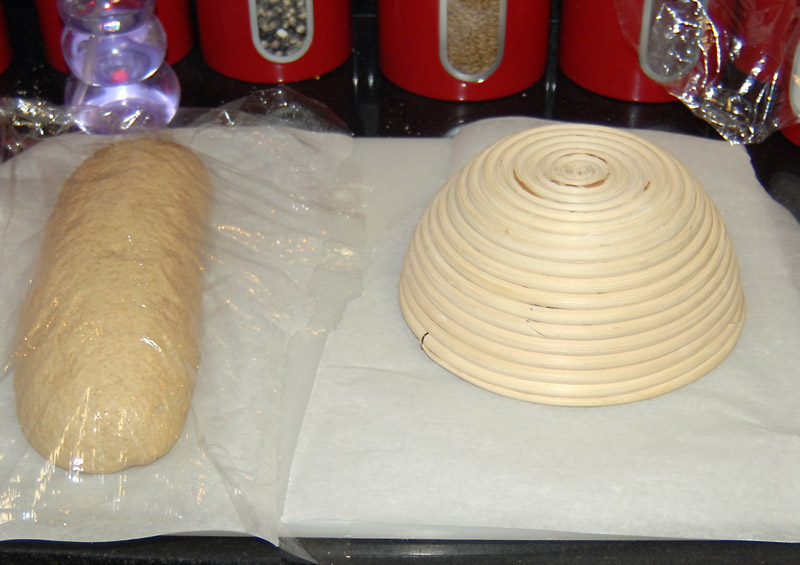
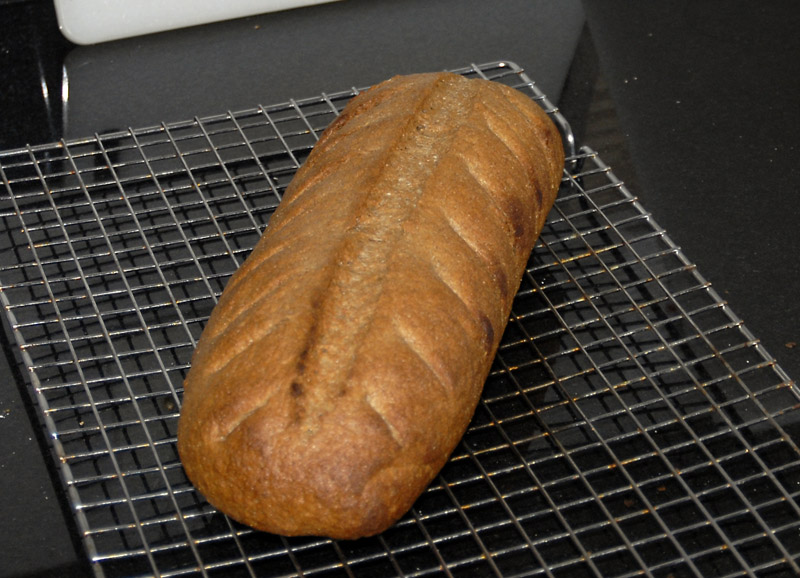
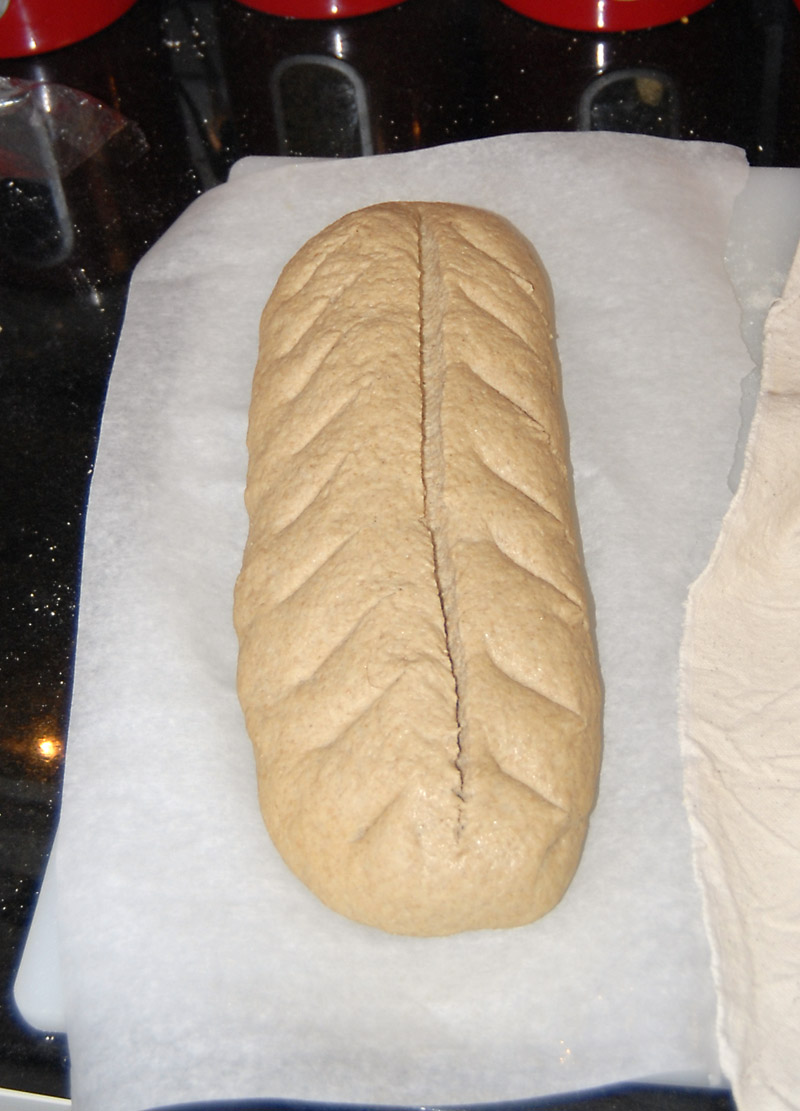
The long loaf did well. I scored it and stuck it in the oven.
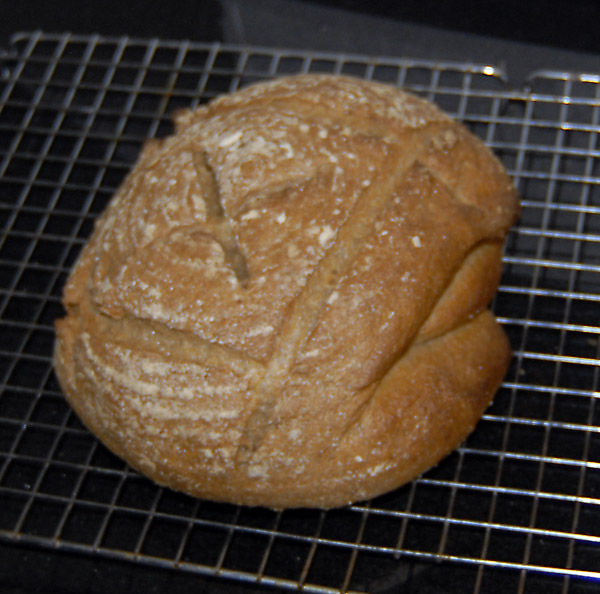
I let the other loaf continue to rise for the 25 minutes of cooking, but still had this to deal with:
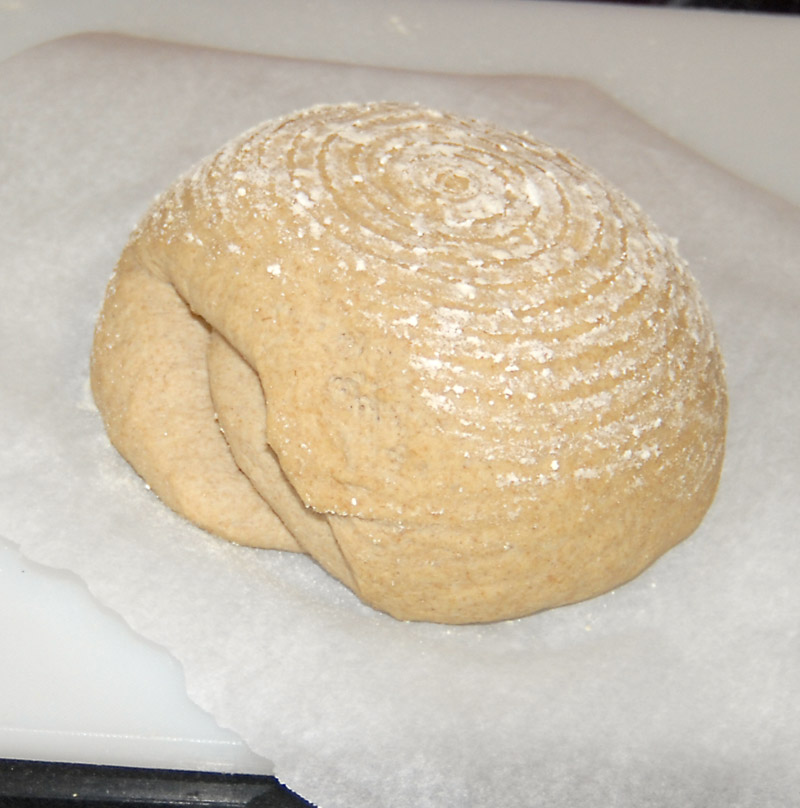
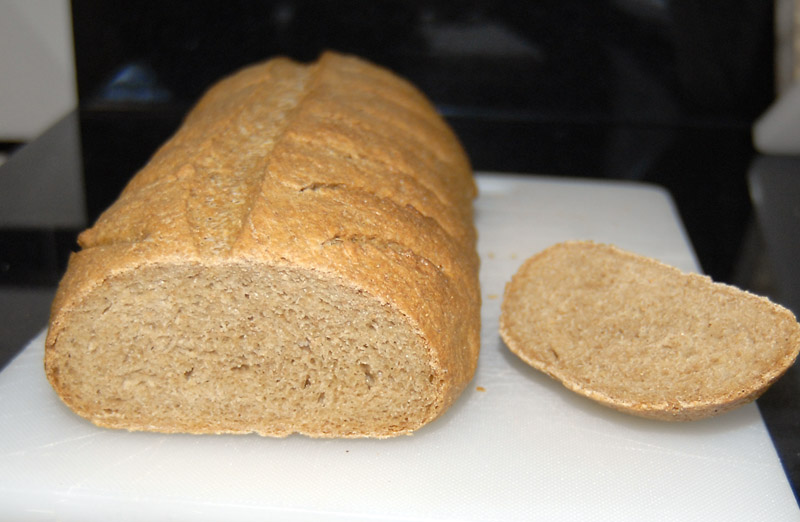
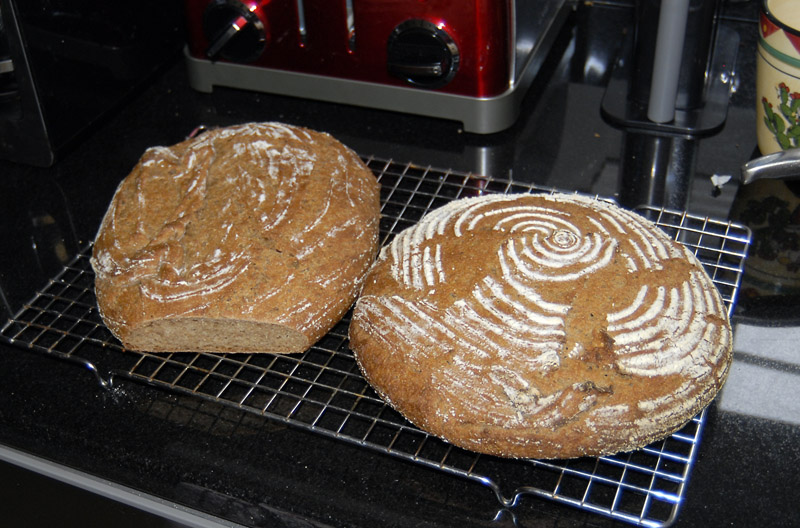
Here are the final results. One good, one not so good. Fortunately, the taste is fantastic -- I'm just not entering the second loaf in the county fair :). The bread almost tastes like it has cornmeal in it to me, and doesn't need any butter at all. I'm going to try this again in a couple of weeks, but this time make a spelt sourdough starter to use instead of the poolish, and then spike it with yeast in the final dough. I'll also add more water...