SearchUser loginRecommended BooksFavorite Recipes
|
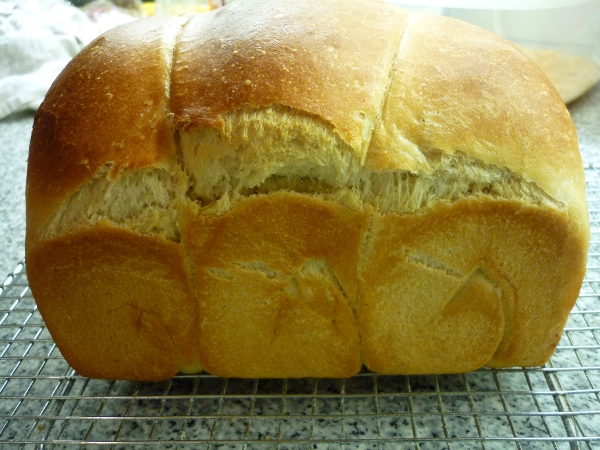
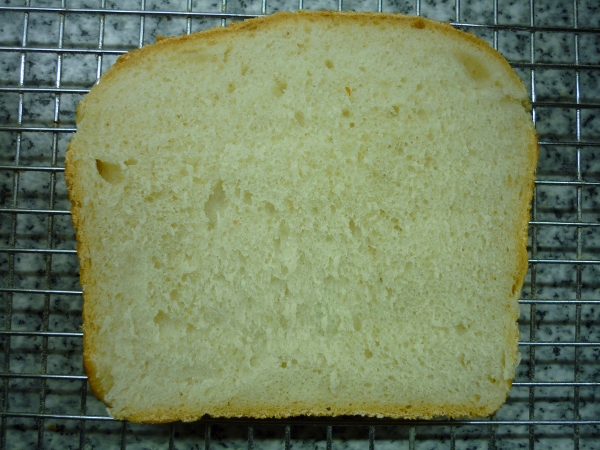
Submitted by Erzsebet Gilbert on October 18, 2009 - 10:55pm The mystery of the ghost biscuitThis isn't a problem - it's just a big conundrum to me, and I'm simply wondering whether anybody can solve it... The other day, I asked my husband what sort of bread he'd like for me to make the most. He said a regular loaf - but salty! extra salt! So I warned him that salt can kill yeast, and at best we'd have a very slow rise, but he said he didn't care - just salty! (For safety's sake I made another loaf, the same recipe but without extra salt, too!) So I went ahead with it - taking a basic loaf recipe with white flour, water, scalded milk, butter, sugar - but I upped the salt to about 4 or 5%. Like I had predicted, the rise was extremely slow and small, both in the dough and the final proof. I went ahead and popped it in the oven with steam, and it turned out to have excellent oven spring and a nice soft gold crust. We were pleased. But upon the tasting - it was salty enough, perfectly so - but for reasons I simply can't explain, it tasted exactly like the breakfast biscuits we've had in a diner in the United States! The other loaf tasted like a normal bread. Where did the biscuity flavor come from??? Spooky! I just can't figure it out! Any hints, ideas? Thanks! Submitted by carrtje on June 17, 2009 - 8:14pm My Three-Day, Rotating, Country White BreadMy three-day, rotational, Country White dough...and first attempt at blogging. I bake this bread every third day or so, and it pretty much always turns out the same. The original recipe is the basic white dough from Richard Bertinet's "Dough", which I absolutely love. I stumbled upon this process one day by accident. I woke up early one Saturday and decided it was a good day for some fresh bread. After mixing up the dough, and putting it in the oven to rise (I usually use the oven with the light on trick), my wife reminded me that we had to get ready to leave for the day...oops. I slid the dough into an oiled plastic bag, and popped it into the refrigerator. Well, as we all know, life happens fast. I kept remembering that dough ball in the fridge, but didn't seem to have time to bake it. Finally, a few days later I had the crazy idea to use it like a starter. I have since read that this isn't a crazy idea, but a pretty common one. Now it's become my bread of choice. Every few days I take the bag of dough out of the fridge, chop it into thirds, and make three batches of the original recipe, adding a third of the old dough to each. I've even gone as far as a week and a half between baking, which makes a deliciously sour loaf! A few days early, mix up this dough and stash it in an oiled bag in the refrigerator: 18 oz white bread flour 12.5 oz water 2 tsp kosher salt 1.5 tsp instant yeast
When you're ready to bake, here's what I do. First, take your dough out of the refrigerator, and divide it by weight into three equal portions. Take one portion, and cut it up into little strips or balls about an 1x1 inches. The smaller it is, the easier it is to mix into the dough. Measure out your water. If the dough is really cold, I use pretty warm water. Plop your old dough into the water and let it hang out while you measure out your other ingredients. You end up making the recipe three times, so I like to get all the old dough in separate water portions, with three bowls of dry ingredients ready, too. I pour the first batch of water / old dough into the Kitchenaid bowl with the paddle attachment, and mix on low for a few minutes until it's pretty well homogeneous. I mix the flour, salt, and yeast in a bowl by swirling it with the dough hook by hand. Next, I pour the dry mixture on top, replace attachments with the dough hook, and turn the machine on to level 2 for two minutes. If it doesn't seem to be picking up the flour as well as I like, sometimes I stop the machine, and scrape the bowl with the hook a few times. After two minutes, I turn the machine up to level four for seven minutes. Notice it's a nice, wet dough. I turn the dough straight out onto a floured surface, and tri-fold it into a ball. I put this in a floured bowl, and place in the oven until risen double. After the first rise, I gently pull it into a square, and tri fold it again. I put it back in the bowl, and rise it in the oven for a second time. After this rise, I square it, and form the final loaf. I put it on a floured tea-towel. I put a 12 inch dutch oven, with lid in the oven and preheat it to 525F Pretty much by the time the oven is pre-heated, I take the dutch oven out and set it on a cutting board. I flop the dough into it, put the lid on, and put it back in the oven for 20 minutes. After 20 minutes, I remove the lid and bake for 15 more minutes, or until it's nice and golden brown. Now, just do it again. The third batch I bag up and save in the refrigerator for next time. This bread makes really yummy, crispy toast. We ate it just this afternoon as chicken salad sandwiches. It's our all-purpose bread. Submitted by hsmum on March 6, 2009 - 10:56am basic white sandwich bread aggravationThis morning I departed from my newbie efforts at French loaves at the request of my dear husband, who enjoys same but requested "useful" bread for sandwiches. As we are currently buying a loaf or more a day, I conceded it would be useful and a good experience to learn to make a basic white sandwich bread. So....a look at one of my favourite recipe books produced a recipe for "basic white bread". It's maybe important to say that this recipe book is written by daughters of Alberta, Canada home-steaders, and so includes a lot of "down-home" basic food. It's been a fantastic and extremely reliable cookbook. The bread ingredients are not measured by weight, but as I live in Alberta myself, I would have expected their measurements & directions to be fairly reliable for this elevation. This is the recipe, to give you an idea what I'm working with. I did follow the directions exactly, even though they are quite different from what I've been doing. 2 tsp sugar 1 cup lukewarm water 2 tbsp active dry yeast 2 cups milk, scalded 6 tbsp sugar 4 tsp salt 1 cup cold water 4 tbsp butter 11 cups flour, approx (I only used 10 total) Dissolve 2 tsp sugar in lukewarm water, sprinkle yeast on top and let stand 10 min. Scald milk and add 6 tbsp sugar & salt. When dissolved, add 1 cup cold water to bring mixture to lukewarm. Add butter. Measure 10 cups flour, make well in centre. Mix liquid ingredients together and pour into well. What a mess! Busy mums don't need this waste of time! The bread dough was extremely dry, to the point where it just wouldn't seem to come together at all, so I added an additional cup or so of room-temperature water -- maybe more. This eventually brought the dough to a good consistency, but I can't seem to work it properly. I'm doing it by hand and my limited previous experience with this has went well. This time, the dough doesn't seem to want to re-connect with itself on a knead or fold. This is a gluten problem, right? Is it just something with this type of dough, maybe (i.e. different gluten development than with a French loaf)? I tried folding it, letting it rest for a few minutes and then coming back to it a couple of times. Definitely looks better and is smoother each time, but still won't fold in on itself properly. It's as if it's too dry to do this, but i sure wouldn't have thought so given the consistency. Thoughts? Karen
Submitted by Anonymous on January 8, 2009 - 12:32pm White Bread - A King's twistSalutations, This is a very interesting Blog post, fresh, from King Arthur Flour:
I'm not a big fan of White bread but I did find that very interesting. Submitted by CountryBoy on July 31, 2008 - 3:18pm White Bread of P.Reinhart BBA, p.269I will be baking the following recipe tomorrow and tripling the quantities. But have no bread flour, just KA All Purpose flour. Can I do it and add Vital Wheat Gluten to make up for the lack of bread flour? If so, how much? Thanks. The recipe is: Sponge:
Dough
Submitted by goetter on October 27, 2007 - 6:03pm Cacao nib sourdoughA professional baker acquaintance of mine recommended that I work with more 100% white flour doughs for practicing my hand-shaping skills. White bread always reminds me a little bit of candy, and I happened to have on the counter some cacao nibs from garnishing the previous night's hot chocolate: hence, Cacao Nib Sourdough Bread. Preferment: 140g KA white AP flour; 84g water. Target 60% hydration Soaker: 15g roasted cacao nibs (Scharffen Berger brand), crushed lightly in a mortar; 20g water Submitted by smartdog on June 18, 2007 - 7:05pm Plain White Bread (But, Ohhh so soft and yummy)I posted the recipe in my blog today, I thought it was "photo worthy" so...here you go. :)
-------------------- Submitted by smartdog on June 18, 2007 - 6:40pm Eureka! I've found the best white bread recipeWonderfully Soft White Bread 1 cup tepid water |
ALSO ON |