SearchUser loginBread BooksFavorite Recipes
|
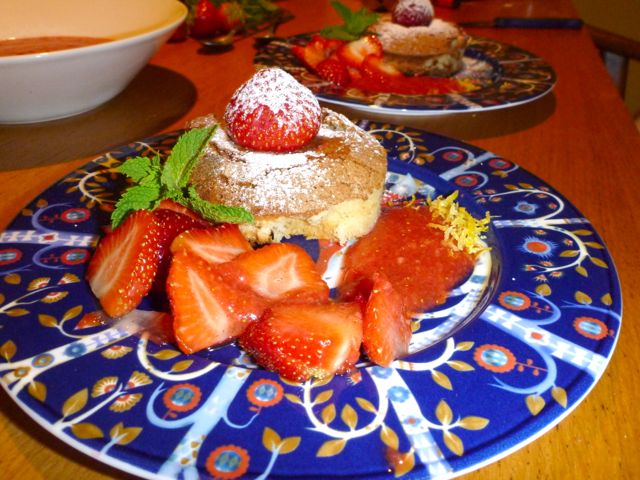
Submitted by freerk on August 13, 2011 - 2:13pm sautumner frangipani; diverting all power to the piesEven though summer just doesn't seem to happen this year in these parts of the world, there are some wonderful summer fruits to be enjoyed. Being under a strict bread baking embargo right now due to an overfull freezer, it seemed best to take advantage of the local produce (and fix my weekend baking crave in one go). Here they are: 1x full fledged "summer of your dreams" in the shape of an almond lemon torte with fresh strawberries;
And (yesterday), the dessert that's more in touch with the slightly worrying autumnal meteorological reality over here:
Almond frangipani with apples and lemon in a pain d'epices caramel sauce. The sauce, made with apple juice, brown sugar and Monin's "Pain d'Epices"-syrup, tweaked with a hint of ginger and chilipowder, was especially tasty. It tasted pretty much like the summer of 2011: spiking bright yellow with sunny lemon and juicy almond meal, fading away to brown via the ginger and the pain d'epices, to come full circle in acidity in the apples. Not summer anymore, but no fall yet. I call it sautumner frangipani! Freerk P.S. You would do me a big favor endorsing my BreadLab iniative. Every "like" will get me closer to realizing a 6 episode documentary/road movie; chasing the best bread Europe has to offer. Thanks in advance! Submitted by breadbythecreek on May 31, 2011 - 3:55pm Survival of the Fittest – Which Fruit Yeast Water to Keep?I’ve been experimenting with various types of yeast water for several weeks now. I now have five separate jars percolating on the counter or in the refrigerator. Since I’ve discovered that very little if any fruit flavor is discernable in baked breads made from these waters, it makes sense to me to keep only one. It also makes sense to me to keep the one that is the most effective. I have heard that raisin yeast water is the strongest and most active. When I first started experimenting with these waters, I made a raisin/apricot yeast water, but the color and murkiness was not appealing, so I threw it away shortly after it was created. Today I am making a new jar with just raisins and another with just apricots. These will be tested against the winner of this trial. To see which of my active yeast waters are the more effective, I created test waters containing 30g each of peach, blueberry, strawberry and cherry. To these amounts I added 90g fresh water and one sugar cube. These jars were left out overnight to activate the yeasts. This morning I took 3 grams from each of the jars and 3 grams of AP flour. These were mixed together and placed in identical test-tube like glasses (tall and very narrow).
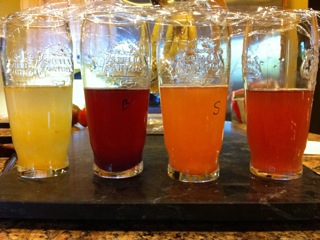
9:30am, roughly 3 hours since start time Now it is four hours into the test. Gauging from my ongoing work on the blueberry yeast water, this first build will take approximately 7.5 hours to plateau. Halfway through, it seems that the growth pattern of the testers matches too closely to the order in which the tests were prepared, lagging perhaps by no more than 5 minutes from the first (cherry) to the last (peach). Also, both the strawberry and the peach were slightly more hydrated than either blueberry or cherry. At 12:31pm, roughly 6 hours later, it appears that the cherry levain is far stronger than either the blueberry or the peach. The strawberry levain is only slightly behind the cherry in growth.
At 2:09pm, roughly 7.5 hours later, it is still cherry in the lead. At this point I noticed that the glasses are not identical – some are deeper than others. This accounted for, the cherry is still slightly more effective than the strawberry. Also, approximately at this same time, cherry had reached its maximum height, approximately double the start level. Strawberry went on to double at approximately 8 hours, as did peach. Blueberry, interestingly enough, did not achieve more than a 50% growth over the entire period. So there you have it. In terms of overall effectiveness for a first level build, cherry is the strongest of the test set. The rest are not as effective for raising culture in a given period of time.
Next trial, Cherry against raisin and apricot. Stay tuned.

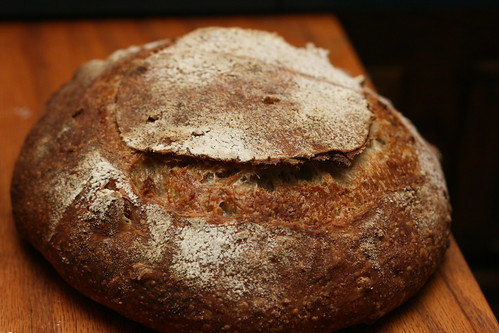
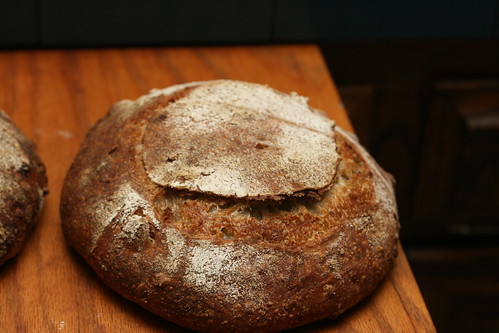
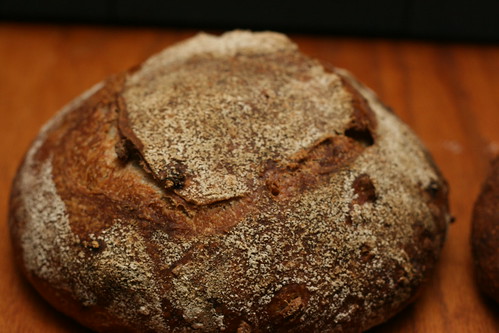
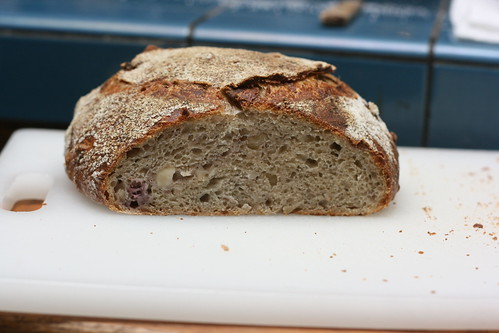
Submitted by breadbythecreek on May 24, 2011 - 8:45am The Fruit-fed Yeast Adventure/MadnessOver the last couple of weeks I've been experimenting with the properties of fruit based yeast waters. Starting with a strawberry water, I've so far transformed Txfarmer's 36+ hr baguette from a standard sourdough to one fed strawberry yeast water. The result was as to be expected, crunchy crust, moist crumb, not a hint of sour, and interestingly, a surprisingly dark color despite the exclusive use of AP flour in the dough. Strawberry Yeast Water Baguette, and one with Peach Yeast Water - Same recipe, same flour. I have also created a number of boules using Ron Ray's Darling Clementine recipe. I've used that same boule recipe to create a strawberry, cherry and blueberry boule. From these loaves I have come to some conclusions. Once out of the oven, these boules are virtually indistinguishable in terms of color, crust, and crumb. The only distinguishing feature was the strawberry loaf aroma while it was still baking. So, my conclusions are that it matters little exactly what kind of fruit one uses to cultivate yeast (except of course for those containing actinidain or actinidin), only that the yeast exist. Fruit based yeast from these types of waters will alter the color and consistency of the bread but will not impart any fruit essence upon baking. The reddish/purplish fruits that I tested will significantly alter the color of the crust and crumb, and the relative amount of sugar present in the water will also affect the taste (the blueberry water, made from a quantity of dried blueberries was quite sweet to begin with). Strawberry, Cherry, Blueberry Boules: Beauty Shots, Profiles, and Crumbs
I think after this experiment, I'll retire all but the strawberry water, as it is the most pleasing in terms of aroma, at least when it comes out of the oven. So, in conclusion, choose your favorite fruited yeast water and keep only one type. Also, don't forget to feed your sourdough starter too because what is life without a little tang? Happy Baking! -Pamela
Submitted by SumisuYoshi on December 17, 2009 - 12:05am Sourdough Strawberry Banana Macadamia Nut LoavesAfter the pear bread worked so well, I got it into my head to try some other fresh fruits in breads. I really like strawberries so they were the fruit that immediately came to mind, even if this isn't the best season for them (ones that are only a bit ripe actually work better for bread due to their crispness). Then when I thought of strawberries, bananas came to mind too, they make such a wonderful pair. So, banana puree providing hydration, and strawberry chunks in the dough. But it could really use a nut in it too, so I chose macadamias, the only nut that really felt to me like it went with the two fruits. I also took that inspiration a step further and added macadamia oil and butter to the dough. This bread is quite moist, and a bit heavy, though not in the stone in the stomach manner! Strawberry Banana Macadamia Nut Sourdough Makes: 2 medium, or 3 small loaves Time: Day 1: Elaborate starter. Day 2: Mix final dough, fold dough and retard. Day 3: Shape, proof, and bake. If using commercial yeast, you can do this in 2 days. Day 1: Make preferment. Day 2: Mix final dough, fold and ferment, shape and proof, bake. Ingredients:
Directions:
One thing I was surprised about with this bread is the strength of the macadamia flavor. I was hoping for a bit more strawberry and banana flavor, but as it is they provided a nice backdrop for the macadamia flavor that infuses even parts of the bread with no nut pieces in it. So, it wasn't exactly what I set out to create, but it ended up being delicious in an entirely different way. As a note, if you don't have macadamia nut butter, you can probably make your own in a food processor, blender, magic bullet, etc. with nuts and just a little bit of oil. You can also substitute another oil for the macadamia oil, but it won't add quite the same flavor. And this is, of course, my weekly submission to YeastSpotting! |
ALSO ON |