SearchUser loginRecommended BooksFavorite Recipes
|
Submitted by JT on September 5, 2009 - 11:23am Help! First time Seed Culture/Barm went horribly awry!"Hi all, So this week I tried to make my first sourdough, and seeming as how I live in San Francisco I was pretty excited about this! I have been thoroughly enjoying "The Bread Baker's Apprentice," so I figured I'd use Reinhart's formula for Seed Culture, Barm and Starter. From Day One, starting the Seed Culture, it looked like something was wrong. First off, my dough was quite wet - almost the consistency of pancake batter, while Reinhart's instructions said the Day One mixture should be a "ball" and to be careful to make sure all the flour was hydrated. I double checked my measurements, and still I had the pancake batter consistency. Moving on to Day Two, Reinhart said to expect ver little if no rise. My Day One mixture bubbled like a jaccuzi and grew to twice its size in 24 hours. None the less, I soldiered on. At the end of Day Three, after having thrown out half the Day One/Two mixture as per the instructions and added the new ingredients, everything just stopped. In the next 24 hours, the Culture showed no activity at all. I let it sit another 24 hours, and this morning what I saw was this unrisen goo with a film of vinegar-smelling ooze on top. Terrific. So today I'm starting over...and looking for help. I started again with the Day One formula, and again, it was the consistency of batter (4.25 oz. rye flour to six ounces water). So I added more flour until it truly was a ball and had the consistency of a regular dough. Any other suggestions? Any assitance would be greatly appreciated! Submitted by Sketti on July 28, 2009 - 4:24am Cheesy smellHi, newbie here :) I started my first ever starter three days ago. I've been keeping it in my room and its been bubbling away since. I've been feeding it once a day. It looks fine, doesn't seem to have any mold and quite wet. I was wondering about the smell though. Yesterday it was a pleasant sort of bready smell but today it smells more like cheese or spoiled milk. It's kind of a sickening sort of smell. I was wondering if it was normal for it to be unpleasant at this stage. I tossed about half of it today and fed it as the instructions I'm following say to do. What should I expect from now on? Submitted by Lobarr on July 27, 2009 - 11:03am Managing Sourdough Starter ProperlyI am brand new to this forum and haven't had much time to peruse the site, but do like what I see thus far and am hoping to gain much information as I have time to read and learn. Hopefully someone is online now and can give me some feedback ASAP. Previously, I baked the Sourdough Banana Bread someone posted and it was the best banana bread we've ever eaten! It rose good and had such great flavor! I'm getting ready to bake more of it, which brings me to this post! I'm new to using and maintaining Sourdough Starter so there is much I do not know regarding taking care of it. How do I know my starter is okay to use if I have not fed it recently? I've "heard" it is important to feed Sourdough Starter at least once or twice the day or night before you are to use it. I haven't fed my starter for about 3 or 4 days. Does that mean I shouldn't bake with it today and should instead feed it today and bake tomorrow, or is there a way to tell it is healthy and okay to use today? I would prefer not to waste ingredients if the starter is not okay to use, thus my question. Thanks in advance for feedback. Submitted by davidg618 on July 25, 2009 - 9:54am Rye sourdough starter: a questionI'm about ready to tackle rye breads made with a sourdough starter, but I have a question. I've been reading Hamelman's Bread, and he poses two ways to make a rye sourdough starter: one begins with an established starter--presumedly, all white flour; the second way begins by making a rye sourdough starter from scratch. I have an all white sourdough starter I'm happy with, but somehow it seems I might be cheating myself converting, rather than creating a rye starter. Please offer your facts, opinions and comments. Thanks beforehand, David G Submitted by kranieri on July 15, 2009 - 1:01pm 100% whole wheat sourdough, missing the brick oven...since returning from a month of wood-fired oven apprenticeship, (a little example of the bread i was helping bake...)
i have been trying to recreate the magic in my little electric oven. lately i've failed mostly by over-proofing and being forgetful or impatient. in summary : really all over the place and not documenting anything. but in coming to this weeks bread i decided to be a slave to the bread and keep track of all its little movements and stayed true to the method i had previously been taught. here's the outcome. CRITICISMS? WELCOME.
the process: Monday 9:30 am -- feed starter (kept at room temp after feeding til..) 1:30 pm -- popped it in the fridge so i could get out of the house Tuesday 11:00 am -- made up the bread, kneaded etc, let it hang at room temp 5:30 pm rounded, rest, shape, back into the fridge for the night Wednesday 10:30 am -- out of the fridge to come up to fully proofed 12:30 pm -- into the oven. the recipe is as basic as it gets. flour, water, starter, sea salt.
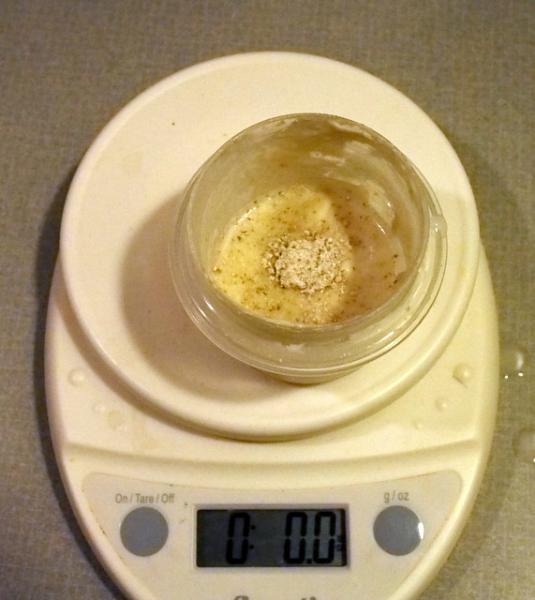
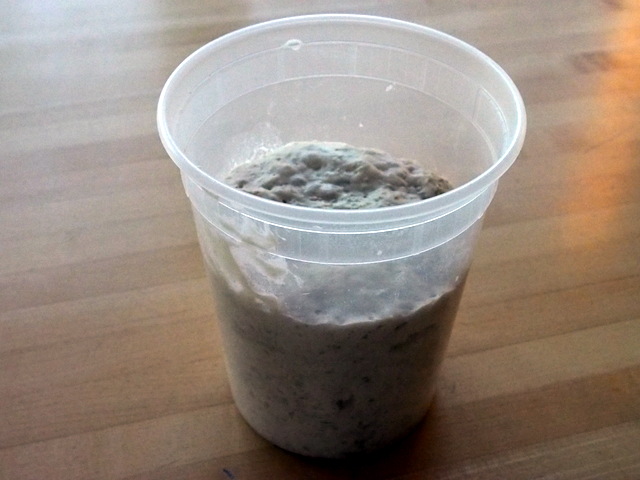
Submitted by LeahM on July 14, 2009 - 3:18pm baking with a new starter--help!Hello all, I am 5 days into making my first sourdough starter (using the directions from this post: http://www.thefreshloaf.com/node/10251/starting-starter-sourdough-101-tutorial) and all seems to be going well (fingers crossed). However, I haven't been able to figure out exactly what the process is for using the starter in a bread dough recipe. I plan on refrigerating it and baking weekly. So, I remove the starter from the fridge, feed it, and wait a few hours. Can I remove a part to bake at that point, or should it go back in the fridge for a few days? Does the bit I remove have to be fed again or prepared in any way before using it in a dough? (I was thinking about starting with the Norwich sourdough from the Wild Yeast blog) Thanks so much for the help! Leah Submitted by davidg618 on July 7, 2009 - 12:33pm Building a Formula-ready levain (starter)I think one of the biggest differences between commercial artisan bakeries, that bake every day, and the amateur that bakes once or even twice a week is how each handles levain day-to-day. From my reading I've gleaned the commercial baker keeps his or her levain (starter) at room temperature, and feeds it on a periodic schedule every 8 or 12 hours. (I'm an amateur, so, experts, please correct me if I'm terribly wrong). on the other hand, most amateurs keep thier starters at refrigerator temperature (~40°F), and feed them once weekly, or less often. I am less certain how commercial bakers maintain their starters' hydration, I assume, however, that perhaps as little as one day earlier they prepare a chosen amount of their maintained starter by feeding it an amount of flour and water that adjusts its hydration to the target for a days baking. Amateurs keep their maintained starters at a fixed hydration, and, although some amateurs maintain their starters very dry (50%-60%), or very wet (~200%), the usual maintenance hydration is ~100% to ~125%. The challenge for us amteurs is, "How do I convert an alive, but nearly dormant, relatively cold starter to a formula ready starter, i.e., the correct formula specified starter weight and hydration?"; one might also add, in a reasonably short time. Some recipes intruct a single feeding, without changing the starter's hydration, followed by a fermentation period--usually 12 hours--and adjusts the dough's flour and water weights to achieve the desired dough hydration. Some amateur bakers convert their maintained starter in one feeding to the target starter weight and hydration, and then feed it an additional one to nine times over a period of one or more days. Both these approaches work, and each have subtle secondary consequences, usually effecting the final bread's flavor. It's not my intent judge the merit of those consequences, merely note they occur. What I want to do is describe the process I use, explain why I use it, and show some results. First of all, I have two primary goals for creating formula-ready starters the way I do. One is related to the final dough. I want to achieve a very active starter, strong enough to produce two strong proofs, in moderately short time, i.e., 2-3 hours each; and with sufficient reserve to provide strong oven spring. And, I want to build this formula-ready starter in no more than 24 hours. The second goal: I want to maintain only a barely necessary amount of starter, e.g., around 200g, 100% hyddration, and fed every two or three weeks. I've succeeded in reaching both goals using a 3-build approach that triples the amount of starter with each build, and adjusts the hydration by one-third of the difference between the maintained starter's hydration and the formula specified starter hydration. A couple of definitions, and a little math: seed starter: the weight of maintained starter that when tripled 3 times yields the formula-specified starter weight. Intermediate starter: the building starter, i.e. the starter at any time between the beginning of Build 1 and the end of Build 3. formula-ready starter weight = seed starter weight x (3x3x3) = seed starter weight x 27; therefore: seed starter weight = formula-ready starter weight/27. But, I always lose some--it sticks to the stirrer, and the its container's walls, so I add a little more, e.g. 20g. intermediate starter hydration = seed starter hydration +(formula-ready starter hydration - seed starter ready hydration)/3 x # of last build. An example: Formula specified starter: 480g, 60% Hydration Seed starter hydration: 100% Added to make up loss: 20g Hence: Seed starter weight = (480 + 20)/27 = 19g (rounded to nearest whole number) Intermediate starter's hydration = 100 +(60 - 100)/3 x 1 or 2 or 3 = 100 + (-40)/3 therefore: during Build 1 the Intermediate starters hydration = 86.7; during build 2 73.3%, and during build 3 60%. Intermediate starter weights are: Build 1, 55g, Build 2, 167g, and Build 3, 500. (all are rounded to nearest whole gram.) Now, I'm not going to do the Baker's math to calculate the flour and water weights added each build. I built a spreadsheet to do that for me, but it is possible by hand using Baker's math, and the intermediate starter weights and hydrations. The results: Below are a series of five photographs that visually document the example above. Why do it this way? I reasoned that adding more than twice the weight of the seed starter (or the intermediate starter weights) would dilute the density of the yeast critters beyond a "strong" density, i.e. each build should peak within eight hours or less, Yeast have little or no motility, so after a time, they are surrounded by their waste products: carbon dioxide and alcohol, not food, so production slows down or stops. Stirring , kneading dough, etc. all redistribute yeast, by-products, and food, but I don't want to be burdened with stirring. Furthermore, my goals focus on yeast production, not bacterial growth. (There are other things one can do to develop flavor contributing starters.) 1. Seed Starter: 19g of my refrigerator maintained starter.
2. Build 2. at its peak 16 hours after starting. I didn't photograph build 1, even at its peak it didn't cover the bottom of the container.
3. Build 3 at zero hour, I'd just added its flour and water additions and spread it out in its container.
4. Build three after only 3 hours (19 hours from the beginning); I consider its growth a good subjective indicator of its strength.
5. Build 3 after 7 hours (23 hours from beginning). You can see evidence it's peaked by the slight deflation around the edges. Immediately after taking this photo I made the dough...
...for this bread. This is D. DiMuzio's San Francisco Sourdough au Levain (firm starter) formula, but I used it for a Thyme-Feta Cheese-Toasted Chestnut vehicle, so it probably doesn't exhibit all the oven spring it might have in an uncluttered dough. Nonetheless, I think it stands a good example of my goal.
Crumb
Submitted by pietro79 on July 5, 2009 - 8:26am throwing out part of starter?hello i've created a healthy starter following Susan's instructions over at Wildyeast blog I would like to know, why must we throw out part of the starter when growing it? Is it for biological reasons? Does it strengthen it somehow? Or is it only because you'd otherwise end up with a room full of the stuff? For example, after day 2, I had 300 grams of starter. I then kept 75 grams of it to which I added 75 grams of flour and 75 grams of water, as instructed. What would happen if I kept all 300 grams, and added 300 grams of water and 300 grams of flour?
-Pietro Submitted by leahweinberg on July 1, 2009 - 12:14am Rye StarterHello and good morning! I'm building up a rye starter for a rye bread that I've been dying to make now for a few days. I remember reading that rye flour is denser and so the hydration of the starter should be adjusted. Is this accurate- and if so, how should I adjust it? Thanks! And Happy Canada Day! Submitted by Mini Oven on June 30, 2009 - 6:49pm Starter TerminologyI know this seems a little late but I think we could all benefit if we define these terms in order to remove any confusion surrounding them. What is a:
Thanks for participating. Oct 31, 2009 Changed title of thread so it is more easily located using the site search machine. I may turn this into a FAQ or anyone wanting to make a FAQ should feel free to use the information. |
ALSO ON |