Submitted by amy bassett on October 6, 2011 - 12:35pm

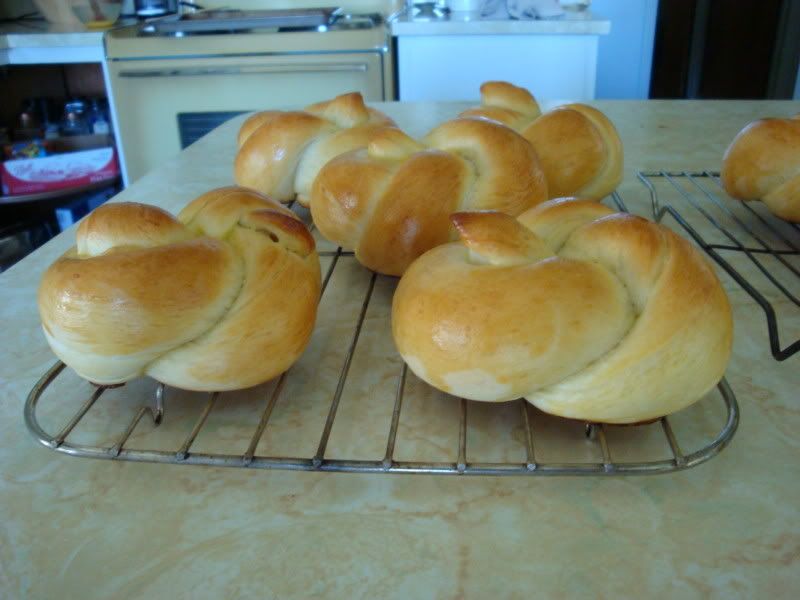
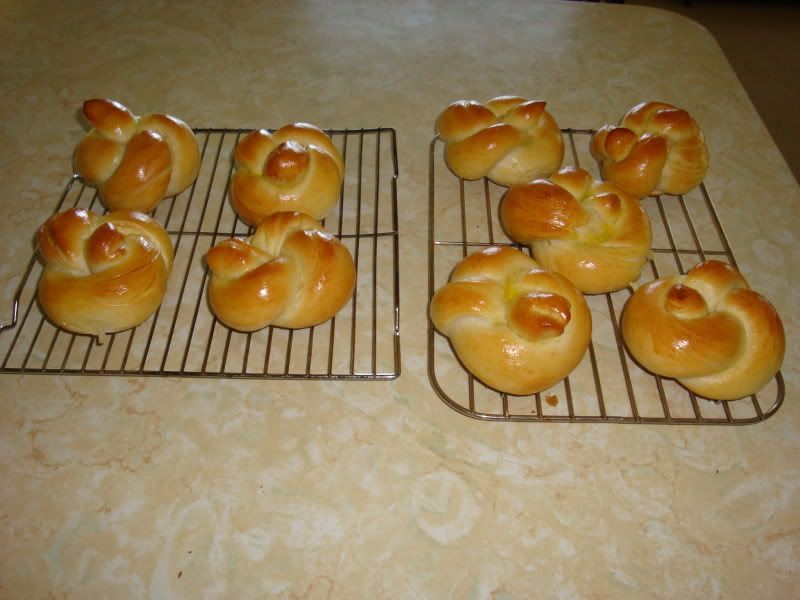
I love love love Double Knotted Rolls!!


I just love this recipe, thanks to Floyd for posting it!  It is just sweet enough and soft enough that you can't stop eating them!  I made these to go with my blackened salmon burgers............YUM!!  The sweetness of the roll was just a delicious combo!

Submitted by caisys on August 31, 2011 - 2:36pm

Help with Sandwich bread

Hi,

I recently purchased a small restaurant in Bucharest Romania. I am from Egypt and would like to serve some hot sandwiches we have in my home country. I cannot find suitable bread here in Romania. Bread here usually has a leathery crust and is quite dense or is called baguette and has a crust that is too crunchy. I want to make fluffy soft loaves around 10 inches long and 2 inches white whose crust do not make any resistance when biting. This is very common in Egypt and we are not that famous for baking.

I found two bakeries near my shop who said they would make special recipes for me. I am attaching two pictures of the type pf sandwiches I wish to serve. Can you direct me to which recipes I should try to produce?

Thanks

Ahmed

Submitted by eschneider5 on July 24, 2011 - 11:01am

Need help figuring out formula for this bread.

I wanted to start a new thread for this.  I need to find out the formula for this bread which is also a sandwich roll.  The roll has a slight sour taste to it, the crumb is soft and chewy, the crust is thin and crunchy.  The crust is the big mystery for me as it is unlike any baguette that I have made or eaten before.  This crust is much thinner than a baguette which makes it great as a sandwich roll.  Help please!

Submitted by jschoell on March 30, 2011 - 10:10pm

The Purps

For some reason I wanted to make a loaf with a purple swirl... probably because purple is not a standard bread color, and I am not a standard bread man. 

I tried this recipe and it turned out good. Just divide the recipe in half, and make two seperate doughs. For one of the doughs, replace the water with an equal amount of liquid from boiled red cabbage. I took a head of red cabbage, shredded it, then cooked it with 2 cups of water in a large pot for 30 minutes. Strain the liquid out, let it cool, and use it to make the purple half of the dough. 

Ingredients: (total for both doughs)


  • 4 cups bread flour
  • 1/2 teaspoon instant yeast
  • 2 teaspoons salt
  • 2 1/4 cups water

Instructions: (remember you are making TWO doughs)

  1. Combine all the dry ingredients (flour, yeast, salt) in the large bowl and stir with spoon for about 15 seconds.
  2. Add water to the bowl and stir for about 1 or 2 minutes (it won’t look that good but that doesn’t matter).
  3. Cover the top of the bowl loosely with plastic wrap.
  4. Let sit on counter top for about 12 to 16 hours (I ussually do this for about 13 hours), the dough will look all bubbly on the top when done rising.
  5. Generously sprinkle flour the top of your clean counter top or a cutting board (don’t worry about using too much flour, it won’t hurt it).
  6. Slowly pour the dough from the bowl on to the floured surface, using the silicone spatula to help it peal off the sides of the bowl.
  7. Sprinkle a little flour on top of the dough and rub your hands together with flour.
  8. With you hands, gently stretch each dough out to a rectangle shape.
  9. Lay the purple dough on top of the white dough.
  10. Roll up the dough from one end to the other.
  11. Place the dough into a lightly greased bread pan (seam side down).
  12. Let dough rise till it is a bit above the top of the bread pan (about double in size or 1 to 1.5 hours).
  13. Pre-heat the oven to 450 degrees.
  14. Place bread in the oven for 30 minutes.
  15. Remove from oven, dump bread out on a cooling rack or your counter top and allow it to cool.
No detectable flavor from the cabbage, but the color just begs, "eat me!"


Submitted by Syd on March 1, 2011 - 7:08am

White Sandwich Loaf

Poolish

250g all purpose flour
250g water
1/16 - 1/8 of a tsp yeast (more if it is cold, less if it is hot)

Mix together and leave for 12 hours.

Dough

300g white bread flour 
130g milk (scalded)
unsalted butter 6g
10g salt
3g instant yeast
a little less than 1/4 tsp of ascorbic acid

[Hydration = 69%]

Scald milk and add butter and salt to it. Stir until dissolved. Allow milk to cool to room temp.  Add to poolish, then add dry ingredients.

Knead for 5mins - rest for 5mins - knead for 5mins. Allow to proof until doubled. A stretch and fold half way through fermentation is necessary not so much for gluten strength, as it is to degas the dough.  Pre-shape. Shape and put into a two pound tin. Let it rise until coming about an inch over the top of the tin. (My tin is a 10x19x11cm 900g loaf tin).

Bake at 230 C with steam for 15 mins and without steam at 190 C for 35 mins. Remove from tin for last 10 mins .


This loaf has a crisp crust and a tender, moist crumb.  It toasts very evenly and makes a good sandwich.  It keeps well, too.

Syd


Submitted by cranbo on February 11, 2011 - 1:19am

BreadBuns, just for kicks

So in a recent thread I posted a recipe that I based on a bread someone had seen on TV. I just did my best guess, based on provided ingredients and my own experience. 

I figured I should post the results, because it was mostly theoretical, but I believed it would work. The goal was yeasty, soft, fluffy bread, and use of a preferment. 

Here's the recipe, makes eight (8) 92g rolls/buns, or one good-sized loaf of bread...hence BreadBuns!

  • 100% hydration starter (sourdough or not) 100g (26.50%)
  • All purpose flour 375g (100%)
  • Water 218g (58%)
  • Brown sugar 38g (10%)
  • Salt 10g (2.65%)
  • Yeast (instant) 12g (3.30%)
  • Melted butter 26g (7%)
  • FINAL DOUGH WEIGHT (g) 778g

First, make a 100% hydration starter with 50g flour, 50g water and a pinch of yeast, mix, cover and leave at room temp for at least 6 hrs (or use some existing sourdough starter). In this case, I used some starter that I had around. 

Combine starter with remaining ingredients. This is after 1 minute of mixing at low speed. 

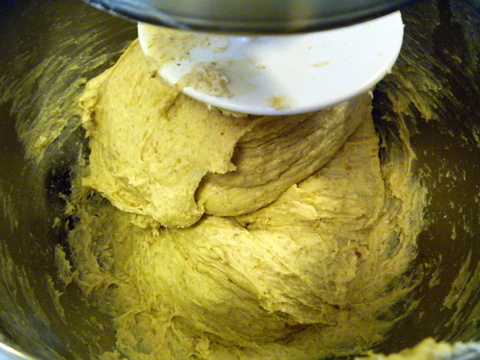
Mix with dough hook for 6 minutes total at KitchenAid speed #2 (low speed); this is the end result: soft, supple, quite smooth and satiny. 

Flatten, then roll into log and/or shape into ball and let rise for 1 hr in warm place, covered. 

Shaped and ready for rising...

In the bucket, ready to rise

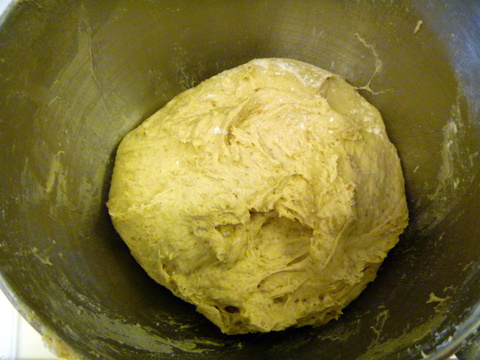
After a 1 hour rise, it's doubled.

I decided to shape into 92g rolls, placed in a greased 9x13 pyrex dish:

Cover and let them rise in a warm place for about 1 hour, til doubled. Preheat oven to 400F

Bake for 23 minutes at 350F on middle oven rack.

Here's how they look after 10 minutes, just starting to get a hint of browning.

After the full 23 minutes, they're looking nice and brown. 

Remove from oven, carefully remove from pan and let cool on rack about 10 minutes before devouring. 

Crust and crumb are soft, light, tender and fluffy as expected. I think they could use a bit more brown sugar though, a touch more sweetness for this kind of bread. 

I like to store these in a Ziploc plastic bag to maintain that fluffy softness. Enjoy!

Submitted by ilan on January 8, 2011 - 12:17pm

Sandwich bread filled with sweet basil pesto


It’s been a while since my last post. I didn’t post anything because I was lazy… I did bake, a lot. From bread, flat bread, pizza and more (next blog entry will be on one of them).

Today, I will continue with my sandwich bread. The recipe is not so different from the previous one, but this time I reduced the amount of yeast by half, added more sugar, and changed the ratio of water & milk. Nothing fancy here, but it taste good.

I love sweet basil, and a pesto made out of it is an excellent addition to a lot of dishes.

So bread filled with it, will be fantastic to eat with a tomato salad with some mozzarella cheese.

In the past, I did add pesto to my dough during kneading, but the bread was not as good as I expected.

This time I decided the filling will go into pocket in the dough. 

What I did is basically braided bread and each of the braids is filled with my pesto. This time, to fulfill my curiosity, I went for 2 halves, each is braided out of two strands and then shaped into a circle. Both halves were placed together to create one bread.


The Recipe:

The filling:

A bunch of fresh sweet basil leaves

1 claw of Garlic

Few pine nuts

A walnut or two

A pecan nut or two

2 tablespoons of grated Parmesan cheese

¼ cup of Olive oil

Salt and paper (prefer the coarse salt – will help grinding the other ingredients)

Crush all ingredients in a food processor (or pestle and mortar) until you have a smooth mixture.

The bread:

-      3 1/4 cups flour

-      1 ½ teaspoons of yeast

-      1 tablespoon sugar

-      ½ cup of milk

-      ¾ cup of water

-       1 egg

-       3 tablespoons of olive oil


Mix the yeast, milk and sugar, wait 5-10 minutes

Add the flour and water and kneed for 5 minutes, add salt, egg and olive oil, kneed for another 5 minutes.

Let rise for 60 minutes

Mix the flour, yeast, sugar, egg and water (or milk) into a unified mixture and let rest for 20 minutes.

Add the salt Pecans and Pumpkin seeds knead for 10 minutes. Let rise for 60 minutes.

Cut the dough into 4 equal pieces, form a long strand from each.

Use a rolling pin to spread each strand (make some room for the filling), fill each with the pesto and roll (see pictures below).

From each pair of rolled strands, form a braid, and then roll it like a snail.

Put both parts in the form, let them touch, we want them to become a single bread.

Let rise for 40-60 minutes or until it doubles in size.

Bake in high temperature with steam for 15 minutes (240c)

Reduce the heat (180-170c) and remove the steam, bake for another 40 minutes.

The process:


The outcome:

Until the next post

Ilan


Submitted by songwritergirl on October 28, 2010 - 10:30am

Whole Wheat Oatmeal Sandwich Bread

This was my first legit attempt at homemade bread, a whole wheat oatmeal bread. The recipe is from Kim Boyce's "Good To The Grain" cookbook, and is made in one day, using active dry yeast, regular whole wheat flour, oatmeal and unbleached bread flour, and a very short 30-minute autolyse before kneading and proofing. It's a great beginner's recipe.

A short list of ingredients I used:

King Arthur Flours

Red Star Active Dry Yeast

Submitted by 4.184kj on July 5, 2010 - 7:25pm

Do you have a recipe for raisin sandwich loaf? Michel's Baguette, Toronto ON

Hello,

I am a new bread baker trying to recreate my family's favourite raisin sandwich loaf from Michel's Baguette, Toronto, ON.  The loaf is a plain white sandwich style loaf, mixed with raisins.  I've tried a few recipes including the American sandwich loaf from America's Test Kitchen, Hokkaido milk loaf, and some other Japanese style bread recipes using variations of AP, bread, and cake flour.  None of them was exactly what I was looking for.  Sometimes my loaves come out dense, and most of the time, they dried out the next day.  Any ideas/suggestions? 

My typical method includes

- using a toaster oven, set at 25 degrees less than recipe calls for

- using whole milk when milk is needed in recipe

- usually use AP flour, because of ATK's recipe uses it and it was the closest to the recipe I am looking for

- no egg recipes, looking for a white loaf

- pressing dough into a rectangle, rolling it swiss-style, then pressing it again into a rectangle and re-rolling it (is this too much handling?)

- brushing on whole milk before putting loaves in oven

- halfway through baking, rotate, and cover loaves with foil to prevent overbrowning

- check temperature and remove once loaves hit 190 celcius

- cool for 10 mins, then remove and let cool on wire rack

- once cooled, place in plastic bag

- cut, study, and taste loaves to see outcome :)


Thanks! :)

4.184kj


Submitted by Smita on May 24, 2010 - 7:10am

Sourdough Sandwich Bread

A couple weekends worth of sourdough sandwich breads. Heres what we do:

1. Friday night (or morning, depending on room temperature) - feed starter with 2 oz each of water and AP flour. I use 8-hour two builds if possible, to get 8 oz of 100% hydration starter.

2. Saturday am - When the starter is ripe (bubble with fruity smell), add 12 oz flour and 8 oz water. Including 4 oz each of flour and water in the starter, this amounts to 16 oz flour and 12 oz water (75% hydration dough). We're flexible with the 12 oz of flour. Of the two loaves below, the top loaf was made with 5, 4 and 3 oz of whole wheat, white whole wheat and AP flour. The bottom loaf was made with 7 and 5 of whole wheat and white whole wheat flour respectively.

Notes: I store our flours in the freezer. I use the formula for desired dough temperature (DDT) to calculate water temperature.

3. Mix flour, water, 2 teaspoons gluten and starter - autolyse 30 minutes.

Note: I also added 1 tablespoon flax seeds to the bottom loaf.

4. Knead by hand for 10 minutes, till windowpane.

5. Rest, add salt and knead gently.

6. First rise for about 3 hours or till dough doubles. We did three stretch and folds for the top loaf. Went and got brunch while the bottom loaf was rising!

7. Deflate and roll real tight (such a lovely americanism) tp shape into sandwich loaf. Place in a greased 9 x 5 pan.A slightly smaller pan will give you a higher loaf. I don't worry too much about this.

8. Final proof for 3 hours or until it crests above the loaf pan. Note: We've also done overnight retards with good results.

9. Bake at 375 for 40 minutes. Internal temperature should read around 200 degrees F when done, the loaf should sound hollow.

Cool for an hour and slice. 


Taste and appearance: We have grown quite fond of this formula. The loaves have no butter / oil at all, and made for a perfect morning toast / sandwich bread. Sometimes, I will add a half cup of mashed potato or buttermilk, which tenderizes the loaf. These loaves showcase whole wheat - so if you enjoy whole wheat, this is a good recipe to try. IMHO, the critical steps were: 1) Working out 16:12 flour to water is a good size loaf for us, that resulted in the right crumb texture, 2) Knead till windowpane to coax gluten development in whole wheat, 3) I have to be flexible about rise times. Gotta run one's day by the dough's schedule and not vice-versa. If I add a teaspoon or less of yeast, I can cut down rising time to about 90-120 minutes. The best loaves we've made usually take 3-5 hours. I'm sure this will change as we apprach warmer weather.

Feel free to share your thoughts! All feedback welcome!