Submitted by Sheblom on February 6, 2012 - 3:07pm

Raisin and Rosmary loaf #2

Hi

A while back I baked a raisin and rosemary loaf and it came out quite well, and the flavour was quite excellent. I have only been baking for a year now and from that year I have gather one opinion. I have still lots to learn.

So I am going back to basics. Just have one simple recipe and tweak that recipe to learn all the ins and outs of getting a decent loaf of bread. Don't get me wrong I will be baking with different recipes that I find here on fresh loaf and in Various books. My major aim though is to stick with one basic recipe and learn all the ins and outs. What temperature to bake at, when to add the salt, what temperature the water must be, how long to proof the loaf, what will happen if I have a high hydration loaf, etc

This is all in aid for me to learn and know when and where certain elements will happen. So that it will be less hit and miss if it going to be a good loaf and be more certain that a loaf will come out how it should.

The basic recipe I will be following is the same one from the lesson found on this website [LINK]

3 cups of all purpose flour

2 teaspoons of yeast

2 teaspoons of salt

1 1/8 cup water

In the loaf I will be showing today I have added about 1/4 cup of raisin and 2 Tablespoons of rosemary. I just love the combination of these two ingredients.

So now for some pictures:

As always start with the recipe:

Then the required utensils and ingredients [I do all my bread baking by hand as I do not have a mixer of yet]
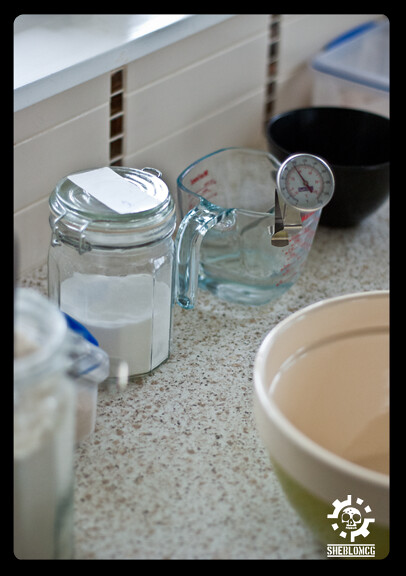
Add the Yeast to the warm water to activate 

Add the flour, at this point I have held back the salt and let the flour and water and yeast sit for about 10min to Autolyse
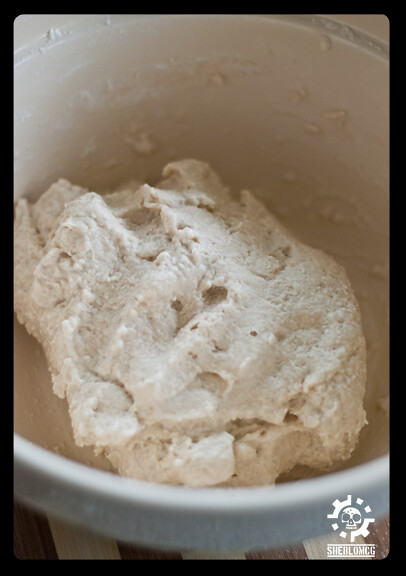
I then add the salt and then Knead for 10 - 15 min, I then leave the dough to rest for about 15 min
While the dough is resting I cut up the fresh rosemary to be added to the dough

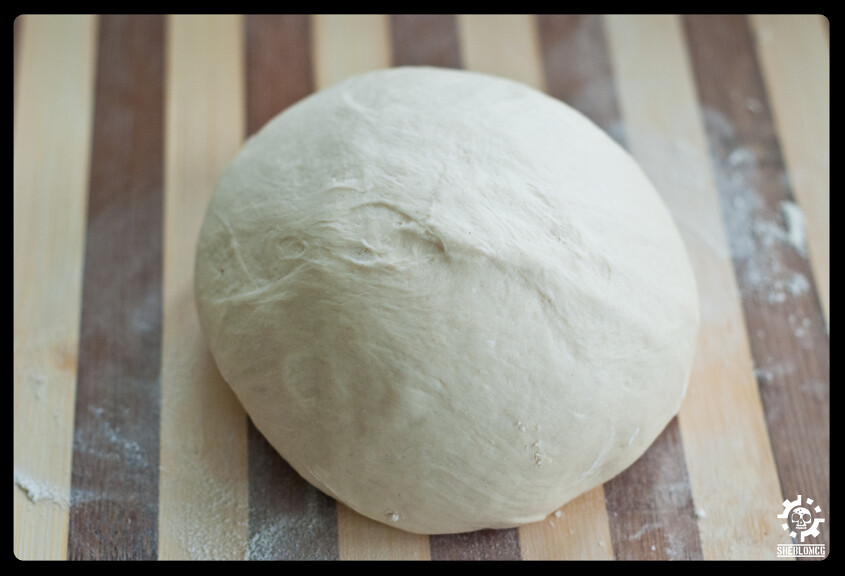
I then add the raisins and rosemary and knead for another 5min. I then tighten up my boule and let proof for about 45min. I then fold the dough and least proof for another 30min

After it has proofed, I then punch down and reshape into the final boule shape. 

I preheat my oven to 230c and place in my pizza stone to heat up as well. I also place an old roasting dish to water up at the bottom of the oven.

Once the loaf has been proofing for about an hour, I place the boule onto the pizza stone and slice in a cross. As I place boule in the oven I reduce the heat to 200c and though some ice blocks in the heated roasting dish to create steam.

I bake the loaf for about 15min then turn the loaf and back for a further 10 - 15min. 

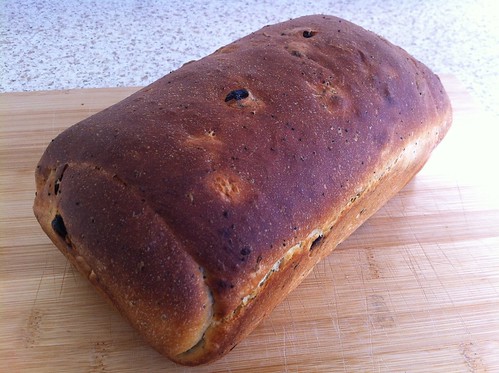
and here is the end result:

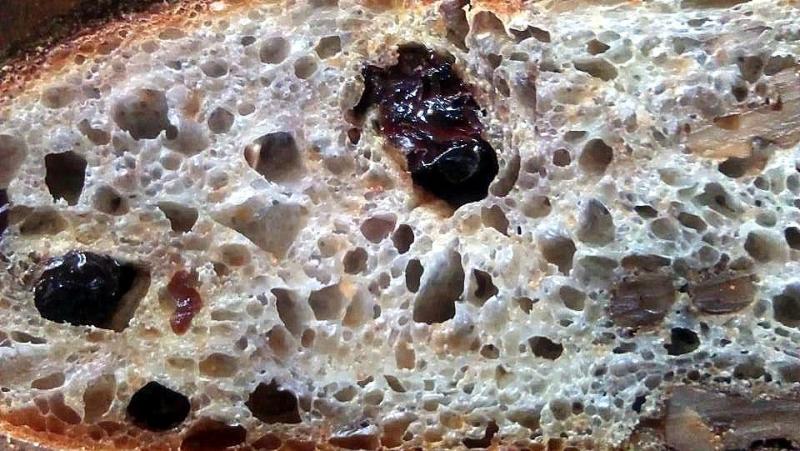
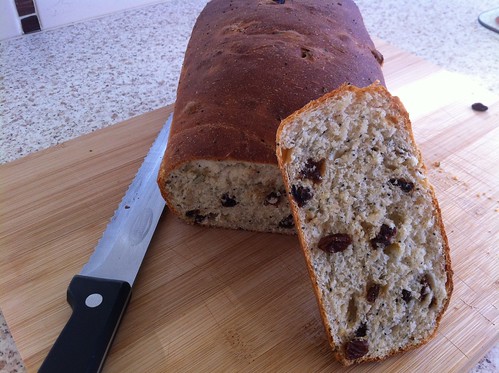
and crumb

I am quite happy with how the loaf came out, the crust was nice and crispy and the flavour was good. I think the crumb is still a bit dense and spongy. This might be due to the salt being added later. Aslo it looks like it "blew out on one side, I am not sure why this happen, maybe my slicing was not up to par.

Next I will try this recipe without the raisin and rosemary and try it with out the autolysis and a different slicing pattern and see what will happen. Hopefully this will rectify some of the issues that I have had.

Please let me know what you think or if I must try something out at different stages of my bake.

Thanks

Please excuse any spelling or grammar mistakes, it is not my strongest strength.

I have also submitted this post to YeastSpotting : http://www.wildyeastblog.com/category/yeastspotting/

Submitted by Sheblom on January 26, 2012 - 2:31pm

Rosemary and Raisin Loaf

Hi Guys

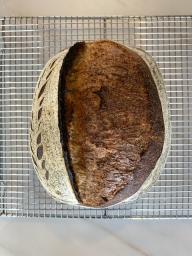
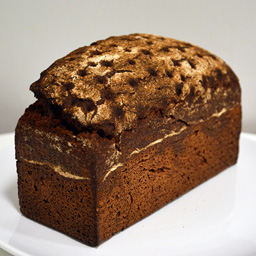
Just wanted to pop and in show you a loaf I baked the other day. Its an enriched bread with raisin's and fresh rosmary added.

I should have let it proof a bit more but it came out quite well I think. The flavour is brilliant. What I would change is the amout of proofing it had and what tempreture that I will bake the laof at as the cumb is a bit soft, but this might be the result of using butter in the recipe or cutting the bread too soon.. 

Please let me know what you think and if anyone would like to have the recipe.

Churs

Loaf:

Crumb:

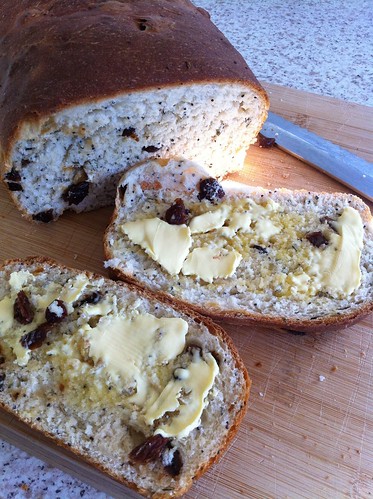
Best way to eat it:

Submitted by Onceuponamac on January 1, 2012 - 2:11pm

Raisin Boule

Sourdough Raisin Boule :)


Submitted by jimham on November 13, 2011 - 7:11am

Oatmeal raisin cookie ingredients question

I have an oatmeal raisin cookie recipe from a great uncle who has passed away, he worked at a bakery. Apparently these are some really great cookies, but the recipe is in pounds which are not a problem but it does not state how much vanilla and salt to use or the cooking time or temperature. I figure that someone has ran into this before and wondered if you could help.
Thank you

Uncle Bobs oatmeal raisin cookies
1 1/2 lb sugar
3/4 lb Lard
1/2 lb Raisins
1/2 lb Oats
1 1/4 lb Flour
2 Eggs
7/8 cup milk
3 Level tsp soda
Salt
Vanilla
Temperature

Submitted by Sjadad on May 19, 2011 - 12:30pm

BBA Cinnamon Raisin Bread

I found myself with a free morning and wanted to bake bread.  Since I didn't plan in advance, sourdough was out.  Loving anything with cinnamon, I decided to try the cinnamon raisin bread from BBA (my kids are allergic to nuts, so I left out the walnuts).  I used golden raisins and followed the formula exactly, with one minor tweak - I borrowed a technique from Cook's Illustrated (or was it Cook's Country?) and sprayed the dough with water before sprinkling on the cinnamon sugar, then sprayed the filling again before rolling.  I don't know whether it made a difference, but the swirl came out nicely with no separation or gaps.

This almost shouldn't be called bread.  It's more like dessert!  I'll definitely be making this one again.


Submitted by BerniePiel on October 2, 2010 - 9:52am

Tartine Basic Country Loaf with raisins and pistachio

I have really become enamored of late with Chad Robertson's Tartine Bread, particularly his basic country loaf which is a combination of APF or BF and WWF.  I had to experiment with some raisins and pistachios that I had on hand.  The methodology was identical to Robertson's given in the text, same proportions, same times and so forth.  My only variation is that I use spring water, I mill local Oklahoma winter hard red wheatberries, and perhaps my method of folding the bread and the number of times that I fold versus the text.  I fold 4 or more times depending on what kind of structure I see developing; Chad states he folds three times every 25 minutes during the bulk rise.  I add one of two extra folds.  Also, I do not use all of the 50 g of water that he calls for when addiing the 20 g of salt after the inital 20 minute autolyse.  I usually just end up adding 25 g rather than the entire 50 because I feel it makes my dough to wet.

I have also discovered that his temps of water and air environment called for at various locations in the recipe should be adhered to.  He states using water at 80 degrees and he's right.  I tried using my ambient temp water at between 65 and 72 and the dough behaved differently.  The bulk rise and final rise temps should also be between 78 and 82 which is conducive to good yeast activity and providing a proper amount of time for the flavors to be created in the dough.

In this bread I added 1 1/2 cups of currants (a smaller dark raisin) and 1 1/2 cups of unsalted pistachio nuts, added at the first folding following  the 20 minutes autolyse or rrest.  It took several minutes to incorporate these two items evenly throughout the dough.  If you skimp here, the raisnins and nuts will be along the inside of the crust edge rather than scattered throughout the loaf.

Also, as the recipe states, it will make two loaves.  During this bake, I cooked the first loaf immediately ater the final rise.  The second loaf I allowed to ferment in the fridge for 12 hours just to see if  there was a difference in taste.  There is and its quite good.  But, even without that fermentation period, the bread was also very good.  But, the time in the fridge did improve the flavor.

Finally, I baked these two loaves in a round clay couche that I soaked before puttiing into the oven and I added  them as tthe oven was heating.  The oven was up to 360 degrees when I added the couche (normally I put my cooking vessel in when I fire up the oven, but I forgot this time.)  The clay vessel had been soaking in water for 15 minutes just prior to going in the oven to preheat befoe i added the boules.

I put the loaves in when my temp reached 515, put the top on and after 10 minutes, turned the oven down to 450.  After a total of 20 minutes had elapsed from the time I first put the dough in the clay pot, I took the lid off and baked for another 20 minutes at 450.  The crust becomes harder, good carmelization, and the interior crumb is chewy and flavorful.  I really, really like this bread.

Here are the pix:


Submitted by 4.184kj on July 5, 2010 - 7:25pm

Do you have a recipe for raisin sandwich loaf? Michel's Baguette, Toronto ON

Hello,

I am a new bread baker trying to recreate my family's favourite raisin sandwich loaf from Michel's Baguette, Toronto, ON.  The loaf is a plain white sandwich style loaf, mixed with raisins.  I've tried a few recipes including the American sandwich loaf from America's Test Kitchen, Hokkaido milk loaf, and some other Japanese style bread recipes using variations of AP, bread, and cake flour.  None of them was exactly what I was looking for.  Sometimes my loaves come out dense, and most of the time, they dried out the next day.  Any ideas/suggestions? 

My typical method includes

- using a toaster oven, set at 25 degrees less than recipe calls for

- using whole milk when milk is needed in recipe

- usually use AP flour, because of ATK's recipe uses it and it was the closest to the recipe I am looking for

- no egg recipes, looking for a white loaf

- pressing dough into a rectangle, rolling it swiss-style, then pressing it again into a rectangle and re-rolling it (is this too much handling?)

- brushing on whole milk before putting loaves in oven

- halfway through baking, rotate, and cover loaves with foil to prevent overbrowning

- check temperature and remove once loaves hit 190 celcius

- cool for 10 mins, then remove and let cool on wire rack

- once cooled, place in plastic bag

- cut, study, and taste loaves to see outcome :)


Thanks! :)

4.184kj


Submitted by jennyloh on February 28, 2010 - 9:09am

Pain Aux Raisin & Apricot

http://www.thefreshloaf.com/recipes/painauxraisins

Followed the recipe above from Floyd,  I had a lot of fun doing this, especially the shaping of the dough.  Somehow the 1st method of shaping caused the middle to rise more than it should, perhaps I shaped it too tightly.

The 2nd with raisins,  I think I put too much raisins,  all the raisins started to spill out.  


Interestingly, the dough didn't turn out as sweet as i thought it would be. The dough had a good oven spring.  It was so nice to watch it "grew" in the oven.  And I learnt about sugar glaze and egg glaze from this experience.  It was nice to see the shine,  just that the hands get sticky handling the bread after that.

Thanks Floyd - for the great recipe.


Submitted by LeahM on October 19, 2009 - 8:50pm

sourdough cinnamon knots

So, my absolute favorite breakfast is a nice half of a toasted baguette with butter and (preferably homemade) jam. But a close second is pretty much any type of breakfast pastry. Recently, I've been experimenting with using my sourdough starter in a few recipes. In this concoction, I made a basic sourdough recipe, added raisins and dried cranberries. After bulk fermentation, formed into thin worms, which I rolled in cinnamon sugar before forming the knot shape. I'm aiming for just a little sweetness with the sugar dusting, but didn't want to make a sweet dough. I haven't tasted them yet (saving for breakfast tomorrow) but the house smells delicious and I'm pretty excited.

Dough recipe: 1/2 c 100% hydration starter (fed last night), 1.5 c AP flour, 3/4 c white whole wheat flour, 1 1/4 c water, 1/2 c mixed raisins & dried cranberries. Mix & autolize 30 minutes, knead briefly. Then stretch and fold twice, at 20 min intervals. After the second S&F, fold in and knead dried fruit. Let rise until doubled--about 3 hours. Shape as described above (I divided into 6 rolls), then proof 40 minutes, and bake at 425 degrees for 20 minutes.

Here are the rolls before going into the oven:

And the final result:

Submitted by breadbakingbass... on December 28, 2008 - 6:50am

Raisin, Cranberry, Currant Bread with Caraway Seeds


Hey All,

Just wanted to share with you some more pictures.  This is my Raisin, Cranberry, Currant Caraway Seed Bread.  For this recipe, I used 70% hydration.  The crumb is denser and drier than the Sweet Potato Pugliese Bread I had made yesterday.  I think next time, I will try 75%-80% hydration.  I'll post a recipe when I figure out the hydration levels...  Overall, the flavor is what I had expected.  Yummy!

Tim