SearchUser loginRecommended BooksFavorite Recipes
|
Submitted by Igwiz on November 16, 2009 - 7:05am Cold proofing... how long is TOO long?Hi all: I am working on a sourdough rye right now. It's on its second build, is proofing in the fridge, and due space and time issues has been there since Saturday afternoon. By the time I bake it this evening, it will have been proofing for nearly 48 hours. Am I still going to have bread, or will I likely just be baking a HUGE starter? Any advice would be helpful. Thanks, Igwiz Submitted by katyajini on November 9, 2009 - 2:28pm Size of proofed loafHigh I am new here and this is my very first post! Extremely informative and vibrant forum, I am so glad I found it. I have been learning so much by browsing, at least what can be learned by reading. I am so new to bread baking that I just don’t get this. All recipes say proof the shaped loaf till it is twice the size. How on earth do you know what is twice the size? Some loaves are round and flattened, some are round and high. Some are baguettes or batards. Then there are the focaccias and ciabattas. How do you tell when the loaf has doubled? It’s not so easy to take out a ruler or measuring tape and estimate the volume for such shapes. And we all know the trouble with over-proofing or under-proofing. And temperatures and other environmental conditions are so variable for the home baker that the suggested times can be quite off. I can guess at the unshaped dough if I use a graduated clear container but the shaped loaf? And going by my 5th grade geometry eyeballing volume can lead to great errors.
So please give me some tips how you guys do this. I am interested in the above kind of shapes.
Many, many thanks.
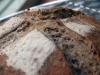
K Submitted by hc on July 17, 2009 - 4:05am Gluten gave out? Why?So I shaped a sourdough boule last night and put it in the refrigerator. This morning when I took it out, this is what I saw:
Any idea why I might have gotten that blowout on the left side? I shaped carefully with good surface tension. Could I have let it bulk ferment too long (~9 hours) before shaping? Submitted by Rodger on May 27, 2009 - 7:02am Proofing High hydration dough in couche or bannetonAfter I proof my Basilicata-style high-hydration loaves, one of two problems occurs. Either I've floured the couche too sparingly, and the dough bonds to it so that I have to separate it with a knife blade (sometimes with unhappy results), or I've floured too liberally, and the dough carries a thick layer of unincorporated flour that spoils the crust. In the second case, I try to scrape off as much of the extra flour as possible with a blade or a brush, but still the extra flour still prevents portions of the crust from caramelizing, and leaves an unpleasant dusty feel on the tongue when you bite into it. How do you wizards do it? Submitted by Bread_Slavery on March 26, 2009 - 5:49pm Bringing un-proofed loaves up from fridge tempAfter doing some serious experimentations with long room-temperature rises and enjoying them, I have concluded that I do like the flavor imparted from 8-12 fridge retardations. It just gets a twang-y zippy edge I don't necessarily get from non-fridged loaves. I do fear it creates a far-too-similar flavor profile in loaves, even ones with long pre-ferments, pate fermentees, or epoxys (or the combination of those). Back to the point: I hear it suggested to proof loaves in the fridge in airtight containers. This is not practical for me, so I generally just throw the post bulk-fermented dough into the fridge (generally overnight). It comes out the next morning, and continues to grow throughout the day. Getting the right proof level is tough. I worry that the loaves won't spring after this rigorous procedure, but they generally blow up. So I'm starting to think I might need: 8-12 hour fridge retardation 8-12 back to room temp (house is cold in winter, likely much shorter in other months) 1 hour proof? I need new linens so I've been slacking on proofs lately with noticable results but am not sure how I should do this with the loaves coming up from cold. How many hours do you guys generally proof on regular, unretarded loaves? I find my loaves are generally under-proofed as they are likely to blow up on oven-spring. Your input requested. Submitted by swordams on March 26, 2009 - 2:25pm Poofing laminated doughHello all, I made laminated danish dough in my baking class years ago, and I remember it worked well all but one time. The one time, during the proofing stage, all of the butter melted out. Today I tried to make cinnamon rolls at home. The dough was working perfectly until the proofing stage, at which time a lot of butter melted out (I proofed at about 85 degrees, definately warm enough to melt butter). The rolls still looked fine (not over proofed), so I baked them. The resulting rolls are limp and flat. Should I have proofed them at less than room temperature?
Thanks, Adam Submitted by swordams on September 25, 2008 - 4:23am Buying some timeI am fairly new to baking, especially yeast breads, so I've joined this forum to meet people with the knowledge and experience to help me become a better baker. I have taken an intro to baking class at culinary school, but I'm still a total novice at bread. I plan to make a challah to serve on Monday, 9/29/08 for Rosh Hashanah. The trouble I'm having is determining when to prep and bake my loaf. I work all weekend and have an important event on Sunday night. I have all day Friday, Saturday night (6:30-12:00), and about 1 hour very early Sunday morning free for baking. If I prep and bake my challah on Friday, will it be good on Monday? If I proof the dough on Saturday night and retard the shaped loaf in the fridge overnight, can I expect it to be ready to bake on Sunday morning? I imagine many artisan home bakers nowadays have trouble finding a block of free time long enough to make bread, and I'm wondering how the rest of you manipulate the process to fit into your schedules.
Thank you, Adam S. Submitted by BSquared18 on September 13, 2008 - 1:36pm Can't Get a Rise Out of My Whole Wheat BreadHi,My wife and I recently started on the South Beach Diet, so I wanted to find a recipe for a bread that follows that diet (i.e., whole wheat flour and no sugar). I found one at http://www.yumyum.com/recipe.htm?ID=19364. But I wanted to use the “hybrid” method I’ve used successfully with bread-machine mixes, which is to have the bread machine knead and initially rise the dough; and then move the dough to a regular loaf pan, re-rise it, and bake it in a conventional oven. Unfortunately, while the resulting bread is tasty, I have yet to make a loaf that isn’t flat on the top. Also, the bread’s texture tends to be a bit gummy, instead of crumbly. To see a picture of the results and a detailed list of the ingredients and procedure I used, go to http://bmbmisc.home.comcast.net/bread.html Any suggestions on how to get the bread to rise so that the loaf is more rounded and to make the texture less gummy would be greatly appreciated. Thanks, Submitted by wyllow42 on July 5, 2008 - 8:49am Freezing bread doughI just started a new job where one of my tasks is to keep the restaurant supplied with fresh bread for their bread baskets. The exec chef and I have decided on a baguette of some type (I'm thinking something like a whole wheat molasses dough), a 7-grain epi, and a sundried tomato fougasse. I have other tasks as well, so making fresh dough every day will be impossible. I am thinking about doing all of my dough production on one day and freezing it, so it can be proofed and baked for service. I do have a large proof box and three hearth ovens in my kitchen, so volume is not the problem. I'm trying to come up with some sort of organization that would be best suited to my product. At what stage can I freeze the dough? Can I take it all the way to the shaping/final proofing stage and freeze shaped (unbaked) loaves? How can I defrost and properly proof and bake them? This is my first time not baking on the same day that I've shaped the dough, so I'm kind of clueless. At what point would it be best frozen and thawed? Thanks in advance for the help! Kristen Submitted by Windischgirl on May 6, 2008 - 5:22am controlling overproofingI'm beginning to think my yeast is on steroids... Given my hectic schedule, what with work and home and hubby and 3 kids going at least 4 different places, I have often stowed dough in the fridge to buy some time...as well as develop the flavors. However, I've noticed a pattern that I haven't seen discussed on the forums yet: If I put the dough in the fridge before first fermentation (knead it and fridge it), I get very little rise in the fridge. But if any rise has happened at room temp and then I fridge it, either during first fermentation or proofing, I get overdevelopment...by the time the dough has come to room temp again, it's huge and I might as well degas ( the action, not the artist!) and shape from scratch, otherwise it's impossible to slash and I get almost no oven rise. Doesn't matter if it's yeast, or yeast-starter combo. I do the combo because my starter, altho bubbly and tasty, has never really risen...and I seldom have the extended stretches of time to let a straight starter do it's thing...but this will be another posting. So...is it my fridge? (Which has been having it's quirks now, as well!) I store the dough on the bottom shelf--it's a bottom-freezer version--which is coolest. Am I using too much yeast/starter? If straight dough, yeast is typically 2 tsp for a 1 1/2 to 2 lb loaf; if yeast-starter, I use 1 tsp yeast and about 25-30% starter for the same size loaf (about 4-5 c flour). I am basing the starter percents on The Metropolitan Bakery Book (Metro. is a Philly-based artisan bakery) which suggested using 30-40% starter for max flavor and keeping quality. And since I had a bathtub full of the stuff... Are there other issues I should be aware of? Should I work on my organizational skills, developing a schedule for proofing, retarding, etc? In my earlier life, I was scheduled rigidly, but having been knocked around by life and being married to Mr. Spontaneity, I've lost that ability ;-). The thought of reverting to a schedule makes me cringe, but if I have to for the sake of good bread...! Windi |
Advertisement |