SearchUser loginRecommended BooksFavorite Recipes
|
Submitted by seekthat on November 3, 2009 - 9:28pm Does anyone know a very healthy and easy to make pizza recipe?Hi all, please let me know of good and healthy recipes for pizza, thanks Submitted by subfuscpersona on June 18, 2009 - 12:26pm Sourdough Sesame Seed Spelt BatardsFor over 3 years I've been baking artisan style breads in my (really lousy) gas oven without a baking stone but was never quite satisfied with the result. I finally purchased a good baking stone. This is my first effort with the baking stone... Sourdough Sesame Seed Batards with Spelt Flour The height of each of these batards is about 4 inches (compared to the 3-1/4 inch height I got without a stone) for a similar type of dough and prebaking dough weight. The recipe (one of my own devising) uses a white flour 100% hydration sourdough starter. About 20% of the total flour weight is spelt flour (home milled from organic spelt). In an attempt to add sesame flavor to the bread without compromising rising, I use 8% sesame seed meal, which is ground from whole sesame seeds using a small electric coffee mill. Additional sesame seeds are on the outside of the dough. Dough hydration is 68% I am pleased with this first effort using my new baking stone, although I obviously need to become familiar with this newest addition to my bread baking equipment arsenal. Onwards and upwards - SF ========================== For those who are interested, this stone is a Dacor baking stone. It is 1/2 inch thick and measures 15" x 20". This was a good size for my oven, as my oven rack measures 17" x 25". I believe that smaller size baking stones from Dacor are marketed under the brand name Old Stone Oven; these smaller stones are widely available. The stone was purchased from fantes.com for $50 USD plus shipping. The packaging was excellent and shipping was prompt. I am including two images of this baking stone from the fantes.com site in this post to give an idea of what the baking stone looks like...
Submitted by summerbaker on May 28, 2009 - 8:13pm recession hits organic farms - articleI read this depressing article in the NYT today: http://www.nytimes.com/2009/05/29/us/29dairy.html?_r=1&hp It is mainly about arganic dairy farms. Are there any Fresh Loafers who have info about how the recession has hit the organic grain farmers? Is it as bad for them? In the meantime, since my husband and I have managed to keep our jobs, have no children to support and have no massive debt, I'll continue to to buy organic milk and flour and hope that the economy picks up so that others will eventually be able to as well. I'd hate to see this industry take a step backwards. Summer Submitted by flourgirl51 on May 3, 2009 - 2:29pm What it REALLY means to be a certified organic farmer.Being a certified organic farmer means MUCH more than just not using chemicals. It means a different way of farming altogether than conventional farming. Certified organic farming means you have to leave buffer strips to make sure that adjoining fields can't contaminate your fields with chemical sprays and GMO crops. This is done by tilling under a large section of your fields that are near neighboring fields. We can't use chemicals in organic farming so we have to remove weeds with the tractor and methods called multiweeding and harrowing. These methods also remove a portion of the crops which you lose so you have to seed heavier to compensate for this which makes it more expensive than conventional farming is and also means hours and hours spent in the tractor. Water quality is also checked and soil samples are required much of the time. This all costs money. We have to rotate the crops each year which helps to keep the soils from being depleted of nutrients , which means you can' t grow the same crop on the same field two years in a row. You have to let some fields "rest" or lie fallow for a year which helps to remove weeds by not planting that field that year, you just keep tilling the weeds under to kill them. When a field lies fallow you don't make any money from it that year, but it helps to produce a better crop the next year. We grow a specialty legume crop that produces nitrogen for the ground instead of using a deadly chemical such as annhydrous ammonia. Nitrogen is key to the protein content of the wheat and we are proud of our 14% high protein wheat-produced organically. Being certified organic means that you have to pay to join a certifying agency.THEY in turn choose an inspector to send out to the farm each year to perform an all day inspection. You can't choose your own independent inspection company in certified organic farming. Companies can't do inspections, only certifiying agencies can. The inspector checks the fields and crops, the machinery and grain bins and the mountain of paperwork and records that you have to have. You have to have certificates and affidavits for many things. The machinery, grain bins and trucks have to be cleaned out between crops and be rodent proof and the trucks and combine are checked to make sure that they aren't leaking anything that could contaminate organic soil. The semi trucks that haul the grains to the mills have to also be cleaned out and have affidavits also.If you use any fertilizers such as molasses, you have to provide the paperwork that shows that they are approved by your certifying agency, and also provide the labels for these. If you have too many weeds in your fields the crops can be condemned and are not certifiable. Just because an inspector comes and checks your farm does NOT mean that your farm will be certified organic. All of the certifying agency's requirements have to be met in order to become certified. If they choose not to certify your crops you don't get your money back and you can't sell your crops as certified organic. We CHOSE to be certified organic farmers because we believe that it is so much better for us, our families, the earth and our customers who buy directly from us and ultimately for the consumers who end up with our high quality grains and flours. We work hard to grow these crops while we also try to build up the soils to replace what the crops remove each year. I hope that this has helped to educate some people about what it really means to be Certified Organic. Going the extra mile to become a cerfied organic farm means that our customers can be assured that we have done everything possible to provide them with the highest quality wheats and flours that we can while we also are stewards of the land that is so precious to us. We have been a certified organic farm for almost 14 years. www.organicwheatproducts.com Submitted by ehanner on April 22, 2009 - 10:04pm Amazing Organic Whole WheatFor months I have been trying to decide on buying a good quality grain mill and grinding my own fresh grains. I really don't want to buy what I can purchase easily locally, but we live in a rural area and it's a drive to a decent store that carries Organic. Jmonkey, Bill Wraith, Proth5 and many others have raved about how much better their fresh ground organic flours are. Today I baked up my first batch of Organic Fresh Ground 100% WW bread. I used Peter Reinhart's Whole Grain Breads Master recipe. I'm still a little cynical about all this Organic and fresh ground stuff so yesterday I made a batch of the same recipe using Bob's Red Mill Stone Ground WW, which has been my usual WW flour. I was able to save half the loaf to compare with todays results. The bread was delicious on its own. Today I used the flour I received from Country Creations mail order flour service. The price is right and due to a regional shipper I got the flour on my door step in 2 days for less than I would pay at TJ or Whole Foods. Rhonda took my order and ground the 2 bags I bought that day. The product is slightly grainy instead of the silky smooth KA brands but I think is fine for my use. I got good gluten development in the short mixing time and a nice rise during my over proofing :>(. My family was asking what is in the oven since the aroma was stronger than my usual breads. The house filled with a rich wholesome aroma I have not experienced prior. When the loaves came out of the oven I was really surprised at the wonderful smell. I have always expected this kind of aroma but never experienced it. Knowing how much of our taste comes from sense of smell, I have high expectations. Finally the taste test. My wife had been gone and so she was able to objectively try both versions and pass judgement. The overwhelming consensus is that the fresh ground is way better tasting and smelling. So, I'm sold. Country Creations has a wide variety of the products I like to use and their prices are more than fair. To me it's a bonus that her farm is Certified Organic and also the taste test winner. It's a win win situation for us. On another thread several members are discussing the changing flour situation and how hard it is to get a straight answer from TJ's. The Whole Foods is a huge place but they don't move that much product so I question how fresh it is, plus it is priced at double what I paid through these folks. I can't think of a reason not to support the small farmer/mill. Hey, it's Earth Day right? I'm taking a stand! Eric
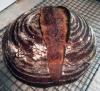
I was distracted and this got over proofed, sorry.
Submitted by Wild-Yeast on June 10, 2008 - 12:24am Explosive Oven SpringPerformed the bi-daily bake tonight and was totally suprised with the amount of oven spring. The loaf nearly blew itself apart! You can barely see the slash pattern..., I've decreased the time of the bake to around 36 minutes with the first 15 minutes under the stainless steel cloche. Find out tomorrow what the crumb looks like. Wild-Yeast
Submitted by Bettina Berg on February 16, 2008 - 3:26pm Has anyone tried Rapunzel's RIZE active dry yeast? AND organic fresh yeast available in US soonHi. I am new to this site and delighted to have found such a wonderful resource for recipes and so many experienced bakers sharing valuable knowledge! Organic Active Dry Yeast (RIZE by Rapunzel) Submitted by staff of life on February 8, 2008 - 8:00pm A Sourdough ObservationWhen I attempted to make a sourdough culture over a year ago, I used something called I believe Gold'n White, the only organic flour my store carried. It was basically whole wheat without the bran. The culture fermented so quickly that by the end of the first day, it was ready for a feeding. I fed it, and fed it, stuck it in the refrigerator, and fed it some more until I realized that this starter was way too active for me. This was all in one day. It was the second sourdough culture I had started, so I had at least a bit of familiarity with creating and maintaining a cultur Submitted by bakerb on February 2, 2008 - 7:10am Organic Michigan FlourHello...I'm looking for an organic farmer & miller in Michigan, I'd like to buy fresh-ground unbleached bread flour, locally. I live in Bay City. Tomorrow I'm headed south (Linden, Michigan) to Westwind Milling Company to try their products. Does anyone know of another place? Thanks! Submitted by tmac on December 23, 2007 - 12:39pm Organic vs Non-organic FlourI have been baking a french baguette recipe with KA all purpose flour. I need to bake some more for Christmas but could only find the KA organic all purpose at market today. I would assume I can just substitute one for one between the two flours, but don't have the experience to say for sure. I did note that the recipes for baguettes on the back of the sack is different from the one on the KA site for normal all purpose flour. Thanks for any help.
|
Advertisement |