
oil



seeking a soft crust: milk vs egg vs oil vs steam
Forums:
Greetings
When I make bread buns and loaves, the crust always comes out hard and cracky. I like simple basic recipes, using just flour, water and yeast. But I've always read that adding fats to the dough makes the bread softer. I don't like fat though. But I wonder, if I can get away with just one of those fats in my dough, which ingredient gives the most soft crust? and should I add that ingrient to the dough itself, or only use as coating just before baking?
Share

Adding fats such as oil to dough
Forums:
Hello Bakers,
Would anyone know what an oil such as ext. vir. OLIVE OIL would do to a ciabatta dough? I make a straight up ciabatta with just flour yeast salt & water and I'm just wondering what the addition of some OO would do to that dough... more holey crumb or the opposite?
Thank you,
Ray
Share
Focaccia technique question
Forums:
I made Reinhart's focaccia recipe from the BBA a couple weeks ago and it turned out very well. Interestingly, I noticed that the olive oil and water are simultaneously mixed with the flour. I understand that fats are typically added later in the mixing process so that the gluten is given more time to form and so the fat doesn't lubricate the gluten and prevent it from forming longer strands.
Share
Unrefined Oils in Baking
Forums:
Hi all!
Going to make a loaf tonight (not sure what, I've just been doing a lot of experimenting lately), and I was thinking of using some unrefined oil I picked up downtown.
I've been reading about the apparent health benefits of unrefined oil over refined oil, and I was wondering if anyone has baked with it? I have unrefined sunflower oil.
I only ask because I know unrefined oil cannot withstand high temperatures that come with frying and sauteeing; maybe they wouldn't be good for baking then?
Let me know if you know or at least have an opinion/idea!
Share

OIL or NO OIL in bread
Forums:
I have been making what I think is some very flavorful bread recently. A few years ago I discovered a local mill and have been playing with their organic wheat and rye flours. The other week my mother-in-law, a great baker herself was enjoying the bread and she asked what oil I used. When she learned that this bread was only flour, water and salt she was puzzled. Why would I make a bread without any fat? She learned to bake in the 40's and used pork fat.
Share
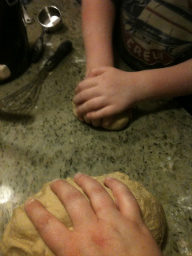
Why does bread need to go into an oiled bowl to rise?
Forums:
Maybe I'm doing something totally faux pas, but I never oil the bowl for rising. I mix and knead in the dlx mixing bowl, I remove the hook or the scraper and roller, and then I shape it a bit so I can when it has doubled, and then I put the DLX bowl lid over top. When it's doubled, I just grab the mass, and only a tiny bit sticks, I scrape that up, add it to the rest and then fold it a few times for shaping or the second rise, whichever it needs.
Share
Butter vs Oil and Dry Bread
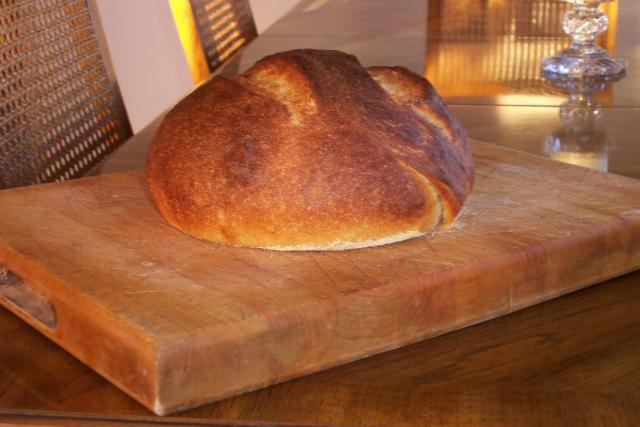
Why do my focaccia go stale within 24 hours?
Forums:
I use a recipe similar to Dan Lepard's for focaccia.
- 100% flour (obviously)
- 35% sour starter (100% hydration)
- 0.74% yeast
- 2.5% salt
- 65% water
- 5% extra virgin olive oil
When it cools, it's extremely light and fluffy, with HUGE holes in it. The closest you'll ever get to eating clouds. But for some reason, it goes tough and hard within 24h despite being kept in an airtight plastic box.
WTF?! Should I store it differently?
Share
My Breads are too Dry
Forums:
My friends are complaining that my breads are too dry. I am using 3 tablespoons of olive oil for each 4 chup of flour and between 1 1/4 and 1 1/3 cups of water.
Will a different type of oil be better, or should I jsut add more oil? Also, for more percentages of Whole Wheat, should I add more oil generally?
Thanks
Share
Pages
