SearchUser loginRecommended BooksFavorite Recipes
|
Submitted by katyajini on November 9, 2009 - 2:28pm Size of proofed loafHigh I am new here and this is my very first post! Extremely informative and vibrant forum, I am so glad I found it. I have been learning so much by browsing, at least what can be learned by reading. I am so new to bread baking that I just don’t get this. All recipes say proof the shaped loaf till it is twice the size. How on earth do you know what is twice the size? Some loaves are round and flattened, some are round and high. Some are baguettes or batards. Then there are the focaccias and ciabattas. How do you tell when the loaf has doubled? It’s not so easy to take out a ruler or measuring tape and estimate the volume for such shapes. And we all know the trouble with over-proofing or under-proofing. And temperatures and other environmental conditions are so variable for the home baker that the suggested times can be quite off. I can guess at the unshaped dough if I use a graduated clear container but the shaped loaf? And going by my 5th grade geometry eyeballing volume can lead to great errors.
So please give me some tips how you guys do this. I am interested in the above kind of shapes.
Many, many thanks.
K Submitted by summerbaker on October 8, 2009 - 8:49am Guinness Walnut Loaf - Thanks QahtanI've been out of town some lately, but really wanted to post the pictures of my Guinness Walnut Loaf which is a recipe that I got from Qahtan here: http://www.thefreshloaf.com/node/1649/walnut-levain It turned out to be delicious and perfectly timed since I just read a NY Times article touting the health benefits of walnuts here: http://well.blogs.nytimes.com/2009/10/02/walnuts-the-original-health-nut/?scp=1&sq=walnuts&st=cse There are some yummy looking recipes in that article as well. About the baking: One change that I made is that I retarded the dough overnight and should have reduced the yeast since the centers of the loaves dried out a little about a day after cutting into them.
I left the walnut halves on the top of the loaf whole. Try this recipe for a simple but satisfying and healthy loaf! Summer Submitted by angeliaw on May 13, 2009 - 1:33pm Loaf PansI was talking with someone regarding the dimpled loaf pans and they don't like them because of the aluminum. They only used stainless steel. What are your thoughts about the metal for bread pans and what pans do you think are best? Thanks for any input. Angelia Submitted by Seeking Chewy Loaves on May 4, 2009 - 2:40pm Looking for advise on making a chewy loafI have some bread recipes that I am trying to "fix". Whole wheat, multigrain and white sandwich loaf recipes specifically. They currently yield very airy, light loaves. This may please some but I am interested in chewy, relatively dense loaves with buttery crusts. The current recipies produce crusts that are light and tear easily.. I am looking for more "chew" than "tear". Any suggestions? Do I need to type the recipe or does something jump to mind that I need to adjust, ie more sugar, more oil, more proofing time? Many thanks!
Submitted by niagaragirl on March 30, 2009 - 2:42am Plain Old White LoafJust a couple of pics of yesterday's loaf.
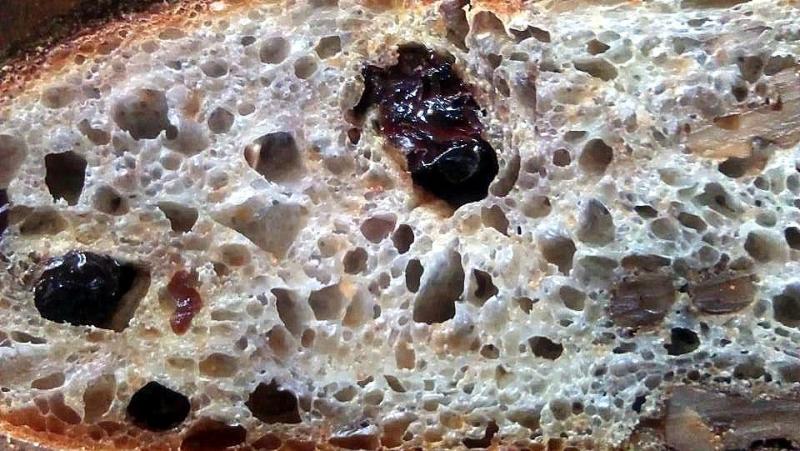
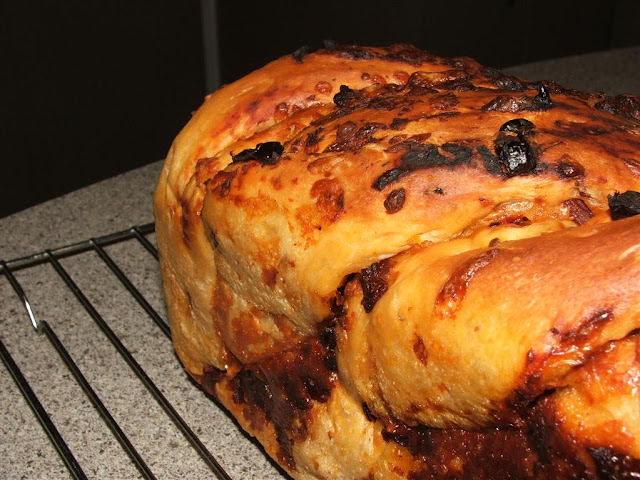
Submitted by clazar123 on January 17, 2009 - 7:40am Where to get tall loaf pans?I am looking for a standard length/width (9x5?) bread pan the is about 5 inches tall. I want to make sandwich loaves that don't have the typical "shoulders" loaves get from shallower pans from when the dough rises and tried to spread outward. I have accomplished this with foil as an experiment but would like to find a permanent solution. I have seen the pullman pans but for some reason they seem inordinately expensive and may not be tall enough-I don't want to use the lid. So, where can I get such pans? I have checked many sites on the internet but not found any yet. Thanks! clazar123 Submitted by afjagsp123 on October 14, 2008 - 3:36pm Loaves sticking to pyrex loaf pansI've recently jumped on the "down to basics" bandwagon. I stopped using spray oils like Pam, and bought a Misto, and loaded it with olive oil. Like everyone else, just trying to save money wherever we can! (the Misto was only $9.99 at Bed, Bath & Beyond, and think about the cost of a can of Pam -- $3 or so? Would pay for itself in a few months...) I had used my trusty Pyrex loaf pans without a single problem for all kinds of yeast and quick breads as long as I used Pam. But now that I've stopped using Pam, the bread sticks LIKE CRAZY. I almost cried on Sunday when after all that work, my white white loaves stuck in the Pyrex. Half of each loaf was left in the bottom, even after I ran an offset spatula all the way around, and even up under the bottom, just to get the bread to unglue itself from the pan. Any ideas? I guess I could go back to Pam, but I hated the way it left that gluey residue on everything (what is that??? it doesn't seem like it could be good for you...). Is the the olive oil the problem? What about Canola, or just buttering or using (blech) shortening? Thanks! Submitted by mcs on August 15, 2008 - 3:43pm Kalamata LoafHey there everybody. Well about a month ago I asked for some advice in creating a 'Peasant Loaf', more specifically a Kalamata loaf, and I had lots of great suggestions and recipes. Anyways, this is what I came up with and it's derived mostly from the recipe AnnieT posted in the original thread (Dan Lepard's recipe), a recipe Bob (Oldcampcook) sent me, and my rustic white recipe that Eric (ehanner) blogged about not too long ago. Thanks so much everyone; I'll try to post the recipe as a PDF here so as not to clog up this thread too much. -Mark
Submitted by foolishpoolish on August 1, 2008 - 7:46pm Sweet Sourdough LoafWell I prepared a semolina starter yesterday all ready for baking some semolina-based bread today. Unfortunately I ran out of semolina for the final mix (bought cornmeal by mistake!) so I mixed the semolina starter into a rich sweet dough using lots of egg yolks (5), sugar, milk and butter (25ish percent). The result was not unlike the milk loaf I made a few weeks ago only much richer. The crumb has nice colour from the semolina and egg yolks. The texture was probably the most soft and tender that I've ever had in a bread (sourdough or commercial yeast).
The recipe as best as I can recall... Starter:
Final Dough:
Glaze:
The night before, mix together the semolina starter and leave until it reaches peak activity (it should roughly double in volume) - about 12 hours. The following day, mix the egg yolks, sugar, milk and starter together. Stir in the flour until you have a slack dough and leave to autolyse for 30 minutes. Using a mixer or frissage, gradually incorporate the butter into the dough. Knead/mix the dough for a further couple of minutes until you obtain a smooth consistency (it will still be quite slack and sticky) Refrigerate the dough for about 20 minutes if the butter got too warm. Bulk ferment at room temperature for 2 hours with stretch-and-fold every half hour (very important). Divide the dough and shape on a well floured into two loaves and leave to proof for a further 2-3 hours. Brush the top of each loaf with milk before baking at 375F for 30-40 minutes (until a skewer comes out clean and the top is nicely browned). After removing the loaf from the oven, brush the top with the butter/honey glaze and allow to cool completely. Cheers FP |
ALSO ON |