Submitted by sabinemcgrady on November 20, 2011 - 8:13am

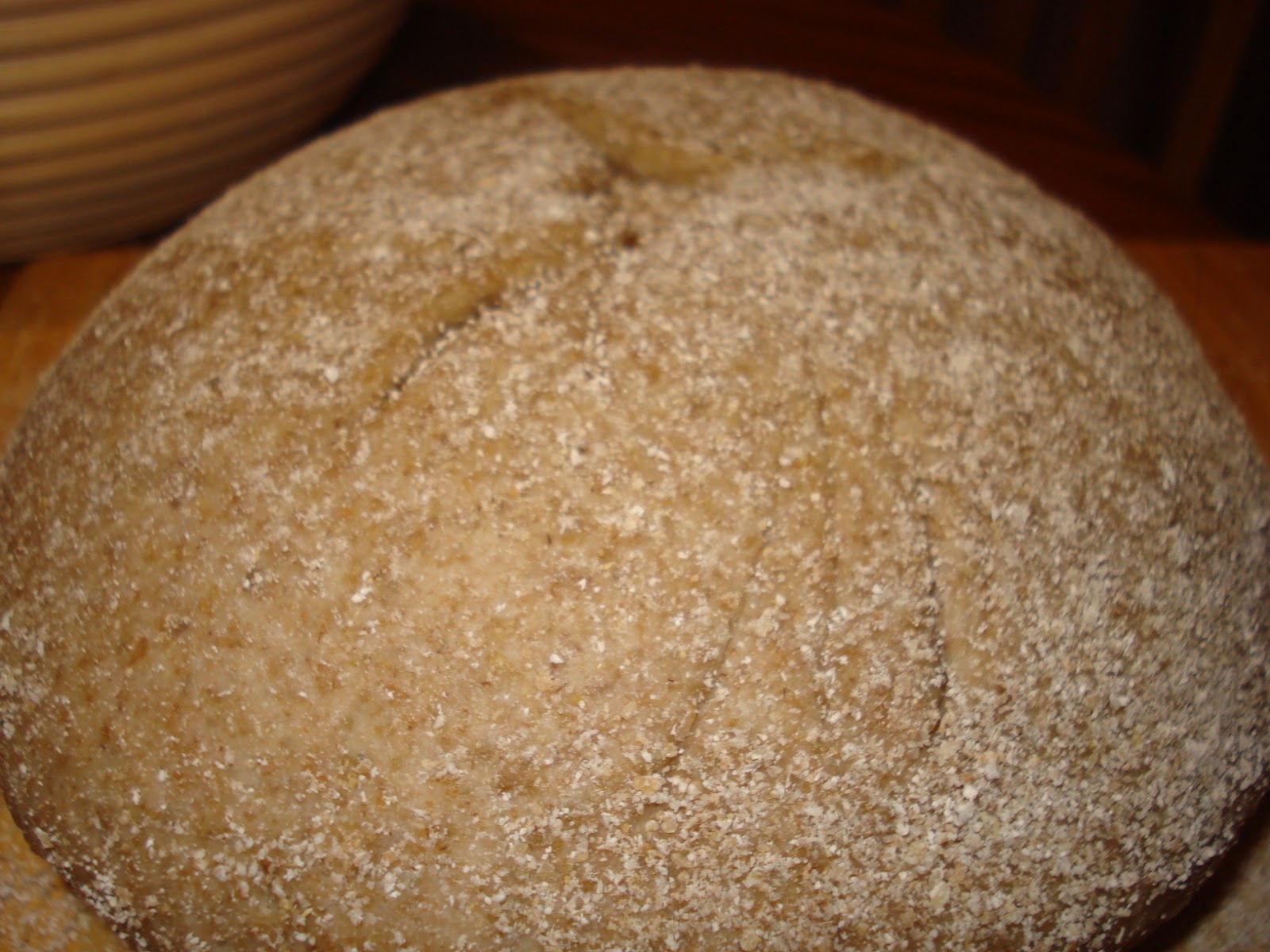
It worked! Sourdough starter took beautifully and I baked my first loafs of good, crusty german style sourdough rye bread!

So, I've been browsing this site for some time now, I live in Ohio USA and miss a good loaf of bread from the traditional bakers common in the German villages I grew up in. Last week after looking at a good loaf of bread at our local grocery store bakery and not wanting to shell out $4.00 for it I decided to finally try setting up a sourdough starter.  I started with a Tbsp of white bread flour and 1 Tbsp of warm water. Then I fed this twice a day, alternating with some whole wheat and rye flour. It looked like I got some action after the first three days, but by day 6 (Friday morning) I looked at it and thought it was flat, kind of slimy looking and had failed.  When I got up Saturday morning I was going to toss it, so what a surprise when I took a spoon to this mass on Sat morning and it was perfect! Light, fluffy, kind of like a mousse consistency.

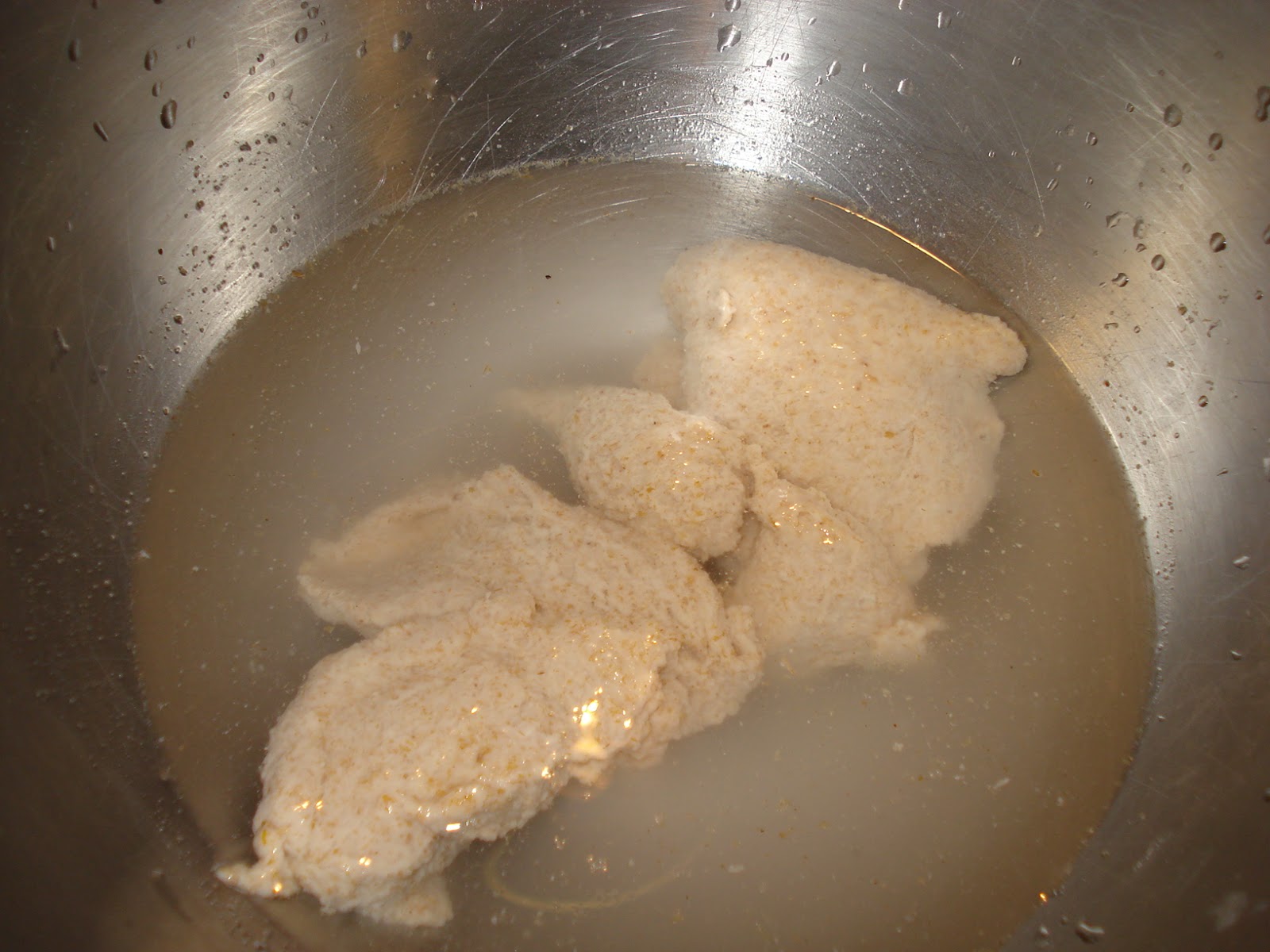
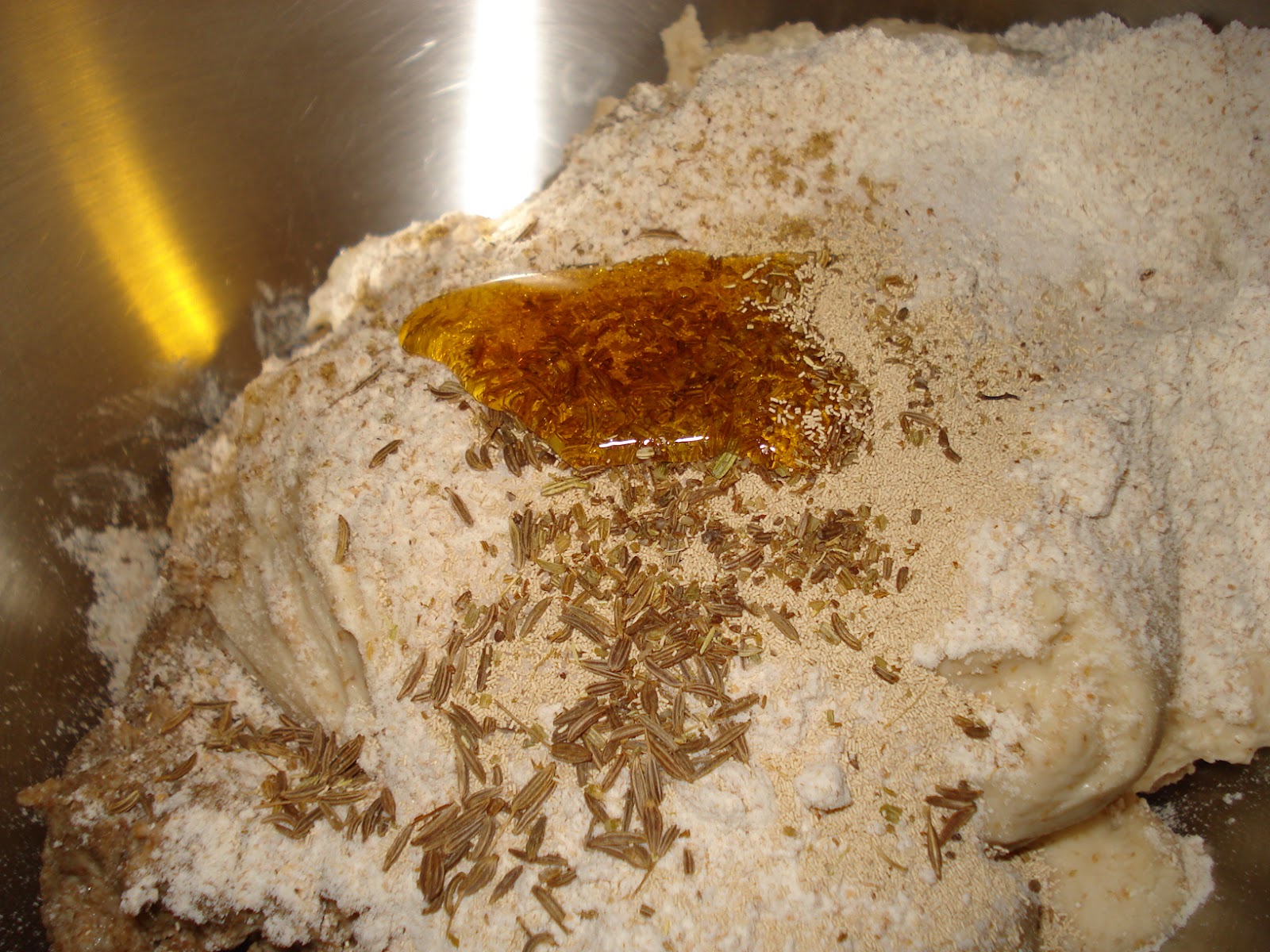
I started a dough on Sat morning using 3/4 lb of white bread flour, 1/4 lb rye flour and warm water.  Left all this sit until Sat evening in the oven (off).  I was so amazed in the yeast action the sourdough gave to this dough by now.  In the evening I mixed 1 1/4 lb of white bread flour, 3/4 lb rye flour and 2 tsp of salt.  I added my sourdough mixture in the center and started adding enough warm water to mix this with more of the flour mix.  Once the center part was quite soft I started using my hands and kneading the remainder of the flour into the soft dough until I had a workable, but still soft consistency.  After some good kneading action I covered and left this to rise (which it did wonderfully) overnight.

This morning I streched the dough just a bit and shaped two loaves, then let them sit for another 1 1/2 hours.  Baked in a very hot oven, 450 deg F with a pan of boiling water on the bottom for 1 hr. and the texture and flavor are wonderful, just like going to a good bakery at home!

Oh, and before making the final dough last night (and before adding salt) I reserved some of the sourdough for the next baking. Plan on making this a regular project now!

Submitted by nellapower on October 9, 2011 - 5:35am

Dresden Christmas Stollen


I have been lurking in the forum for over two years now, soaking up all that I could about sourdough bread-baking. All this time, I wished there was something that I could give back, that I could share with the community. Seeing that I am still a bread amateur compared to you guys, I thought I will have to wait a few more years for this blessed moment. But today, as I was getting my kitchen ready for baking, it hit me. There actually is something I can share with you: my recipe and my experience with baking Dresden Christmas Stollen. I know, there is already one recipe around by harrygerman. My recipe is similar, but with even more butter and fruit. This stollen is an amazing thing: rich, heavy, and fruity. The dough is different from anything else I know and a little tricky to work with. Before I give you the recipe and the technique, I will start by telling you a little about the history of Dresden Stollen. Seeing that there are very different stollen recipes around, I think you need this little introduction to understand how the Dresden stollen is different and why it is worth making, despite all the effort.

In Saxony (the region in the East of Germany, where Dresden is), stollen has been a tradition Christmas bread for centuries (the first written documents about stollen are from the 1329). At that time, however, stollen was a light, yeasted bread, containing nothing but flour, water, yeast and sometimes oil. It was sold and eaten during he pre-Christmas period of Advent fast. Saxony was then catholic, so the use of any richer ingredients such as butter or milk was strictly forbidden. The Saxon rulers, however, were apparently dissatisfied with their Advent bread, so they applied to the pope for a permission to use butter in their stollen. The pope allowed this in 1491, on the condition that they atone for their sin by donating liberally to the church. Although meant only for the rulers and gentry, the pope's permission was quickly applied with much more liberation. Maybe to compensate for centuries of butter-free fasting, the Saxons transformed the stollen into a rich, buttery bread stuffed with fruits. No longer a fast meal, the stollen became a Christmas celebration bread. After a while Saxony turned protestant, but the stollen remained. Of course, with its centuries of tradition, the title "Dresden Stollen" was soon used for trading purposes, unfortunately not always with high-quality products. Since the beginning of the 20th century, the traditional Dresden stollen bakeries fought against the on-slough of so-called Dresden stollen. Today, "Dresdner Stollen" is a registered trademark and only selected backers from Dresden area can use it, provided that their stollen meet criteria with regard to the minimum amount of butter and dried fruits.

Enough of history, let's look at the bread. A real Dresden stollen contains at least 500g Butter and 650g sultanas per 1000g flour. This makes it extremely heavy and rich. Furthermore, the stollen is traditionally heavily coated in icing sugar. The bread needs to ripe for at least 3 weeks in order to develop its flavours and texture and keeps in proper conditions easily for several months. I have started baking stollen some ten years ago, when I moved to Dresden. I now bake 2-3 batches each year before Christmas. For my husband, stollen is something to look forward to throughout the whole year. Even when we spent six month in Finland last year, there was no questions that I will bake his beloved stollen. The recipe that I have here is based on a century old recipe for Dresden Christmas stollen, that Dresden bakeries use as a foundation. Of course, I have adapted it to suit our tastes. You are free to do the same. Just what ever you do, do not cut down the fat! Without the fat, the stollen will never keep as long and it will not develop the proper texture and taste. The same goes for the amount of fruits. You can play with the sugar though, for example leave out the sugar coat (I prefer our stollen uncoated).

Right, enough said, here is the recipe:

Ingredients:

1000 g flour (fine, weak flour; all purpose flour should do nicely)
250 g cream
42 g fresh yeast (or 14 g dried yeast)
500 g butter (or 450g butter and 50g lard or tallow)
1 g ground mace
0,5 g ground cinnamon
0,5 g ground cardamom
zest of 1 lemon
150 g sugar (I use Muscovado whole-cane sugar)
50 g candied lemon peel (instead I make my own by soaking peel from two lemons in honey
for several days)
150 g candied orange peel (instead, I soak peel from 4-5 oranges in honey)
500 g sultanas
250 g currants
100 g rum (optional, I use Amaretto instead)
200 g ground almonds
+ extra butter (approx. 250 g)
+ extra fine castor sugar (approx. 100 g)
+ extra icing sugar (at least 250 g)

0. Save the date
It's important not to start baking stollen too late. My personal experience with this recipe is that they need at least 4 weeks, ideally 6 weeks before you cut into them. Really! We always cut our first stollen on the first Advent Sunday, so I bake my first batch 10 weeks before Christmas. I bake my second and sometimes third batch about 5-6 weeks before Christmas, partly for us and partly as presents for friends.

0. Preferment
The stollen dough is very heavy and it will need a strong yeast activity to raise it. For this purpose, I like to preferment a portion of the flour. I take 300g of the flour, break in 21g yeast, and knead it with 250g cream. I leave it to ferment for 1 hour by room temperaure and than for 12-24 hours in the fridge. You can also use sourdough in the preferment. I have successfully baked sourdough-only stollen, you just need to let them rise longer.

0. Soaking
Place the sultanas and currents in a large bowl. If you are using alcohol, pour it over the fruit. Add enough boiling water to cover the fruit. Leave to soak for at least 30 minutes, but best over night. It is important to soak the fruit even if you are not using alcohol, or else it will burn in the oven. Don't forget to drain the fruit well before you start making the dough to make it as dry as possible.

1. Dough
I sieve the flour onto a working surface (this definitely does not work in a bowl). Break in the remaining 21g of yeast (you can leave this out, just adjust the rising time). Rub the lemon zests into the sugar and mix the sugar into the flour, together with the mace, cinnamon, and cardamom. If you are wondering about the small amounts, the stollen is not supposed to taste very spicy. However, this is your stollen, so you can add any spices you like. Cut the preferment into small pieces and distribute it on the edges of your flour mound and do the same with the butter/lard. Now comes the kneading. Be warned, that you will need about 30 minutes to knead the dough. You can try it in your mixere, but make sure your mixer can take it. Better invest the time or coax a physically strong friend or relative into helping. Start by taking a few pieces of the preferment and the butter and kneading them together. As you do this, the dough-lump in your hands will turn sticky. Place it in the middle of your flour mound and knead it there, until so much flour has been incorporated that it's dry again. Now take some more preferment and butter and knead them in your lump. This will make it sticky again, so add flour. And so on and so on. At some point, the dough-lump may become difficult to handle. Feel free to cut and put aside about two thirds of it and continue kneading with the rest. You can put the pieces together in the end. Do not be tempted into adding more flour or any liquids. Trust me, just keep kneading, it will all be well in the end. As you work, the kitchen will be slowly filled with the smell of lemon zest and the spices - Christmas is on the way!

2. Fruits
You are tired, your fingers ache and you are a proud owner of a homogeneous dough lump that reminds you of short-bread dough. Congratulations, let's add the fruit. Take your drained sultanas and currants and mix them with the ground almonds. This will help soak up the remaining liquid. Mix them with the candied orange and lemon peel and pour the whole lot on your working surface. You might have the urge to check the recipe now, because you think you have too much fruit. But it really can be incorporated into you dough-lump. First, cut the dough-lump into 5 pieces. Start by working the first piece into the fruit. As the fruit is wet, this will make it all turn into a strange paste. Keep adding piece by piece, until the whole lot is incorporated. Don't worry if you feel more like making mudpies. Place the whole mass into a bowl and clean your working surface with a dough scraper. Now evaluate the dough. Is it like a soft short-bread or cookie dough? Than you are done with it. If it's too wet and soft (probably it will be), dust the working surface with flour, turn the dough onto it and carefully work in a little more flour. Not too much, though, the dough should be just about manageable. You won't need to make anything fancy with it, so as long as it does not stick to the work surface or your hands like crazy, it's fine.

3. Divide, form, and rise
Divide the dough into 2-5 pieces. For us, I prefer to make two large stollen. This size apparently has a positive influence on the texture of the stollen later on. But you can make several smaller stollen, too, for example as gifts. Just don't forget to adjust the baking time. Form each stollen into a rough, high log. Just pat it into shape - no rolling, no stretching. Just a note here: the traditional Dresden stollen has no almond paste inside. With all the dried fruit and its sugar coat, I also think that it does not need it. But it's your stollen, so if you like, add it now. Put the formed stollen on a baking sheet with baking paper (make sure the stollen are far enough apart) and let it rise for about 2 hours (more, if you are using only sourdough or less yeast). The stollen will become a little puffy, nothing more. It will definitely not double.

4. Score and bake
There is a traditional way of forming a Dresden stollen. I use a different, simple way used for stollen from Thuringia (another region in Germany). It's easier and the stollen are less flat, so they are also moister. Basically, you just make a log and then you score it with a single cut all the away down the stollen's back. That's it. I score the stollen directly before putting it into the oven. I don't preheat the oven, just pop it in and bake it at 180°C for approx. 1-1,5 hours. Keep a watchful eye on the stollen. Cover it with aluminium foil if it has turned brown before its time and adjust the time according to the size of the stollen.


5. Coat
This is an optional step. Traditional stollen is heavily coated in sugar. If you want to  coat the stollen, brush it with liquid butter (as much as the stollen can soak up) immediately after taking it out of the oven. Than sprinkle it heavily with fine castor sugar. The castor sugar will soak up any access butter. Wait for the stollen to cool and sprinkle it with a very thick layer of icing sugar. As I wrote, I skip this step. Firstly, I find the coated stollen too sweet and secondly it makes a mess when storing. Alternatively, it is also possible to store uncoated stollen and brush it with butter and coat it in sugar right before cutting into it.

6. Store
The stollen has to be stored for at least 4 weeks (I recommend 6) before cutting into it. If you cut it earlier, you will be disappointed. Cutting it later is even better. Stollen store best in an old fashioned cool celler, with high humidity. If you don't have such a cellar, you can store stollen outside in wooden boxes provided that your climate is cool enough (that's what I do). Otherwise store the stollen in the coolest room of your house, but not in the fridge. Some people like to freeze the stollen, I don't think its necessary and it has a negative impact on the texture. If you are storing stollen in a cellar or outside, simply wrap it in cotton cloth and put it in a wooden box, so that it can breathe. Otherwise wrap it well in a plastic or aluminium foil. The idea is that if you cannot provide an environment with high humidity, such as cellar or outside, you should prevent the stollen from drying out. That's it, now wait.

7. Eating
If you cut into a stollen 2-3 weeks after baking, you will be disappointed. It will taste fine, but the crumb will be far too dry. Don't give up and put the stollen away again and wait a little longer. The texture will change over time and after six weeks it will have a short-bread-like crumb and the taste will be a mixture of spices and fruits, all rolled into a buttery, sweet bliss.

So to sum up, a Dresden stollen is not hard to bake. All it takes are good quality ingredients, some muscle and a lot of patience. The reward is a truly unusual bread. Although I am not German and grew up baking other Christmas goodies, stollen has become to me a personification of Christmas. You take the best, you do your best, you wait for the occasion, and then you enjoy it in full.

I hope someone might have a go at my Christmas stollen. I'll be happy to help you.

Best, Nella

Submitted by Jaydot on March 25, 2011 - 1:29am

For those who speak German


A German documentary about "bread technology".

Submitted by UnConundrum on August 11, 2010 - 5:29am

Need help translating German recipe

I need some help translating an ingredient in a German recipe for Rosetta rolls.  The word that has me is "proteinweizen."  I'm guessing it means "wheat gluten," but I'm not sure.

The whole recipe in German is:

970 g Mehl, T.550 

15 g Proteinweizen 

15 g Weizensauer

10-30 g Hefe 

20 g Salz

50 g Oliven-Öl 

ca 580 g Wasser

Also, assuming I'm correct, can anyone help with selecting an American flour to use as I'm not familiar with T.550.  I believe that's a higher protein flour.  If I used KA Sir Lancelot, would I leave the gluten out, or are they looking for something even higher in protein?
Thanks.
Submitted by whosinthekitchen on June 21, 2010 - 1:51pm

GERMAN BROTCHEN


GERMAN BROTCHEN

The German brotchen is a hot milk bread that kneads together yielding a smoothly elastic dough. This makes great rolls and buns. The best is to eat it warm with your favorite cheese or jam. I have searched online for other brotchen recipes. An internet search did not turn up a brotchen recipe for awhile but now several are available. However, none are identical to the one I got on that wonderful trip to Germany in the 80’s from a nice German lady.  The US Army officer husband helped convert metric measures to English.  This has to be the best travel souvenir I have ever returned home with!
Here I share my recipe for you to enjoy: 
GERMAN BROTCHEN

Mix first three ingredients. 
1/2 c. warm water
1 1/2 cup warm milk
1 Tbsp yeast
Add: 3/4 tablespoon sugar
1 teaspoon salt
When well blended
Add 1 cup flour 
Beat this with a wooden spoon until bubbles appear in the pancake like batter.
Add more flour a cup at a time to make a dough you can no longer stir.
(This recipe uses about 4 cups of flour total; today I used 34 ounces weighed on a scale because I live in South Florida where the air is HEAVY and measuring by volume doesn't work.)
Knead for 10 minutes adding as little flour as possible until the dough is satiny and not sticky. The dough should be firm, and give to the touch. Place in a lightly oiled bowl to rise for 45 minutes (depending on the temp and humidity.  I lived in Wichita and found it a dryer climate yielding shorter proofing times for my breads.) The dough should more than double in size. Degas and remove the dough from bowl onto a floured surface. Knead 4 or 5 times and divide into 10 pieces for large burger size buns or 16 for buns. Sprinkle baking sheet with cornmeal generously and evenly space rolls. Allow to rise again (about 30 minutes) covered with plastic wrap you have brushed lightly with oil. Preheat oven to 350 degree F. When the oven is to temperature place rolls into bake for 20 - 30 minutes or until lightly golden. (I do not score the buns because the ones I had in Germany had a smooth top)  I do splash 1/8 cup water into my gas convection oven three times in 20 second intervals to create my crust at the beginning of the bake time.  Remove to cooling rack.

I was unsuccessful in getting rid of the blank box. 

Enjoy! 

Lisa


Submitted by CottageCrafts on April 11, 2010 - 1:56pm

New member from New Zealand

Hello forum,

just wanted to say hello. We are two German immigrants living since over 10 years in New Zealand now. We live on our 100 acres farm and have milking goats, cows, sheep, chicken etc. We try to be as selfsufficient as possible. I run a small business selling cheese making equipment for the home cheese maker. But my main job is a software engineer and I work from home office. My wife is doing the farm work and I help on the weekend and in the evenings.

The range of bread in NZ isn't really great if you compare it with what we were used to in Germany. I am not complaining, it is a different place here and that's why we love living here. But some things we miss we try to make ourselves (I am also a passionate All Grain Brewer which really complements bread making). So we make our own bread since years now. Mainly sour dough which we start ourselves.We mill our own flour using organic wheat and rye whichis often difficult to get. New Zealand is a small place. Only 4 Mill people here.

I dream of building my own wood fired oven. We moved to our place 4 weeks ago so this is still on my list. Some of our friends built one and I am glad I could see what they would do different next time! ;-)

So far I am still overwhelmed with the amount of information on here. I am sure I will first spend a lot of time reading and might have one or the other question.

Cheers

Peter

Submitted by FloridaJeeper on February 24, 2010 - 2:39pm

Greetings from southwest Florida!

I discovered this web site by accident yesterday, and I LOVE IT!  I'm trying to learn my way around (I've never written in a forum before!), and I look forward to meeting some of you and sharing information.  What a great learning opportunity.  I have been baking bread since 1994, and since my husband is German, I like to make the Old World-style breads...the artisan breads just absolutely win my heart!

Submitted by katzinchen on February 22, 2010 - 9:36am

German sourdough powder

I have several packages of sourdough powder from Germany. I have used the German liquid starter to good effect in Hamelman's Vollkornbrot recipe. I put two tablespoons or so (the indicated amount of liquid starter actually) into one of his recipes using rye meal and flaxseed and am not certain it has worked. Cut slices of he bread actually molded over the weekend in a Tupperware container, which could be because of the higher moisture content of the bread; but that is perhaps another question. Could someone please advise me as to how to use this sourdough powder correctly in bread recipes before I use it again; or should I throw it out and make my own starter? Thank you so much for any help!

Submitted by Mini Oven on July 5, 2009 - 11:19pm

Seoulful German Farmhouse Rye


Yes I did it.  I found rye flour in Seoul, South Korea, in the Bangsan Market between wall paper shops and packaging tucked into the alleyways kept cool in the winding shadows from the burning sun.  I found two different ryes, that with my third, and my unending curiosity can only lead to one thing.... a comparison.  I have already gathered that there might be some flavor differences evidenced by the interesting additives in North American recipes...

So I decided to use Daniel Leader's Soulful German Farmhouse Rye in Local Breads combining all the ingredients except for added yeast (don't want it) and final 70% rye flour.  That way the only difference in flavor will be the flours.  All three doughs will be handled alike. 

The Rye:

  • Bob's Red Mill Organic Dark Rye flour @ 4000 won a kilo

  • German, Demeter Organic Rye type 1150 flour @ 7900 won a kilo

  • Austrian, Haberfellner Rye type 960 which is quickly running out


I mixed up the recipe and divided the liquid into thirds, added 117g rye flour to each bowl moistening the flour and covering for one hour.  I had already started noticing differences...

Bob's is a slightly coarser flour, has more speckles, is darker (but not by much) and not as sticky as the other two

German 1150 has two mosts: lighter color, and stickiness

Austrian 950 has dough color between the two but in the picture they look all look alike.

All mixed well, all sticky (typical rye) so I use a wet silicone spatula to fold the doughs twice.   After 3 hours the loaves were gently shaped with wet hands patted with oatmeal flakes and set over cutout bread letters to mark the bottoms.  (4 o'clock is Bob's, 12 o'clock is German)  They were rising nicely (not a whole lot) when they went into the oven.  (tip, it is very hard to judge rising in a flat round bowl shape)

As you can see, I'm having a little trouble lining everything up here...(someone please send me a note on how to do this!)    The picture below of the top shows Bob's Red Mill at 10 o'clock, Austrian 950 at 2  o'clock, German 1150 at 6 o'clock.


The doughs seem to rise in relationship to fineness of the flour.  Bob's is the heavier and coarser so it rose slightly lower than than the other two.  1150 and 950 were pretty close in height but the 950 rose just a tad more.  The darker color of Bob's is even darker after baking.  Now to squeeze in another picture, the crumbs.  Austrian is on left, German right, Bob's is the darker of the three, first on the bottom then on the top.

All have a moist heavy crumb (We like it that way) but the differences are slight but mostly in color and texture of crumb in the mouth. 

1150 feels smoother in chewing, 950 is more stick to your teeth smooth, Bob's tend to be more stick in between the teeth which gives it a longer taste in your mouth. 

After two days the sour is growing but I still can't tell one from the other as far as taste goes.  The Austrians at the office yesterday could also not tell any flavour differences.  They just wanted more.  So I've been baking and playing.  I keep in mind that Bob's won't rise as high as the 950 (or peaks sooner having more whole grain).  I made a loaf yesterday with Bob's and gave it a longer steam in the oven, 10 min instead of the 6 minutes in the above bread.  It came out lovely rose higher and being consumed as I write.   It also went into a banneton, tall and narrow.  I also use more spices than the recipe but far from overpowering the rye.

So.  I Guess I blew the top off that urban legend if there ever was one.  They all taste pretty much the same.  Thanks for waiting patiently for the results.

Mini Oven


Submitted by orangejellybean on June 25, 2009 - 2:52pm

german roggen vollkornbrot

Hey Everybody,

   I've just recently returned to the States from a stint in Germany, where I fell in love with Roggen Vollkornbrot.  It's this heavy, dark, moist rye bread, with large grains and a slightly sour taste- in Germany, they cut it thin and eat it with cheese for breakfast/dinner.  I've been looking everywhere for a recipe, but most of what I've found is for bread with a lighter texture and taste, including those recipes on the previous post in this forum about Klosterbrot.  This has quite a different texture from your average rye loaf, and is extremely toothsome and dense.  Does anyone know the bread I'm talking about and perhaps could contribute a recipe?

Thanks!