Submitted by dmsnyder on June 1, 2011 - 3:37pm

Travel Notes (food version) - Toscano and Paris, May, 2011


We just returned from 2 weeks in Europe, the first 10 days in Italy, traveling with one of my sisters and her husband. We then spent 4 days in Paris and one in Brussels.

I've generally found it difficult to find bad food in Italy, although it's not all wonderful. I think the best meals we had were actually at the B&B at which we stayed South of Siena. Our hostess, Laura, kept saying she was "not a professional," but the best Italian cooking is, after all, "home cooking." Laura made totally amazing tarts and breads, with butter she churned herself, for breakfast each morning, and one special dinner. The dinner included ribollita and pasta with a tomato sauce, both of which were extraordinary.

As an aside, I would recommend this B&B/Agratourismo, Il Canto del Sole, to anyone wanting to stay near Siena. The setting is beautiful, in the Sienese hill country. Our hosts, Laura and Luciano were incredibly warm and helpful. Laura's cooking was simply fabulous. The evening she cooked dinner for us, Luciano learned it was my sister's birthday and presented us with a bottle of champagne with our dinner.

The bread we had in restaurants in Italy was boring with the one exception of a very rustic sourdough that I'm pretty sure was baked in house in the wood fired oven they used for pizzas. 

Paris was an entirely different story. We had some excellent food, and the generally quality of the bread was quite good. I was able to visit 3 of the boulangeries I most wanted to visit - Phillip Gosselin (across the street from our hotel!), Eric Kayser (in Gallerie Lafayette) and Poilane on Rue Cherche Midi. 

We did not know one of Gosselin's boulangeries would be so close, but I was delighted. His is the "pain a l'ancienne" on which Reinhart based his very popular formula. We had Gosselin's "Baguette Tradition" a couple of times. It is a very rustic, thick-crusted baguette with an open, chewy crumb and a delicious flavor.

Gosselin Baguette Tradition

Gosselin Baguette Tradition crumb

Poilâne Miches

Poilâne miche crust

Poilâne miche crumb

We made a special trip to Rue Cherche Midi, arriving at Poilane at about 3 pm on a Friday afternoon. The miches were still warm from the ovens. The aroma of the little shop almost brought tears to my eyes it was so wonderful. The shop was empty of other customers to my surprise. I guess it was just a bit too early for picking up bread after work, but the breads were waiting for the evening line-up. My wife and I were offered lovely little butter cookies to nibble on while we admired the breads. I bought a quarter loaf. (They sell miche by weight.)

We bought two of Eric Kayser's breads - a mini-"Baguette Monge" and a Pain au Cereal. The former was beautiful to look at but was quite ordinary in flavor. The pain au cereals was delicious. It's a pain au levain with some whole grain (wheat, rye or, perhaps spelt) and seseme, flax, millet and poppy seeds in the dough and on the crust.

Kayser demi-baguette Monge

Demi-baguette Monge crumb

Kayser Pain aux Cereals

Pain aux Cereals crumb

We ate the Kayser breads and our miche with wonderful cheeses and tomatoes from the Gallerie Lafayette food court. The Poilane miche had a very crunchy crust and a chewy crumb. The crust was very sweet. The crumb was surprisingly sour. (This was probably no more than 3 hours out of the oven.) The flavor was wonderful - quite similar to the SFBI Miche, actually.

But "man cannot live by bread alone." There is also ....

Gelato in Florence

Pecorino in Pienza

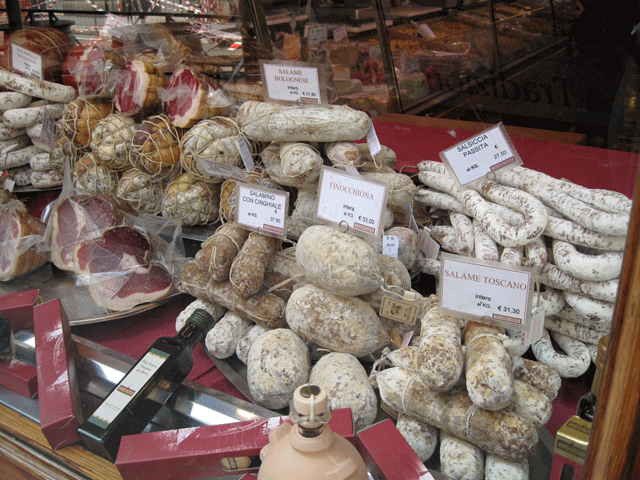
Salumi in Bologna (at A.F. Tamburini)

Tagliatelli with Ragu in Montepulciano

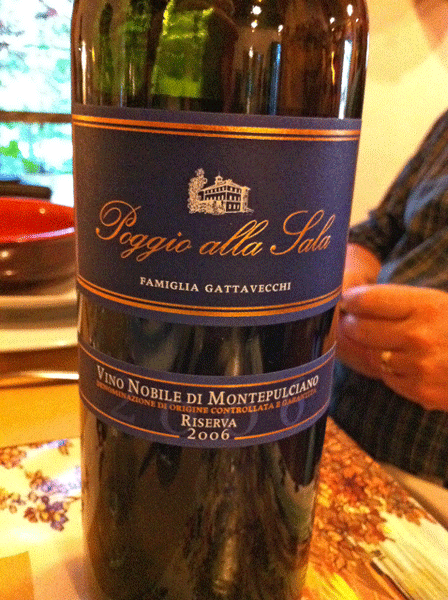
Wonderful wine (Vino Nobile di Montepulciano)

A little something sweet for dessert (from Ladurée in Paris)

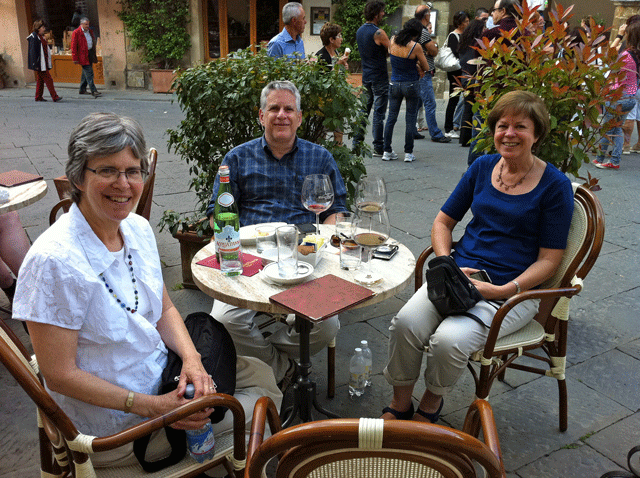
And, most of all, good company with which to enjoy them.

Susan, Evan and Ruth enjoying a taste of Brunello in Montalcino

Happy baking and happy travels!

David


Submitted by nate9289 on April 16, 2011 - 4:03am

Pictures! Boulangerie Apprenticeship in France


As I promised on my last entry, I took pictures of my bakery during work this morning.  I'll explain some of the methods and processes that we employ as well, since each boulangerie does things its own way.  We are an artisan bakery and use no pre-fabricated frozen dough or chemical additives.  The levain for most of the breads (excluding the standard baguettes) is all natural, made with apple juice we press ourselves.

I work with a small staff of two bread bakers and one pastry chef - the patron or boss makes the specialty cakes.  The bakers work from 3am/5am until 9am/11am every day, and the pastry chef from 5am until afternoon.  Breads not baked in the morning are baked by the boss in the wood-fired oven two or three times during the day, but all the work is done before 10am except for the specialty cakes.  The short hours and small staff keep costs way down while managing to put out between 800 to 1100 loaves daily in about 30-40 different varieties.  While some credit should be given to the equipment, most belongs to the two bakers themselves who are incredible to see in action.  I'm thankful to be learning from them!  So, the pictures:


We use an 8-deck hearth oven at 310 deg. C, or 590 deg. Fahrenheit.  Loaves are taken out of the retarder in the morning and let proof before going in the oven.  The first baker arrives at 3am and takes them out, mixing other doughs to let bulk ferment during the early morning hours.  Around 5am the other baker arrives and the oven gets going.  One baker forms baguettes to be retarded that afternoon and night while the other bakes the breads from the day before.  At 9am everything for the day has been baked and we weigh all the specialty doughs, which have been fermenting, and fashion all the loaves, and then they go in the retarder until the next morning.  This is the process for 90% of the breads.


The specialty doughs go in the spiral mixer and the normal white dough goes in the large oblique mixer.


Baguettes during pre-shaping:


Here are some loaves about to go in the oven.  The dark ones are baguettes aux céréales and the one with the ring is bread made with hazelnut flour.  The second picture show baguettes nouvelles, explained below.


For the baguettes nouvelles (new baguettes), the dough undergoes a 72 hour bulk fermentation in the refrigerator and then is formed with a hydraulic machine to not deflate the gas.  Notice the machine and the metal grill below:


Here are some loaves fresh from the oven: round miches, large pain paysan, regular baguettes on the oven loader, dusted baguettes de tradition, and baguettes nouvelles in the case.


My favorite bread we bake each Saturday is the grand pain paysan, a slab of dough weighing 5kg, or 11lbs!  It's sold by the kilo.


I don't do much with pastries - one absolute master pastry chef makes them all.  Fresh strawberries are all the rage right now, and we're doing a buy 3 strawberry pastries, get 1 free deal.  The picture with the almonds and raisins shows mini-kugelhopfs, the special pastry of my neighbor region Alsace.


Finally, some pictures from inside the store.  Most boulangeries suffer from either an overly-elaborate or overly-dull store space, often too small.  Not the case here!  From the enormous wood-fired oven imported from Mexico - producing an unbelievably tasty bread - to the lime green walls, it's a great place to find whatever suits your palate.


At home after a long morning of work, enjoying a baguette nouvelle.  Hope you've enjoyed the pictures!

Nate


Submitted by RobynNZ on February 20, 2011 - 6:59pm

Bread machines- France:instant! Japan:Rice

Couldn't resist sharing a link to David Lebovitz's post:

http://www.davidlebovitz.com/2011/02/the-french-bread-machine/


and how about Sanyo's GoPan!  This rice bread machine was released in November and has been a hit in Japan with sales beyond their projections. In Japanese cooked rice is called 'gohan' and bread is called 'pan' so they've come up with a cute name for the machine  combining the kanji for rice and kana for bread  and assigning the pronunciation GoPan (米ぱん)

http://search.japantimes.co.jp/cgi-bin/nb20101229a2.html

Take a look at some photos: 

http://jp.sanyo.com/gopan/recipe/komepan/index.html

The first recipe is for white rice, the ingredients  are is as follows:

50g gluten

3g dry yeast

420g rice plus water (wash 220g white rice grains, drain and add water to total 420g)

16g sugar

4g salt

10g shortening (unsalted butter)

There is also a gluten free recipe and for brown rice etc.

The original breadmakers were made by adapting the machines which had been developed in Japan for making mochi (rice cake/dough). In these sticky rice was first cooked and then the machine kneaded the cooked rice until a soft dough formed. This is a further adaptation.

There's a video explaining how to use the machine,  turns out it 'mills' the rice, kneads etc etc. 

http://direct.jp.sanyo.com/eclub/pages/gopan.aspx#howto

Submitted by houstonwong on November 21, 2010 - 10:57am

A visit to Poilane in Paris


Hi,


On my trip to Paris last month, I got a chance to visit the famous Poilane bakery. I've been wanting to visit it since reading about it in BBA as well as hearing what others have said about it. And finally, I had the chance so I thought I'd share with everyone.

I arrived in the neighbourhood at around 11AM on a Thursday, so it wasn't very crowded. Nice neighbourhood, btw:
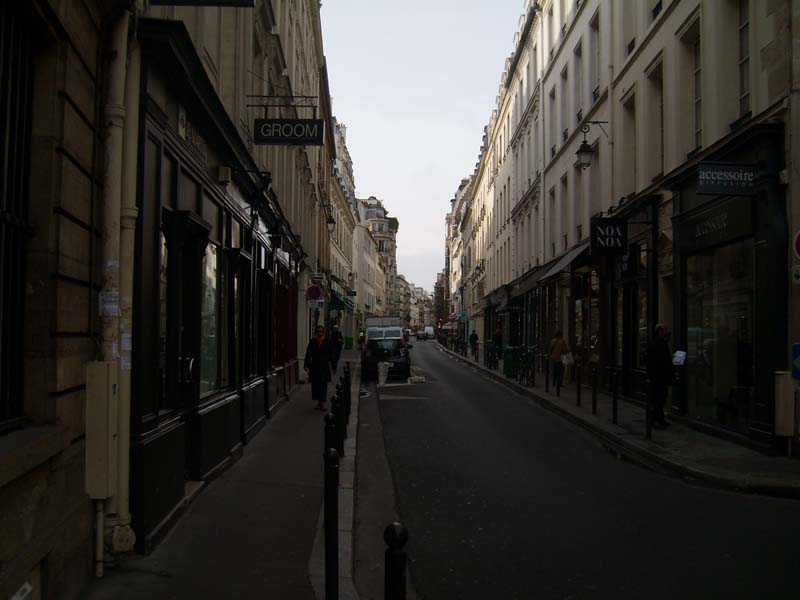
 

And finally, I found the shop, which looks exactly like it does on Poilane's website (apologies for the blurry pic):


I bought 3 of his famous miche with the big P slashed onto it, one of which I had them Fedex to my parents in Canada (you can  order online to ship anywhere in the world, though to my chagrin the Canadian customs people decided to charge an arm and a leg in taxes when it arrived in Canada, so do beware!).


The service was exceptional! I speak fluent French, but I get the feeling they'd be friendly no matter what language you speak. The lady even gave me a certificate to testify that the bread was indeed made in France, listing the ingredients etc. so I wouldn't have trouble taking my miches back to HK (in her words, the certificate was "just in case someone at customs decides they would like to eat some Poilne bread" hehehe). The 2 miches pretty much filled half my luggage and weighed 1.9kgs each (that's over 8 pounds for the 2 that were in my luggage).

When I got home, (about 24 hours later), they were in perfect condition. Here are shots of them uncut and cut.


For scale, that's a 10" carving knife. If I were to hold the bread on a cutting board that's 16" across!


The bread was delicious. Quite sour, with a very crunchy crust which was heavily floured. The crumb was chewy, but when you pull it apart, it breaks rather easily like most sourdough (i.e. not "tough"... hope that makes sense). I had it with French butter, a triple cream Saint Andre cheese (if you've never had it, think of it like Brie's sexy cousin... you'll never want Brie again!), a white chevre (relatively mild goat's cheese) and an ash chevre (same but a bit stronger/more pungent). I'd have to say the butter alone was not the best combo, as the bread is relatively sour... but that's just my personal preference. The St Andre was excellent with it, as it was creamy enough to hold its own. But the goat cheeses were perfect with it.


It being a huge miche, I cut it in quarters and well-wrapped and froze the quarters I wasn't eating. The quarter that wasn't frozen lasted a few days before getting kind of dry. But I suppose that cutting it in quarters would dry it out faster. Still, great bread.


Compared to other sourdoughs I've tried (which aren't many, since I'll have to admit I'm not a huge fan since I prefer baguettes), I'd say the crust is must more interesting on Poilane's miche... crunchier than the few sourdoughs I've had, with a sour crumb that stands out, distinct.


Any sourdough afficianados out there who have tried Poilane and have any comments? I'd love to hear more, as I'd like to start trying more sourdoughs as well as make a few of my own.


Submitted by houstonwong on November 21, 2010 - 10:34am

A visit to Gosselin in Paris


This is one of my first posts, though I've been a long-time and avid viewer.

Last month I was in Paris and had a chance to visit a few bakeries. So I thought I'd share some pics here with everyone.

This post is about Gosselin's bakery. I went to the one on St Honore St (the original?) but these photos are from his other bakery on St Germain St.
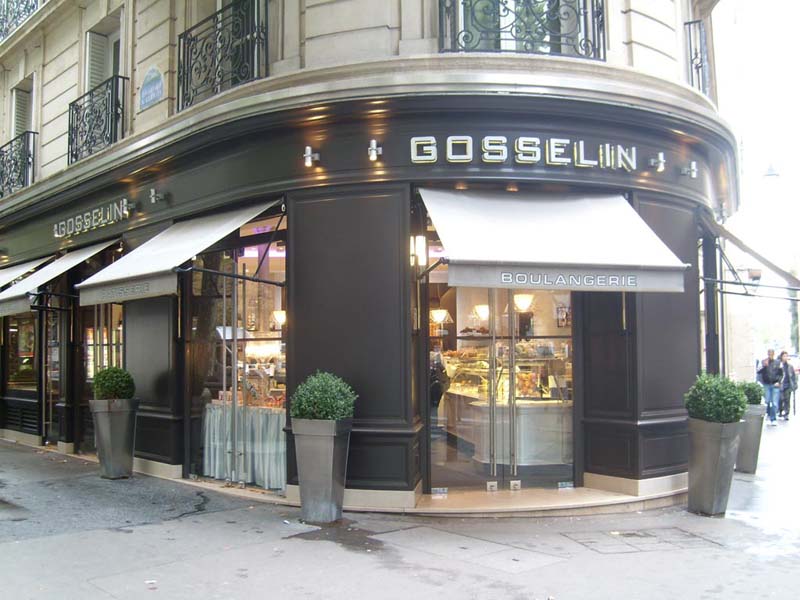
The shop looks rather posh and wasnt very busy at around 930am. The service was ok, nothing to write home about, but not unfriendly. Just business-like (I speak fluent French, so it wasn't due to a language issue). Here, the baguettes are called "baguette tradition" versus "a l'ancienne" at the other shop, even though I asked if they had any a l'ancienne.

Here are shots of the baguette that I took at the park across the street. Sorry, the first one is a bit dark because of the flash... looks like night but it's actually 930am.


I cracked it open and it broke apart relatively easily. The inside was really fluffy and chewy at the same time!


As you can see, the crumb is nice and airy.


About 2 inches or so in height, with a nice crunchy (not crispy.. crunchy!) crust.


It tasted just as it was described in BBA. Slightly sweet with a nuttiness to it. The crumb was indeed cool to the touch and on the tongue. The crumb had a very clean taste when you eat it alone. When you eat it with the crust, you get a nice balance of sweet crust and clean, cool and very slightly creamy crumb. It was definitely one of the best baguettes I've ever had, and I've had qute a few decent ones in my life (in France, UK, Canada, other parts of Europe and even in Hong Kong where I'm currently living).


Was it the best ever? Hard to say, as this would be a huge claim. But definitely memorable.

Wish I could bake one half as good one day.

Anyway, just thought I'd share my experiences and hope others have a chance to try this much talked about baguette. :-)


I'll share my trip to Poilane's in my next post. Enjoy!


Submitted by Ziege on July 21, 2010 - 11:05am

the starter has reawakened!


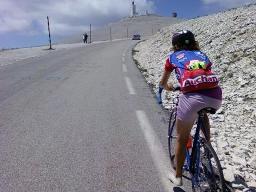
I returned to the US a few weeks ago from a year living abroad in France as an exchange student, and it is interesting to be back. I am full of memories of the Mediterranean landscape and mes pensées often drift to the days that I spent biking up the Mont Ventoux and eating dinner with my host family, who thought that I was crazy for baking my own bread ("You call that bread?! That looks more like a moist brick to me!" my host dad would call out) and for biking 12 miles to get to school every day. I could ramble about my past year's experience for hours, but instead I'll spare you tales of coed bathrooms (that was a surprise...my first day of high school in France when I discovered that young men and women share les toilettes) and my first encounter with modern dance and write about something a little more related to this blog: the plight of my sourdough starter in France, and its revival aux Etats-Unis.

August 2009, my starter embarked for its first voyage out of the US. Packed in a tupperware container, and sheathed in multiple plastic bags labeled "sourdough starter for making bread" (I feared that the airport officials would confiscate my suspicious-looking container full of ooze), it boarded the flight at San Francisco. And many, many hours later, we arrived together in Montpellier, France. That would be the end of our amicable friendship. As the months went by, I would feed my starter with French (T 150) flour just as I had in America, however it seemed to become less and less responsive. On its fiestiest of days, bubbles the size of strawberry seeds would form; otherwise, the starter was about as active as my neighbor, who sat in front of the TV all day and complained that the day was too long. 24 heures- c'est trop longue! At least he had an excuse. He was in his eighties, whereas my starter was less than a year old. So, needless to say, my bread that i produced from the starter was quite dense and multiple times I had to make a loaf or two of yeast bread to raise my confidence in my bread-making abilities. Not that there's anything wrong with yeast-risen bread, but I had been trying for months to make good bread with my sourdough starter.


Here's what a typical slice of my 100% whole wheat bread that I made in France looked like:


(in the background you can see my sprouting avocado plant)


Needless to say, France was not too impressed by my bread baking skills. Oh, I exagerate. A few good loaves came out of that starter that had journeyed so far- in particular, one walnut loaf that I assume was tasty as I left it on the counter at a friend's house and when I went looking for it a few hours later, the loaf was gone and in its place was a dusting of crumbs.


July 2010- as I packed up my bags (the night before my flight), I wrapped up my starter, still in that same tupperware container, and this time labeled the bag with, "levain pour faire du pain/sourdough starter". This label was partially for airport security, and served in addition for the starter itself, who I think had forgotten that it was supposed to be a leavening agent and was considering itself instead as some sort of sauce bechamel gone rancid. Anyway, a few connecting flights and plane meals later, I arrived home. Home! After a year of struggling to remain a vegetarian in le pays du foie gras and a year of daily adventure, I was home. It was sad and nice at the same time. I immediately rummaged through my suitcase to verify that the levain hadn't been confiscated- and sure enough- it was still there! I fed it with some Stone Buhr flour (which my local supermarket doesn't carry anymore...darn!), and went off to visit my friends whom I hadn't seen for nearly a year. When i got back the next morning, I was blown away by the activity of my starter. It had actually doubled in size! And there were bubbles not the size of blackheads, but the size of popcorn kernels! Wow! I've been making bread since my return, and I have been more than satisfied with the results.


Here's a walnut loaf:


and here's a plain loaf:


that are both 100% whole wheat (of course).


I am puzzled by the inactivity of my starter in France- the only possible hypothesis is that my starter simply didn't pick up the French language like I did, and so the American yeasts were unable to communicate with the French yeasts. Sacre bleu! In any case, my starter is thriving and well back on top of the microwave at home, and the bread is much lighter and tastier. And thanks to Minioven- who instructed me to "clean the cage" when it comes to feeding a starter. I had posted a blog back when I was in France complaining about the sluggishness of my starter, and she emphasized the importance of dumping out half of the starter at each feeding, and increasing the amount of flour that I was nourishing my starter with. I think that these two pieces of advice have helped a lot.

Submitted by copyu on April 18, 2010 - 5:52am

Ancient baguette discussion


Hi all,

I was searching the 'net for possible tips on re-creating Boulangier Paul's "flute ancienne" and came across this rather old, but interesting, bulletin-board/blog/discussion. There are some really good posts, there.

Someone asked the question: "Why are French baguettes better than others?" There were some interesting answers. This may be useful to bakers around this neighbourhood. No questions from me, for a change...just posted FYI...

http://forums.egullet.org/index.php?/topic/44562-why-are-baguettes-so-much-better-in-france/

Cheers,

copyu


Submitted by JeremyCherfas on October 7, 2009 - 11:16am

Even in France

Would you believe it? France too succumbs.

"The decline of French bread over the past few decades is one of the saddest aspects of the ransom paid to progress, and much of the blame must simply go to good old greed."

Submitted by JeremyCherfas on August 21, 2009 - 2:30am

Recovering almost extinct French wheats

Has anyone here come across the French wheat varieties known as Touselle or Touzelle? (I did search first.) Louis XI, gravely ill, thought that only bread made from Touzelle could restore him to health.

I ask because a friend has written about the rediscovery of these varieties, and wondered if anyone had access to the article L'homme qui plantait des blés by Isabelle FAURE in Nature & Progres No. 59 (Sep/Oct 2006).

Thanks

Jeremy

Submitted by Cendrillon on September 17, 2008 - 4:11am

Bonjour et merci!

Hello there

I am a slightly obsessed bread fanatic based in Central France, where the only baker in the village sells a vile industrial range of breads. As a result, I have rediscovered bread-making at home and throughly enjoy trying out new methods and recipes.

I have been lurking for a long while and wanted to thanks you all for the immense pleasure I take in reading your posts, tips and suggestions on all things bread.

Cendrillon / Cinderella