Submitted by PiPs on December 18, 2011 - 11:29pm

Further Abroad Borodinsky Rye + Sweet Rye Crispbreads


As the holiday season rapidly approaches I decided to squeeze in what’s likely to be my last ‘real’ rye bake of the year before concentrating on the light and sweet Christmas goodies.

Andy’s fascinating and instructive posts on Borodinsky, Auerman Formulas and other high rye breads have kept me fascinated and entertained while perched in a bus to and fro from work. At first I found the list of ingredients overwhelming and that was before even fully digesting the multi-stage processes … I was going to have to be present and pay attention, plus top it off with a little planning. This was even more apparent with the amount of time needed to translate this formula to the blog …

I settled upon Andy’s Borodinsky – The Auerman Formula [or thereabouts anyway] but tweaked it slightly … um … quite a bit - sorry Andy :)


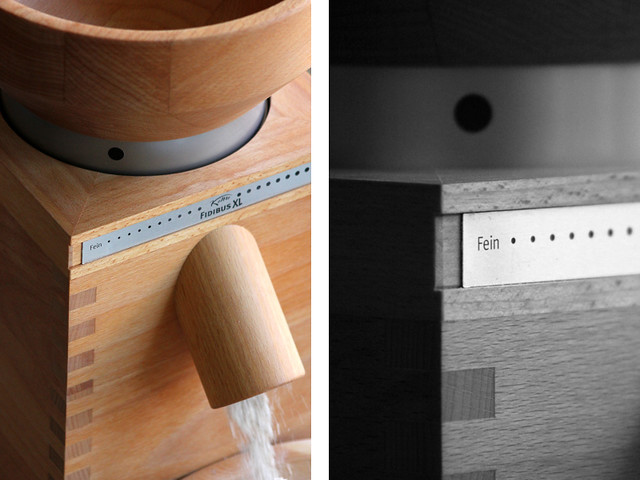
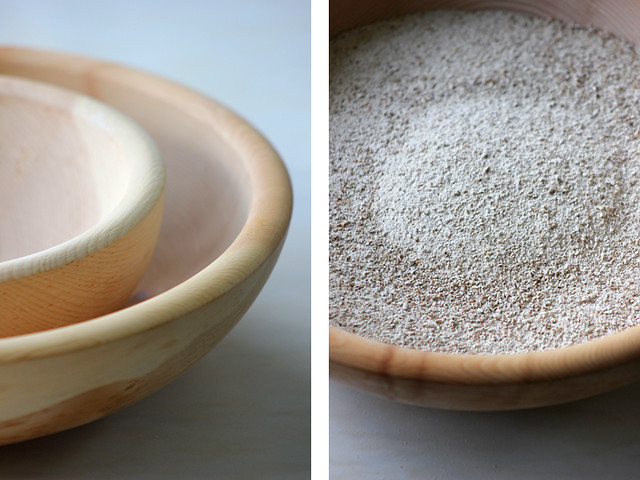
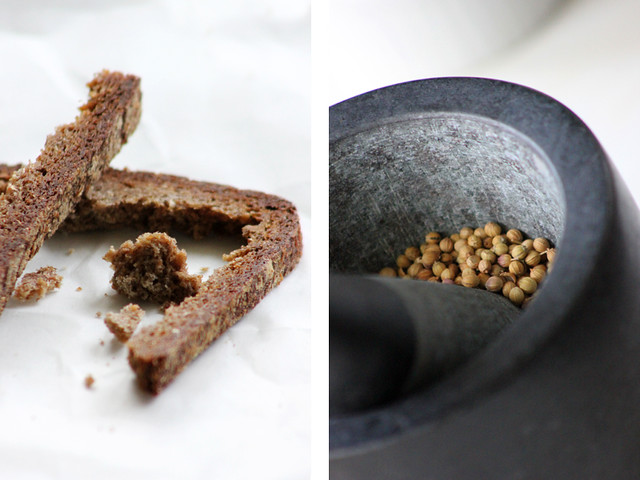
Altus and coriander (I love to chew on the altus crusts)

The dark ryes I have baked up until now have been a one stage process with a rye sour built and fermented before being added to the final ingredients. This formula is a tad more involved and uses a three stage process. A rye sour is built and fermented. With the sour fermenting, a scald of boiling water, flour, and other ingredients is produced. The sour and scald are then combined into a sponge which is fermented further until it is mixed with the remaining ingredients for the final shaping, proving and baking.

I deviated/strayed from Andy’s formula in a few ways. Firstly I have altus which I planned on adding to both the sour build and scald. Instead of the red malt asked for in the formula I used roasted rye malt that I had produced earlier in the week. It is richly coloured flour with a bright sweet roasted flavour and was bound to add some flavour to the finished loaf.

I kept the overall hydration level the same, but altered the hydration of the sour and scald builds to allow for a small amount of water to autolyse the wheat flour used in the final paste. This is a tip I received from minioven that allows the gluten in the wheat flour to develop before being mixed into the final paste. Finally, I sifted the final addition of rye and wheat flour.


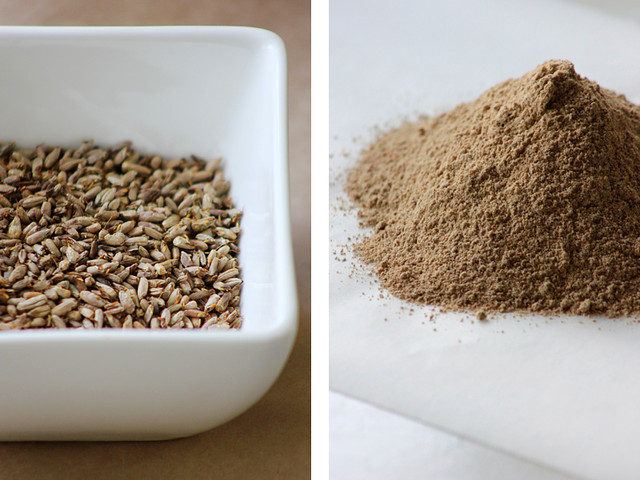
Roasted Rye Malt


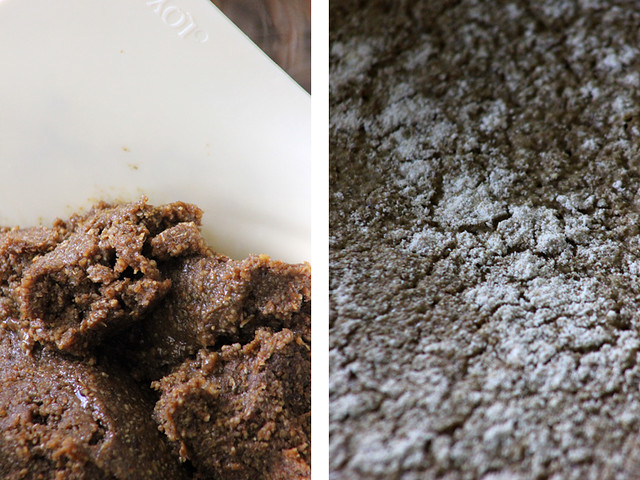
Scald and sponge


Further abroad Borodinsky

Overview

Weight

% of flour

Total flour

1405g

100%

Total water

1195g

85%

Prefermented flour

702g (30% +20%)

50%

Desired dough temperature 25°C


1. Sour build – 18 hrs 24°C


Starter (Not used in final dough)

21g

1.4%

Fresh milled rye flour

421g

30%

Altus (100% rye sourdough)

50g

3.5%

Water

492g

35%

Total

963g


2. Scald


Coarsely milled rye

281g

20%

Roasted rye malt

70g

5%

Blackstrap molasses

84g

6%

Altus (100% rye sourdough)

50g

3.5%

Freshly ground coriander seed

14g

1%

Water

492g

35%

Salt

21g

1.5%

 Total

1012g


3. Sponge – four hours @ 25°C


Sour from (1.)

963g

68%

Scald from (2.)

1012g

72%

Total

1975g


4. Final paste – one hour @ 25°C


Sponge

1975g

140%

Fresh milled rye flour sifted

423g

30%

Fresh milled wheat flour sifted

210g

15%

Water

210g

15%

Total

2818g


Method

  1. 4:00pm day before, prepare the rye sour.
  2. 10:00pm day before, prepare the scald. Grind coriander seeds and combine with remaining dry ingredients. Measure the molasses into a saucepan cover with boiling water and bring to a rolling boil. Quickly stir in the dry ingredients with a wooden spoon and remove from heat and cool. Weigh scald and add further boiling water if necessary to account for evaporation.
  3. 9:00am following day, combine and mix the sour and scald and ferment a further four hours.
  4. 12:00pm combine sifted wheat and final water together and mix thoroughly with wooden spoon or whisk and allow to autolyse for one hour.
  5. 1:00pm add autolyse dough, remaining portion of sifted rye flour to the sponge and form the final paste.
  6. Shape and place into greased tins (mine were 8 x 4 x 4 Pullman) seam side down.
  7. I proved these for one hour before docking and placing into oven with lids on for 15 minutes at 270°C  then a further hour at 210°C

The final paste felt drier than the dark ryes I have baked recently – perhaps the molasses or malt flour? It was still a paste but felt it lot easier to handle. I as a little worried that the rye flour was absorbing too much water which may be a sign of excessive starch damage …

As seems to be the case with the rye breads I bake using freshly milled flours the final proof was exceptionally quick. I am hesitant to take my eyes from these breads during their final rise … the first sign of readiness and its straight into the oven … I don’t even debate myself anymore.

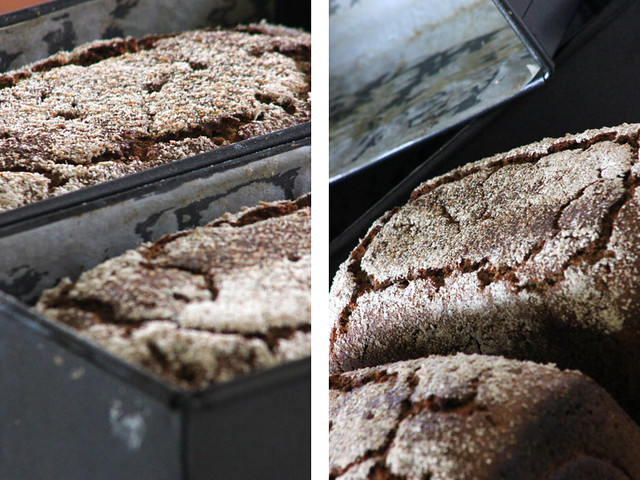
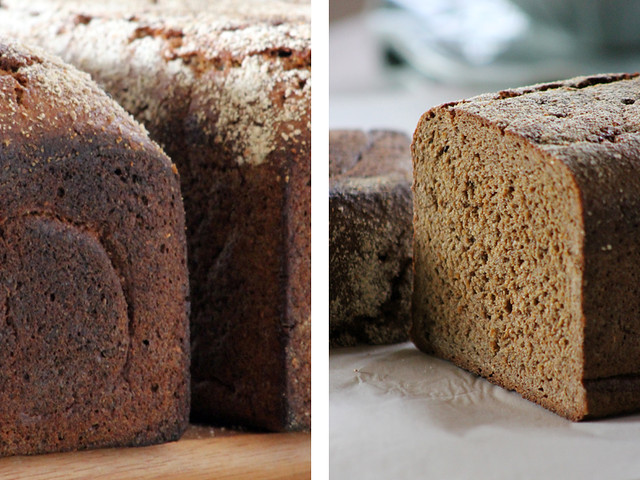
When pulled from the oven the bread felt soft and springy to the touch … the crust a dark brown with red hues. After cooling they were wrapped in a tea towel before storage in a plastic bag for a day … with me looking on longingly – all the time fingers crossed. I still lack confidence in my rye baking …

Finally I could slice – it was a cinch with a crust that was soft and smooth. The crumb was still moist but that will decrease over the coming days. A slice could be folded in half without breaking … did I mention it was soft?

The flavour is bright and I can pick the brightness of the coriander and tartness of the molasses. On the first day the molasses seemed stronger but by the next it had equalled out to rich round flavour. Most of all I am struck by the gentle mouth feel. It does not feel like a heavy rye bread and I look forward to the flavour developing throughout the week.

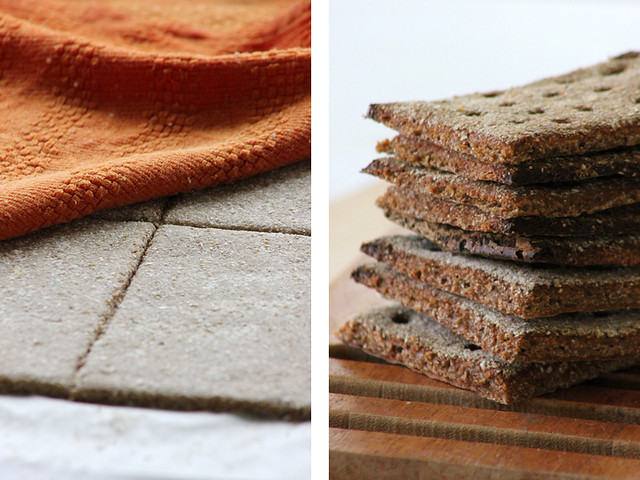
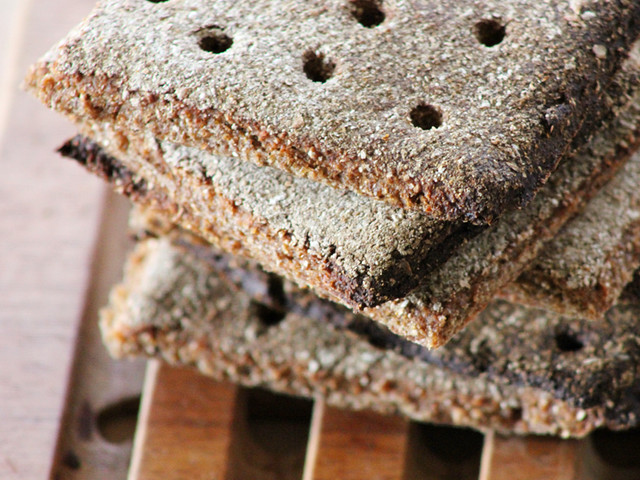
I also started playing with a rye crsipbread based on the formula in Dan Lepard’s Handmade Loaf. I omitted the commercial yeast and added some flavours inspired by his sweet rye formula – honey, ground cardomann seed, aniseed, and lemon zest. They are crunchy on the edges with a chew towards the centre. I love this combination of flavours …

All the best and best holiday wishes,
Phil

Submitted by hanseata on December 1, 2011 - 5:48pm

Lepard's Ale-Crusted Potato Pasties


A few days ago, my lovely stepdaughter, Cat, convinced me to join twitter. As if I didn't spend enough time already on my computer!

But it's fun to follow Dalai Lama (my favorite, whose tweets are not about food, but food for thought), well-known food gurus, like Mark Bittman ("How to Cook Almost Everything" - always good for some environmentally conscious comments) -  or new baking entrepreneur Martina Snetkova ("Cookie Time!") in her heroic fight to establish her little bakery-on-wheels against a big chain cafe who tried to crowd her out of the Bay Area market before she even got started.

And Dan Lepard. When I saw this recipe, I jumped on my bicycle (yes, at the end of November! In Maine!!!) to get local brown ale, sharp cheddar and white onions:

http://www.guardian.co.uk/lifeandstyle/2011/oct/21/ale-crust-potato-pasty-recipe

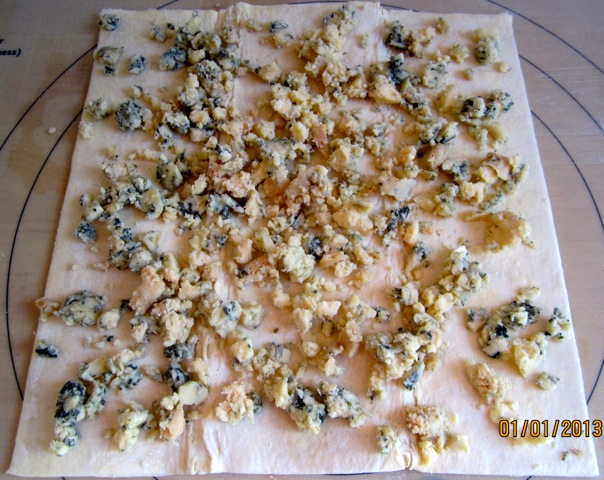
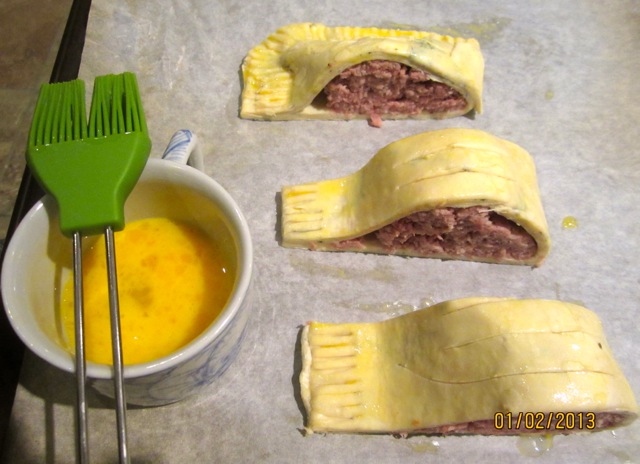
Having learned a few tricks by watching the French video on croissants (that somebody here just posted), working with the ale dough was fairly easy. I americanized the potato onion filling a bit by adding some fried bacon. The amount of the filling would have been enough for nine pasties instead of six (my husband will work the surplus into somosas).

This is the result:

The crust was wonderful, and can surely be used for pies crusts, too. Smaller versions would be great finger food at parties.

Here ist my adaptation of the recipe (with a reduced amount of filling - enough for the six pasties):


ALE-CRUST POTATO PASTIES (6)

DOUGH
325 g bread flour, plus extra for rolling
175 g spelt flour, or whole wheat (I used spelt)
10 g salt, (2 tsp.)
300 g cold, unsalted butter, cut into 1 cm (0.4") cubes
250 ml Newcastle Brown Ale, or similar (I used Bar Harbor Thunderhole Ale)
 
FILLING
2 slices bacon, cubed
265 g white onions, chopped
¼ tsp. salt
15 ml olive oil
65 g water
salt and pepper, to taste
50 ml heavy cream
350 g potato, cooked and diced
70 g sharp cheddar, grated
egg, lightly beaten , for egg wash


1. For the dough: Stir together flours and salt. Toss butter cubes through flour mix. Pour in beer and mix to rough lump (the butter pieces will still be visible).

2. Transfer dough to floured worktop and roll out ca. 1 cm (0.4") thick. Fold it like a business letter, roll it out and fold it again into thirds. Wrap dough package in plastic foil and freeze it for 30 minutes to firm. Repeat this double rolling and folding 2 x more at 30-minute intervals. Chill the dough for 1 hour.

3. For the filling: In a saucepan, cook bacon until crisp. Using slotted spoon, take out bacon bits, place on piece of paper towel, and set aside.

4. Add onions, oil, water and 1/4 teaspoon of salt to sauce pan, and bring to a boil. Cook until all water has evaporated, and onion is very soft. Stir in cream, let thicken a bit (mixture should not have too much liquid). Remove from heat, add potatoes, season well with salt and pepper, and set aside to cool.

5. Divide dough in halves. Return 1 piece to refrigerator. Roll other half into rectangle ca. 23 x 33 cm (9 x 13"), then cut into thirds (using a pizza cutter), each about 23 x 11 cm (9 x 4 1/3").

6. Brush dough stripes with water, spoon filling towards one end, covering about half of piece (leave edges clean, otherwise you can't seal them!), and sprinkle with cheese. Fold other half over filling, and seal edges with a fork. Repeat with other pastry sheet. Chill pasties until firm, at least 30 minutes.

7. Preheat oven to 400 F/200 C.

8. Brush pasties with egg wash, and trim cut sides, if necessary. Place on parchment lined baking sheets and slash tops.

9. Bake for 15 minutes. Rotate 180 degrees for even browning, and continue baking for another 15 - 25 minutes, until puffed and golden.


Submitted by saumhain on June 11, 2010 - 9:12pm

White corn and Whey Loaf (c) Dan Lepard's The art of handmade bread


It's been a month since I started baking with sourdough. So far every single recipe I tried (and there were plenty of them really) was successful and delicious!

This loaf is made with Italian 00 flour, corn flour (in the recipe white corn flour is used; I used simply fine corn flour, don't know whether it's the same thing) and whole-wheat. Oh and whey. I made it, as suggested by Dan Lepard, by stirring a bit rennet in milk and then straining mixture through cheesecloth.

I baked with steam at somewhat 220 C (my oven is damn old, it's hard to tell) for 40 minutes.

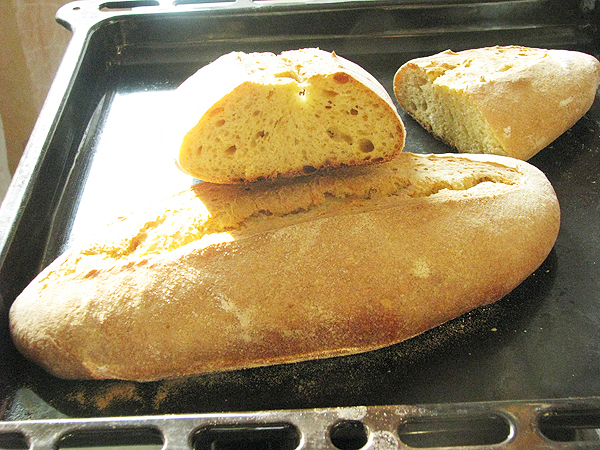
I really like the way it turned out, the colour, the crumb and holes - everything is perfect! I bet, the colour could have been more deep, but I was sort of afraid that the bottom might burn.

Submitted by jennyloh on May 14, 2010 - 6:10pm

White Leaven Bread - Dan Lepard - My first attempt

With the starter that I made a week ago, I finally got to try a recipe using Dan Lepard - The Handmade Loaf.  White Leaven Bread Pg 28.

I halved the ingredient as I was not sure how it'll turn out.  With the freshly made starter,  I just did 1 refrehment.  Made a little too much,  and the rest went to making muffins and pancakes.

Ayway,  it was quite an experience.  I wanted a good well developed gluten,  and I wanted to nice holes in the crumbs.  I decided to do more rest,  stretch and fold and add my salt last.  

Thursday night:  Prepare Leaven.

Friday night:  Prepare dough - did a few 1/2 hour stretch and fold.  I almost forgot the salt,  added in after my 2nd or 3rd stretch and fold.   Shape - was really really careful not to burst those bubbles that were forming,  retard in fridge - wasn't sure about this step as I didn't want to over proof the dough.  But I needed my sleep.

Saturday morning:  Final baking - Heated my oven with cast iron skillet (since I had difficulty finding a baking stone,  this is a good alternative). I score the dough,  should have scored deeper.  I was not sure whether to steam the oven,  as the book only described to spray water on the dough.  I went ahead to steam the oven as well, every 10 minutes, squirt on the iron cast skillet.  I had difficulty sliding the dough from my pizza peel onto the skillet,  one of the ends drooped down,  tried to push it but was too late,  that portion would not budge.  Well,  I went ahead anyway.  Turning every 10 minutes as my oven couldn't turn with the skillet sitting on top of the turntable.  

I was really really pleased with the outcome.  The dough had a great oven spring, browned nicely,  and there were open crumbs,  and you can see the stretching of the gluten.

Even my father was happy about the outcome (he had been staying with me for the past month), and not exactly giving me compliments on my other breads so far. I think I can add a little more salt...The bread was not sour at all,  but has a nice fragrant to the taste.  


Jenny

More details - click here.


Submitted by Doughtagnan on April 2, 2010 - 10:15am

Dan Lepard's Spiced Stout Hot Cross Buns -


As it is Easter I made my 1st ever bun attempt (ditto using a piping bag for the crosses!) the recipe is from Dan Lepard's baking column in the UK Guardian newspaper. As iv'e never used a piping bag before I should have opted for the atheist no cross buns!, but I managed okay despite a piping bag malfunction (it split) which caused a little spillage. The result was very tasty and would have been richer if I had used Mackeson Stout (I subbed a Dark Mild Ale). For the recipe please follow this link

http://www.danlepard.com/front-carousel/2010/03/2131/spiced-stout-buns/

And the pic's before and after baking with compulsory crumbshot before a good helping of french butter, cheers Steve


Submitted by SallyBR on November 30, 2009 - 10:15am

Bake Along with Dan Lepard


Yesterday I participated of a great event organized by Dan Lepard - called Bake Along.  A bunch of folks from all over the world baked together a Dundee Cake, following Dan's instructions, posted step by step online


it was absolutely great!  If you want to see the results, here is the link at The Guardian


http://tinyurl.com/yk3k8hn


Submitted by lukemansell on September 12, 2009 - 5:33am

Couldn't resist...

I am lazy and have the attention span of a small hamster - I also love bread and have found that following Dan L's White Leaven  works just as well if you do a few less kneads, leave it in the fridge overnight then warm shape and bake....

Submitted by Bettina Berg on February 23, 2008 - 6:15am

Help substituting yoghurt in Dan Lepard's leaven recipe

Hi. I've just purchased Dan Lepard's The Handmade Loaf and am dying to try his leaven recipe. However he uses yoghurt and we can't have dairy in my house (alas), so I was wondering if anyone could recommend a substitution.

Also, a lot of his recipes include milk or buttermilk as well as butter. Any suggestions how to handle this?

Thanks!

Bettina

Submitted by Trishinomaha on November 29, 2007 - 7:01am

Dan Lepard Q and A


Here’s a link to a good “Q&A” with Dan Lepard  that was published in the UK Guardian newspaper: http://blogs.guardian.co.uk/food/2007/11/dan_lepard_live_chat.html

Submitted by tigressbakes on April 18, 2007 - 7:56pm

tigressbakes bread


This is the second bread that I've baked with my white sourdough starter and it is mmm-mmm good!

This is the Mill Loaf that is in Dan Lepard's The Handmade Loaf. Which I might add is a beautiful book!