Submitted by yy on November 24, 2010 - 5:31pm

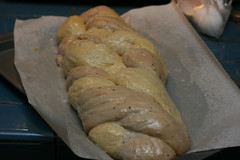
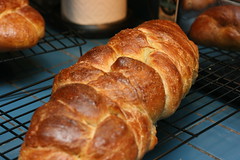
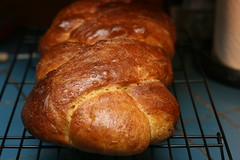
how to incorporate dried fruit into a braided loaf?


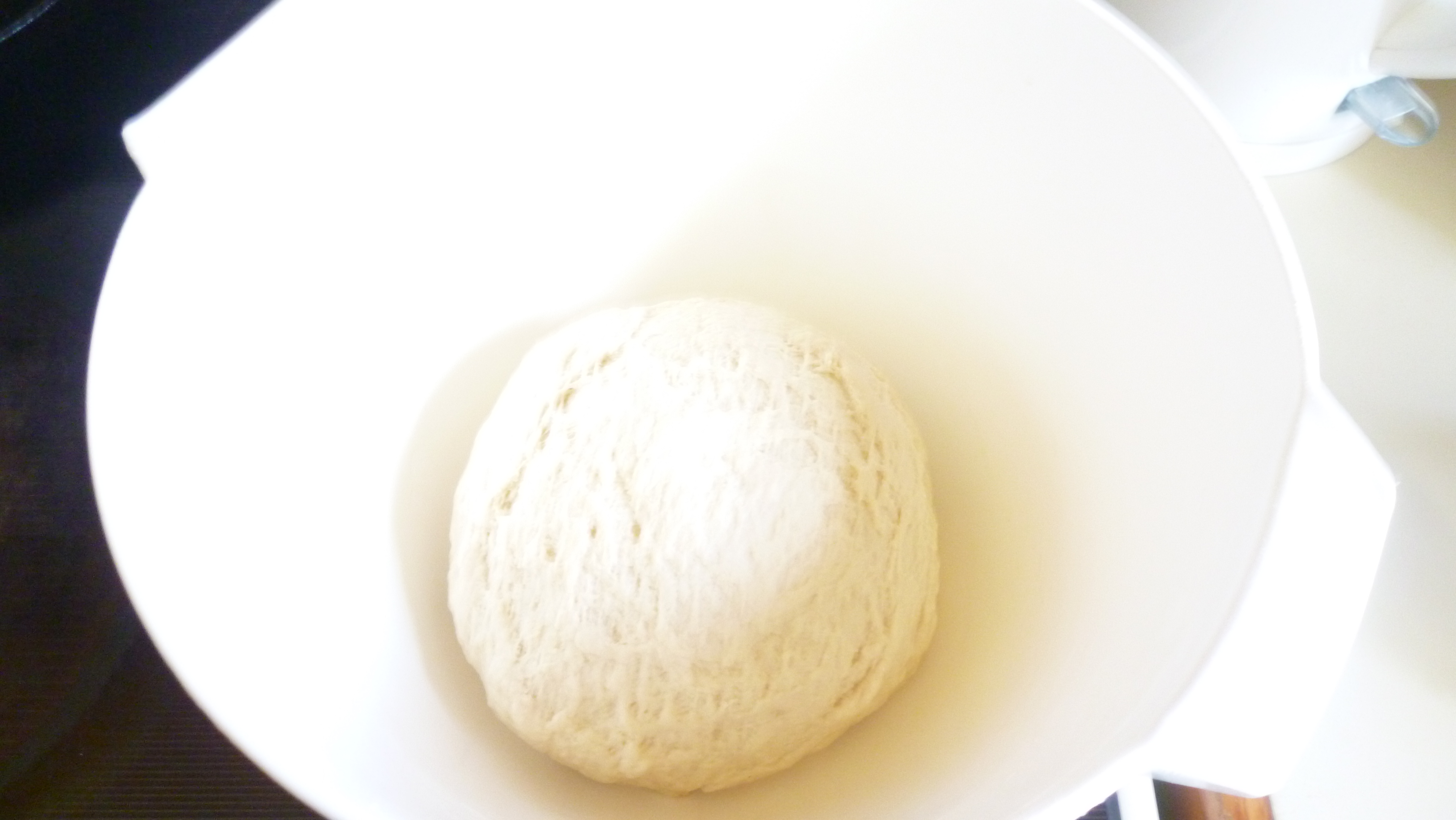
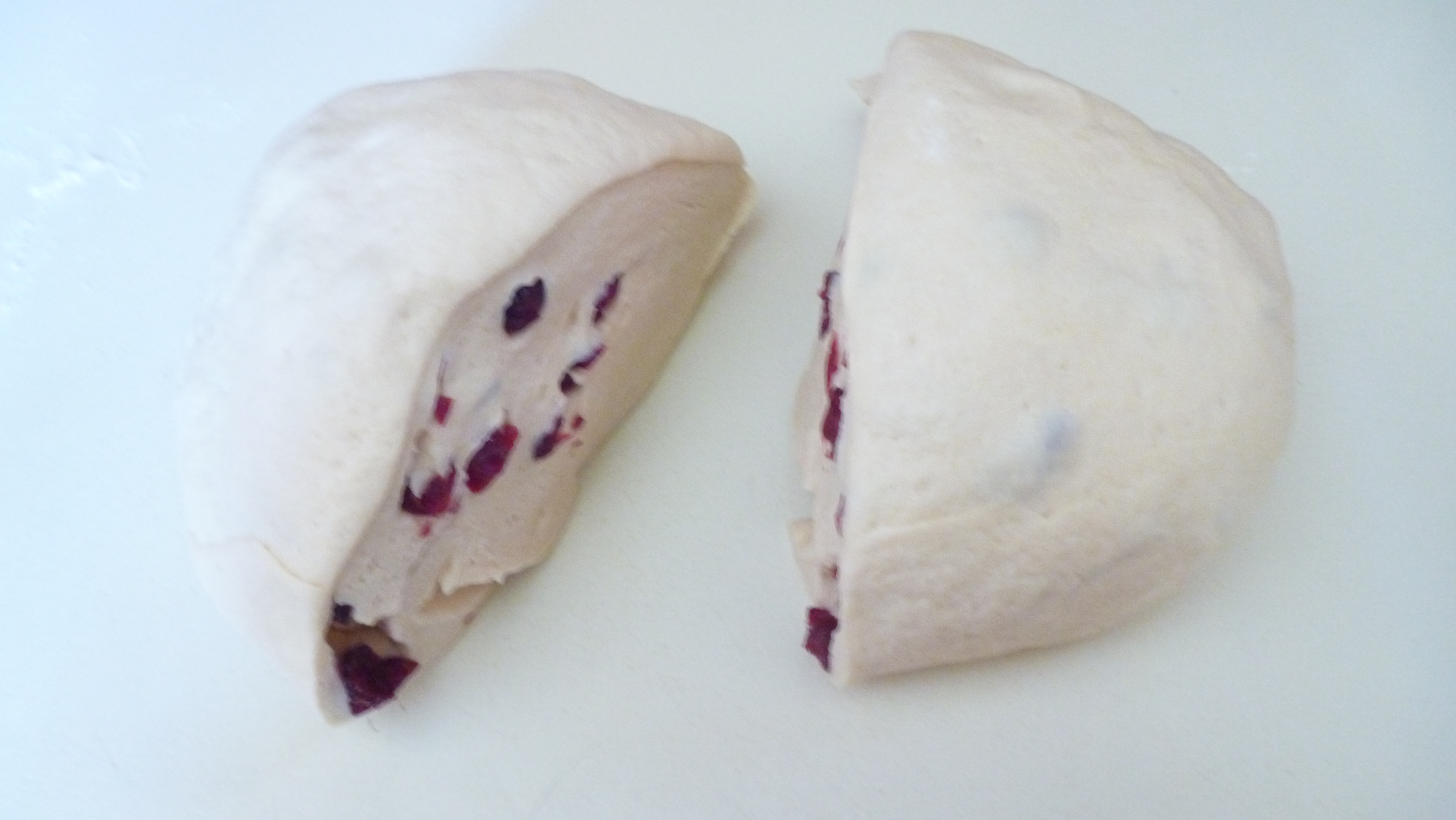
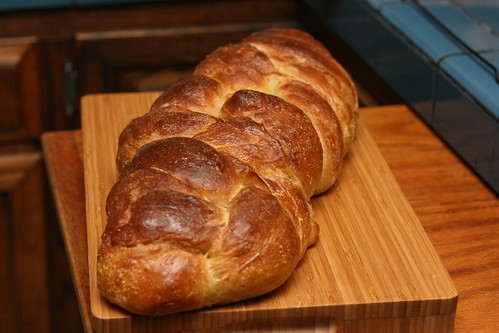
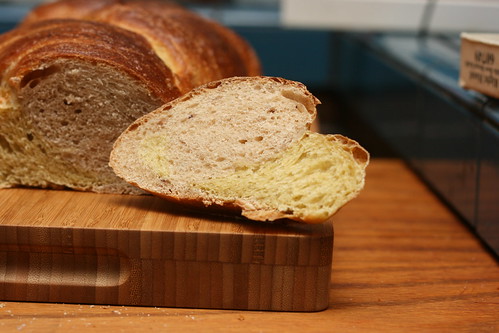
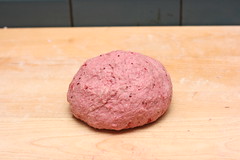
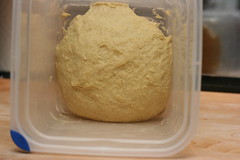
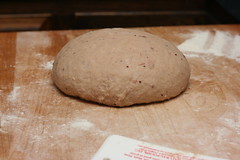
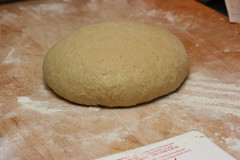
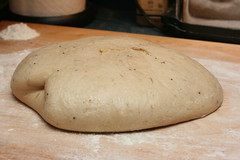
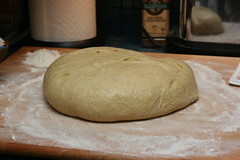
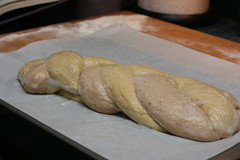
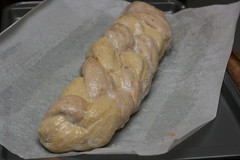
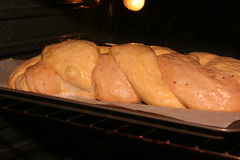
Hi everyone. I'm planning to bake the bba Cranberry walnut celebration bread (minus the walnuts), and I'm looking to modify the procedure a bit. The original recipe has the dried cranberries mixed in with the dough, which I've found results in a bumpy, rough looking loaf. I'm looking to make a 5-strand braided loaf that looks like challah - nice and smooth, without any "stretch marks" or dried fruit sticking out on the surface.This has nothing to do with flavor, but I'm a stickler for presentation.

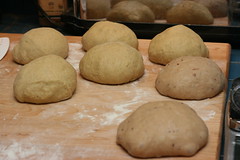
I'm thinking that to get this result, I should roll out the 5 balls of dough into rectangles, sprinkle the berries inside, and roll them up like jelly rolls to make the strands. Has anybody tried something similar? Does this result in a lumpy loaf, or one that is cavernous?

i appreciate any input.

Submitted by jrudnik on May 20, 2010 - 6:59pm

Recipe

Hi everybody, a bit of a novice (and young/male!) baker here and I hade a few ideas that I was wondering if some of the experts here could help me out on. 
There is a few criteria for this though:

1: Has to be a viable breakfast food (just a pet peeve: I like to eat my sweeter breads for a second breakfast after morning swim practice, just pretending to be French I guess! :)

2: Has to be based off of http://store.secondnaturesnacks.com/xcart/product.php?productid=16133&cat=250&page=1 Second Nature's Wholefoods Snack Medley</a> (Just another unrealistic goal a teenage boy sets for himself!)

Okay so here is my idea if anybody wants to help:

I wanted to base this off a milk bread in order to incorporate some ingredients here.

<em>Nut Milk:</em>

Soak <strong>1/4 cup Almonds</strong> and <strong>1/8 cup Cashews</strong> and <strong> 1/8 cup peanuts> overnight

The next day blend the soaked nuts with <strong>4 cups of water</strong> and <strong>1 teaspoon of vanilla extract</strong>

Press the mix through a strainer and reserve the pulp for something else

<em>The Dough:</em> (http://www.thefreshloaf.com/node/9780/mark-sinclair039s-portuguese-sweet-bread-and-rolls#comment-50134)

Portuguese Sweet Bread and Rolls

White AP flour                  857g
Molasses                            262g
Eggs                                  2 eggs
Water, warm                    113g
Nut Milk, warm                  409g
Butter, softened                  97g
Brown Sugar                        30g
Yeast                                   15g
Salt                                      10g


1. Mix all of the ingredients together with a dough hook on speed 1 for three (3) minute, then speed 2 for three (3) more minutes. Dough should clean sides of bowl.

2. Set aside in a covered bowl for 90 minutes; fold at 45 minutes.

3. Roll out into a rectangle 8 x 15 inches and coat with an egg glaze (1 egg beaten with a tablespoon of the milk mixture) Press the Dark Chocolate Chunks, Cherries, and Cranberries into the dough. Roll the whole thing into a log, cut into nine pieces, flatten the rolls out and brush with some more egg glaze

4.  Allow to rise until puffy (I am thinking around 45 minutes) Bake at 350 [deg. F.] for 25 minutes . 

Hope you guys can help! Please criticize!


Sorry for the bad formatting all, but its getting late

Submitted by breadbakingbass... on May 19, 2010 - 5:58pm

5/14/10 - Cranberry Apple Cider Bread with Walnuts


Hey All,

Haven't posted in a bit and wanted to share with you something I baked for the Yelp 2nd Annual Bake-Off on Saturday, 5/15/10 in NYC.  I was up against some stiff competion with a dizzying array of sweets and savory baked goods...  I figured that I wouldn't win against those, but I took comfort that everybody went back for 2nd and 3rd helpings of my bread...

Here's what was left the Cranberry Apple Cider Bread with Walnuts that I baked:

Sorry I don't have a shot of the whole loaf...  It had this cool leaf pattern slashing...  Anyways, here's the formula below:

90% AP

10% WW

37% Water

37% Hard Apple Cider (alcoholic)

2% Kosher Salt

30% Stiff levain (60% hydration)

15% Dried Granny Smith Apples

15% Dried Cranberries

15% Toasted Walnuts

1/4 tsp instant or active dry yeast per 500g of flour

Directions:

12:00pm - Peel and cut apples into 3/8" cubes, mix with a little lemon juice to prevent browning, place on parchment lined pan, dry in 250F oven for 1 hour.

3:45pm - Mix all ingredients in large mixing bowl with wooden spoon, hands, cover let rest for 30 minutes.

4:30pm - Knead in fruits and nuts (no more than 1 minute), cover let rest.

5:00pm - Turn dough, cover, let rest.

5:30pm - Turn dough, cover, let rest.

6:00pm - Turn dough, cover, let rest.

6:30pm - Turn dough, cover, let rest.

7:00pm - Turn dough, cover, let rest.

8:00pm - Divide, shape, proof.  Arrange stones in oven along with steam pan.  Preheat to 500F.

9:00pm - Turn loaves out onto lightly floured peel, slash as desired, place directly onto stone, add 1 cup water to steam pan, bake for 15 minutes at 450F, rotate and bake for 50 minutes at 420F, or until internal temp reaches 205F.  Cool completely before cutting.

**Notes:  I used 1270g flour for this recipe which gave me a dough yield of about 3250g.  I divided this into 2 equal pieces and formed boules.  Your baking time may be different if you make a smaller quantity.

Tim


Submitted by SumisuYoshi on November 26, 2009 - 2:23am

Sourdough Pumpkin Cranberry Challah

When I was finishing off the last of the challah I made the week before I made this one, I was trying to figure out what to do with some leftover cranberry sauce and leftover pumpkin from other things I'd made, then the idea came to me, what about a challah made with two doughs? One with pumpkin puree providing much of the hydration, and one with cranberry sauce providing much of the hydration. I thought the colors and flavors would make a really interesting combination. And, while I was at it, why not make it with my levain? Having only made challah twice before, this may have been a bit ambitious, but why not! I decided to use the challah recipe in Bread Baker's Apprentice as a starting point, as I liked the loaf I'd made the week beforehand. I took a look at the hydration in the recipe and calculated out how much flour and hydration I wanted in the preferment, I had to estimate here as I didn't know what percentage of the pumpkin puree and cranberry sauce was water. The cranberry sauce definitely had a lower water content, and it also seemed to have somewhat of an inhibiting effect on the levain. I'm not sure why, but I have some ideas. It may have been the sugar and/or acidity levels of the sauce, or the lower availability of water because there was less water in the sauce. The more mundane reason, it could just be that I forgot to get the cranberry sauce to room temperature first (not to mention our house is colder than room temperature) so the cold starter and cold cranberry sauce may have just stayed cold much longer, as the cranberry dough did rise at the same speed as the pumpkin on the final rise.

Pumpkin Cranberry Challah Recipe

Makes: 1 large loaf or 2 small loaves

Time: 2 days. First day: Pumpkin and Cranberry starter. Second day: mix final dough, ferment, degas, shape, final rise, bake.

Ingredients: (baker's % are at the bottom of the post, or will be in a day or two for now they are here)


  Cranberry Dough  
Starter    
  Flour 4.5 oz
  Cranberry Sauce 3.5 oz
  Water 1.250 oz
  66% Levain .5 oz
Final Dough    
  Starter 9.75 oz
  Flour 6.5 oz
  Sugar .5 oz
  Salt .125 oz
  Vegetable Oil .5 oz
  Eggs 1 Large Egg
  Egg Yolks 1 Large Egg Yolk
  Water 1 oz.


  Pumpkin Dough  
Starter    
  Flour 4.5 oz
  Pumpkin Puree 3.5 oz
  Water 1 oz
  66% Levain .5 oz
Final Dough    
  Starter 9.5 oz
  Flour 6.5 oz
  Sugar .5 oz
  Salt .125 oz
  Vegetable Oil .5 oz
  Eggs 1 Large Egg
  Egg Yolks 1 Large Egg Yolk
  Water 1 oz.
  Ground Cinnamon 1/2 tsp
  Ground Nutmeg 1/8 tsp
  Ground Cloves 1/8 tsp
  Ground Allspice 1/8 tsp


Directions:

  1. Mix the starters: ‘Cream’ the levain with the water and cranberry sauce, and water and pumpkin puree. Then mix in the flour until the dough forms a loose ball. Let rest 5 minutes, and then knead for 3 minutes to ensure adequate mixing. Place each starter in a lightly oiled container or bowl.

  2. Leave the starters to ferment: Leave the starters in a room temperature place to rise until nearly doubled, degas the starters and refrigerate unless you will be finishing the dough then. If refrigerating, remove from the fridge at least an hour before you start the final dough.

  3. Pre-mix ingredients: Stir together the flour, sugar and salt (and spices for the pumpkin dough), and mix the starter with the oil, water, egg and egg yolk (making it wetter so it will more easily mix with the dry ingredients).
  4. Mix everything into a dough: For both doughs: pour the liquid ingredients with starter into the dry ingredients and with a large spoon, dough whisk, or a stand mixer, mix until a ball forms, adding additional water or flour as needed.
  5. Knead to develop gluten: Knead for about 5-8 minutes, or until the dough passes the windowpane test. Once again, do this for both doughs. Once kneaded, place each dough in a lightly oiled container or bowl with a cover.

  6. Degas both doughs after they have nearly doubled: Gently remove them from their bowl or container, turn them out onto a lightly floured surface, and degas. After degassing, divide each dough piece in half, (or any other even numbered amount, or any other division you want, however you need equally sized pieces unless making a double braid) form into a rough boule and let sit a few minutes to relax.

  7. Shape boules into strands: Roll the boules out into strands, spend a little bit on each one then move to the next so the first has a chance to relax, until you end up with strands an appropriate length for the braid you plan on doing.
  8. Braid loaf as desired: I’m horrible at braiding so I’m not going to try to give advice on it! After braiding, place the loaf on parchment paper on a baking sheet and brush loaf with 1 egg white whipped until frothy, saving the remainder for after proofing.

  9. Proof loaf: Place loaf on sheet in a food safe plastic bag, or spray some plastic wrap lightly with oil and cover the loaf with the wrap. Leave the loaf to proof at room temperature until about 1 and a half to twice its original size, about 1-2 hours depending on room temperature and your starter.
  10. Preheat oven to 350°F: Just before placing the loaf in the oven, brush again with the egg wash and top with any seeds or other garnishes you like. Place the loaf in the oven on the middle rack and bake for 20 minutes before rotating the loaf 180°, continue baking for 20-40 minutes until the loaf is golden brown and measures about 190°F in the center. When done, remove from the oven to a cooling rack, and let cool for 1-2 hours before slicing.


This challah was really awesome, great flavors, and great colors! You may want to increase the amount of the spices some, it was just barely enough in my opinion. But you don't want it to overpower the other flavors. I made some french toast with this bread, while we normally only use cinnamon, I added ground cloves, nutmeg, allspice, and ginger to the mix this time. It was like pumpkin pie french toast, but with a bit of fruity overtone from the cranberry. Definitely a good bread for the fall holidays.

Note: As with my last bread, this one can be made as a straight dough, rather than sourdough. Just mix everything in one step, add about 2/3 tsp yeast and add .3 oz. flour and .2 oz. water to compensate for the lack of levain.

And my second recipe submission YeastSpotting . I really enjoyed this one and hope other people enjoy it, or are inspired to their own creation!


Submitted by Floydm on February 8, 2009 - 2:18pm

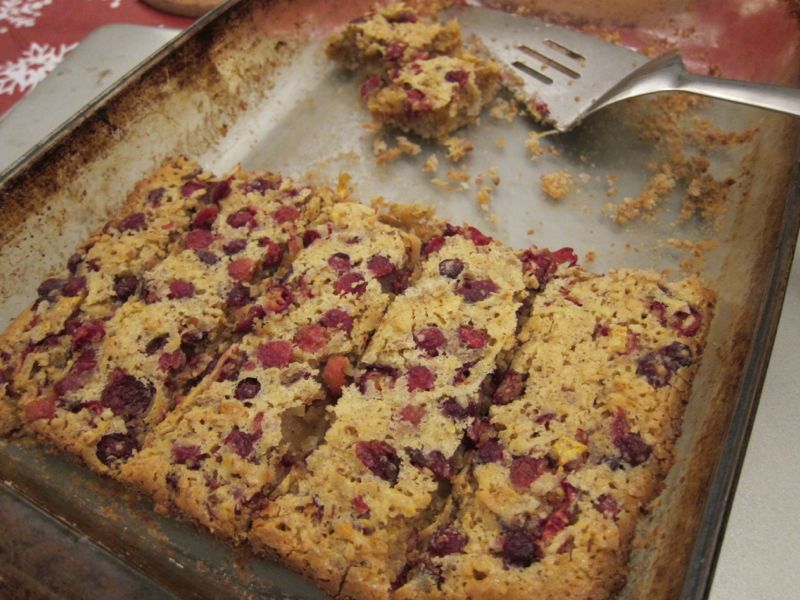
Cranberry-Pecan Bars


I usually bake these around Christmas, but the recipe was requested recently and there is no reason they wouldn't be good any time of the year.

The recipe is from a Better Homes & Gardens "Cookies Cookies Cookies" cookbook.

Cranberry-Pecan Bars

Crust
1 cup AP flour
2 tablespoons sugar
1/2 cup butter
1/2 cup chopped pecans

Combine the flour and sugar and cut the butter in until the mixture resembles fine crumbs. Stir in the pecans. Press into a 13x9x2 inch baking pan and bake for 15 minutes at 350 degrees.

Topping
2 eggs
2 tablespoons milk
1 1/4 cup sugar
2 tablespoons flour
1 tablespoon shredded orange peel
1 teaspoon vanilla
1 cup chopped cranberries
1/2 cup coconut
1/2 cup chopped pecans

Combine the topping and spread over the partially baked crust. Continue baking for another 30 minutes. Slice into bars while cooling.

Submitted by breadbakingbass... on December 28, 2008 - 6:50am

Raisin, Cranberry, Currant Bread with Caraway Seeds


Hey All,

Just wanted to share with you some more pictures.  This is my Raisin, Cranberry, Currant Caraway Seed Bread.  For this recipe, I used 70% hydration.  The crumb is denser and drier than the Sweet Potato Pugliese Bread I had made yesterday.  I think next time, I will try 75%-80% hydration.  I'll post a recipe when I figure out the hydration levels...  Overall, the flavor is what I had expected.  Yummy!

Tim

Submitted by tamraclove on May 26, 2008 - 5:53am

Mike Avery's Cranberry Chocolate Loaf / 100% WW Sourdough


The Chocolate Cranberry loaf was my first 100% sourdough loaf. I won't say too much about it here, because I posted questions about it in another forum. Here is a link to that conversation.

This loaf was made using my yeasted starter. My wild starter still isn't ready yet, although today's observation (day 6) shows that it increased by about 50% - the most so far!


Today I'm trying Mike's 100% WW Sandwich Bread. It looked pretty basic, and I'd like a basic recipe to use every week to hone my skills on.

My dough is in its first rise right now. It's been sitting, oiled and covered, in a sunny window (cool kitchen) for 1 1/2 hrs. It still hasn't doubled yet. This is the same starter I used yesterday in the Chocolate loaf, and it has been fed twice since then, and I waited until it doubled before stirring it down and measuring it.

The recipe calls for finely milled WW. Here in Greenock, I think I only have 1 option for WW. I need to check at the store again. As of now, I'm using the store brand Strong 100% Stoneground WW. The bran flakes are huge - the same size as in the bag of wheat bran that I bought. I have been reading that the gluten in coarsely-ground flour is not 'available' resulting in shorter gluten strands. This might also account for the hard time I had in kneading. I ended up adding just over 1C of additional flour (oh - I doubled the recipe) and it was still quite sticky.

I'm defining sticky like this - wet enough to leave strings of dough attached to my hands, will clean the countertop, but if I leave it sit long enough to clean my hands off, I have to use a scraper to pick up the ball again.

So... if the gluten is shorter, the dough is stickier, wetter, heavier, harder to rise? Hmm... we'll have to see. With the Chocolate loaf, it didn't quite double on the first rising, bit it 'nearly' doubled on the second rise, and then I got very nice oven spring. The conditions were the same - sunny windowsill. But, the chocolate loaf was made with white flour (WW starter) and this bread is 100% WW - much heavier bread. I did get it to pass the windowpane test finally (it took almost 30 min. of kneading).

More comments will be posted as the day's baking progresses.


AFTER FIRST RISING:

After 2 hours, i decided that the dough had nearly doubled. I punched it down gently, turned it over, and reshaped the ball 'inside out'. The dough is somewhat stiffer after the 2 hour rest, and didn't stick to me - yea! As I stretched the dough (the side that was the bottom) the dough did not tear, but made very small (1/8-1/4") blisters on the surface. The dough is very smooth, other than that.

AFTER SECOND RISING:

The dough nearly doubled again - after about 1.25 hrs. I punched it down, divided it in half (double batch) and made 2 loafs. It was still too sticky to put on the counter without a dusting of flour. I spread the dough out - almost using Mike's 'teasing' technique, like for stretch and fold. I rolled the dough up, brushing flour off and pinching the seam as I went. I sealed the ends, turned them under, and placed them into 2 greaed and floured PC stoneware bread pans (I can't get Baker's Joy here) The pans are about 1/2 full of dough - I don't think they'll rise above the surface...

AFTER FINAL RISE:

I was right - they only filled the pans about 3/4 of the way.  I did get them to slash nicely - one long slash down the middle.  Baked for 45 min at 350, then upped the temp to 400 for the last 10 to get them brown(I had the pans too low in the oven).   Because I had greased AND floured my pans, they popped out nicely.  I took them out when the temp was at 205. 

The bread was, again, too moist.  But not as bad as last time.  They were completely risen inside - no thick spots, or pockets of dough.  The flavor is nice - just a bit sour. But that might be because of the extra moisture.  You can't taste the honey (I didn't really want to) so it's a nice any-time bread.  I will definately use this bread next time, and compare notes - using more flour until I'm happy with the texture.  Also, since a double batch wasn't enough for my 2 loaf pans, I think I will make a 3x batch next time.  That makes 1.5 batch in each pan.  I think that would just about do it.


Submitted by tamraclove on May 25, 2008 - 7:54am

Mike Avery's Cranberry Chocolate Loaf


I"m wondering if Mike Avery is lurking today...  I'll copy this entire post into an email to him, and then post a reply when I get one.

I'M A NEWBIE at sourdough, but this question doesn't regard THAT part of the bread.

Here we go:

I decided to give Mike Avery's Cranberry Chocolate Loaf a try today.  This is my first attempt at a true sourdough loaf - no added yeast (although my wild yeast starter isn't ready yet, so I had to use my yeasted one... it won't be long now, though!) Oh - I believe my starter is at about 100% hydration (thick pancake batter)  Below, you'll see that I didn't add very much flour while kneading, so I'm thinking that it was just about right.

I don't have a stand mixer, so I followed instructions closely, but mixing everything in a bowl then kneading by hand.   I watched Mike's Kneading Video (to refresh my memory) and then followed his procedure... press out, fold back, 1/4 turn.  Slowly and rhythmically.  The instructions said to knead 12-15 min in a stand mixer - I decided to start with about 25 minutes by hand.  At around 20 min, i noticed the dough became smoother but firmer - giving way more freely under pressure, but sticking less to the surface.  I thought that "satiny" might be just the term, which is what I had been shooting for - good so far.  Over the course of 25 min, I only added 1/4 C. additional flour for kneading - which is good for me - I think I usually end up with bricks partly because I add too much flour.  I was proud of myself at this point :-) The dough was quite moist and supple - tacky to my hands, but not to the surface.

I gave it a couple more minutes of kneading then proceeded to add the cranberries and pecans.  NOTE: The pecans were my own idea.  I thought that since they were very coarsly chopped (not ground) they wouldn't affect the moisture of the loaf too much. Please correct me or point me to more reading if this isn't right.  They kneaded in beautifully.  Then came the cranberries, and the reason of this posting.  They were a disaster.  I began to knead them in and the dough fell apart.  They were so wet, that by the time I got them all in I felt like I was kneading cake batter!  I had drained them and used the juices in the recipe (as directed) and everything was going so well up to this point!  I only let myself add 3/4 C. more flour - that was the minimum amount required so I could pick the dough up to transfer it to my greased bowl.

My question - was there something I missed?  Has anyone else made this loaf?   Did I miss some major direction (like spread the cranberries out on paper towels for a week to dry before adding)?  Maybe my starter was too wet?  The directions didn't say precisely, but it was measured in cups - it had to be at least pourable, right? My dough is in its first rise now, and I'll let you know how it turns out.  If anyone has experience with this recipe, I'd love to hear about it.  Again, I'll email this posting to Mike, and let you know if he sheds any light on my plight.

Thanks! 

Submitted by Floydm on December 18, 2007 - 5:42pm

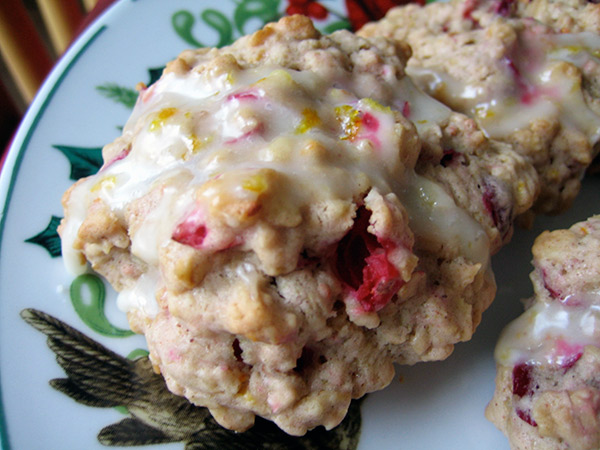
Cranberry-Orange Oatmeal Drops


Cranberry Oatmeal Cookies

I made these for the first time this year. They are excellent!

Submitted by PsDenys on November 10, 2007 - 3:58pm

looking for a cranberry walnut recipe

Hello everyone. I'm new to the site and very grateful for all of the insight I've gleaned from reading your posts. I'm new to baking and have learned a lot from all of you already.

I'm searching for a recipe for a fruit and nut yeast bread. I've been making a loaf using a straight dough method, but find it to be much too dense when I try to use whole wheat flour. I'd like to use a poolish or biga to see if I can get a more open crumb.