Submitted by loydb on October 24, 2011 - 5:36pm

[ITJB] Old School Deli (Sourdough) Rye

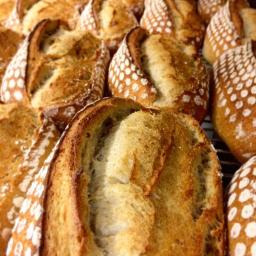
Much like the planets, my need to refresh my 100% rye starter aligned with the arrival of Inside the Jewish Bakery. I've tried to do a 'traditional' yeasted rye in the past using commercial flour, but the results weren't particularly great, and neither my wife nor I like whole caraway seeds. When I read the recipe for the Old School Jewish Deli Rye, and saw the ground-up caraway, a little light went on, and I knew that was going to be my first bake from the book.

My home-cultured rye starter is kept at 100% hydration (and I'm pretty sure can be used as superglue in an emergency). It had been 11 days since it had been fed, so I started out with 1.5 ounces I turned into 4.5 overnight, then turned that into the 21 oz needed for the preferment with another step up and overnight fermentation.

I followed the recipe with the these alterations:

  • 0.5 teaspoon caramel coloring
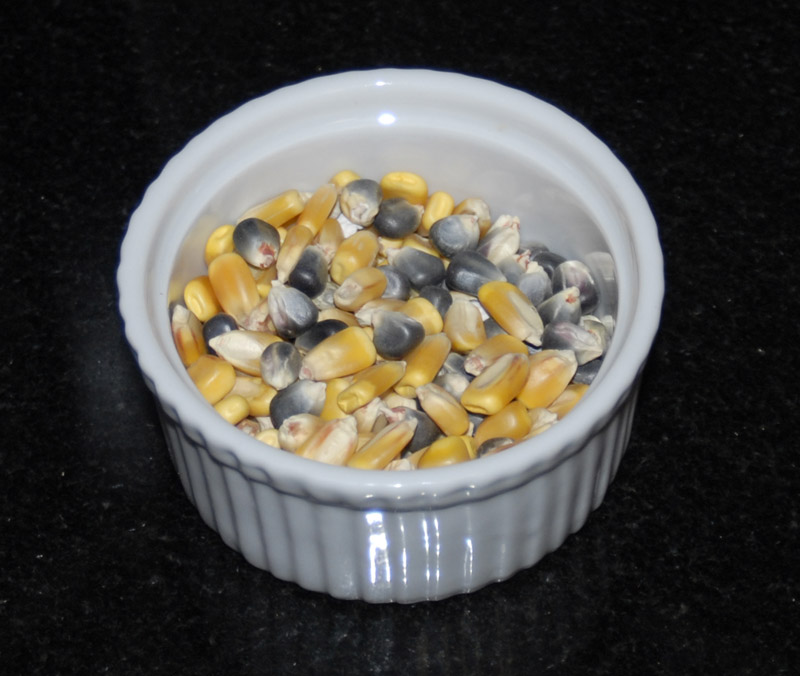
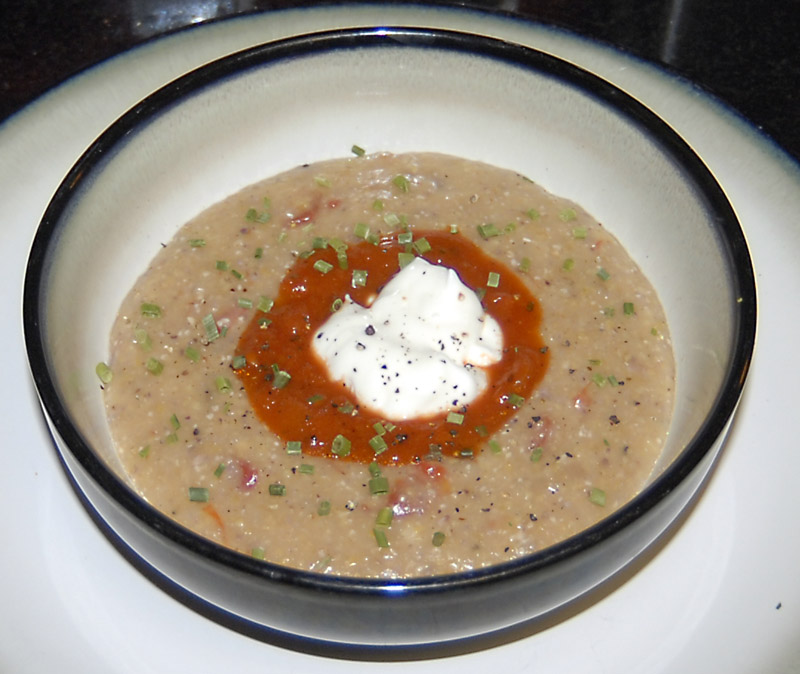
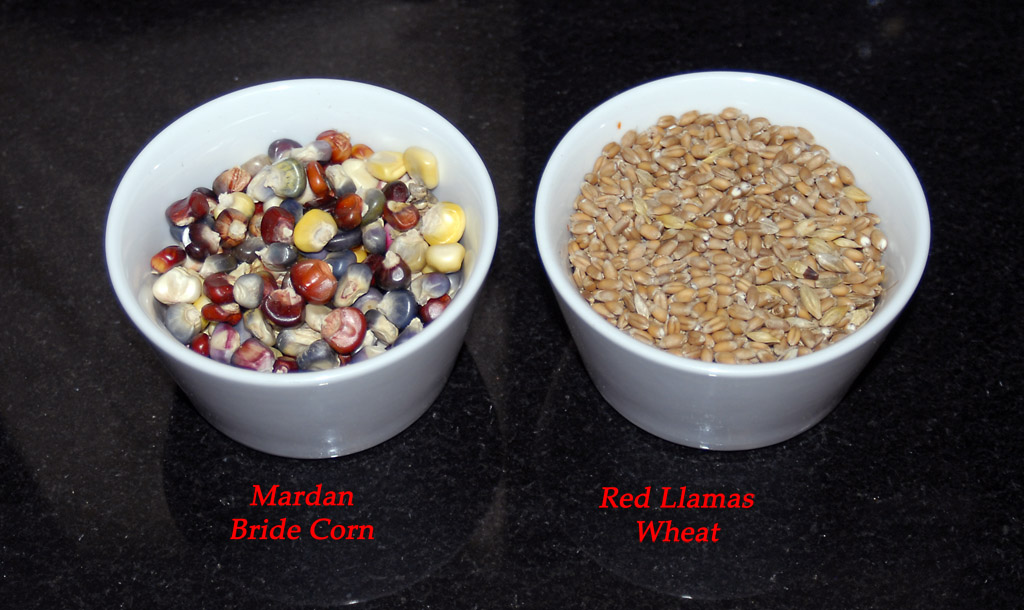
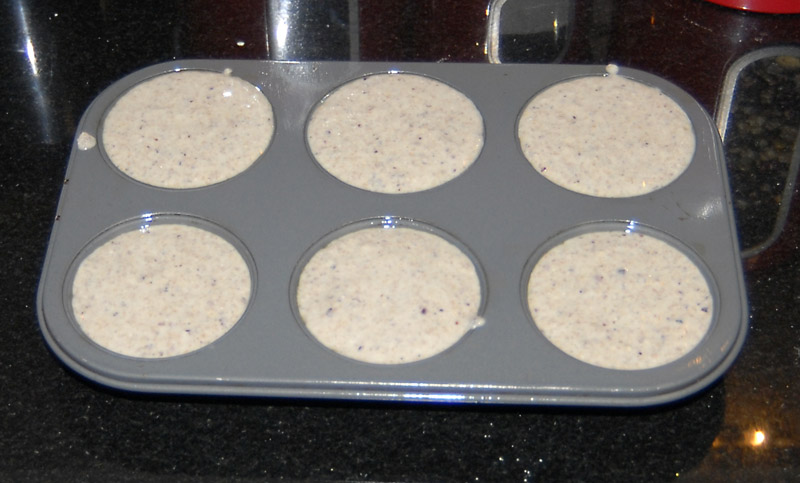
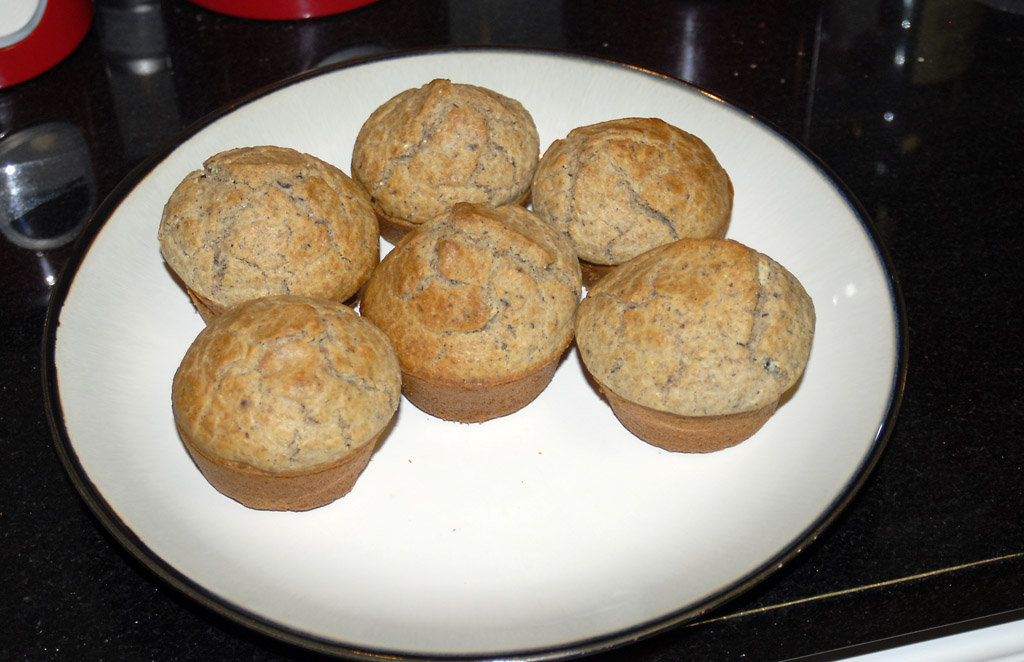
  • 1.5 oz of the final flour was blue cornmeal left over from last night (see Blue Corn Cornbread)
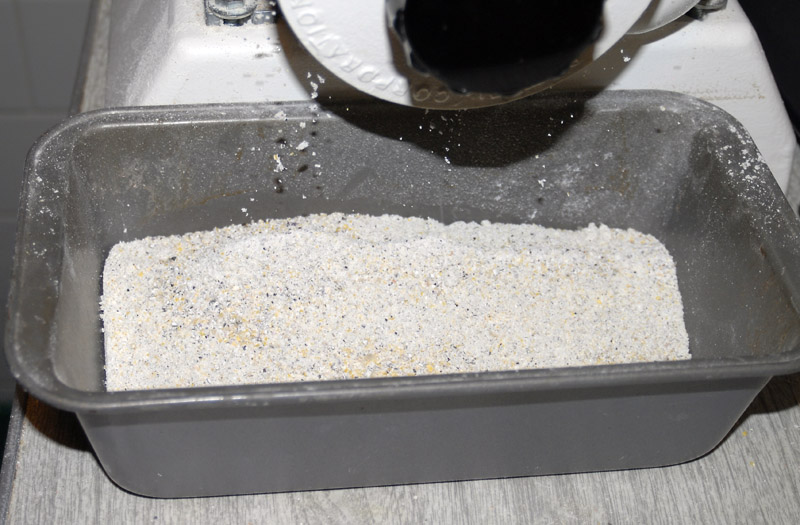
  • The remaining flour was a 50/50 mix of hard red and hard white wheat. I sifted it to 85% extraction (#30 seive) then re-milled and re-sifted the bran, giving me a final extraction of 93% WW at a fine texture.
  • I didn't add any yeast. Instead, it got a 4.5 hour bulk fermentation and a 2.25 hour final proof
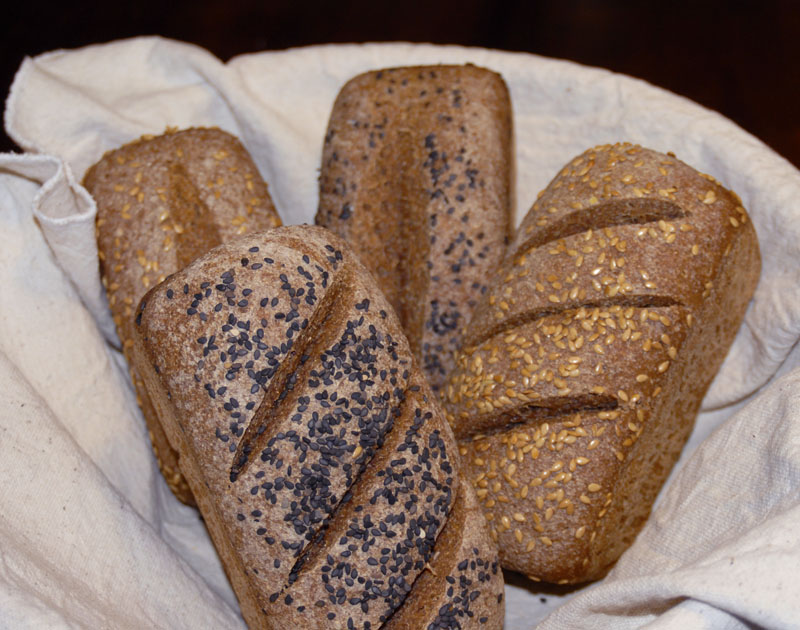
  • I made four miniloaves (plus a large roll)

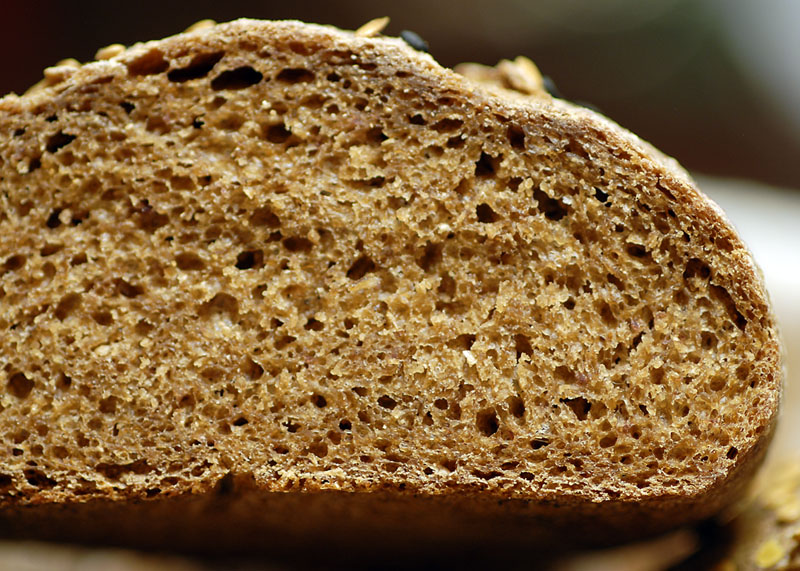
The result is a crunchy exterior with a great caraway nose that enhances the subtle caraway taste. After chewing for a few seconds, the sour hits with the best flavor expression I've gotten out of this particular starter. This one is definitely going to go into my regular rotation.

Thanks for a great book guys!
 

Submitted by rainbowz on March 23, 2010 - 2:19pm

Salt Rising Bread - how does it work?


A friend on the other side of the planet said he was making "Salt Risen Bread" and was wondering if I could help figure out why his didn't have enough oven spring. 

Well, first I had to point out I was unfamiliar with "salt risen" (or salt rising, as it seems to be referred to more in Google), the few recipes I checked first all seemed to be ancient : "use sweet milk", "mix in a quart of flour" and "add a lump of lard", the sort of thing you'd find in old farmer's recipes with estimated amounts and vague temp ranges. 

Anyway, I did locate one or two more modernized recipes and it seems to be a "starter" made from ether potato or cornmeal, with some baking soda and salt. Salt, in fact, seems to be rather minor in the whole process so I have no clue why it's called that. Much of the process needs to be done at rather warm temps, like 100º or so, and the mash/starter takes a day or two to get active. 

My friend says it's supposed to be like starter "in that you're 'catching' bacteria to do the rise"...

Anyone here familiar with it and know how it works? Or have a good, detailed recipe?

And his original question was how long to let it rise before putting it in the oven as his rose very unevenly (oven spring) and barely at all after 4 hours in the proofing stage. 

Thanks to anyone who can shed light on this.

Submitted by Matt H on February 5, 2010 - 11:22am

Great locally-grown and milled grains in Nor. Cal. from Ridgecut Gristmills


I'm writing with a shameless plug for Ridgecut Gristmills. I don't have any connection, other than as a satisfied customer who hopes that this new business succeeds. The owner is very friendly, and I've been very impressed by her stone-milled flours and her willingness to custom-grind whatever grain I ask for.

It was started by Erin McGowan Sweet in Arbuckle, in the Sacramento River Valley in California. She sells grains and cornbread and pancake mixes every Saturday at the Ferry Building Farmer's Market in San Francisco.

I met Erin a year ago, and got to chatting with her about grains and milling. Hers is a neat story: she decided that Northern California needed a stone mill, so found an old millstone for sale in North Carolina, drove cross-country to buy it, brought it back to a small town between Sacramento and Yuba, and started buying grain from local farmers to mill. Apparently, it's one of only 5 working stone mills west of the Mississippi.

Erin has been stone-milling corn and other grains and selling them online, at farmer's markets, and recently, to a bunch of high-end restaurants: BarbersQ (Napa), Cane Rosso (SF), Ducca (SF), Greens (SF), Incanto (SF), Rutherford Grill (Rutherford), Ubuntu (Napa), and Zin (Healdsburg).

My partner is a polenta-lover, and we swear by her cornmeal. Unlike the stuff in the supermarket, it has all the germ included, so it has more corn flavor. The tradeoff is that the cornmeal is not shelf-stable, and will go rancid unless you keep it in the fridge or freezer.

I mentioned to Erin that I was an amateur baker, and asked whether she ever milled other types of grains. She responded, "What would you like?" Amazingly, she has no problem milling even small quantities for a home baker. I just email her a couple weeks in advance and pick it up at the market on Saturday.

So far, she has custom-milled barley and rye for me. The rye flour from a local grower was wonderful, and made some great European-style loaves. Needless to say, I think it is beyond cool to have my own personal miller, and  almost hesitate to share this secret.

Recently, she's been "experimenting" with a hard red wheat from a local grower, trying to figure out the best grind. I got 10 lbs of a medium-grind whole wheat. I did sift the flour through a medium sieve to remove some of the bran, and removed about a teaspoon per cup of flour. I'm saving that to sprinkle on my breakfast cereal, as a topper for rolls, etc. The sifting technique is what Peter Reinhart recommends in The Bread Baker's Apprentice to approximate the high-extraction whole-wheat flour used by France's most famous baker, Lionel Poilâne.

This must be a high-protein grain with a lot of gluten. I baked a sort of hybrid Pain Poilâne/ciabatta with 80% whole wheat and 20% King Arthuer All-Purpose. It had a great structure, lots of irregularly sized holes with glossy sides, exactly what you're looking for in an artisan-style loaf, but that is sometimes hard to get with whole wheat.

Anyhow, Ridgecut is definitely worth seeking out by fellow Northern Californians. Here are a few loaves I've made with Ridgecut-milled grains.

Happy baking,
Matt

A brown boule with rye, barley, cornmeal, molasses, coffee, cocoa, and caraway

Half rye, half wheat sourdough batard

Here, I started off following Reinhart's instructions for Pain Poilâne. I pushed the hydration a bit, so it ended up closer to ciabatta. 80% sifted Ridgecut whole wheat, 20% KA AP.


Submitted by Gunnersbury on September 10, 2009 - 2:13pm

Cornmeal

I am not very advanced: as my question will indicate. I have two types of cornmeal at home usually: the coarse ground, and the flour. Can I use either one when sprinkling on the peel?  And if the coarse is okay, then are grits okay?  Thank you. 

Submitted by PMcCool on November 24, 2008 - 9:17pm

Hensperger's Pumpkin Cornmeal Bread


Here's a pic of some Pumpkin Cornmeal Bread from Beth Hensperger's Bread for All Seasons:

Judging from the oven spring, I ought to have let them proof a bit longer.  No crumb pics now; these are cooling their heels in the freezer in anticipation of Thanksgiving Day.

Paul

Submitted by glenmarshall on August 18, 2008 - 8:45pm

Anadama Bread


This being the second time I've baked bread, I decided to try my childhood favorite.

Anadama Bread (from www.anadamabread.com)

Ingredients

½ c. coarse cornmeal
2 T. butter
2 c. boiling water
1 tsp. salt
½ c. unsulphured blackstrap molasses
1 pkg. dried yeast
5 c. unbleached flour

Making it

  1. Stir the cornmeal slowly in water the boiling water and let steam over a double boiler for a minimum of one hour. You can make it up and let it sit overnight.

  2. Add the butter, molasses, and salt.

  3. Cool a bit. When lukewarm, add the yeast dissolved in warm water.

  4. Add enough flour to make a stiff bread dough.

  5. Knead for 10 minutes

  6. Turn into a greased bowl covered with a damp cloth and let sit for 1 - 1½ hours until double in bulk.

  7. Shape 2 loaves and place in 2 greased medium bread pans; let rise until double in bulk.

  8. Bake in hot 400 degree oven for 1 hour. Note: I baked it @400 for 30 minutes and then 350 for another 20.  


Submitted by krusty on March 3, 2008 - 7:42pm

Yeast-risen cornmeal bread (no-knead)

For those familiar with the no-knead method, here's a recipe that I formulated and tried last week.  The result surpassed my expectations. 

For one loaf:

250 grams unbleached white flour

100 grams fine-ground cornmeal

2 tsps (10 grams) vital wheat gluten

275 grams water

1/2 tsp instant yeast

1 tsp sea salt