Submitted by dabrownman on February 9, 2012 - 8:15pm

PiP's 40% Rye w/ Caraway Meets Hanseata's Seeds and a Restless dabrownman

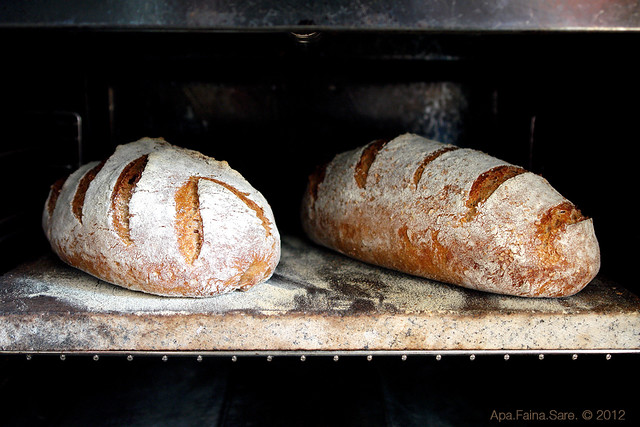
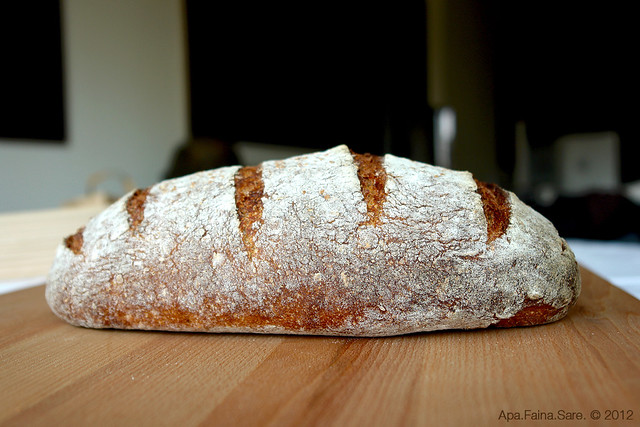
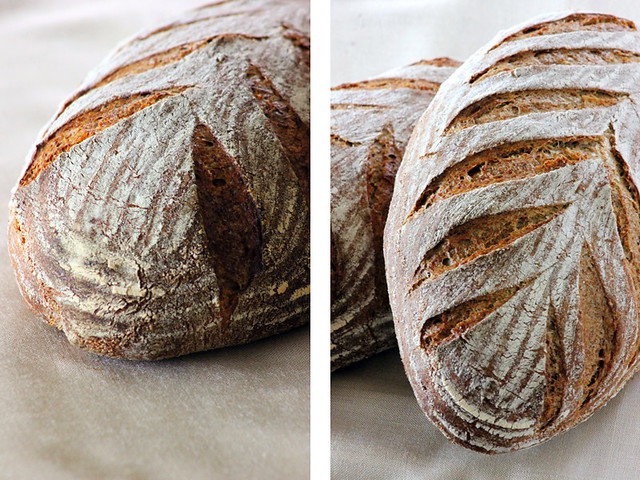
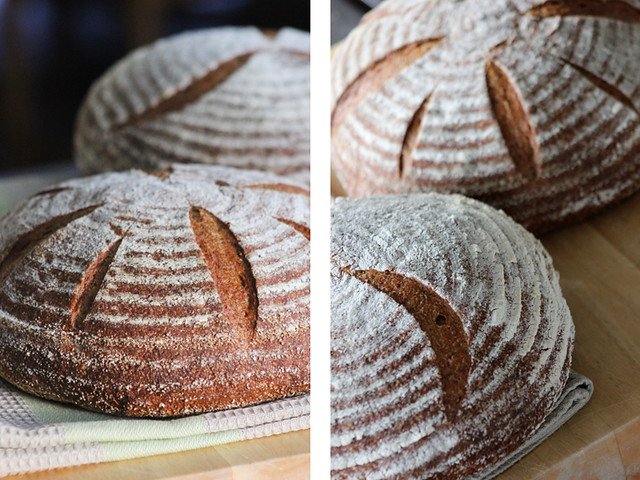
After having such good luck with Phil's no stress recipe for 40% Rye and Caraway, I was additionally inspired by hanseata's seeded loaf's.  So, I thought I would try to marry up the two and take on my requirement for more whole grain and less white flour.  I was hoping that by adding some spelt and farro home ground berries to the rye replacing some of the white and adding some anise and fennel to the caraway, this new concoction would be a decent bread.  Plus, another important test, I could try out for the first time my new 'double Y chicken foot' slash!!!!

I also got a new way to final prove these ill shaped breads with a new bamboo containment thing-a-majig that has some doohickey handles for the containment challenged like myself.  Don't laugh.  This thing, what ever it is,  cost a buck.  We can't sleep at night worrying about these contraptions and they are real issues for us !!!  The used, so much better than new,  parchment paper is the crowning achievement of getting the loaves out of the trash bag and into the oven without disfiguring oneself unnecessarily - by hot oven.

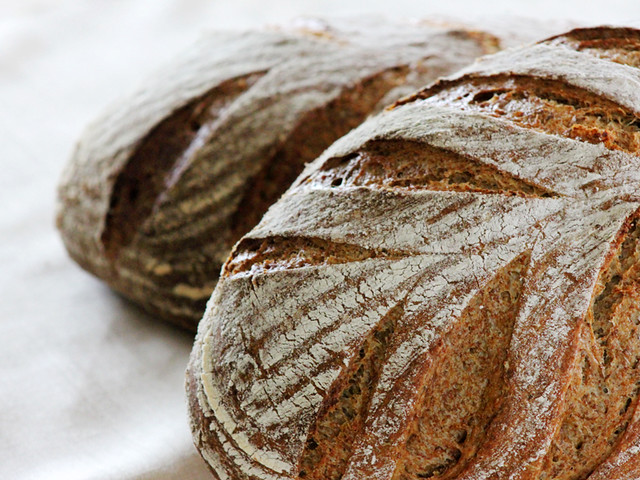
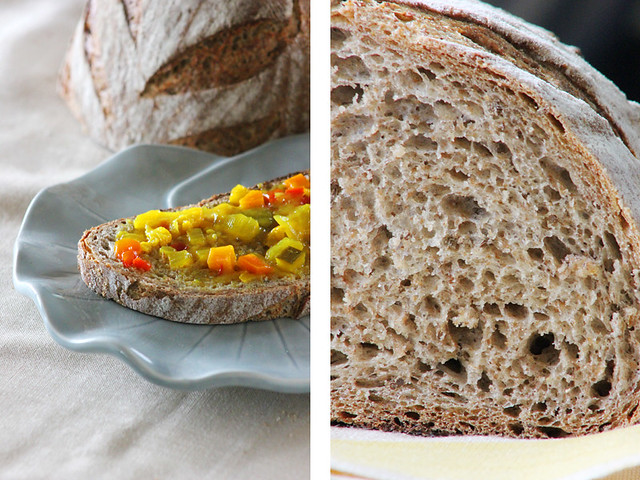
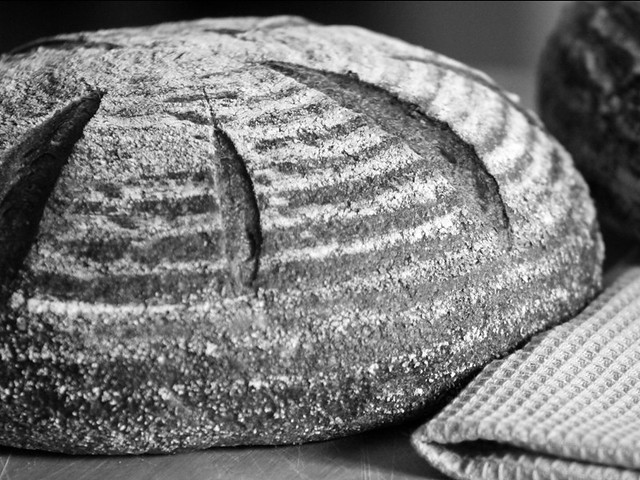
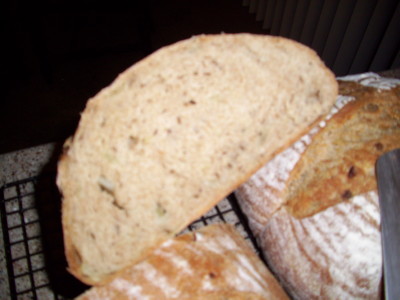
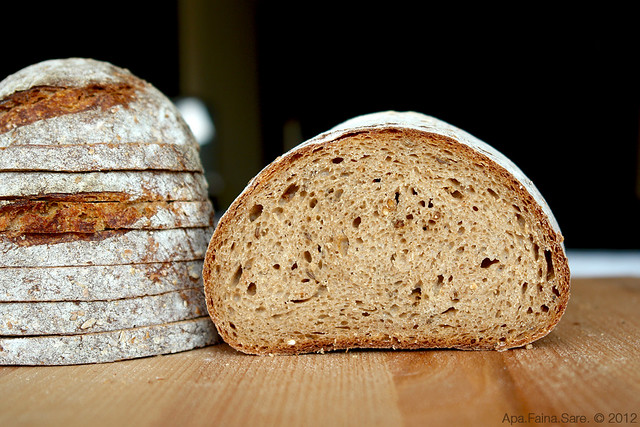
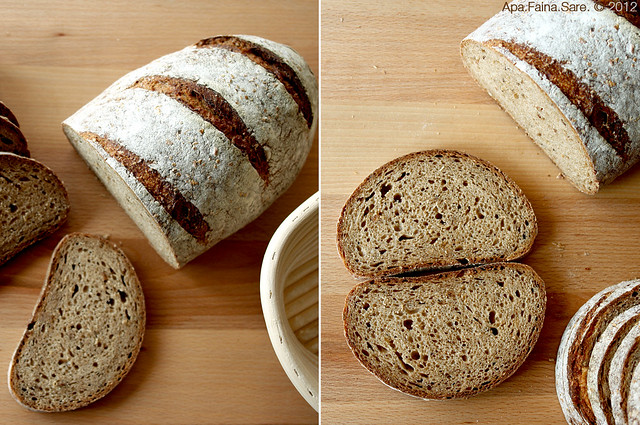
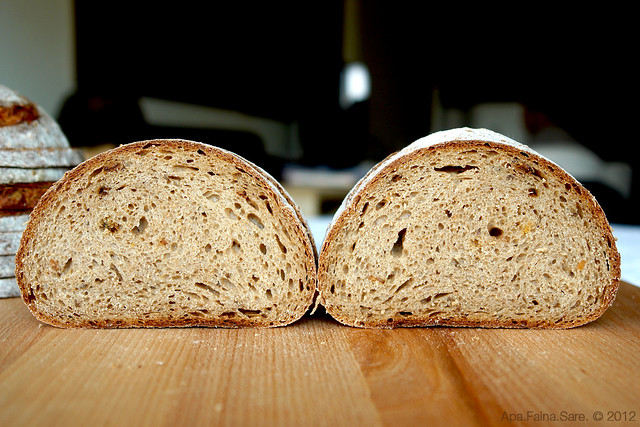
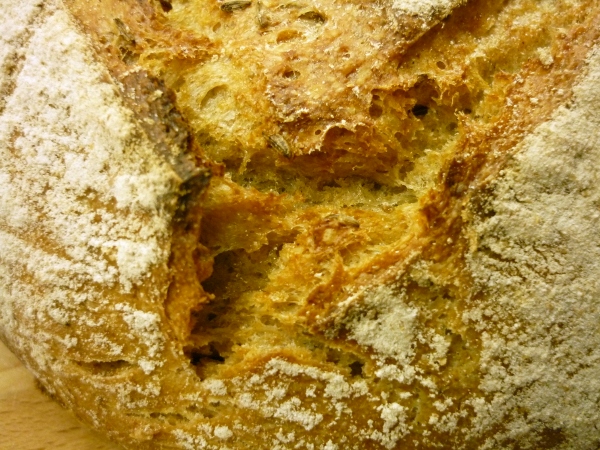
The loaves sprang nicely.  The crust was crisp, crunchy yet chewy.  The taste of the bread was more earthy and more to my liking as expected.  The crumb wasn't quite as open as before probably due to the extra 20% whole grains in place of the white - but still OK.  The slash produced a wide flatish gash where the loaf pooled through lazily.  No ears - so fancy pants still needs some work before the double chicken foot slash is a keeper.

The disappointment was that I replaced some of the caraway seeds with the anise and fennel and the resulting seed taste was too slight and muddied.  I was too chicken to go for a bold taste with these seeds.  Don't you be !!! It would be much better just adding the same grams of anise and fennel as the caraway.  I think it would be perfect that way - if it didn't kill you of course ;-) 

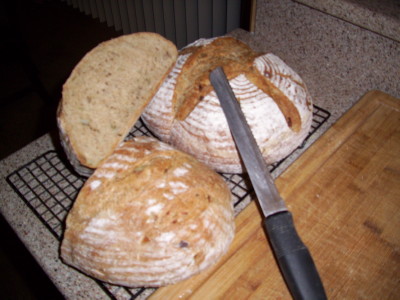
Here are some more pics...

I really like it that you can make these breads in half a day if you have some decent rye sour built all the time.  Next time, and there will be one if only the for the double Y chicken foot slashs' sake, More seeds will be boldly incorporated.  I think I am still making progress.

Thanks again Phil and hanseata.


Submitted by PiPs on January 7, 2012 - 4:35pm

Organic Wholegrains + 40% Rye with Caraway


My stocks have been running low. Grains, flour, salt and even the bread in the freezer have all taken a beating over a busy Christmas period.

With suppliers back on board after holidays I was more than a little relieved when a new shipment of biodynamic wheat and spelt grains finally arraived.

Along with the grain, I was also in need of white flour. The idea of leaving a gentler footprint to me means that if I have to use processed white flour then it should be from a local and organic producer. So for this reason I have switched to organic plain white flour from the Kialla Pure Foods mill only 150 km away. (90 miles) Kialla’s plain flour with a protein level of 12.5% is stronger than the bakers flour I been currently using but has a slightly creamier colour and chewier mouth feel. For this weekends bake though, I wanted wholegrains and organic. I hadn’t planned on baking any rye until a friend suggested she would like to try a lighter rye sourdough. Nat and I have a strong appreciation for caraway seeds with rye so this was suggested as well.


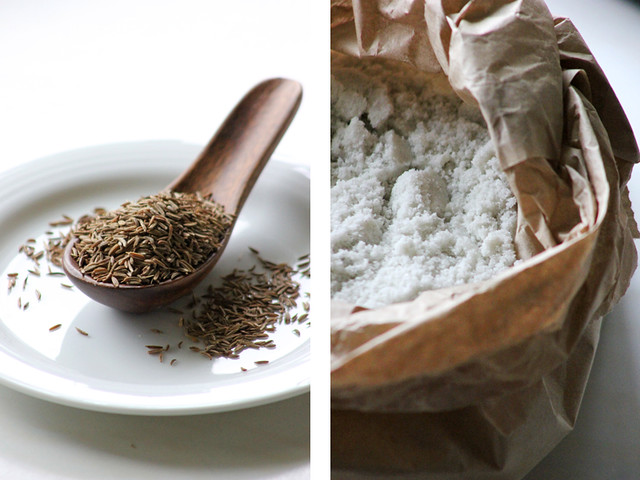
Organic 40% Rye Sourdough with caraway

Formula

Overview

Weight

%

Total dough weight

1800g


Total flour

1071g

100%

Total water

769g

72%

Total salt

19g

1.8%

Prefermented flour

428g

40%

Desired dough temperature 26-27°C


Rye sour build – 12-14 hrs 22-24°C


Starter (not included in final dough)

21g

5%

Freshly milled rye flour

428g

100%

Water

428g

100%


Final dough


Rye sour

856g

133%

Organic plain flour

643g

100%

Water

341g

53%

Salt

19g

1.8% of total flour

Caraway seeds

19g

3%

Method

  1. Mix rye sour and leave overnight to ferment
  2. Next day disperse rye sour in remaining water and add flour.
  3. Knead for 5 mins (this is sticky and uncomfortable)
  4. Add salt and knead for a further 10 mins until dough starts to show signs of smoothness.
  5. Gently mix in caraway seeds until combined.
  6. Bulk ferment one hour
  7. Gently preshape. Bench rest 20 mins. Gently shape into batards.
  8. Final proof was one hour at room temperature (27°C).
  9. Load into oven with steam at 230°C for 10 mins then reduce temperature to 200°C and bake a further 30 mins. 

The rye sour had developed nicely and apart from the seemingly unending stickiness of kneading, the dough eventually bulk fermented into a smooth dough that shaped quite easily.

The final proof kept me only my toes as I was mowing the backyard and ducking inside every 15 minutes to check on it’s progress, as it has been quite hot and humid recently.

I am particularly fond of the crumb colour with the caraway seeds hidden amongst the rye bran. The flavour is a really nice balance of a subtle rye tang with a puff of caraway scent on some bites.



I also baked a pair of simple organic wholegrain sourdoughs - the first breads for our household this year. The levain contains a proportion of Kialla plain flour so approximately 90% of the flour is freshly milled wholegrains.

I tried a few new procedures with this bake. I milled the wheat grains in two passes. The first pass cracked the grains before passing them through the mill again at a finer setting. This didn’t produce much heat in the flour and I ended up with softer feeling flour than in the past.

The other change was the fold in the bulk ferment. I recently read a comment by proth5 on the timing of a stretch-and-fold in a two hour bulk ferment. (sorry Pat I can’t remember where you posted it) If the dough is already well developed before the bulk ferment, perhaps a stretch-and-fold could occur earlier in the bulk ferment allowing some larger gas pockets to develop in the 2nd half of the bulk ferment.
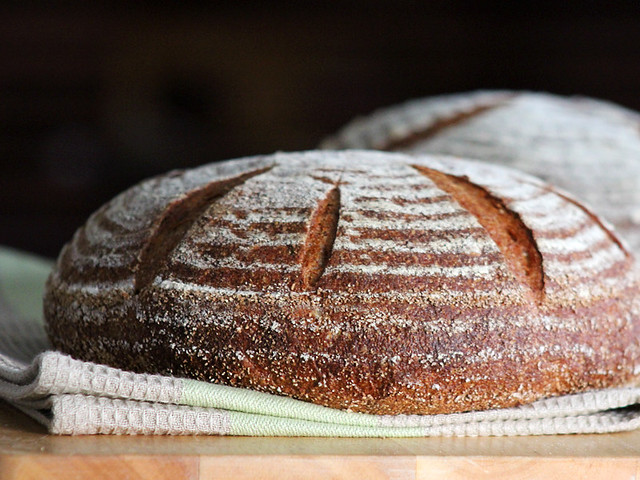

Organic Wholegrain Sourdough

Formula

Overview

Weight

%

Total dough weight

2000g


Total flour

1081g

100%

Total water

919g

85%

Total salt

21g

2%

Prefermented flour

270g

25%


Levain build – 4-5 hrs 26-27°C


Starter (60g not included in final dough)

100g

40%

Flour (I use a flour mix of 70% Organic plain flour, 18% fresh milled wheat, 9% fresh milled spelt and 3% fresh milled rye)

240g

100%

Water

120g

50%


Final dough


Levain

405g

50%

Freshly milled organic wheat flour

703g

86%

Freshly milled organic rye flour

108g

14%

Water

784g

96%

Salt

21g

2%


Method

  1. Mix levain and leave to ferment for 4-5 hours
  2. Mill flours and allow them to cool before mixing with cold water from fridge (hold back 50 grams of water) and autolyse four hours.
  3. Add levain to autolyse then knead (French fold) 5 mins. Return the dough to a bowl and add salt and remaining 50 grams of water and squeeze through bread to incorporate (dough will separate then come back together smoothly) then knead a further 10 mins.
  4. Bulk ferment two hours with one stretch-and-fold after 30 mins.
  5. Preshape. Bench rest 20 mins. Shape.
  6. Load into oven with steam at 230°C for 10 mins then reduce temperature to 200°C and bake a further 30 mins.

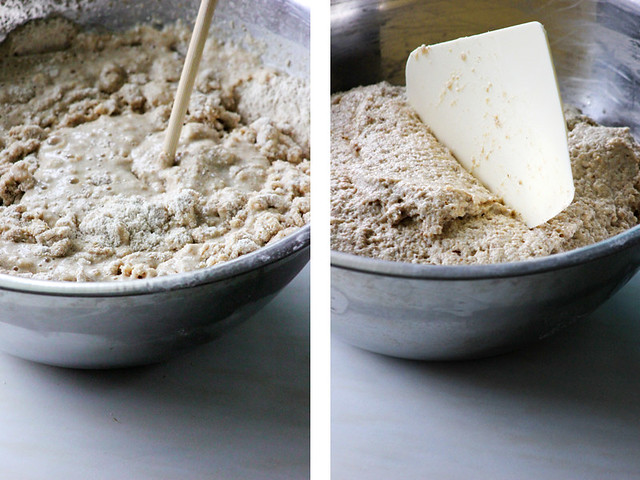
 

This has become familiar dough for me to mix. At 85% hydration doubts can creep into my thinking as the initial mix feels sticky and loose. Press on, add the salt and feel relief as the dough tightens up and releases cleanly from the bench.

The dough felt strong even after shifting the stretch-and-fold forward 30 mins so I left it untouched for the remaining time and was rewarded with light bubbly dough ready for preshaping. I am quite pleased with the proofing on both of the loaves and find I am becoming braver at judging their readiness for the oven. They sprang beautifully on a hot stone.

Some rye bran is visible scattered throughout the moist crumb which contains no hint of sour. The change in bulk ferment procedure has possibly led to a slightly more irregular crumb, but this will need to be experimented with and expanded.
 

Another busy day in the kitchen which was balanced by an equally busy day doing yard work.  The sun is finally shining here after a day of humid grey skys. We plan to make the most of it.

Cheers,
Phil 


Submitted by stephy711 on August 8, 2011 - 12:02am

Russian Black Bread

Find more recipes on my blog Dessert Before Dinner


Everyone in the family loved this recipe. It was great with butter and trout roe when it was fresh out of the oven, and this morning it was perfect with cream cheese and smoked salmon. The crumb is tender and the crust was firm, creating a wonderful contrast. It's great right now, but this bread will be even better with soup or smoked fish in the winter. Like all brown breads, this is a hearty, winter weather bread. It has a very complex flavor and it is even better a day or two later.
Russian Black Bread 

Ingredients
  • 2 packs active yeast
  • 1 pinch sugar
  • ½ cup warm water
  • 2 cups water
  • 1 oz unsweetened chocolate
  • 4 tbsp unsalted butter
  • ¼ cup dark molasses
  • ¼ cup cider vinegar
  • 2 oz (1/2 cup) whole wheat flour
  • 2 ¼ oz (1 cup) wheat bran
  • 13 oz (3 cups) bread flour
  • 11.25 oz (3 cups) rye flour
  • 2 Tbsp caraway seeds
  • ½ tsp fennel seeds
  • 1 tbsp minced shallots
  • 1 tbsp ground dark roast coffee
  • ¼ cup cornmeal
  • 1 tbsp all purpose flour
  • 1 tsp caraway seeds

Directions

    1. Heat 2 cups water, butter, chocolate, molasses, coffee grounds and vinegar on stove until butter and chocolate are melted. Set in refrigerator to cool. Too hot liquids will damage the yeast.Proof yeast with ½ cup water and pinch of sugar

    2. Sift together flours and bran.
    3. In separate bowl, add fennel, shallots, caraway and 2 cups of the mixed flours. Add chocolate mixture and yeast to the flour. Continue adding flour half a cup at a time until the mixture pulls away from the mixing bowl.
    4. Knead until mixture is springy yet dense. Place in oiled bowl and let proof until doubled in size (about a hour and a half).
    5. Remove dough from bowl and divide into two pieces. Shape pieces into boules and dust tops with cornmeal, flour and caraway mixture. Let rest for 45 minutes
    6. Preheat oven to 350 degrees. Just before baking, slash tops of loaves. Bake for 45 minutes or until dark.
Submitted by hanseata on October 8, 2010 - 6:49am

Lübecker - Whole Grain Yeasted Sandwich Bread


This bread is an easy to make, tasty, whole grain sandwich bread that I bake regularly for my little bakery. It doesn't require sourdough - but can be made with it.

German breads are typically not - or very little sweetened. If you like it sweeter, you can add more honey.


SOAKER
80 g rye flour
136 g whole wheat flour
3 g salt
92 g buttermilk (or 36 g buttermilk powder and 92 g water)
83 g water
 
BIGA
216 g whole wheat flour
1 g instant yeast
160 g water
 
FINAL DOUGH
all soaker and biga
48 g whole wheat flour
9 g salt
5 g instant yeast
15 g honey
45 g sunflower seed oil (or other vegetable oil)
1 tsp. caraway seeds, ground
¾ tsp. fennel seeds, ground
1 tsp. coriander, ground
1 tsp. coriander, whole, for topping


DAY 1

In the morning:

Mix together all soaker ingredients until well hydrated. Cover and let sit at room temperature.

Knead together all biga ingredients at low speed for 1 - 2 min., until they form a coarse ball. Knead at medium-low speed for 2 min. Let dough rest for 5 min., then resume kneading for another 1 min. Place in lightly oiled bowl, cover, and refrigerate.

In the evening:

Remove biga refrigerator 1 - 2 hrs. before using.

Mix together all final dough ingredients at low speed for 1 - 2 min., until they form a coarse ball. Switch to medium-low speed and knead for 4 min. (dough should be tacky bordering on - but not - sticky, adjust with water or flour if needed), let dough rest for 5 min., then resume kneading for another 1 min. Place dough in lightly oiled plastic container and refrigerate overnight.


DAY 2

Remove dough from refrigerator 2 hrs. before using.

Shape sandwich loaf, place in lightly oiled loaf pan, mist with water and sprinkle with coriander seeds, pressing them gently a bit into dough. Score. Spray with oil spray, cover, and let rise for ca. 45 - 60 min., or until it has grown to 1 1/2 times its original size.

Preheat oven to 425 F, including steam pan.

Bake at 400 F for 20 min., steaming with 1 cup boiling water. Rotate, remove steam pan, and continue baking for another 20 - 30 min. (Internal temperature at least 195 F).

Remove from pan and let cool on wire rack.

Lübecker Bread

Lübecker crumb

Submitted by ryeaskrye on March 30, 2010 - 1:48pm

Rye am I here?


I have been meaning to start a blog here at TFL for quite some time. So...

I want to start this blog with a post influenced by why I began a bread-baking adventure in the first place. My quest began several years ago in an attempt to recreate a sourdough "pumpernickel" I and my extended family of Austrian descent relished when I was a kid growing up outside Denver. (Hi Pat.)

There was a local bakery near I-70 and Josephine whose name I can't recall and that has long since disappeared. However, the memory of their "pumpernickel" lingers among numerous family members that still talk about it at holiday gatherings. I decided I would bring those memories back to life. 

As my knowledge of bread has grown, in no small part due to the TFL community, I realize this is not really a true pumpernickel, but basically a 50% Rye with Caraway.
I adapted a recipe from Charles Van Over's "The Best Bread Ever" (my first bread book) by eliminating commercial yeast and converting to a full sourdough, increasing the percentage of rye, increasing final hydration, and pre-fermenting 39% of the flour overnight. Below is just the latest tweak of the formula and the resulting bake from a few weeks back. Being a bit of a purist, I dropped the cocoa for a little while, but discovered it does add essential flavor undertones in addition to being a coloring agent. (Hey...some people like chocolate in their bread.)
Despite ongoing refinements and continual variations, I have a base formula that finally satisfies cravings from a now distant era.

I used a 50-50 mix of Bob's Red Mill Pumpernickel and NYBakers Dark Rye, BRM Vital Wheat Gluten, Ghirardelli unsweetened coca, Eden Organic Barley Malt Syrup and KAF Bread Flour. And yes, I like poppy seeds.
Prefermented Flour = 38.89%
Total Flour = 900g
Total Water = 610g
Final Hydration = 67.78%
General method:
  • Late evening the night before baking, combine starter, water and rye flour to make rye sour. Cover and ferment overnight.
  • In the morning, combine together all ingredients (except salt and caraway) just until hydrated. Let autolyse for 30 minutes.
  • With mixer running, add salt and mix for 5 minutes (KitchenAid @ Speed 2). Add caraway and mix for 2 more minutes.
  • Proof for 40 minutes in a warm place (76-80°F) then perform a stretch-&-fold.
  • Proof for another 40 minutes and perform a 2nd stretch-&-fold.
  • Proof for another 1.5-2 hours.
  • Preheat oven, stone and cover to 475°F.
  • Divide and shape dough into two boules or batards. Place either in covered brotforms or en couche. Proof for another 1 hour.
  • Lightly brush with cornstarch glaze (or spray with water) and sprinkle poppy seeds on top. (simmer 1 TBL cornstartch with 1 cup water for 2 minutes and allow to cool to room temperature for glaze) 
  • Score and bake covered for 15 minutes at 450°F before lowering temperature to 420°F and baking uncovered for a further 15-20 minutes. 
  • Allow to cool completely on wire rack. Flavor builds when left uncut as long as you can wait. Goes well with european unsalted butter, cured meats and pungent cheese.

 
While the crumb make look dense, it is actually very even, light and moist. I normally have a more open crumb, but let this round overproof just a touch and was heavy-handed on the slashing. The flavor is clean and full with very little aftertaste..and meets the approval of all family members. The crust is thin and crunchy.

The non-poppy-top loaf was for those who get drug tested at work...
John


Submitted by jennyloh on March 26, 2010 - 11:08pm

Swedish Caraway Bread

Recipe from Bernard Clayton's New Complete Book of Bread - White Bread Chapter

I have an interesting bake last night.  This bread is very very tasteful,  with the caraway seeds,  brown sugar, and orange zest.  The taste is exceptional.  Somehow, this reminds me of gripe water that we give to babies.  Very very refreshing taste...if you are one of those that like caraway seeds,  try this...

Ingredients:

3/4 cup water
2 tbsp brown sugar
Zest of 1 orange, grated
1 tablespoon of butter
1 tsp caraway seeds
1 package yeast
2 cups of bread flour
1.    Boil water, sugar, orange, butter and caraway seeds for 3 minutes.
2.    Mix 1 cup of flour, yeast and the boiled ingredients (after cooled).
3.    Knead well and let it rise for 1 hour.
4.    Add rest of flour slowly and knead well.
5.    Shape into loaf pan and let proof for 1 hour.
6.    Bake at 180 degrees celsius for 1 hour
This bread is so easy to eat,  we had ate 3/4 loaf in the morning.  Eat it plain or just put tuna,  taste just as a good...


Submitted by Janknitz on February 3, 2010 - 11:56pm

Levy's Deli Rye Bread (Variation)

I made this lovely rye bread from the Bread Bible by Rose Levy Beranbaum this weekend. 

If you like a deli-style rye, this is the bread to try.  It has a fantastic balance of rye flavor and a beautiful crumb that stays fresh-tasting for days.  The crust is just beautiful (never mind my scoring).  And the oven spring on this bread, in my 10 1/2" clay baker

Is truly spectacular!

This bread weighed just shy of 2 lbs (14.9 oz to be exact)--more than I thought my clay baker could even handle. 

But there's a secret.  My "variation" was actually a mistake--a mix up between caraway seeds and anise seeds.  And delicious--I don't like caraway at all, but it was truly yummy with anise.  A good mistake.

I've blogged about it here if anyone is interested. 


Submitted by ejm on February 22, 2009 - 4:15am

caraway rye bread from Beranbaum's Bread Bible


The last time I made caraway rye bread, I used the recipe in The Joy of Cooking. We really like it. But as I was leafing through The Bread Bible by Rose Levy Beranbaum, I noticed her recipe for rye bread. A recipe that looked too good.

Whenever my father had an excuse to return to the Bronx, he'd never come back without a freshly baked loaf from his favourite bakery. I liked the rye bread, studded with constellations of caraway seeds, best. My grandmother, who lived with us, would serve it to me spread thickly with unsalted btutter, the top paved with rounds of sliced red radishes. - Rose Levy Beranbaum, The Bread Bible, page 324

How could I not try this bread?

As it turns out, this is the best rye bread we've had. Thank you, Rose Levy Beranbaum!!

I would love to have tried the bread with butter and sliced radishes. But we didn't have any radishes.... Initially, I had thought we would be making Reuben sandwiches with it. But my husband was so thrilled with how light it was that we decided to serve it with goulash and steamed broccoli. It was brilliant!

-Elizabeth

Submitted by breadbakingbass... on December 28, 2008 - 6:50am

Raisin, Cranberry, Currant Bread with Caraway Seeds


Hey All,

Just wanted to share with you some more pictures.  This is my Raisin, Cranberry, Currant Caraway Seed Bread.  For this recipe, I used 70% hydration.  The crumb is denser and drier than the Sweet Potato Pugliese Bread I had made yesterday.  I think next time, I will try 75%-80% hydration.  I'll post a recipe when I figure out the hydration levels...  Overall, the flavor is what I had expected.  Yummy!

Tim