SearchUser loginBread BooksFavorite Recipes
|
Submitted by cgcrago on November 2, 2009 - 11:58pm Pain Bordelais
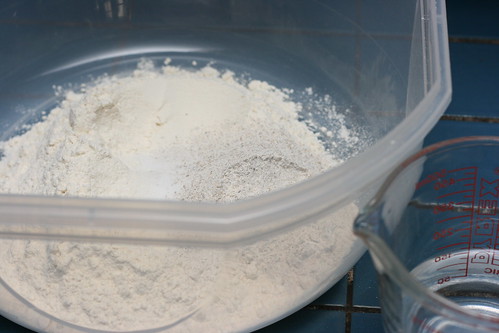
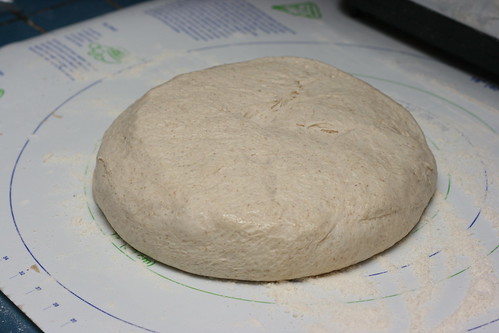
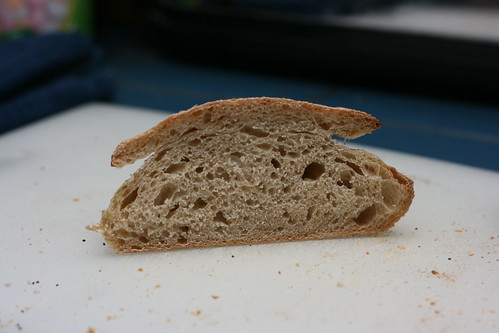
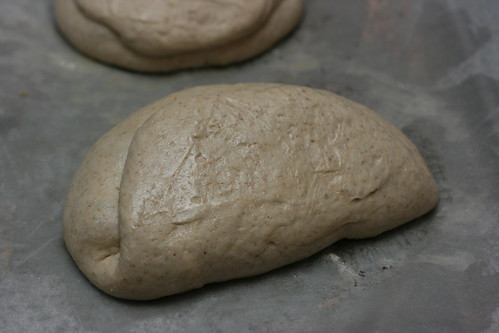
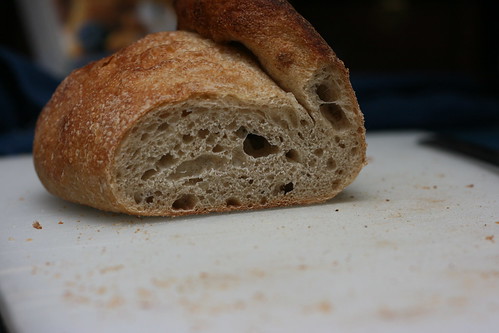
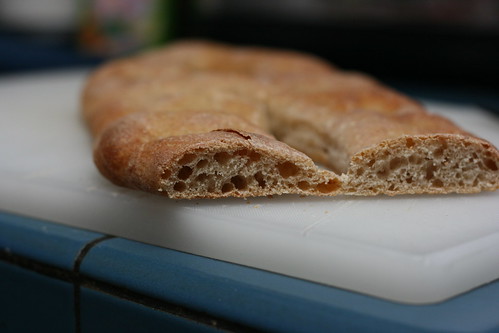
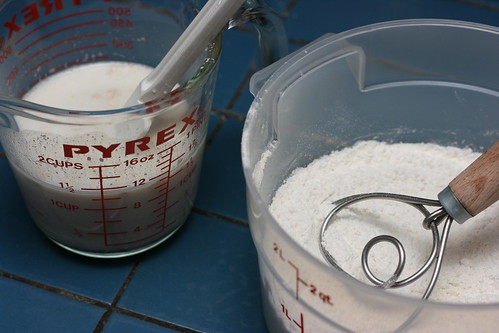
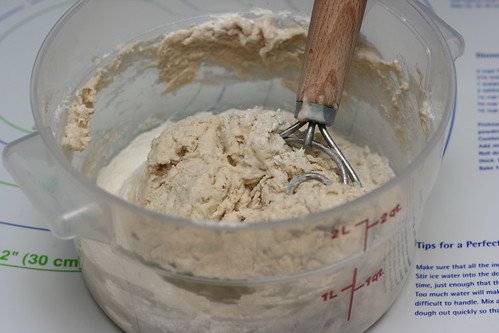
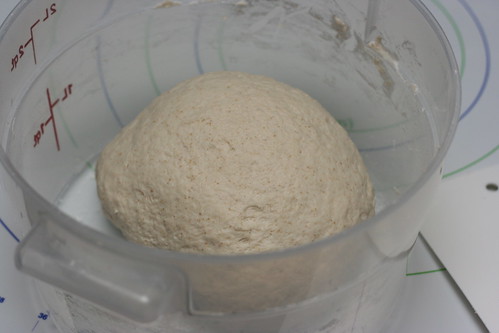
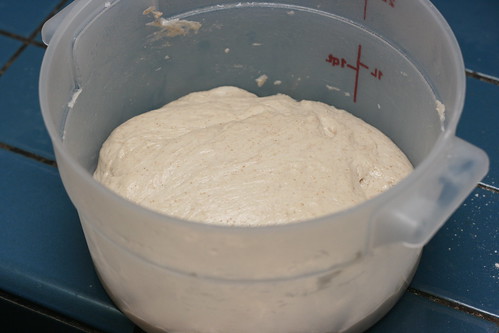
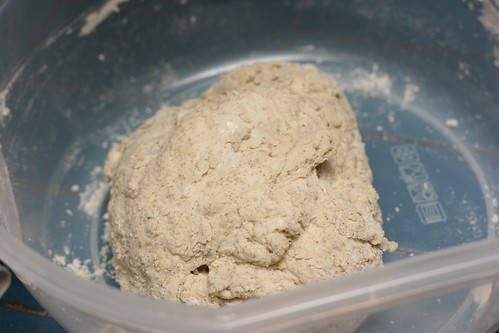
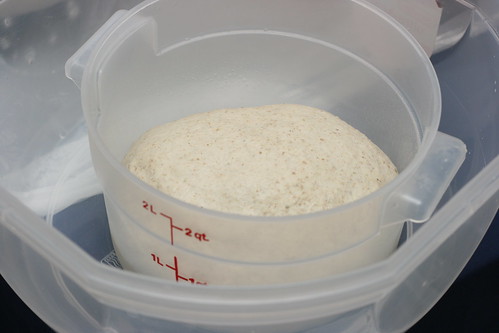
This bread is often referred to as a pain de campagne or a pain au levain and it is certainly both of these things, though more specifically in the tradition of the Bordeaux region. So far, this is one of my favorite breads that I have made and I eat it literally every day. I finally made it today with a culture that I have been growing for a few weeks and I am extremely pleased with the result. It grew huge and crusty, and the score split nicely to form two strong grignes. Stay with me here, as I have never tried to transition a commercial recipe (this one was for 12,000 grams of dough) for home use before, so this might be a bit on the rough side. The only thing that would complicate making this bread at home is that it requires a liquid levain, which requires a sourdough culture, which not too many non-breadheads keep around the house. If you happen to keep a culture around, I will explain (all the way at the bottom) how to build it so that it is ready for baking this recipe the next day. I will give the bakers' percentages first, with measurements in grams for a hand-mix batch listed thereafter. I recalculated the recipe to produce 1500 grams of dough, which makes two nicely sized batards or boules. Levain Build Final Dough First, assemble your mise en place. Scale out the water and the liquid levain in the same container (save the dishes!). They should both be somewhere in the neighborhood of room temperature. Scale out the flours and put them in a fairly large mixing bowl. Scale out the salt and the yeast and set them aside. Form a small well in the flour and pour in about half of the liquids. Mix slowly using a wet hand or a bowl scraper. When those liquids are reasonably well incorporated, add the rest of the liquids and continue to mix until the dough is a fairly consistent texture. Flip the dough out onto the counter. Form two little wells in the dough and place the salt and yeast in each one, respectively. Flip the bowl over to cover the dough and let it sit for about 15-30 minutes. This, friends, is your autolyse and it will save you a lot of kneading later on. Put the salt and yeast on top so you don't forget them, spill them, or add them to the wrong thing. This is not as much of a problem in a home kitchen. Just don't forget them. When that time has elapsed, start with your bench knife, moving around the edges and bringing the dough up over the salt and yeast. Continue to use the bench knife to bring the edges over the top as much as possible. One note of caution is that, in general, what started as the bottom should be the bottom when you're finished. Throughout the process, it forms a sort of skin the protects the gluten network that you're working so hard to develop. When the dough has become more smooth, we're going to start kneading. If you do this in a mixer, be careful not to overmix, which will create a more dense final product. On the counter, this doesn't take a ton of flour, but it's sticky stuff so you'll definitely need some. Less is always best. Remember, fold the dough toward you and use the heel of your hand to push down and away from your body. Rotate 90 degrees and repeat. And repeat until the dough is much stronger and smoother. You can try to make a window at the edge of the dough, though it's pretty hard to over-knead this by hand. I would say about eight minutes of solid kneading should do it. Grease up your bowl, put the dough back in it, and cover it with plastic wrap. Now we're in bulk fermentation, which takes about two hours for this dough if the temperature of the dough is around 75 degrees. After one hour, fold the dough. Folding is the clever man's version of punching down. Fold the top two-thirds of the way down, repeat with the bottom, and then repeat with the sides. Flip the lump of dough over, cover, and continue with fermentation. Folding has multiple purposes: it strengthens the dough's structure, stabilizes the temperature of the dough, and redistributes the yeast and what it eats. Divide the dough evenly in half. If you measured correctly, each half should weigh 750 grams. No preform is necessary for this dough, though if it's something you want to do, preform it to round and let it relax for about twenty minutes. The final shape is a batard approximately 10 inches long, and it should proof in a banneton/brotform if you have one available. As an alternative, it could proof on a couche or on a very-well-floured towel. Proof the dough until an indentation made with the finger springs back about 50%. The oven should be set to about 470 degrees and a pizza stone is recommended though not ultimately necessary. Gently steam the oven, score the bread down the middle with a lame or a knife, and insert the bread into the oven. Steam the oven again after 30 seconds and again after 3o more seconds. Cook the bread until it is deep brown, almost burgundy, a color brought about by the non-white grains. I have never made this in a home oven, but the cooking time should be in the neighborhood of 35-50 minutes. When you think it's done, crack the oven door to release any remaining steam and leave the bread in for five to ten more minutes. Remove the bread and cool completely. On scoring: This bread takes a single long slash from end to end. When scoring, the knife or lame should never be vertical. Try slicing with the blade at a 45 degree angle to the top of the bread (__/__). This will get you a better grigne in the end. On Levain: The recipe requires approximately 300 grams of developed levain. If you have a culture at home, this should be quite easy to build. You must feed your culture 24 hours before you plan to bake so that the yeast in the culture has time to develop and eat lots of sugars. The bakers' percentages are as follows: Flour: 100% So, to achieve 300 grams of levain, we need to calculate what one percent is. To do so, take the desired amount of product and divide it by the total percentages in the recipe. For the levain, we divide 300 by 235 to get 1.27. At this point, we multiply this number by the percentages of each ingredient. So, calculated out, the levain recipe is as follows: Flour: 100% x 1.27 = 127.7 g We can check our math by adding the calculated weights of each ingredient in the recipe and comparing that number to the amount we wanted to make. (127.7 + 158.75 + 10.27 = 296.72, which is close enough) So, with that done, mix these things together in a container and let them sit room temperature for 24 hours before you plan to bake. Don't forget to feed your culture so you can do this again. The best idea would be to build the levain in a separate container. Submitted by SumisuYoshi on October 13, 2009 - 10:20pm Bread Baker's Apprentice Pain de CampagneThis bread ended up being somewhat abused, but it still turned out very tasty and nice looking! I had planned out the day and while I had a meeting at school, that I was expecting to take quite a bit of time, things still ended up funky. My best estimate for when I would get home left the dough for this bread with about 2 to 3 hours left on the bulk ferment. As it turned out, I had to have my mom give the dough a quick stretch and fold for me and stick it in the fridge. But of course then things started moving fast, so it never should have gone in the fridge... Why don't we go back to the start... The recipe for Pain de Campagne in the Bread Baker's Apprentice calls for a pate fermente, however, as I am wont to do, decided to make it as a sourdough (my first time making this recipe too, I always tell people not to do that). So I started the recipe out with a sourdough adaptation of the pate fermente, added some of my starter and subtracted an equivalent amount of water and flour from the recipe. I keep a stiff starter these days, I've found it easier to keep, work with, and get the flavor I want than a liquid starter like I used to have. Usually I put the starter in the water for the recipe and mix it fairly thoroughly to get a milky looking fluid with small bits of dough still in it. Well, the next step is obviously to mix those ingredients together! I gave them a quick mix with my dough whisk, scraped the dough down into the bowl and left it to rest for 10-20 minutes. Not quite an autolyse since the dough has salt and wild yeast, but I find it still helps to make the dough more evenly hydrated and develop the gluten. After the rest, time to turn it out and give it a quick kneading to make sure everything is well incorporated, and it was! I forgot to take a picture of this step, shame on me, but I left the pate fermente to rise until about doubled, degassed it, and stuck it into the fridge to wait for making the final dough the next day. I purposely removed it from the fridge right before making the dough as I wanted the bulk ferment of the dough to proceed rather slowly. The recipe calls for bread flour, with a small portion of either whole wheat or rye, my starter already has some whole wheat flour in it so I decided to use rye flour in the final dough. As with the pate fermente, I mixed the dough loosely and let it rest for a while to incorporate. After kneading I wasn't sure if the dough was going to get bigger than the container it was in or not, so I stuck that container without lid in another larger bowl. Around that picture is where I left from school, and well, I wasn't there for the stretch and fold so no pictures of that. And I was rushing too much for most of the rest of the baking process (I was also making prebaked pizza crusts for my dad), and sending good rise vibes to the dough. What helped a little bit was putting some hot water in the larger bowl the dough bucket was sitting in, sort of a little dough sauna. Looking through the book, I opted for 3 different loaf shapes. Auvergnat, Tabatière, and Fougasse. So, for dough that really got abused with the attempted retardation, then right back out of the fridge shortly thereafter, and baking after midnight when I needed to get up early, I was really happy with how this turned out! The flavor was really amazing, the second day after it was baked it was starting to get a bit more sour than what I generally prefer, but it was still really good. And again, submitted to YeastSpotting this is becoming quite addicting! Bread Baker's Apprentice Challenge

Pain de CampagnePain de campagne from Reinhart's Bread Baker's Apprentice. This is my first attempt at a loaf from this book, as well as my first post. |
ALSO ON |