SearchUser loginRecommended BooksFavorite Recipes
|
Submitted by dmsnyder on August 3, 2009 - 10:28pm 100% Whole Wheat Bread from BBA
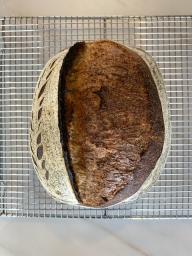
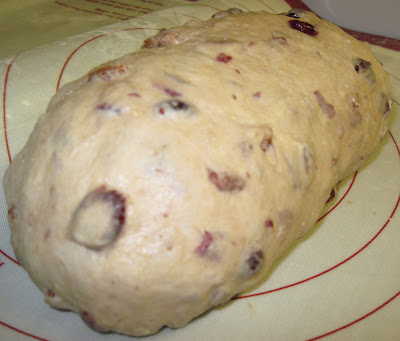
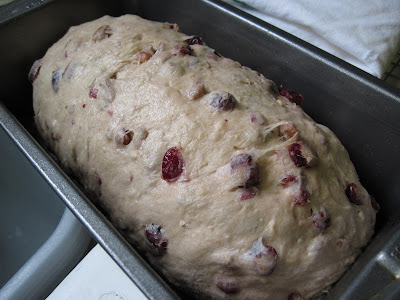
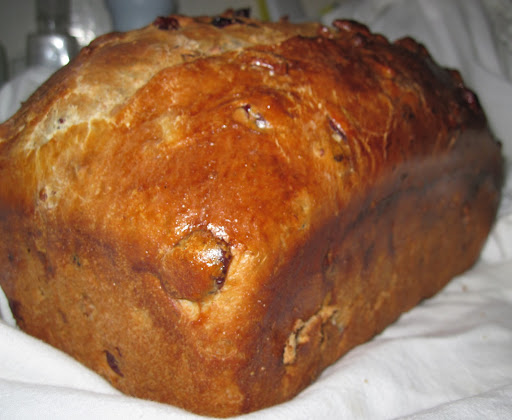
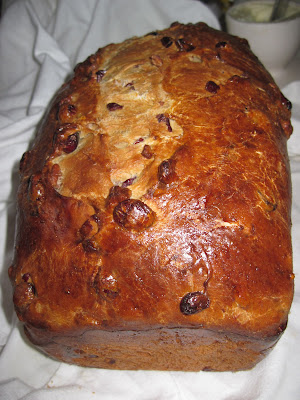
Almost all the breads I bake are sourdoughs, but there are two non-sourdough breads I really like – Cinnamon-Raisin-Walnut bread and a hearty 100% Whole Wheat sandwich bread. Whole wheat bread is my bread of choice for tuna salad or egg salad sandwiches and for nut butter and jam sandwiches. It's one of my favorites, toasted, to accompany eggs, although it has stiff competition from San Francisco-style Sourdough bread and un-toasted Jewish Sourdough Pumpernickel (with cream cheese). My favorite whole wheat bread has been the “100% Whole Wheat Bread” from Peter Reinhart's “The Bread Baker's Apprentice.” It uses both a poolish and a soaker and is essentially identical to what Reinhart calls the “foundational bread” in his later-published “Whole Grain Baking” book. It incorporates what Reinhart calls “the epoxy method” in the later book. These books are widely available, so I will not duplicate the formulas here. However, Reinhart offers a number of options, and I will tell you which I used for this bake. The Poolish in Reinhart's BBA formula isn't really a poolish in the classic sense of a 100% hydration mix of flour and water with a little yeast. In the WGB book, he calls it a “barm,” and it's not really a barm either, as I understand the strict definition. I suppose you could call it a “sponge.” The Soaker calls for “coarse whole wheat flour or other coarsely ground whole grains.” In the past, I've used bulghur (medium size). This time, I did have some coarse ground whole wheat flour on hand. I used 2 oz of the coarse whole wheat and 2.25 oz of bulghur, soaked overnight in 6 oz of buttermilk (One of Reinhart's options), rather than the water I had used before. The final dough uses fine ground whole wheat flour, salt, honey and instant yeast. No additional water is added in the formula. An egg and 1 T of vegetable oil are optional. I used the egg but not the oil. The honey I used was Orange Blossom honey. Using these ingredients, the dough was considerably drier than it had been when I had used water (rather than buttermilk) and all bulghur (rather than coarse ground WW and bulghur). I ended up adding about 3 T of additional water during mixing and still ended up with a rather stiff, barely tacky dough. Fermentation to doubling and proofing to almost doubled took about 75% as long as the recipe specified. This was because my kitchen was 80F yesterday. The dough made two 17 oz pan loaves which baked at 350F for 45 minutes.
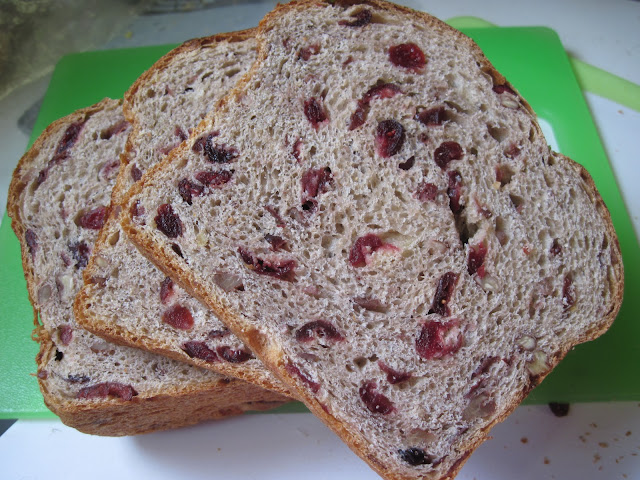
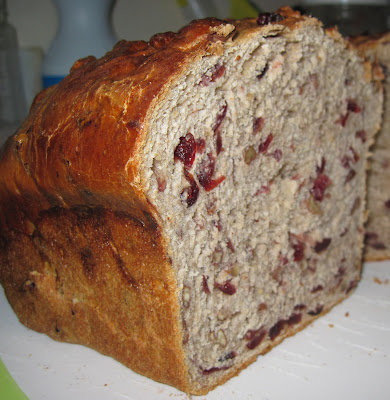
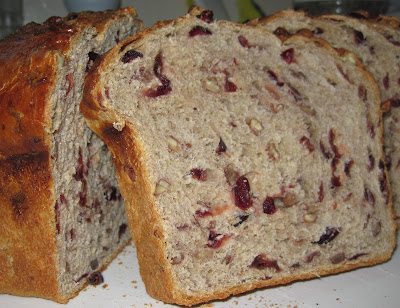
This is a very flavorful, somewhat dense yet tender bread. The flavor of red whole wheat predominated, but the Orange Blossom honey flavor was very much “there,” too. If you pay attention, I think you can also taste a tangy overtone from the buttermilk. I tasted some just after it cooled and had more toasted with almond butter and strawberry jam for breakfast. It's still a favorite. I am curious how I would like this bread made with white whole wheat, and I'll probably make it that way next time. David Submitted to YeastSpotting Submitted by MommaT on July 19, 2009 - 12:53pm Bagels - tried BBA recipe and have questionsHello, Having had a very successful experience with boiled pretzels, I was convinced bagels were a walk in the park. The recipe in BBA seemed approachable enough -- doesn't take too long, doesn't require lye (I know...point of contention) and is ready to bake for breakfast. I had a mediocre experience, however, and am looking for pointers from those of you who have had great success making "true" bagels. The good part: The dough was easy to mix up, the shaping instructions using classic wrap method were a piece of cake and everything looked just right. I even found malt syrup in my local Whole Foods. My only difficulty was the baking time. In the foreward to the recipe, Reinhardt says total baking time is 15-20 minutes, but in the recipe itself it only describes 5 minutes plus 5 more. I think this is a typo and the second, cooler baking time should be 15 minutes. BUT...the real reason I am writing is to ask about the crumb and general texture/mouth feel. I found the outside to be pleasantly and acceptably chewy, but the inside was a bit to "bread-like" for me. The bagels were almost fluffy with a fair number of air holes inside. I am used to a denser, chewier crumb and a bit more flavor. Is success with the chewy crumb better achieved using a starter instead of yeast? I suspect this would go a long way toward generating the right crumb. Is there anything else that I'm missing? All pointers are appreciated and I'm looking forward to Bagels: Round 2 Thanks! MommaT Submitted by dmsnyder on June 14, 2009 - 3:26pm Sourdough Italian Bread and Sandwich Rolls
This bread is based on the Italian Bread formula in Peter Reinhart's “Bread Baker's Apprentice.” I substituted a biga naturale (sourdough starter) for the biga made with instant yeast in Reinhart's formula. I still added the instant yeast to the final dough to provide more predictable fermentation and proofing times. Reinhart recommends this formula for hoagie rolls. I divided the dough to make 4 rolls scaled to 4 ounces each and shaped the remainder of the dough into one large bâtard. I also employed the “stretch and knead in the bowl” technique during bulk fermentation, even though I used a KitchenAid mixer for mixing beforehand.
Intermediate starter (Biga naturale)
Final Dough
Mix and ferment the biga. Mix the biga naturale the evening before baking. Dissolve the starter in the water in a medium sized bowl, then add the flour and mix thoroughly to hydrate the flour and distribute the starter. Cover the bowl tightly and allow to ferment for 3-6 hours, until it doubles in volume. Refrigerate overnight. The next day, remove the biga from the refrigerator and allow it to warm up for an hour or so. Alternately, mix the biga late at night and ferment at room temperature overnight.
Mix the dough Mix the flour, salt, sugar, yeast and malt powder in a large bowl or the bowl of your mixer. Add the biga in pieces, olive oil and ¾ cups of tepid water and mix thoroughly. Adjust the dough consistency by adding small amounts of water or flour as necessary. The dough should be very slack at this point. I mixed the dough with the dough hook in the KA mixer for 10 minutes then transferred it to an 8 cup/2 liter glass pitcher that had been lightly oiled.
Fermentation I stretched and folded the dough in the pitcher with a rubber spatula then covered it tightly. I repeated the stretch and fold again 20 and 40 minutes later. I then left the dough to ferment until it was double the original volume (45-60 minutes more).
Divide and form Divide into 2 pieces and pre-form as logs. Allow the dough to rest 5 minutes or more, then form into bâtards. To make rolls, divide into 4 ounce pieces and pre-shape into rounds, then shape into torpedos. If desired, spray or brush the loaves with water and sprinkle with sesame seeds. Prepare a couche – either a floured piece of baker's linen or parchment paper sprinkled with semolina. Pre-heat the oven to 500F with a baking stone on the middle shelf. Make preparations for steaming the oven. Place the loaves in the couche, cover with plastic or a towel and allow to proof until 1-1/2 times their original size (about 40 minutes).
Baking Score the loaves and transfer them to the baking stone. Bake with steam, using your favorite method. After loading the loaves and steaming, turn the over down to 450F and bake until done (about 20 minutes for a bâtard, 15 mnutes for rolls.). If you want a thicker crust, use a lower temperature and bake for longer.
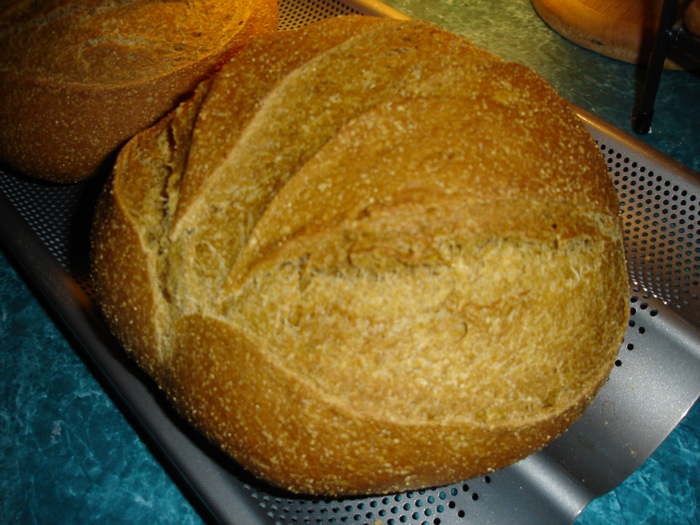
Cooling Allow to cool before slicing, if you can. Sourdough Italian Roll Sourdough Italian Roll crumb We had a couple of the rolls for lunch. They were very nice. The crust is chewy, not crunchy, and the crumb is also chewy. This is not your fluffy, cottony roll that seems standard in most sub shops and, unfortunately, most Italian delis. I am pretty sure this is the roll I would choose for a meatball sandwich, oozing mozzarella and dripping marinara sauce. I don't think this roll would be the usual soggy mess after the first 20 seconds. However, in the interest of Science, I will volunteer to test this hypothesis. Of course, if additional volunteers were to pool their data with mine, we can be more confident of our conclusions. David Submitted to Yeast Spotting on Susan FNP's marvelous Wild Yeast blog
Submitted by jj1109 on May 17, 2009 - 9:04pm The mother of all loaf tins... (well, for me)Firstly, thanks to those who welcomed me to TFL! Recently, I inherited some rather large loaf tins - 12" x 5". At the time, the person that passed them on said "I wouldn't even bother using them, I just can't get a loaf baked in the middle!" to which I scoffed a little. Hah! I am quite the baker now! I won't have those problems! Now, these tins look big. You could drop the Grand Canyon in one of them. Well, compared to the cute little 9x5, that is. And I now have four. What to bake first? Ah, my old favourite, Multigrain Extraorinaire, from BBA. with some minor tweaks - formula below. I cut the sugar in the recipe in half, as for my taste the original amount makes almost a sweet dessert bread. I also increased the flour - this is probably more due to my flour compared to someone elses, however I did increase it by almost 10% which seems quite a lot just to account to regional differences. I've made this recipe a number of times - it's my standard loaf, I make one or two every weekend. So it was no big deal making the dough, shape it, dump into the new tin. Pause. I've done something wrong here, the loaf looks like a little sausage in the bottom of this tin. It must just be perspective, this being a big tin and all... leave to rise - not as much rising as I'd expect. What's wrong? Ah, I split the dough (as always) into two one pounders. This is a huge tin! I won't post the photo of the final result - it was a relatively flat loaf, and extremely embarassing! Here's the formula I used for to make two one pound loaves (as posted in another thread, based on Multigrain Extraordinaire in BBA): Final dough (amount ingredient / bakers %) 449g Bread Flour / 100% Multigrain soaker: (amount ingredient / bakers %) 25g polenta / 50% which works really nicely. However, every time I scaled it up to make one three pound loaf, I would get big holes in the middle. Insufficient mixing, not enough gluten development? Not enough cooking time? I'm not sure. Anyhow, I thought this weekend, "I will make this big loaf one more time and if it doesn't work, it's back to nice easy small loaves." To be sure of the gluten part, after I used my dough hook for 6 minutes, I then did 3 stretch'n'folds in the course of an hour, then left it to rise to double. Shaped, left to rise again and baked at 190C (~375F) for around 30-40 minutes.
Submitted by AndyKornkven on February 24, 2009 - 3:34pm "The Dough Should Pass the Windowpane Test and Register 77 to 81 Degrees....."This sentence, or one like it, occurs throughout the Formulas section of Peter Rinehart's Bread Baker's Apprentice. I know what the windowpane test is. But I don not recall the author explaining why the temperature of the dough should rise so significantly after being kneaded for 6-10 minutes; nor do I recall him instructing what to do if your dough does not make it to the prescribed temperature range. I always stick my trusty digital thermometer (bought from King Arthur Flour) into the kneaded dough, and not once yet has my dough registered above 74 degrees. I've tried kneading for additional minutes, and that seems to raise the dough a degree or two. Am I doing something wrong? Do I need to turn up the thermostat in my house? Any comments are appreciated. Thank you! Submitted by gaaarp on January 18, 2009 - 10:45am Peter Reinhart is Accepting New TestersThe day I've been waiting for is finally here! I've read a number of posts where people refer to testing recipes for Peter Reinhart's books, so I sought out his website a few months ago. He kept saying he was going to open up his blog to new testers, and the day has come. For the next week only, if you would like to test recipes for PR and report back to him on your successes/challenges/failures, go to http://peterreinhart.typepad.com/ and follow the instructions. Happy baking! Phyl Submitted by gaaarp on January 12, 2009 - 5:29pm Starting a Starter - Sourdough 101, a Tutorial(The following started as a blog, but I've had enough questions and comments about it that I thought I'd repost it as a forum entry so it would be easier to find. Of course, if Floyd wants to add it to Lessons, that would be OK, too.) Like many people, I found TFL in my quest to learn how to make sourdough. I had a starter going and was sure I had killed it. The advice I found here gave me the knowledge and confidence to make a starter that I've been using for months now, with ever-better results. Although there is a wealth of information here, there was no one source that detailed the method I used, which was based on Reinhart's "barm" in BBA. Now that I have succeeded in making several starters, I've been thinking about making a video tutorial to walk through the process step-by-step, day-by-day. My own experience and that of others here has taught me one thing: sourdough starters don't read baking books, so they don't know how they are "supposed" to behave. I could have been spared the angst, the wasted time, and of course, pounds of precious flour, if only I had known what to expect and what to look for. I don't have the technical part of video-making worked out yet, so I have decided to do a tutorial blog. This will be a real test, as I am trying out a modified starter that I haven't made before. It's still based on Peter's starter, but I have altered the amounts, and possibly the times, to suit my own fancy. If all goes well, I will end up with a more reasonable (i.e., much smaller) amount of starter, and I will get there with much less wasted flour. So here goes: Day 1: Ingredients: 1/3 cup rye flour and 1/4 cup water For the flour, I use stone-ground rye. Nothing special, just what I got from the grocery store. My water is tap water run through a filter. Before I had a filter on my sink, I used bottled drinking water. Mix the flour and water in a bowl. It will be thick and pasty, kind of like the oatmeal that's left in the pot if you don't come down for breakfast on time.
Once all the flour is mixed in, put it in a pint-sized or larger container and cover with plastic wrap. Leave it out on the counter.
And that's it for today.
Day 2: Ingredients: 1/4 cup unbleached AP, bread, or high gluten flour; 1/8 cup water There should be little, if any, change in the culture from yesterday. Again, I'm not really particular about the flour. I would just recommend staying away from bleached flour. I am using AP flour for this batch. Mix the flour, water, and all of the starter from yesterday in a bowl. It will still be thick but a little wetter than yesterday.
Put it back in the container (no need to wash it), press it down as level as you can get it, and mark the top of the culture with a piece of tape on the outside of the container.
Put the plastic wrap back on top, and you're finished.
Day 3: Ingredients: 1/4 cup unbleached AP, bread, or high gluten flour; 1/8 cup water Around Day 3 or 4, something happens that puts terror in the heart of the amateur sourdough maker: they get a whiff of their starter. When you check your starter on Day 3, you may notice a strange, and not at all pleasant, odor. And unless you know better (which you will now), you'll swear something is drastically wrong. In fact, I would venture to guess that that smell has been the ruin of more amateur sourdough growers than anything else. It's an acrid, sour, almost rotten smell, and it's perfectly normal. And rest assured, your new baby sourdough starter will soon outgrow it. So, take heart, and press on. You may also notice that your starter has begun to come to life. It probably won't grow a lot, maybe 50%, but you will start to see bubbles, like these: Regardless of the amount of growth, stir down your starter, throw out about half (no need to measure, just eyeball it), and mix the rest with today's flour and water. You will get a slightly more doughy-looking mass: Once it's well mixed, put it back in the container (still no need to wash), pat it down, and move your tape to again mark the top of the starter. From this point forward, keep your starter at a moderate room temperature, 70-72 degrees F. Lower is OK (it will just grow more slowly); but don't keep it at a higher temperature, or you will encourage the growth of the bacterial beasties at the expense of the yeasty beasties. Put the plastic wrap back on the container, and take the rest of the evening off. You worked hard today.
Day 4: Ingredients: 1/4 cup unbleached AP, bread, or high gluten flour; 1/8 cup water And now, a word about measurements. If you bake regularly, or even if you've just been nosing around baking sites for a while, you are no doubt aware that the ingredients in most artisan bread recipes are listed by weight rather than volume. I measure by weight for my baking and for maintaining my sourdough starter. You might wonder why, then, am I using volume measurements here? Two reasons: first, I have tried to make this starter as simple to follow as possible -- no special tools, no monkeying around with the scales, just a couple of measuring cups and a bowl. And, when it comes to starting a starter, the measurements aren't as critical as when you actually go to bake with it. So for now, we're just using measuring cups. Today is another one of those days where novice sourdough starter makers often lose heart. Your starter is now coming to life, and like most living things, it kind of has a mind of its own. Up until now, we followed the clock, making our additions every 24 hours. Now, we will be letting the starter dictate the timeframe. Before you do your Day 4 additions, you want to make sure your starter has at least doubled. If it doubles in less than 24 hours, you should still wait until the 24 hour mark. If it takes more than 24 hours, be patient. Let it double. It may take another 12 or 24 hours, or it may take longer. Again, be patient. It will double. Just give it time. If your starter hasn't doubled after 48 hours, you can boost it with a shot of rye flour. Add 3 to 4 tablespoons of rye flour and a bit of water (try to keep the hydration level about where it was) and mix it up. Then wait for it to double before proceeding with the Day 4 additions. Eventually, you'll end up with a nice, bubbly starter: You can see that mine more than doubled. But I still waited for 24 hours. Once it doubles, throw out half of the starter, then mix the rest with the flour and water, and back into the bowl it goes: Replace the tape and plastic wrap. Then wait for it to double. It could take as little as 4 hours, or it may take more than 24 hours. This time, you can move on to Day 5 at any point after doubling. It's OK if you let it more than double; it's also OK to move on right when it hits the double mark. So, hurry up and wait.
Day 5: Ingredients: 3/4 cup unbleached AP, bread, or high gluten flour; 1/2 cup water Once your starter has at least doubled, it's time for the final mix. Combine flour, water, and 1/4 cup starter in a bowl and mix well. Transfer to a clean container with room for the starter to at least double. OK, one last time, cover with plastic wrap and let it sit on the counter until it gets nice and bubbly. Don't worry so much about how much it grows, just so that it's bubbly looking. This will probably take around 6 hours, but, again, don't stress about the time. Let the starter tell you when it's ready. When your starter gets bubbly, pat yourself on the back: you are now the proud parent of a bouncing baby starter! Put a lid or other cover on your container and put it in the refrigerator. Let it chill overnight, and you can begin using it the next day. Day 6 and beyond: By today, your starter is ready to use. The flavor will continue to develop over the next several weeks to month, so don't be disappointed if your first few loaves aren't sour enough for you. I would still recommend beginning to bake with it right away, especially if you have never made sourdough bread before. That way, you can hone your skills while your starter develops its flavor. Feeding your sourdough: If you keep your sourdough in the fridge, you only have to feed it about once a week. And you can minimize your discards by keeping only what you need and feeding it when you want to bake with it. I recommend a 1:1:1 (starter:water:flour) feeding, which means each feeding includes an equal amount, by weight, of starter, water, and flour. Start by weighing your starter, subtracting the weight of your container. Then add an equal amount of water and flour directly to the container. So, for example, if you have 100 grams of starter, you would add 100 grams each of water and flour. I generally add the water and flour at the same time, although some people recommend adding the water first and whisking to dissolve the starter before adding the flour. If you feed your starter right out of the fridge, as I do, warm your water to lukewarm (90 - 100 degrees F). After you mix in the water and flour, leave it out on the counter for a few hours, then put it back in the refrigerator. It's best if you feed your starter a few days before you intend to bake with it. To illustrate, here is an example of my feeding routine, starting with the Day 5 starter and assuming that I finished making the starter on Friday night:
This is just an example of how I keep my starter. You can feed yours more often if you bake more than I do. It's also OK to let it go more than a week between feedings. If you do that, though, you might want to feed it a few times before you bake with it. So, that's it. Hopefully I've unravelled some of the mystery of sourdough starters and given you the confidence to try one yourself. Good luck, and let me know how it works out for you! Submitted by gaaarp on January 6, 2009 - 7:49pm Starting a Starter - Sourdough 101Like many people, I found TFL in my quest to learn how to make sourdough. I had a starter going and was sure I had killed it. The advice I found here gave me the knowledge and confidence to make a starter that I've been using for months now, with ever-better results. Although there is a wealth of information here, there was no one source that detailed the method I used, which was based on Reinhart's "barm" in BBA. Now that I have succeeded in making several starters, I've been thinking about making a video tutorial to walk through the process step-by-step, day-by-day. My own experience and that of others here has taught me one thing: sourdough starters don't read baking books, so they don't know how they are "supposed" to behave. I could have been spared the angst, the wasted time, and of course, pounds of precious flour, if only I had known what to expect and what to look for. I don't have the technical part of video-making worked out yet, so I have decided to do a tutorial blog. This will be a real test, as I am trying out a modified starter that I haven't made before. It's still based on Peter's starter, but I have altered the amounts, and possibly the times, to suit my own fancy. If all goes well, I will end up with a more reasonable (i.e., much smaller) amount of starter, and I will get there with much less wasted flour. So here goes: Day 1: Ingredients: 1/3 cup rye flour and 1/4 cup water For the flour, I use stone-ground rye. Nothing special, just what I got from the grocery store. My water is tap water run through a filter. Before I had he filter on my sink, I used bottled drinking water. Mix the flour and water in a bowl. It will be thick and pasty, kind of like the oatmeal that's left in the pot if you don't come down for breakfast on time.
Once all the flour is mixed in, put it in a pint-sized or larger container and cover with plastic wrap. Leave it out on the counter.
And that's it for today.
Day 2: Ingredients: 1/4 cup unbleached AP, bread, or high gluten flour; 1/8 cup water There should be little, if any, change in the culture from yesterday. Again, I'm not really particular about the flour. I would just recommend staying away from bleached flour. I am using AP flour for this batch. Mix the flour, water, and all of the starter from yesterday in a bowl. It will still be thick but a little wetter than yesterday.
Put it back in the container (no need to wash it), press it down as level as you can get it, and mark the top of the culture with a piece of tape on the outside of the container.
Put the plastic wrap back on top, and you're finished.
Day 3: Ingredients: 1/4 cup unbleached AP, bread, or high gluten flour; 1/8 cup water Around Day 3 or 4, something happens that puts terror in the heart of the amateur sourdough maker: they get a whiff of their starter. When you check your starter on Day 3, you may notice a strange, and not at all pleasant, odor. And unless you know better (which you will now), you'll swear something is drastically wrong. In fact, I would venture to guess that that smell has been the ruin of more amateur sourdough growers than anything else. It's an acrid, sour, almost rotten smell, and it's perfectly normal. And rest assured, your new baby sourdough starter will soon outgrow it. So, take heart, and press on. You may also notice that your starter has begun to come to life. It probably won't grow a lot, maybe 50%, but you will start to see bubbles, like these: Regardless of the amount of growth, stir down your starter, throw out about half (no need to measure, just eyeball it), and mix the rest with today's flour and water. You will get a slightly more doughy-looking mass: Once it's well mixed, put it back in the container (still no need to wash), pat it down, and move your tape to again mark the top of the starter. Put the plastic wrap back on the container, and take the rest of the evening off. You worked hard today.
Day 4: Ingredients: 1/4 cup unbleached AP, bread, or high gluten flour; 1/8 cup water And now, a word about measurements. If you bake regularly, or even if you've just been nosing around baking sites for a while, you are no doubt aware that the ingredients in most artisan bread recipes are listed by weight rather than volume. I measure by weight for my baking and for maintaining my sourdough starter. You might wonder why, then, am I using volume measurements here? Two reasons: first, I have tried to make this starter as simple to follow as possible -- no special tools, no monkeying around with the scales, just a couple of measuring cups and a bowl. And, when it comes to starting a starter, the measurements aren't as critical as when you actually go to bake with it. So for now, we're just using measuring cups. Today is another one of those days where novice sourdough starter makers often lose heart. Your starter is now coming to life, and like most living things, it kind of has a mind of its own. Up until now, we followed the clock, making our additions every 24 hours. Now, we will be letting the starter dictate the timeframe. Before you do your Day 4 additions, you want to make sure your starter has at least doubled. If it doubles in less than 24 hours, you should still wait until the 24 hour mark. If it takes more than 24 hours, be patient. Let it double. It may take another 12 or 24 hours, or it may take longer. Again, be patient. It will double. Just give it time. Eventually, you'll end up with a nice, bubbly starter: You can see that mine more than doubled. But I still waited for 24 hours. Once it doubles, throw out half of the starter, then mix the rest with the flour and water, and back into the bowl it goes: Replace the tape and plastic wrap. Then wait for it to double. It could take as little as 4 hours, or it may take more than 24 hours. This time, you can move on to Day 5 at any point after doubling. It's OK if you let it more than double; it's also OK to move on right when it hits the double mark. So, hurry up and wait.
Day 5: Ingredients: 3/4 cup unbleached AP, bread, or high gluten flour; 1/2 cup water Once your starter has at least doubled, it's time for the final mix. Combine flour, water, and 1/4 cup starter in a bowl and mix well. Transfer to a clean container with room for the starter to at least double. OK, one last time, cover with plastic wrap and let it sit on the counter until it gets nice and bubbly. Don't worry so much about how much it grows, just so that it's bubbly looking. This will probably take around 6 hours, but, again, don't stress about the time. Let the starter tell you when it's ready. When your starter gets bubbly, pat yourself on the back: you are now the proud parent of a bouncing baby starter! Put a lid or other cover on your container and put it in the refrigerator. Let it chill overnight, and you can begin using it the next day. Day 6 and beyond: By today, your starter is ready to use. The flavor will continue to develop over the next several weeks to month, so don't be disappointed if your first few loaves aren't sour enough for you. I would still recommend beginning to bake with it right away, especially if you have never made sourdough bread before. That way, you can hone your skills while your starter develops its flavor. Feeding your sourdough: If you keep your sourdough in the fridge, you only have to feed it about once a week. And you can minimize your discards by keeping only what you need and feeding it when you want to bake with it. I recommend a 1:1:1 (starter:flour:water) feeding, which means each feeding includes an equal amount, by weight, of starter, flour, and water. Start by weighing your starter, subtracting the weight of your container. Then add an equal amount of flour and water directly to the container. So, for example, if you have 100 grams of starter, you would add 100 grams each of flour and water. If you feed your starter right out of the fridge, as I do, warm your water to lukewarm (90 - 100 degrees F). After you mix in the flour and water, leave it out on the counter for a few hours, then put it back in the refrigerator. It's best if you feed your starter a few days before you intend to bake with it. To illustrate, here is an example of my feeding routine, starting with the Day 5 starter and assuming that I finished making the starter on Friday night:
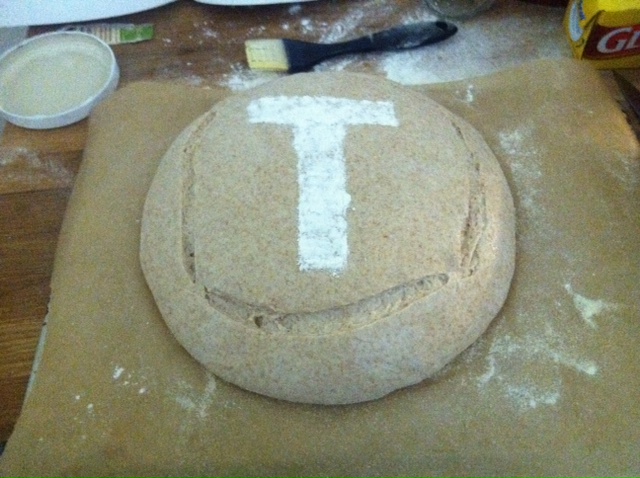
This is just an example of how I keep my starter. You can feed yours more often if you bake more than I do. It's also OK to let it go more than a week between feedings. If you do that, though, you might want to feed it a few times before you bake with it. So, that's it. Hopefully I've unravelled some of the mystery of sourdough starters and given you the confidence to try one yourself. Good luck, and let me know how it works out for you! Submitted by gaaarp on November 30, 2008 - 9:16pm Weekend Bake - Anadama Bread and Poilane-style MicheThis weekend I baked Reinhart's Anadama Bread and the Poilane-style Miche featured on the cover of BBA. Someone mentioned the Anadama recipe in another post, and I remembered making it years ago from a Better Homes recipe. Needless to say, the BBA recipe is head-and-shoulders above my old one. Here are some picts of the Anadama Bread: The Miche was a monster, but a lot of fun to build and bake. Here it is just before slashing and baking: And fresh out of the oven: And finally, what miche photo spread would be complete without... My humble tribute to Peter Reinhart!! Submitted by gaaarp on November 11, 2008 - 8:28am The Need to KneadA few weeks ago, inspired by Peter Reinhart's The Bread Baker's Apprentice (BBA), I decided to make a seed culture-barm-sourdough starter. My first attempt failed, due, I think, to my impatience rather than a true failure of the process. My second attempt, seasoned with more patience, worked, and I am baking my first sourdough loaves today. The BBA recipe for Basic Sourdough Bread states that you can knead the dough by hand for 12-15 minutes, or use the dough hook in your stand mixer and knead for 4 minutes, rest for 5-10, and knead an additional 4 minutes. I have made bread off and on for about 30 years (since I was 10 years old), and I have always kneaded by hand. Until recently, that is. I took a French bread class, and the instructor kneaded the bread in the Kitchen Aid (KA) for the first 5-6 minutes, then finished with the "slap and roll" technique, where you take the dough by the edge in one hand, slam it on the counter for all you're worth, then use the other hand to do a jellyroll. She said if you don't use the KA to start with, you would slap and roll about 100 times; starting with the KA, you only have to do it about 15-20 times. I have been using this method for my French bread for a while now, with excellent results. So I planned to use the KA for my kneading on the sourdough, as instructed in BBA. But partway through the first 4-minute knead, something happened. I suddenly realized that I missed kneading by hand, the old fashioned way! So after the first knead, I put the dough to rest on the counter for a few minutes, then finished kneading by hand. It was an almost-religious experience. When the wild yeast started to come alive, the smell was absoulutely intoxicating. And the time flew by. The dough was ready to be set aside to ferment before I knew it. It's good to get back to what I've always known and loved about bread baking. That's not to say that I will never again opt for the convenience of the KA or the slap and roll, but when I have the time, I will always choose to knead by hand. |
Advertisement |