Submitted by DonD on July 1, 2009 - 8:21am

Ganachaud Baguette


Recently, I tried to make the 'Flute Gana', the poolish baguette from Bernard Ganachaud according to the formulation that Daniel Leader described in Local Bread but ran into a few hiccups. I was wondering if anybody has tried the recipe and been successful.

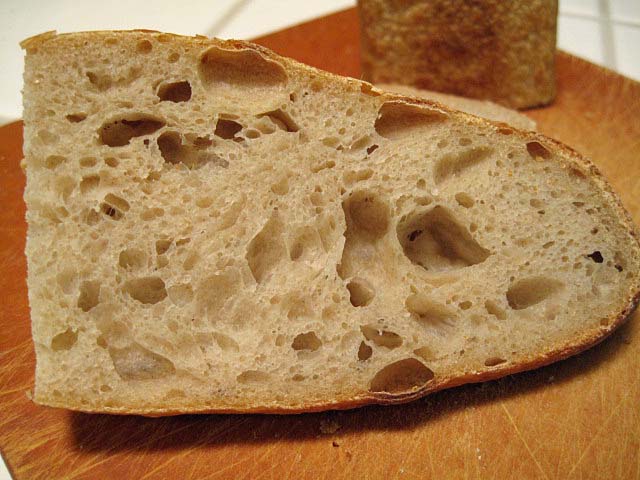
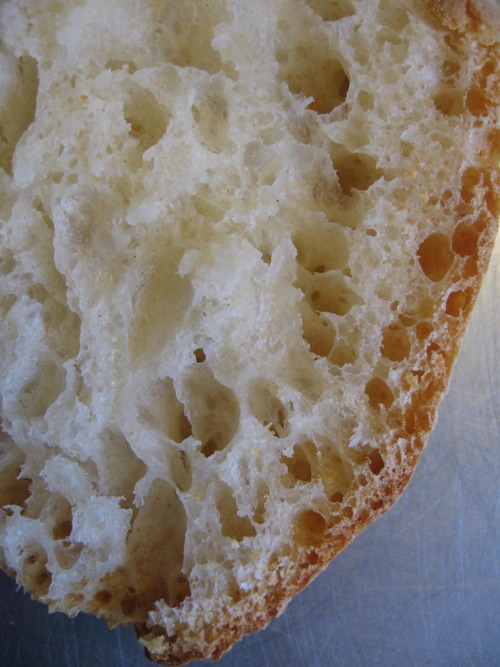
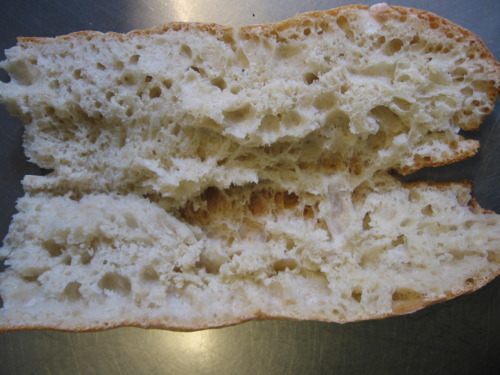
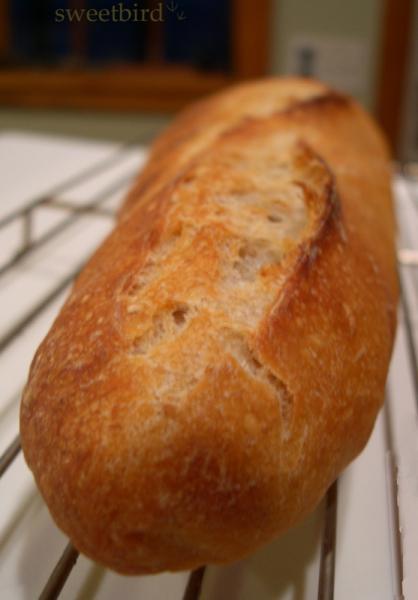
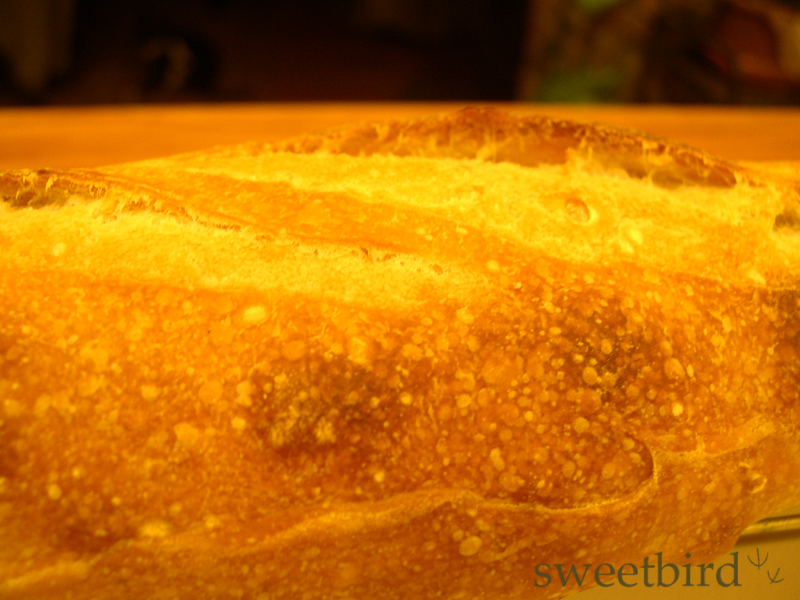
The problem I have is it seems that the recipe calls for an excessive amount of yeast especially with the 12 to 24 hours retardation. First, my poolish tripled in size in 8 hrs at 72 degrees and overflowed the container. For the retardation, because of the lack of room in my fridge, instead of proofing the shaped loaves in the fridge, I ferment the dough at room temperature then refrigerate it for 24 hours before shaping, proofing and baking. The first fermentation at room temperature took only 1 1/2 hours to double in size and it kept expanding while refrigerated. The loaves were easy to shape and had good oven spring. The crumb was light but the holes were small and uniform in size. The crust color was pale gold after 23 mins in the oven and just did not have the caramelization that I normally get with an extended fermentation and the taste was kind of bland. Maybe the corn flour addition has something to do with that. All in all rather disappointing result.

Any comments would be greatly appreciated. Thanks.


Don

Submitted by DonD on June 30, 2009 - 9:33am

Baguettes au Levain


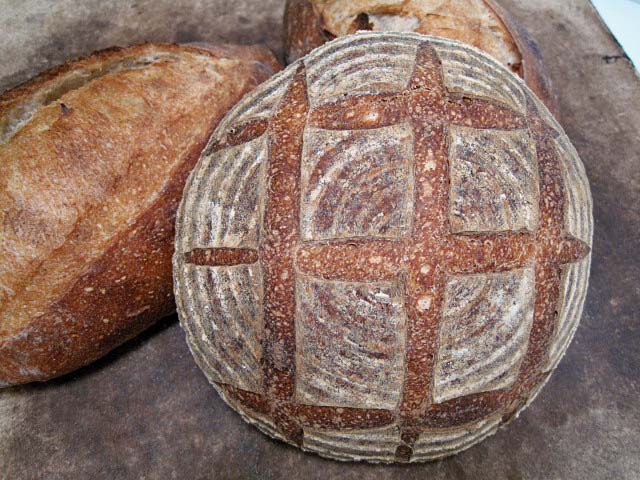
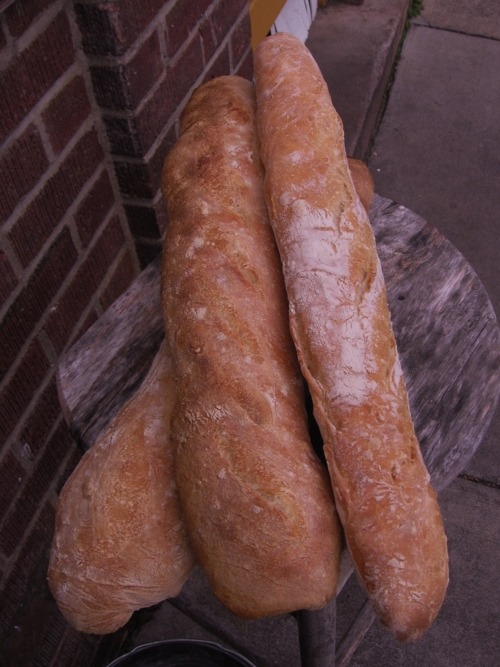
This past weekend, I made a batch of Baguettes au Levain based on the recipe that Janedo had adapted from the Anis Bouabsa formula. This is my third try at this recipe and each time I tweaked it a little bit to correct some aspects that did not turned out to my liking. This time the loaves turned out pretty good with nice oven spring and airy crumb. The crust had nice golden color with small blisters, thin and crackly and deep caramel flavor. The taste was not sour but is rich and sweet with a slight tang.

The formula I used consists of:

- 125 g of stiff white flour levain at 67% hydration

- 300 g KAF AP Flour

- 150 g KAF Bread Flour

- 50 g Arrowhead Mills Organic Stoneground WW Flour

- 350 g water

- 1/4 tsp Instant Yeast

- 10 g Atlantic Sea Salt

I autolyse the flour mixture with the water without the yeast or salt for 30 mins prior to mixing in the levain, then added the yeast and the salt during the stretch and fold. I followed the 20 movements 3 times at 20 mins interval using the stretch and fold from Richard Bertinet (I like slapping the dough!). I let the dough ferment for 1 hr then refrigerate for 24 hours before dividing, shaping and baking.

I reduced the hydration to 70% to make the shaping and scoring of the baguettes easier. I also found that that little extra yeast really helps with the oven spring.

I proofed the shaped baguettes and scored them on a perforated pan lined with parchment paper which helps keep the shape, especially when working with a high hydration dough. To help me comtrol the scoring, I made a full size cardboard template as a guide while scoring.

I tranferred the loaves by sliding the parchment onto a jerry-rigged wooden peel made from a top cover of a Bordeaux wine case and from there onto the baking stone.

I baked 10 mins at 460 degrees F with steam from a cast iron pan filled with lava stones (thanks David!), reduce to 430 degrees and baked without steam for 13 mins, turned off oven and kept them in the oven with door ajar for another 5 mins ( thanks again David!) before removing them to cool on a rack.


I hope these little tidbits will be of help. Happy baking!

Don

Submitted by PeterPiper on June 3, 2009 - 9:26am

Pain a l'ancienne comes out mediocre

I followed PR's pain a'lancienne recipe to the letter, but something obviously didn't go right with my baguettes.  The dough did double, though it was slow and still cold after 2.5 hours out of the fridge.  The dough was incredibly slack and didn't feel like it had many air bubbles.  Even though the oven was at 550 for the first few minutes, I maxed out the baking time, and internal temp was around 207 when I took them out, the color is pale like it wasn't hot enough.  Texture is pretty dense with smaller bubbles, and the crust is pale, soft, and thin.  The only thing I can think is that the steam creation sucked too much heat from the oven, and it never recovered to really brown up these baguettes.  What do you think?  Should I try a different baguette recipe?

pain a l'ancienne

Submitted by Baker_Dan on May 21, 2009 - 6:38pm

Greetings from Stumptown


Hey everyone! I'm an avid reader as of a few days ago and finally decided to add some content! I"ve been baking at home for a couple years, attended Oregon Culinary Institute for Baking and Pastry, and now work in a test kitchen, baking up yummy deliciousness. I, as many others, have high hopes of someday opening my own bakery right here in Portland and focusing on artisan breads.

Last night I took one of my favorite Italian bread recipes and simply changed it from one loaf to three smaller baguettes. At the time of the picture, one had already been consumed by my girlfriend and a friend that was visiting. I've been working on getting my slashing down on baguettes and think that I finally nailed it here. Let me know what you think!

Submitted by proth5 on May 21, 2009 - 3:08pm

Baguette Surprise to Fullfill a Promise

 What is this?  Loaves made with commercial yeast, no pre-ferment, and all commercially ground flour?  I'm flashing back. 

 Must...use...only...iceberg...lettuce...in...the...salad.

 Can...not...find...love beads.

But I promised I would try this as part of the baguette surprise and challenge.  It was like riding a bike.  How fast those commercial yeasts do their little thing! (6 hours from scaling to bread and 2 of that was my slow mixing!)  How easy!

I made my standard baguette formula (65% hydration) adapted to commercial yeast.  I feel that my % of yeast - which was .5% - was a bit high, but looking at dmsynder's formula it seemed ok.

I did not use any whole wheat flour because I wanted to go "single factor" on this try - my sourdough baguettes vs. commercial yeast.

I've written up the technique and formula before and I followed it as only I can (like a maniac) - although I did have to adjust the timings for the bulk ferments (1 hour, fold, 1 hour) and proofing (40 minutes).  Shaping went "as usual" - I did not try to be especially light in my shaping although I have been told that I have a "light but firm" hand "naturally" (yeah, after years of practice...). I got a little distracted during the scoring, but steamed and baked as usual.

Oh my goodness!  The oven spring!  I remember when bread sprang quite like that!  This commercial yeast is the bee's knees! No wonder so many people use it!  Wow!

 Here' a picture of the cooling loaves where my haste in scoring is clearly evident.  But even so, the slashes opened well and have some nice grigne.  Alas, it seems that no yeast wild or commercial will improve my photography skills, though.

Cooling Loaves


I did NOT leave them in the turned off oven for 5 minutes, as again, I wanted to go all single factor on this.  When the loaves came out of the oven the crust was crackly and fragile.  I kept poking my fingers through it as I squeezed the loaves to test doneness and it came off in flakes.  As the loaves cooled, however, they lost the crackly quality somewhat.  I really think the slower cooling has some virtues and some role to play in that "crackly crust." (I also now think that excess steam is the culprit on cuts not opening...)

Here are a couple of crumb shots.  The crumb is not as open as my normal baguette, but it is not horrific.  The slashing flaws have a role to play there.

 Crumb End

Crumb

The bread had a "fluffy" feeling when I bit into it.  Very soft  and springy as compared to my normal levain baguette.

And the taste?  Well, bland.  Nice, sweet, wheaty, no hint of yeast, but bland.  This would make a lovely "carrier bread" as far as I am concerned - some really good butter and jam would go nicely and is almost required.  I'd gladly toast it up for a breakfast tartine.  Remember that I haven't eaten any breads not produced with wild yeast in at least three years now, so my perspective is somewhat skewed.  But so easy! This commercial yeast is the best things since - well, since sliced bread!

 (Seriously, you can see why bakers, pressed to get bread on the shelves for morning customers, embraced this marvelous yeast when it first appeared.  Taste?  Close enough.  People will eat it if that's all we sell and if we sell it warm, who will know?  For my personal baking I would never forgo the preferment - even using commercial yeast - because it is just so easy to do and can be done during non working hours.  But for speed from mixing to baked loaf after long centuries of baking with wild yeast, this must have been viewed with tremendous enthusiasm.)

At some point I will try the 10% whole wheat.  I mean, why not? The whole process is so fast...

David, I hope my experiences are helpful to you in some small way.

 Happy Baking!

Submitted by Debra Wink on April 19, 2009 - 11:47pm

Hamelman's French Bread


We were planning to cook dinner out on the grill this evening, but it was wet and dreary here today, so we changed plans and pulled some French onion soup out of the freezer instead. I opened Hamelman's book this morning to make the Baguettes with Poolish, only to be reminded that the poolish needs overnight fermentation, so I switched gears and mixed the straight French Bread dough instead. The loaves turned out feather-light and much tastier than anything I could have bought at the store. Given enough time, I would have chosen a bread with a pre-ferment, but under the circumstances these fit the bill perfectly. Since the formula is easy to access in Bread, a Baker's Book of Techniques and Recipes (page 233), I'll give my favorite recipe for French Onion Soup instead. This freezes very well. Enjoy!

Famous Barr's French Onion Soup

3 pounds onions (5-pound bag, peeled)
4 ounces butter
1 1/2 teaspoons freshly ground black pepper
2 tablespoons paprika
1 bay leaf
3/4 cup all-purpose flour
3 quarts beef bouillon
1 cup dry white wine (optional)

Slice onions thinly. Melt butter in large soup pot, and saute onions slowly for 1 1/2 hours. Add all the dry ingredients, and saute over low heat 10 minutes more. Add the bouillon and wine, and simmer for 2 hours. Adjust color to a rich brown, if desired, with caramel coloring or Kitchen Bouquet. Season with salt to taste. Refrigerate overnight.

To serve: Heat soup. Fill fireproof casserole or individual fireproof bowls. Top with French bread and swiss cheese. Place under broiler until browned.


Submitted by JT on April 6, 2009 - 9:34pm

Help! how do I get a crispier crust?

Hello All!

First off, let me just say how wonderful this forum (and indeed this website) is. I have made several posts with great feedback, and learned a lot of amazing things. Thanks one and all!

My current Bread Adventures have me searching for the perfect baguette - of course, this is rather subjective...it's got to be perfect to me. What that baguette consists of is a light but chewy crumb with large holes and a crust so crispy it tears your mouth apart like eating a bowl of Cap'n Crunch. Over the past few months, I have been neck-deep in Reinhart's amazing "The Bread Baker's Apprentice," trying out recipes and techniques, hoping to create this perfect baguette.

I've tried Poolish Baguette, Pain de Campagne, Ciabatta (made from a Biga) and Pain a l'Ancienne. So far, the Pain a l'Ancienne has come closest. The crumb is certain close to the mark, but my crust seems to come out more chewy than crusty.

So I've come searching for tips...what are the keys to a crustier crust and a lighter crumb? Any recipes I should try? Do I need to move on to sourdough to get what I'm looking for? Any suggestions would be greatly appreciated!

JT

Submitted by SallyBR on April 4, 2009 - 7:07pm

Baguette help....


This weekend I decided to make baguettes - I spent some time searching this site for recipes, and was amazed at the number of possibilities!

I went with a recipe that calls for a little sourdough starter -


I had a few problems with it - mostly with the shaping, I think - if you look closely at one of my loaves, you will see it has "stretch marks" - from when I tried to do the final shaping, rolling the pre=formed baguette into its longer version.  Also, because I wanted to bake them inside an upside down roasting pan, I could not make them as big as they should have been. They turned out ok, but a little on the heavy side


I was hoping to have a recipe that would end in a very light and airy baguette, as opposed to creamy and a bit heavier

I think that commercial yeast might be better than a sourdough starter - what do the experts here think?


here are some photos

Submitted by xaipete on April 4, 2009 - 9:16am

Neapolitan style pizza made with baguette dough


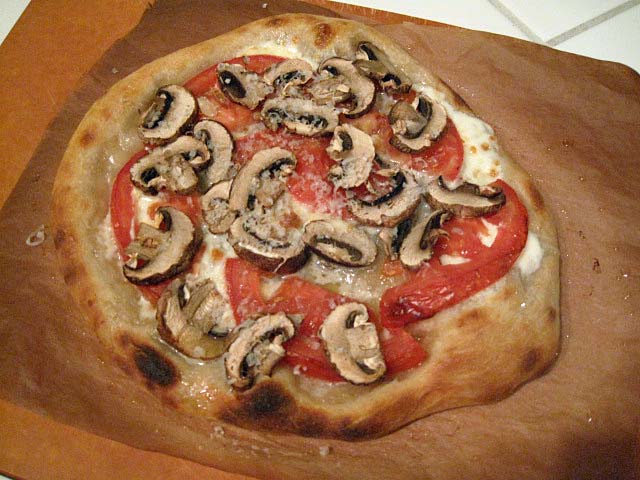
OK, so I know it sounds like an oxymoron, but it works! Baguette dough is one of my favorite pizza doughs because it is easy to handle, has just a hint of sweetness, and bakes up as a sturdy, crisp, and thin platform (no sagging) that works no matter whether the topping be light or heavy. I baked this in the oven on my new stone (I didn't want to risk repeating last Friday's BBQed-beyond-all-recognition pizza). I had planned to top it with some pesto and fresh basil, but the pesto had molded and the basil, shriveled, so I just went with sauce and fresh mozzarella.

Neapolitan style pizza

--Pamela

Submitted by donenright on March 30, 2009 - 9:01pm

baguette recipe- comments and conversion help, please


Hi, all
This is a recipe I've been working on, based on some reading here at the Fresh Loaf on the Anis baguettes, and the idea of the cold oven. I'm encouraged with the results so far- it is tasty and I'm starting to get the nice open crumb. Not only do I save a bit of energy with the cold oven, but the cold/wet oven actually makes for a lot of steam in the first five minutes of baking; it doesn't all vaporize instantly. Anyway- I'd appreciate some feedback and comments. Also, can anyone help me convert this recipe into a formula w/ weights and percentages? (Grams, please- I don't know from ounces). Thanks all- this is a very inspiring site and I appreciate everyone's expertise.

Poolish: 
about 2 tbs active sourdough starter
1 cup all-purpose white flour (I use Robin Hood)
1 cup water
Leave overnight

Morning:

Add 1/8 tsp baker's quick-rise yeast
1 slightly-heaping tsp salt
1 1/4 cup flour 

Stir until it holds together, dump it onto a floured surface, combine further, stretch it a few times, leave for 20 minutes. 
Again, stretch and fold, leave for 20 minutes
Again...
After the fourth stretch, place in a covered bowl and refrigerate a few (up to 20) hours. (I usually leave it five or six.)

Remove from refrigerator, divide in two, pre-form loafish shapes, leave covered for an hour.

Gently form into baguettes, let rise 45 minutes or so.

Mist with water, score and place on top rack in a cold oven. (I pour a cup of water on the cold oven floor- not everyone can/should do this, I realize).

Set oven to 450. 

Loaves are done in about 25 minutes.