SearchUser loginRecommended BooksFavorite Recipes
|
Submitted by RobynNZ on October 27, 2009 - 7:00pm THANK YOU ALL
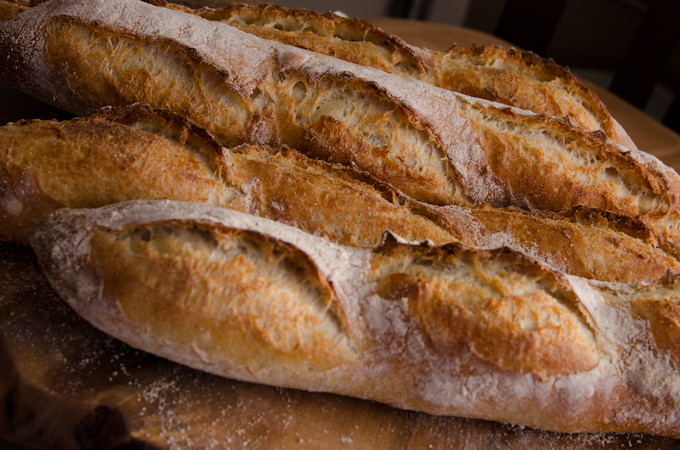
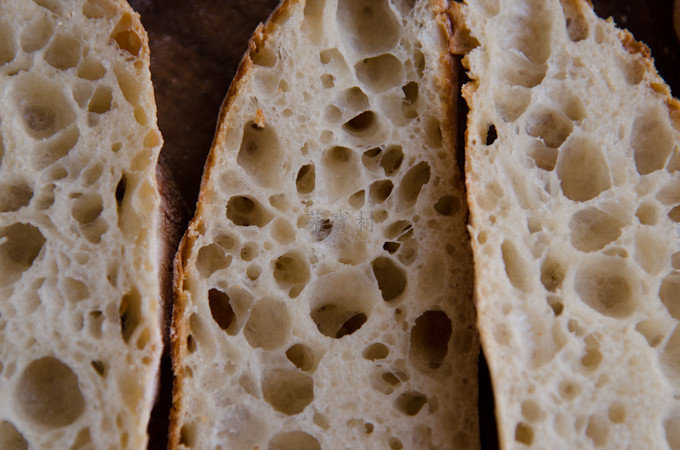
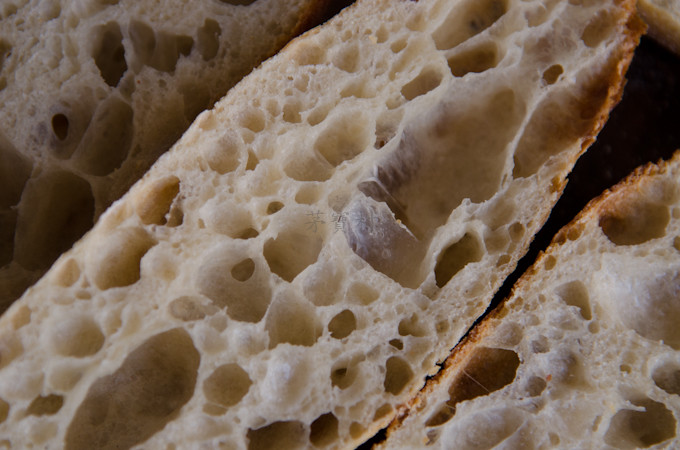
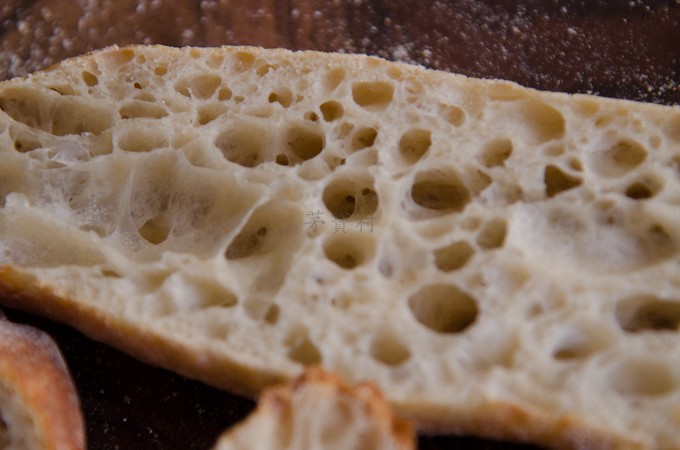
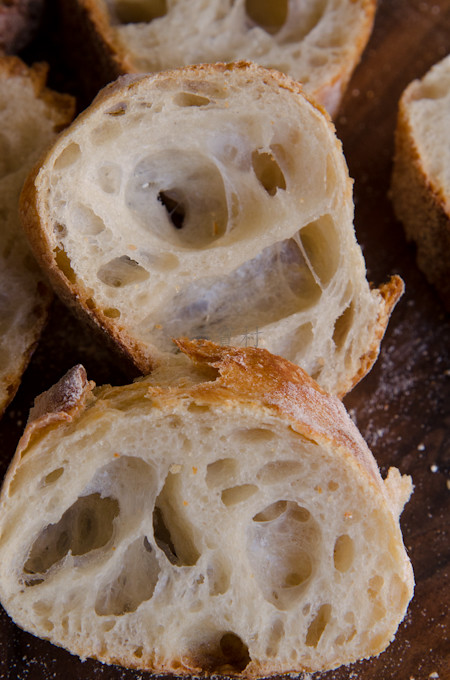
I had the most delicious lunch today, salad all picked from my spring garden accompanied by the first baguettes I've ever made. I wanted to come here and say thank you to everyone, for all the points and tips that helped me gain the confidence to even try. Actually it was watching Steven Sullivan ACME baking with Julia Child in the video Marc linked to the other day, working with his dough, which made me finally decide I could at least give it a go. http://www.pbs.org/juliachild/meet/sullivan.html I've had RLB's Bread Bible out from the library and as her instructions are so easy to follow, decided to use her method which was inspired by that of Maggie Glezer, ACME, as a master class. I figured the dough would be similar to that which Steven was using, so that was part of the decision too. Started at 8pm Monday night and it's Wednesday here now. The pate fermentée and poolish which the method calls for were left for the maximum time suggested and the overnight retarded proof was also maxed out to 14 hours. The formula is for two baguettes, however I made three ficelle from it, to suit the size of my tiny fridge and my oven stone. I adjusted baking time for the smaller size. The resulting ficelle were beautiful to look at; rich gold, with lots of little blisters and despite the blade catching when I was slashing, had pretty gringes. Broken open the crumb was creamy and airy, but the crust although delicious and crispy was thick, around 2-3mm. I like ficelle because they have more crust, but this was a bit more than even I want. If I were to use this formula again what would I do? I'd try some of my sourdough in place of the pate fermentée made up to the same hydration. And while I had no problem at all managing the dough, with a rice-floured linen teatowel as a couche, I couldn't figure out how to seal them with sprayed plastic wrap, as RLB instructed and just put everything inside a large plastic bag which I sealed tightly. It's my assumption that the thick crust was because the dough dried out during its 14 hours in the fridge. I was aware of this and sprayed the dough before it went in the oven, used David's two tiered steaming method and sprayed the oven. Perhaps I even overdid the spraying. They might have come out of the oven a touch sooner too. I'll need to think it through a bit more. However, now I have my 15m certificate (NZ swimming reference, meaning having confidence beyond my ability) I plan to tackle the scrumptious looking baguettes Jane & David have introduced here. Apologies my digital camera has stopped working, so no photos.
Robyn
Submitted by turosdolci on October 23, 2009 - 1:40am Statistics on the baguette consumption in France questionDoes anyone know how to get recent statistics about the consumption of baguettes in France over the last 10 years or so. I have tried contacting the The Association of Bakers in France in both English and French as well as other sources and never get an answer. There has been deep reduction in comsumption of the baguette and it has had a very negative effect on the bakers who prepare it from scratch ("a La Masion") a classification defined by the French government. I have been wanting to write an article "Save The Baguetts" but can only find old figures.
Thanks, Patricia Turo Submitted by LeahM on September 30, 2009 - 12:38pm baguettes! and a slashing questionSo this weekend I went for another round of the Anis baguettes. I am loving the recipe--so tasty, so crusty! Plus the practice (and video tutorials posted around here--thanks!) are definitely helping me work on slashing and shaping. Which brings me to my current question. I thought I did a pretty good job (for me) with the slashing this time. And the cuts definitely opened nicely in the oven as far as shape goes. But I'm not getting any sort of color/texture/crust distinction between the slashed areas and the rest of the crust. Here's a picture, you can see that the loaf is springing and opening, but it's pretty much an even brown all over, like the cut is just a shaped ridge... This happens similarly with my sourdough, so I figure it's something I'm doing, as opposed to an issue with the dough itself. Any ideas?
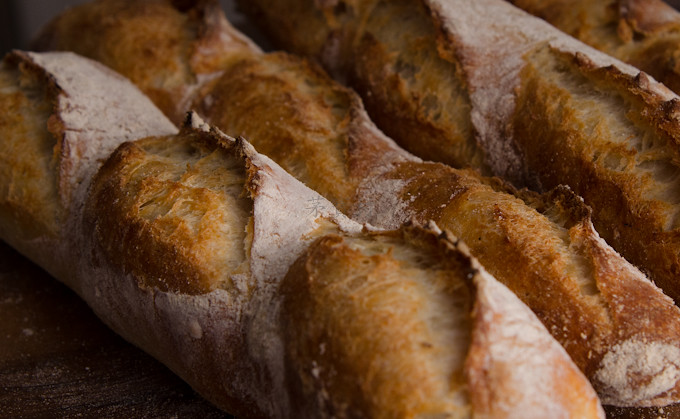
Submitted by Obsessive Ingre... on September 29, 2009 - 8:38am Gosselin's Boulangeries in Paris: A Detailed "Pain a l'Ancienne" Photo ReportBelow are some detailed crust and crumb photos of Gosselin's "baguette tradition"/"baguette ancienne" from Paris + a report on the experience! I managed to get to all 3 of his shops... On my first day in the city, I went to the 125 Rue Saint Honore location by the Louvre. Nice shop. Moderate size. Lots of pastries. I was the only one in there at 10AM as the staff was milling around. The cashier was very pleasant. As I left the shop, I broke off a piece of the "baguette ancienne" (btw - this is the only one of the three locations that calls it "ancienne" instead of "tradition") and was sorely disappointed. Much like many of the lower quality baguettes in Paris, it tasted overwhelmingly of hard water and/or raw flour. Fortunately, I purchased two baguettes, so I later tore into the other one...but only to find the same thing...horrible flavor. Somehow I was not discouraged, and I knew I had two more shops to go... The next morning I visited the 28 Rue Caumartin location. It's on a sleepy street. Relatively small shop. Again, I was the only person in the boulangerie, but the cashier was hurried and not entirely pleasant with me. And, yes, I speak French, so she wasn't just being surly to the "American tourist". Upon leaving the shop, I dug into the baguette and was hit with the same disgusting flavor from the baguettes the day before. I now had major doubts about the quality of Gosselin's famous baguettes. How could they be so beloved and yet be so bad? But I still hadn't been to the flagship store, so I decided to give Gosselin one last try... Saturday morning I wandered down the Boulevard Saint Germain. Gorgeous street. And despite my underwhelming experiences from the days before, I was excited. The numbers on the building counted down until there I was at 258 Boulevard Saint Germain... With a shop this pretty, the baguette had to be good, right? I scooted around to the other side of the building and snapped a cliched shot of an old Parisian man shuffling out, baguette in-hand... I walked inside, ready to give Gosselin his last chance... There it was, above the register on the right, the "baguette tradition"... I walked down the Boulevard and took a shot of the virgin loaf. The crust was dark and very well-caramelized. The scent was not too pronounced: very slightly sweet with a hint of nuttiness. This was surprising to me, as my "pain a l'ancienne" loaves have a very distinct pistachio scent... I sat on a bench, ripped off a piece and gave a taste. Delicious! I don't know who makes the bread at the other two shops, as all three are supposed to have the same source, but this was a world apart... I walked along thoroughly enjoying my baguette until I reached the banks of the Seine, where I had to take a few more photos. In the few minutes between my first bite and the river, I was blown away. The top crust tasted subtly but clearly of roasted marshmallows. The bottom crust was more blunt, although delicious. And, odd as it may seem, the closest thing I can compare it to are the crispy, slightly charred edges and nooks of a Thomas' English Muffin. Not the most sophisticated flavor in the world, but there it was. The crumb, as you can see, was cream-colored and tasted just like it looked, creamy and smooth... Just look at that grigne and the gorgeous colors... The baguettes definitely have an irregular shape, nothing neat and perfectly uniform about them... I was so happy with my experience on Saturday, that I went back to the shop on Monday morning, got another baguette and sat in the Tuileries Gardens by the Louvre to snap a few more shots on a park bench. The baguettes have a beautiful oven spring... Admittedly, this second loaf wasn't quite the religious experience that the one from Saturday morning had been. It definitely hadn't spent as much time in the oven, so there wasn't a tremendous amount of character to the flavor. Visually, excellent crust and excellent crumb, but I'd only go so far as to describe the flavor as "solid". Clearly, the key is to get a "baguette tradition" only from the Saint Germain flagship store, and make sure it has a deep amber crust. It's guaranteed to knock your socks off. I sampled many other baguettes while in Paris. Most ranged from terrible to boring. One from the Le Moulin de la Vierge was adequate and certainly worth going for if you're near the Eiffel Tower and need a baguette fix. And I have to say I was quite impressed with the one I had at Gerard Mulot. While it didn't soar to the heights of my Saturday Gosselin experience, it was excellent and absolutely one to check out. I'd love to hear your thoughts, whether you've experienced Gosselin's work first-hand or love making these loaves yourself. I thought having some close-up photos would be a great thing to share, as I know how many of us love to work on Gosselin's/Reinhart's "pain a l'ancienne" and how much detailed imagery can help us out with our experiments. Bon appetit! Submitted by Ryan Sandler on September 27, 2009 - 10:40pm Sourdough baguette experiment -- Success!Usually when I get it in my head to cobble together a formula based on two or three things I've seen mentioned on this forum, two more in my head, and a bit of whimsy, the results are not pretty. Especially when it comes to baguettes. The last two or three times I've tried to make baguettes, they've come out flat, with closed crumb and, with the sourdough versions, crust that provides a thorough jaw workout. But not this time, oh no! This time I tasted victory. Victory, and some very yummy bread. Here's what I was trying for:
To this I arbitrarily decided that 50% flour weight would be prefermented, of which about half and half from a 50% hydration pate fermente and a 100% hydration wet starter. Because, y'know, why not? I decided on 700g total flour and worked out the math to get:
Got to set up a bakers math calculator for myself. Anyway, the formula ended up being thus: Liquid Levain
Sourdough Pate Fermente
Mixed starters at about 9:30pm the day before baking and let them sit overnight. My firm starter had been in the fridge since that morning, so I used warm water for the pate. Began the next stage at 7:30 the next morning. Final Dough
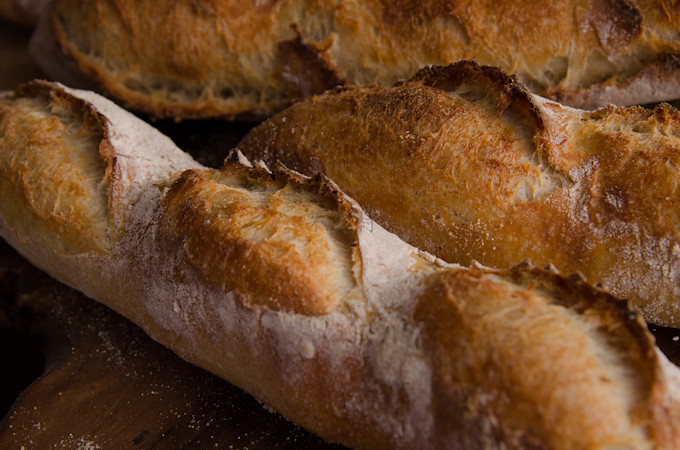
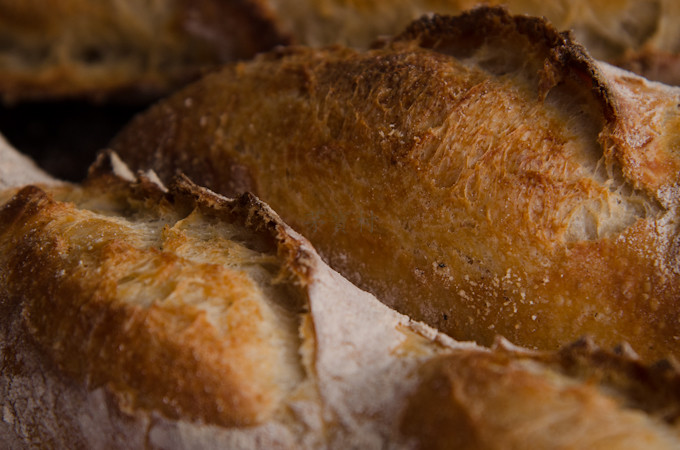
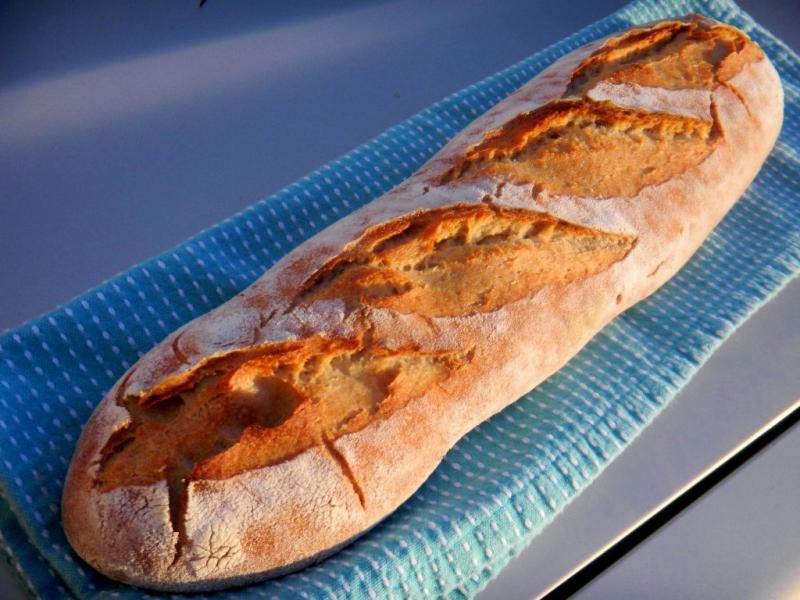
Mixed Flour, water, and liquid levain until a shaggy mess, then covered and left to autolyze for 45 minutes. Held off on adding the pate partly because it seemed like The Proper Thing To Do(TM), leaving out the salt and all that...but mostly because the pate looked pretty sluggish and needed at least another 45 minutes to ripen. Added pate and salt and kneeded for a couple minutes. The stiff pate really didn't want to incorporate, so I gave it a 5 minute rest then kneaded a little more until the lumps were more or less dispersed. Then it was into a bowl to rise. I gave the dough 30 folds in the bowl with a rubber spatula after 30 minutes of fermentation, then again after 2 hours. Total time for the first rise was 5 hours (I meant for it to be 4, but got confused, and anyway it wasn't rising hugely). Preshaped the dough into 4 ~10oz pieces (yeah, yeah, switched measuring systems midway), and let rest for 10 minutes. Then final shaping, and rising on my well-floured couche-tablecloth for 2 hours. Baked at about 475 (my oven's temperature sensor is wacky) with steam for 22 minutes, opening the oven a crack after 10. Then left the oven cracked and turned off for another 5 minutes before removing the baguettes from the oven. The results: Sourdough Baguettes, Exterior:
Another Angle
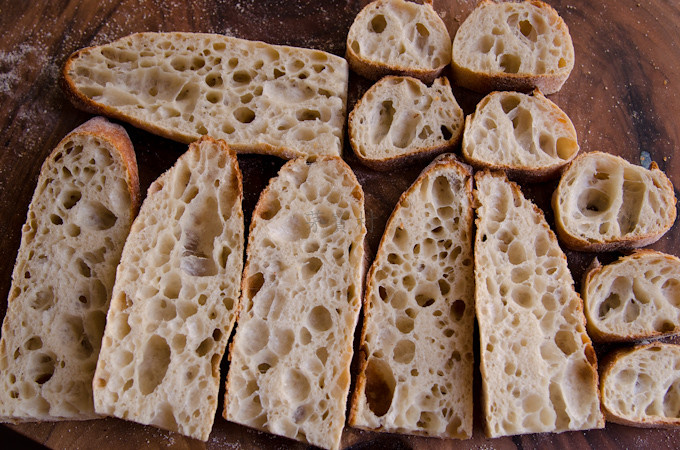
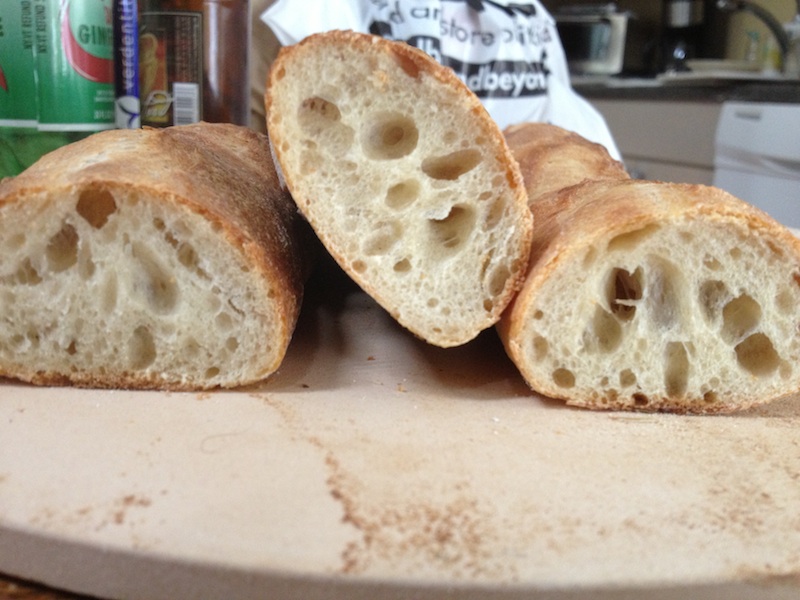
Crumb Shot
I was incredibly pleased with the results here. The scoring is easily the best I've ever done, though there's clearly room for improvement. The mere fact that the things didn't turn out flat was a huge improvement of my last attempt at a sourdough baguette. The crumb turned out well. The flavor was wonderfully complex, moderately sour, with a thin, crisp crust that was just slightly chewy (hey it's sourdough, after all). Submitted by mrosen814 on September 27, 2009 - 9:01pm Results from the Baguette “Test”
For the most part, I was pleased with the results. The day before I baked, I made the sponge, mixed, scaled, and formed the dough into the classic baguette shape. I put in a lot effort in creating as much surface tension as I could, otherwise, the finished product could be quite flat and blob-like. I threw the shaped dough in the fridge, and forgot about it until the next morning. After the loaves were finished baking the following morning, I was happy with the shape, color, and most of all, the nutty aroma that comes along with freshly baked french bread. The texture of the crust worked for me as well. However, the crumb needs to be improved, as it was missing that light airy quality that is so essential for baguettes. I will tweak this recipe next weekend and try to go for that cloud-like baguette crumb I am after.
Submitted by mrosen814 on September 27, 2009 - 8:58pm Time to Experiment
Time, or the lack there of, is a major issue for home bread bakers. There is no doubt that more loaves of homemade bread would be produced if the process wasn't so time consuming. The scheduling involved with some bread recipes can be very challenging. My goal as a home baker, is to have my finished dough ready to pop into the oven first thing in the morning, while getting a proper night's sleep. With bagels, I think this time table works really well. I make the sponge, mix the dough, scale, and shape the night before, and the morning of, take the soon-to-be-bagels right from the fridge to the boiling water and bake. Tonight, I will try the same process with traditional baguettes. I'll also be experimenting with an European style bread flour order from King Arthur Flour.
http://beyondbread.wordpress.com/
Submitted by kate_s on September 21, 2009 - 10:31am New here... question about cold risingI have a question about cold rising... I use a basic baguette recipe frequently with consistent results... good crust, great crumb and flavor... My question is, what is the best way to do a cold rise? With my schedule, I either have to keep my baking for the weekends or eat late to have fresh bread after work. I'd like to know if anyone has experience with doing the first rise as normal (room temperature, about 75 deg, 2 hours), shaping the loaves (two baguettes in baguette trays) and allowing the loaves to rise in the fridge for 12-18 hours so that I can bring them back to ambient temperature and bake when I get home from work... Any insight is greatly appreciated! Thanks - Kate Submitted by LeahM on September 9, 2009 - 11:36am first baguette(s)!!!I've been baking with my sourdough starter for a couple of months, with ever improving results, but this weekend I wanted to try something different. I stumbled upon the Anis baguette recipe on here and decided to give it a try for a barbeque on saturday. It was amazing! My shaping technique needs quite a bit of work, but the bread tasted great--both light and crusty. It got eaten up so fast that when we got home, I decided to make another batch right away, so we could eat the loaves all ourselves. And, amazingly enough, that second batch was even better. Crispier crust, a bit of a nutty flavor--I had sandwiches every meal and was happy about it! I can't wait to try making it again. Thanks everyone that posted all their advice and (of course) the recipe! the first round:
second round:
Submitted by dustinlovell on August 30, 2009 - 5:17pm It's finally coming togetherHello everyone. I'm new to the site. I found it a couple of weeks ago and was immediately astounded by the quality of the breads and the advice that was here. I've been baking bread for around 7 years. I started with a castoff bread machine, graduated to pan breads and then one day about six years ago I was eating a piece of store-bought sourdough and thought "I wonder how hard it would be to make this." I ordered a sourdough starter from Sourdoughs International in Idaho and it's been percolating along ever since then. I tried Carl Griffith's starter and even made my own, but I kept coming back to the San Francisco starter I purchased from Ed Wood's company. I spent a lot of time on the rec.food.sourdough newsgroups and subscribed to Mike Avery's mailing list before I found this site. I've made a lot of bread in the intervening years, most of it good-flavored but mostly uninteresting pan breads. Don't get me wrong, my kids don't eat store bought cardbread unless we're really in a pinch and I haven't been able to bake in a while. My standard daily bread for the past few years has been good, just not great. My baking road has been long and bumpy, and several times I almost gave up altogether. Finally, a few weeks ago I caught the bug again and I'm proud to say that everything seems to be coming together this time. For a long time I was really nervous about degassing my sourdough. Somehow I had it stuck in my head that a sourdough starter just couldn't produce the kind of oomph a yeasted loaf could, so I resisted handling the dough very much, mixing it until the gluten developed and then letting it sit until risen. A few weeks ago I stumbled across a method on Mike Avery's website to let the dough do all (well, most) of the work in developing the gluten. He mixes the final dough together until it's a very rough mass, then lets it rest for a couple of hours, stretching and folding the dough two or three times during the rise. I know I've read similar techniques elsewhere, but for some reason his explanation stuck with me. I decided to give it a try and immediately noticed a huge improvement. The other things that have greatly helped in recent weeks are the addition of split firebrick as my baking surface and the purchase of the SuperPeel from Exo Products. I've always baked primarily for myself, but if my family and friends didn't enjoy the fruits of my labors, I'm sure I wouldn't be nearly as motivated to continue and improve. In the past couple of weeks, I've received three compliments (unsolicited, of course) that have each made my day. A coworker said "This is just like something you'd get at a bakery." A lady at a neighborhood party said "I pay good money for bread like this," and this morning I presented my wife with the best looking baguette I've ever produced and she responded with "I've had baguettes in France that weren't this good." I obviously still have a lot to learn, but there's just something about finally reaching a goal that has taken so long to achieve that makes me want to shout about it from the rooftops. All day long I've felt like a kid at Christmas, and I keep sneaking downstairs to cut another slice. It's amazing that something so fundamentally simple can be so universally fulfilling. I feel like today's batch of bread was finally good enough to photograph and post for all of you to see. Any comments, suggestions, or questions are welcome. Happy baking!
|
ALSO ON |